
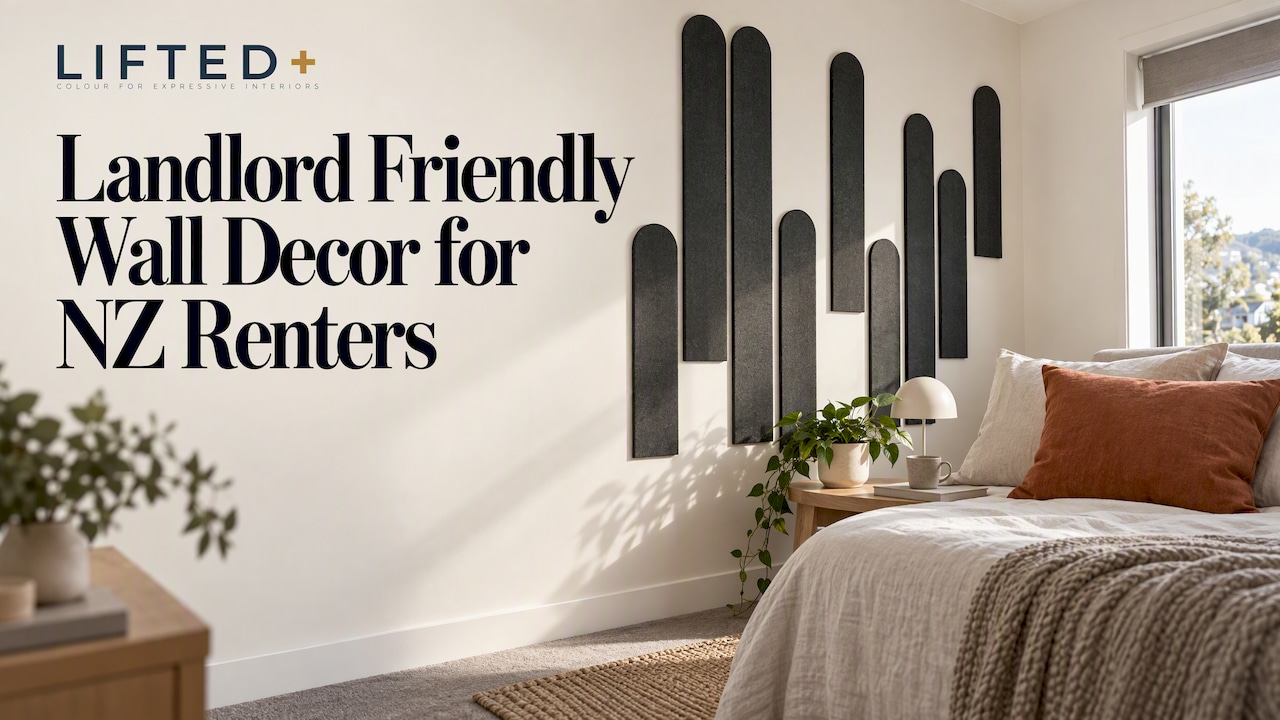
Landlord friendly wall decor is anything that gives a wall character without leaving a lasting mark: removable adhesive panels, leaning art, textiles, mirrors and peel-and-stick finishes, all agreed in writing where your tenancy requires it. In New Zealand, the rule of thumb is simple. If you can take it down at the end of the tenancy and return the wall to substantially how you found it, you are on solid ground. If it needs paint, screws or filler, ask first.
This guide covers what the rules say, which options suit which walls, and how to build a renter-friendly feature wall with real colour and texture, not just a safer version of beige.
Key takeaways
- Minor changes need your landlord’s written consent, and you should have it before you start. Tenancy Services says landlords must not decline reasonable requests for minor changes and must reply in writing within 21 days.
- Removable decor works best when you test a small, hidden patch first and photograph the wall before and after.
- Colour and texture do not require paint. Felt panels, textiles, large leaning art and mirrors all change a room without a drill.
- Anything heavy, tall or breakable needs earthquake-aware placement, whatever the adhesive claims.
- No product is guaranteed damage-free on every wall. Paint age, finish and condition decide the outcome.
Table of Contents
- What New Zealand tenancy rules say about decorating
- Why plain rental walls feel so flat
- Landlord friendly wall decor options, compared
- Building a renter-friendly feature wall with colour
- Perspective: what we have learned about no-drill walls
- How to install removable panels well
- Ideas by room
- Where our wall kits fit
- Mistakes that put your bond at risk
- FAQ
- Sources
What New Zealand tenancy rules say about decorating
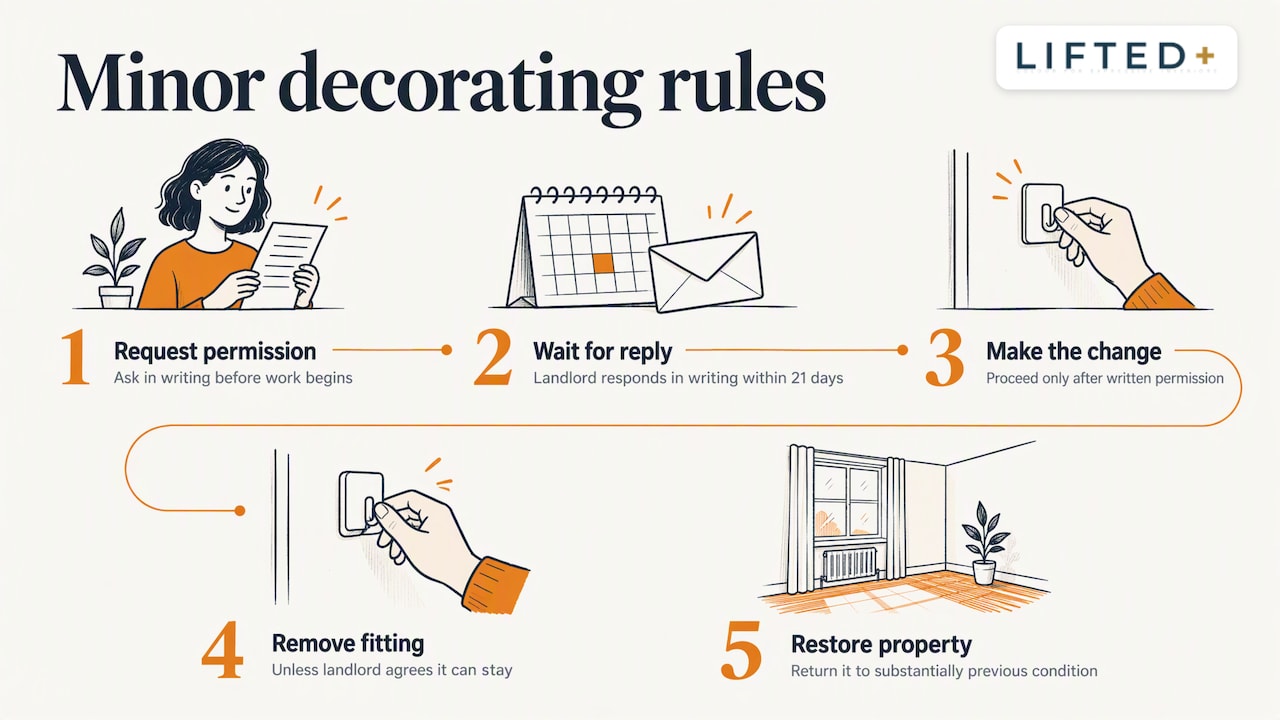
Before choosing a single product, it helps to know where the line sits. Tenancy Services states that changes to a rental must comply with the tenancy agreement or have the landlord’s written consent. For minor changes, you request permission in writing and receive it before work begins. At the end of the tenancy you remove the fitting unless the landlord agrees it can stay, and you return the property to substantially its previous condition.
The same page notes that tenants can request minor changes, that landlords must not decline them, and that they must respond in writing within 21 days. That is a useful lever. A short, specific email describing what you plan to use, where, and how it comes off is far more likely to get a quick yes than a vague question about “putting things on the walls”.
A tidy request might name the product, say it uses adhesive pads with no drilling, offer photos of the wall before and after, and promise to remove everything at move-out. Keep the reply. If a landlord says yes by text, screenshot it and email it to yourself as a record.
Your bond and what it covers
The standard residential tenancy agreement allows a general bond of up to four weeks’ rent, lodged with MBIE within 23 working days, and it does not cover fair wear and tear. Tenants or their guests who carelessly damage a property are liable up to four weeks’ rent or the insurance excess, whichever is lower.
That distinction matters for walls. Faded paint behind a frame is wear and tear. A torn patch of plaster where something was ripped off is damage. Everything below is built around staying on the right side of that line.
If you flat with others, Sorted notes that contents insurance can cover personal liability if a flatmate accidentally damages the landlord’s property. Worth knowing before a housewarming gets lively.
Why plain rental walls feel so flat
Most rentals arrive in the same safe, polite middle: white or greige walls, a few marks from the last tenant, and no obvious place for the eye to land. The usual advice is to hang something. The trouble is that a single small frame on a large wall rarely does the work. It reads as an afterthought, and the room stays temporary.
A feature wall changes that because it sets hierarchy. One surface gets the colour, the texture and the attention, and the rest of the room can stay calm around it. In a rental, you need to build that hierarchy from things you can lift away.
Landlord friendly wall decor options, compared
Every option has a trade-off. The table below sets them side by side so you can match the choice to your wall, your lease and your appetite for colour.
| Option | Colour and texture impact | Consent usually wise? | Main risk |
|---|---|---|---|
| Modular adhesive felt panels | High, sculptural and colourful | Yes, ask in writing | Wall finish and paint age affect removal |
| Peel-and-stick wallpaper | High, flat pattern | Not typically needed, but check your agreement | Can lift paint on older or flat finishes |
| Wall decals | Low to medium | Check | Residue on some surfaces |
| Leaning art or mirrors | Medium to high | No fixing involved | Stability and earthquake safety |
| Fabric hangings | Medium, soft texture | Depends on how hung | Sagging, pin marks |
| Hook-and-loop strips with framed art | Medium | Check | Weight limits |
Peel-and-stick wallpaper and decals
Removable wallpaper and decals are the most familiar route. A New Zealand property management guide says removable wallpaper can be taken off a clean, dry surface without damaging standard interior paint finishes, and that retailers here stock a growing range of removable wallpaper and tile decals. The same guide advises testing a small section for your specific paint type and age, and photographing the wall before application and after removal. That habit is worth adopting for any adhesive product.
The limit is expression. Wallpaper gives pattern, but it stays flat. Wall decals tend to look temporary. Neither gives you shadow, depth or the tactile quality that makes a wall feel designed.
Leaning art, mirrors and boards
Houzz New Zealand suggests several no-damage ideas, including wallpaper samples held with washi tape, lightweight art on removable strips, and an oversized print mounted on MDF and leaned against the wall as a focal point. Large leaning pieces are a genuine renter classic because they require nothing from the wall at all.
In New Zealand, though, leaning has a safety angle. The Natural Hazards Commission says adhesive hook-and-loop strips may suit lightweight frames, while heavier items need sturdy closed picture hooks or more secure fixing, and heavy objects should be kept low. Translate that to your living room: a big mirror leaning above a sofa is a different proposition from one resting low behind a sideboard. Keep large, heavy pieces away from beds, couches and doorways, and if something is too heavy for strips, ask your landlord about a proper fixing rather than gambling on adhesive.
Textiles and curtains
A stretched tapestry, a quilt on a rail or a woven hanging softens a wall and absorbs a little of the echo that bare rentals often have. Pins leave small holes, so check what your landlord considers minor. For windows, Wise Move NZ points to tension rods and suitable adhesive curtain hooks as no-drill options; tension rods hold by pressure between the sides of the window frame.
Building a renter-friendly feature wall with colour
This is where most renters get stuck. Paint is off the table, wallpaper is flat, and gallery walls need many small decisions. A modular panel system answers the question differently: it treats the wall as a composition.
Start with one wall, not the whole room
Pick the wall you look at most. In a lounge, that is usually the one behind the sofa or the television. In a bedroom, it is the bedhead wall. In a small apartment, it may be the narrow stretch by the front door that everyone sees on arrival. One wall with real presence does more than four with modest decoration.
Choose colour as a decision, not a gamble
Colour is the part renters fear most, because it feels risky in a space you do not own. That fear is the argument for removable colour. If it does not suit your light in a fortnight, you can change it. Our guide to using colour to lift a room walks through how to choose, and mixing colours in interiors covers combining shades without the room tipping into chaos.
A practical way to reduce the risk is to see colour in your own light first. Natural light in New Zealand homes shifts a lot between a south-facing flat in Wellington and a north-facing one in Tauranga, and a shade that glows in a photo can look different on your wall. Ordering colour samples lets you hold the felt up against your floor, your sofa and your curtains before committing. Sample kit purchases are credited towards a full kit order, so the test is not wasted money.
Think in shape and shadow
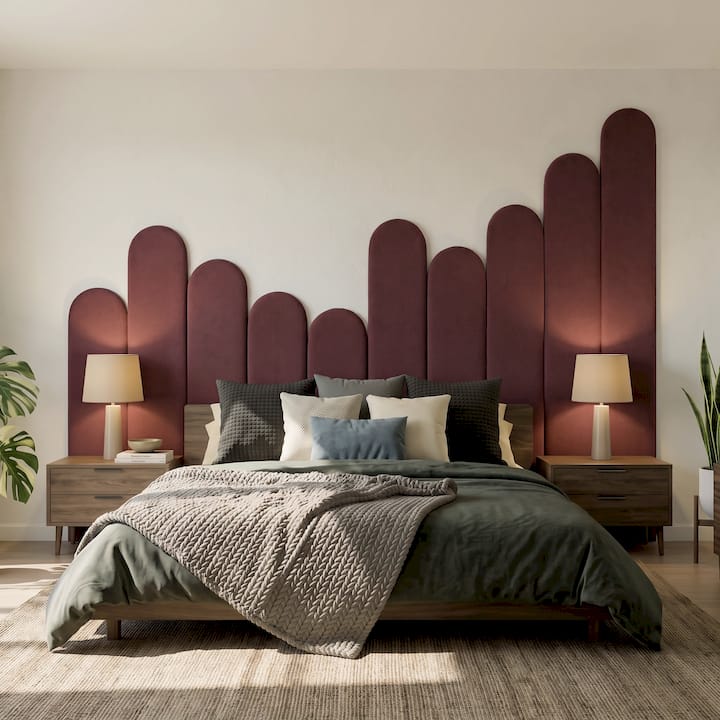
Felt panels cut into precise geometric forms catch light differently through the day. Morning sun rakes across them and throws small shadows; evening lamplight softens the edges. That movement is what makes a panel arrangement feel sculptural rather than decorative. It is also something paint and wallpaper cannot do.
Perspective: what we have learned about no-drill walls
We designed DwellForms™ in New Zealand around a single frustration: renters are told to be tasteful and temporary, and the result is homes that never feel like theirs. Colour is not a luxury. It is often the quickest way to make a space feel lived in and personal, and a wall system that lifts away should not force you to give that up.
The adhesive is where we have been most careful. We tested several pull-tab and adhesive options, and deliberately discounted one popular brand, because the nano-adhesive pads we selected performed significantly better in our own testing at minimising damage to walls. We say minimising, not eliminating. No adhesive is completely damage-proof, and results depend on your paint, how well it was applied and how long ago. That is why we always recommend a small test, a photograph and a written word with your landlord.
We also do not pretend it suits every wall. Textured plaster, flaking paint, wallpaper, fresh paint that has not cured and damp surfaces are all poor candidates for any adhesive. If your wall is in that state, tell your landlord and choose a leaning or floor-standing option instead.
The point of a renter-friendly feature wall is not to dodge the rules. It is colour without commitment, texture without renovation, and a home you do not have to leave behind when your lease ends.
— Michelle
How to install removable panels well
The process is the same whichever removable product you choose, and most problems come from skipping the early steps.
- Ask in writing. Describe the product and how it comes off, and keep the reply. Remember the 21-day response window.
- Photograph the wall. Take clear images in good light, including any existing marks, with the date on your phone.
- Test a hidden patch. Behind a door or a wardrobe is ideal. Leave it a few days, then lift it gently.
- Clean and dry the surface. Dust, grease and cooking residue weaken adhesion and can cause pads to let go.
- Lay out before you stick. Arrange the panels on the floor first, then mark positions lightly with a removable guide or measure from fixed points.
- Press firmly and let it settle. Follow the instructions supplied with the kit.
- Photograph again at move-out. Remove slowly, working the adhesive away from the wall at a low angle rather than pulling straight out.
Our step-by-step reading on protecting your bond with no-drill panels goes deeper on the bond side, and damage free wall panels: a renter’s guide covers surface types.
Weight, placement and earthquake sense
Felt panels are light, which is part of why they suit adhesive mounting. Heavier decor is a different question. Keep anything weighty low and away from where people sleep or sit, and fix tall furniture separately, as the Natural Hazards Commission advises. Decorating well and living safely are not in conflict, but the second comes first.
Ideas by room
Living room
The wall behind the sofa is the natural stage. A broad, horizontal arrangement of panels in two or three related colours anchors the seating and gives the room a clear focus. Add a leaning mirror on a sideboard to bounce light around. Our ideas for renter feature walls show several layouts that work without drilling.
Bedroom
A bedhead wall benefits from softness. Felt has a warm, muted surface that suits a restful room, and a vertical or stepped arrangement above the bed draws the eye upward and makes ceilings feel taller. Keep the arrangement light, and mind the safety point above: nothing heavy above a pillow.
Hallways and small apartments
Narrow spaces suit bold, contained gestures. A single strip of panels along a hallway turns a corridor into a feature. In a compact apartment, one saturated wall makes the space feel designed instead of cramped. For move-in planning, see our guide to colour-led walls for new apartments.
Nurseries and home offices
A calm, textured wall helps in both. If you are preparing a baby’s room, our nursery wall ideas without paint or drilling cover layouts that stay well away from cots. Home offices gain from a backdrop that looks good on camera and reads as deliberate.
Where our wall kits fit
If you want a feature wall that is colourful, sculptural and removable, our DwellForms™ Core Kits are designed for exactly that. They are made from precision-cut PET felt produced from 100% recycled plastic, fixed with tested adhesive pads, and can be rearranged or moved to your next home. When you want to grow the arrangement, Extension Kits let you add to it, and our guide on extending wall panels without drilling shows how.
Not ready to commit to a colour? Start with the samples. If you prefer art to panels, our wall art range and no-drill modern wall art ideas offer another route.
Mistakes that put your bond at risk
Most wall damage in rentals comes from a handful of avoidable habits.
The first is acting before asking. Sticking something up on a Friday night and hoping nobody notices is the surest way to turn a minor change into a dispute. The second is skipping the test patch, particularly on older paint or matte finishes that can lift with the adhesive. The third is rushing removal. Peeling quickly and at a right angle is how paint comes away with the pad.
The fourth is using adhesive beyond its limits: heavy mirrors, large framed pieces or damp bathroom walls. If it is heavy, use a secure fixing agreed with your landlord. The fifth is forgetting the record. Photos from move-in and move-out turn an argument about condition into a simple comparison.
Finally, remember that fair wear and tear is not charged to your bond, but careless damage is. Doing the small things right keeps you well inside that line.
FAQ
Can I hang things on the wall in a rental in New Zealand?
You can make minor changes with your landlord’s written consent, and Tenancy Services says landlords must not decline them. Ask in writing, get the answer before you begin and remove the fitting at the end of the tenancy. Choose removable options to keep your request simple.
What is the best way to decorate rental walls without damaging them?
Use leaning art and mirrors, removable adhesive panels, textiles and peel-and-stick wallpaper, and test each on a hidden patch first. Photograph the wall before and after. No product is guaranteed to leave every wall unmarked, so surface condition and careful removal matter as much as the product.
Will removable wall decor affect my bond?
Bond does not cover fair wear and tear, but it can be used for careless damage. Tenants are liable up to four weeks’ rent or the insurance excess, whichever is lower. Written consent, photos and a careful removal are your best protection.
How do I add colour to a rental without paint?
Textured, coloured panels, fabric hangings, large artwork and removable wallpaper all add colour without paint. A modular felt panel arrangement gives the most depth because it adds shape and shadow as well as colour. Order samples first so you can judge the shades in your own light.
Sources
- Tenants making changes to the property, Tenancy Services
- Residential Tenancy Agreement, Tenancy Services
- Going flatting, Sorted
- Prevent damage from falling furniture, Natural Hazards Commission
- How to Personalise a Rental NZ, Property Plus
- 8 Ways to Put Your Stamp on Your Pad, Houzz NZ
- 6 decor hacks suitable for your New Zealand rental, Wise Move NZ
Recommended
- Rental Friendly Decor NZ: 10 Ideas That Work
- Protect Your Bond: 6 Steps For NZ Renters To Use No Drill Panels
- 21 Day Rule: How NZ Renters Add Colour Without Losing Their Bond
- Bond Friendly Decor: Colour For NZ Rentals Without Risk
This article is for general information and inspiration only. Product performance and results may vary depending on individual circumstances, surfaces and installation.
