
TL;DR:
- Artistic wall art is a deliberate design choice that shapes mood and room identity.
- Choosing local, limited-edition pieces enhances cultural relevance and long-term impact.
- Proper sizing, placement, and style elevate room atmosphere and create visual harmony.
Wall art is one of the most misunderstood elements in home design. Most people treat it as the finishing touch, the last item on a long checklist once the furniture is placed and the cushions are fluffed. But that thinking leaves enormous potential sitting on the floor, leaning against a wall, waiting to be hung. Artistic wall art is not a decoration. It is a design decision that shapes mood, anchors a room’s identity, and tells the story of the person who lives there. This guide will show you exactly how to recognise true artistic wall art, choose the right pieces for your home, and style them with confidence.
Table of Contents
- Defining artistic wall art
- Popular styles and types of artistic wall art for modern homes
- How artistic wall art transforms your home’s atmosphere
- How to select and style artistic wall art for modern NZ interiors
- What most Kiwis get wrong about wall art—and how to get it right
- Find and shop artistic wall art for your NZ home
- Frequently asked questions
Key Takeaways
| Point | Details |
|---|---|
| Originality matters | Choose original or limited-edition wall art for genuine impact and individuality. |
| Style transforms space | The right style and placement of artistic wall art can change the mood and feel of any room. |
| Support local artists | Buying art from local NZ artists adds personality and supports sustainable culture. |
| Smart selection tips | Follow simple steps for sizing, placement, and cohesion to maximise your wall art’s effect. |
Defining artistic wall art
Not everything framed and hung on a wall qualifies as artistic wall art. This distinction matters far more than most Kiwi homeowners realise, because the difference between a thoughtfully chosen piece and a generic print is the difference between a room that resonates and one that simply fills space.
Artistic wall art refers to pieces crafted with deliberate aesthetic, emotional, or cultural intent. These are works by artists, studios, or designers who approach the wall as a canvas for expression rather than a surface to be covered. They differ from mass-produced decor in a meaningful way: where generic prints are reproduced in the thousands with little regard for the final environment, artistic wall art is made with presence in mind.
| Feature | Artistic wall art | Generic wall decor |
|---|---|---|
| Edition size | Limited or original | Mass-produced |
| Design intent | Expressive and deliberate | Decorative and broad-appeal |
| Material quality | Archival, fine art grade | Standard print materials |
| Cultural relevance | Often local or personal | Universal and neutral |
| Longevity of impact | Deepens over time | Can feel dated quickly |
For Kiwi homes specifically, artistic wall art carries additional value. It can honour New Zealand’s rich creative culture, support local artists, and reflect a distinctly Pacific or indigenous aesthetic that no international retailer can replicate. A NZ wall art guide will consistently point toward the same principle: personalised art grounds a home in its place and the character of its owner.
“Seek limited-edition giclee prints from local NZ artists via galleries or platforms like PrintNZ for sustainable, personalised options.” — NZ Gallery Chiefs
Giclee printing, for context, is a fine art reproduction method that uses archival inks and acid-free papers to produce colours and details far beyond standard printing. These pieces do not fade in the way cheaper prints do, making them a genuinely long-term investment in your home’s atmosphere.
Pro Tip: When shopping for artistic wall art, ask about edition size and print method. A numbered limited edition giclee by a New Zealand artist carries far more visual and cultural weight than an unlimited poster print of the same image.
Popular styles and types of artistic wall art for modern homes
New Zealand’s contemporary design scene draws from an extraordinarily rich set of influences, from Māori visual traditions to Pacific modernism to the clean geometry of Scandinavian-inspired minimalism. The result is a breadth of artistic wall art styles that genuinely suit modern Kiwi interiors in ways imported trends rarely can.
Here is a practical overview of the most relevant styles:
| Style | Common materials | Best room placement |
|---|---|---|
| Abstract | Canvas, giclee print, mixed media | Living room, study |
| Minimalist | Fine art paper, monochrome photography | Bedroom, hallway |
| Graphic/illustrative | Digital print, screenprint | Kitchen, home office |
| Native Kiwi and Māori-inspired | Carved wood, textile, print | Living room, entry |
| Photographic art | Archival print, metal, acrylic | Any room |
| Sculptural wall art | Ceramic, metal, resin | Feature walls, dining room |
Understanding which style suits your home is not simply about aesthetics. It is about energy. Abstract work brings a loose, open quality that invites interpretation. Minimalist pieces calm a busy room. Graphic and illustrative art adds wit and personality to functional spaces. The key is knowing what you want each room to feel like before selecting its art.
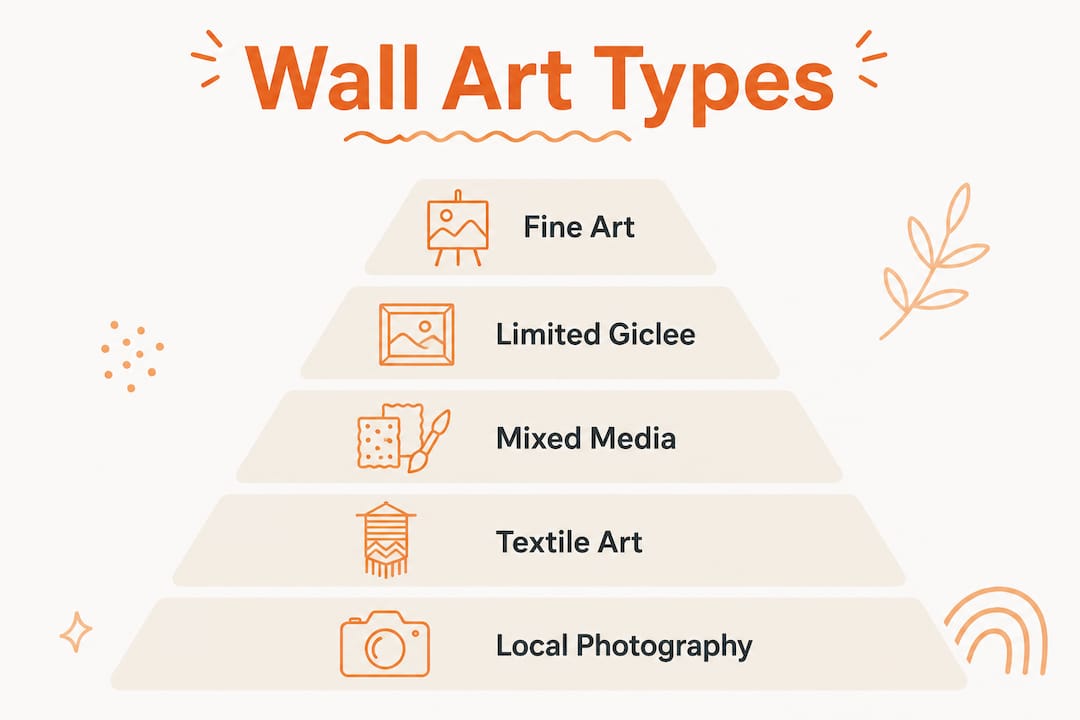
The types of artistic wall art available in New Zealand now extend well beyond the framed canvas. Consider these primary forms:
- Original paintings — Unique, often one-of-a-kind works that carry the hand and intention of the artist directly.
- Limited edition prints — Numbered reproductions of an original work, often giclee or screenprinted, combining accessibility with exclusivity.
- Photographic art — Fine art photography printed on archival media, frequently used in apartment wall art ideas for their clean, contemporary impact.
- Textile wall art — Woven, embroidered, or hand-tufted pieces that bring warmth, texture, and dimension to a flat wall.
- Sculptural wall pieces — Three-dimensional works in ceramic, metal, or resin that bring shape to a surface and catch light throughout the day.
- Mixed media works — Pieces that combine paint, collage, photography, and material to create layered, tactile surfaces.
Exploring unique wall art types beyond the traditional framed print is one of the fastest ways to elevate a room from pleasant to genuinely memorable. Sculptural wall pieces, in particular, are increasingly popular in New Zealand’s contemporary interiors because they introduce depth and shadow that flat work simply cannot achieve.
Pro Tip: When choosing art for an open-plan living space, look for styles and materials that work with the architecture and colour palette already present. Art that fights the room creates tension; art that speaks the room’s language creates cohesion, and then lifts it somewhere new.
How artistic wall art transforms your home’s atmosphere
The right piece of artistic wall art does not merely sit on a wall. It changes what a room feels like to be in. This is not a vague aesthetic claim. It is a functional reality that experienced designers rely on every time they style a space.
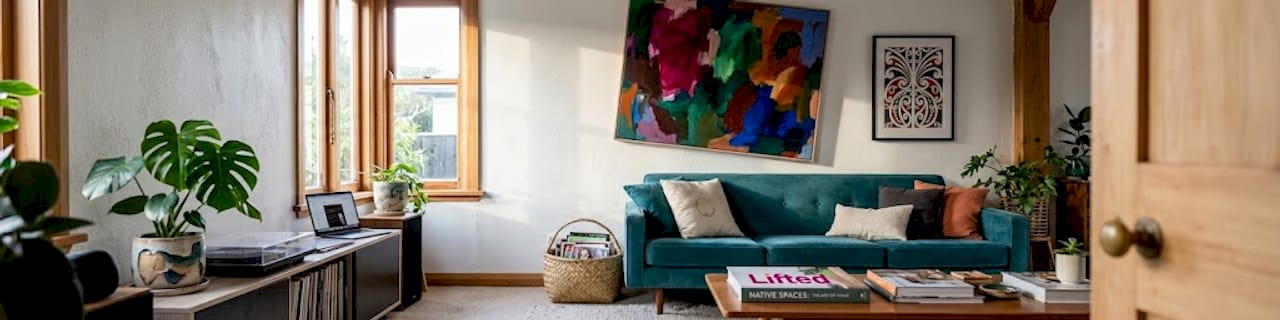
Colourful wall art works because colour itself has psychological weight. A painting in warm terracotta and ochre pulls the energy of a room inward, creating intimacy. A large abstract in cool sage and white opens a space, making it feel considered and calm. These effects are not accidental. They are the result of choosing art with the full room in mind, not just the blank wall.
Here is how well-chosen artistic wall art transforms a space:
- Anchors the room’s identity. A single strong piece gives a room a focal point, a place the eye returns to and the atmosphere organises around.
- Sets the emotional tone. A moody, textural piece creates depth. A joyful, graphic work brings lightness. Art shapes how you feel walking into a space before a single word is spoken.
- Acts as a conversation starter. Original and limited-edition art carries stories. It invites questions, shares values, and reveals something genuine about the people who chose it.
- Defines style without renovation. Changing your art is one of the most powerful and cost-effective ways to shift a room’s direction without touching furniture or paint.
- Supports local culture and sustainability. As NZ gallery experts note, sourcing from local New Zealand artists brings both personality and sustainability benefits, reducing import footprint while investing in the country’s creative economy.
“The pieces that really hold a room are the ones chosen from genuine feeling, not interior trend reports. They become part of the home’s story rather than its backdrop.”
Thoughtful wall art curation is what separates a beautiful room from an impressive one. The former feels good. The latter feels considered, layered, and alive.
How to select and style artistic wall art for modern NZ interiors
Knowing what artistic wall art is and why it matters is one thing. Knowing how to choose and place it with confidence is another. These steps take the guesswork out of the process.
- Identify your room’s current energy. Before searching for art, sit with the space. Is it warm or cool in light? Busy or still in its furnishings? The art you choose should extend or gently counterbalance the room’s existing character.
- Measure the available wall space. This step is almost universally skipped, and it is the source of most styling mistakes. Measure width and height of the space you are working with. For a single statement piece, it should fill roughly two-thirds of the wall’s width.
- Choose style and scale deliberately. Refer to the style table above. Then commit to a size that holds the room rather than disappears into it. A piece that is too small looks timid. Too large and it overwhelms. That two-thirds rule is your guide.
- Hang at true eye level. The industry standard is that the centre of a piece sits at approximately 145 to 150 centimetres from the floor. This positions art at average eye level and prevents the common mistake of hanging too high, which disconnects art from the room’s human scale.
- Layer with furniture and lighting. Place art in conversation with what sits in front of it. A console table beneath a large statement piece creates a natural vignette. Directional lighting, whether a picture light or a track spotlight, makes the artwork come alive after dark.
For statement wall art ideas in living rooms and dining spaces, consider pairing a single large work with a cluster of smaller complementary pieces at a different height nearby. This creates visual hierarchy without clutter.
Common pitfalls to avoid:
- Overwhelming the space with too many pieces. More is rarely more with artistic wall art. One strong work outperforms six average ones.
- Ignoring scale. A small print on a large wall reads as an afterthought. Scale your art to your wall, not your budget.
- Neglecting lighting. Even the most beautiful piece falls flat in poor light. Natural daytime light is rarely enough. Think about how the wall is lit in the evening.
Pro Tip: Before committing to placement, cut paper templates to the exact dimensions of your art and tape them to the wall. Live with them for a day or two. This single step prevents the most costly styling errors.
What most Kiwis get wrong about wall art—and how to get it right
Here is the honest truth: most Kiwi homeowners approach wall art last, choosing it to match their existing decor rather than to shape it. The result is interiors that feel assembled rather than considered. Safe. Polished. But not particularly alive.
The instinct to match is understandable. It feels less risky. You have an olive green sofa, so you find a print with olive tones, hang it, and call it done. But that approach keeps art in a supporting role rather than a leading one, and it is why so many beautifully furnished rooms still feel like something is missing.
The Kiwis whose homes genuinely inspire tend to make different choices. They start with the art. Or they choose a piece that creates productive tension rather than easy agreement with everything around it. A bold abstract in rust and charcoal on a wall of muted whites does not match. It holds. There is a difference, and once you see it, you cannot unsee it.
The fear of getting it wrong drives too many people toward generic choices. But as local gallery curators consistently note, the most resonant homes are those where the art reflects a real point of view. It does not have to be expensive. It does have to be chosen with intention.
Supporting New Zealand artists is part of this shift. Local work carries context that imported posters simply cannot. A print by a Wellington-based artist exploring the light quality of the South Island coastline brings something to a room that no algorithm-driven marketplace can recommend. It is specific. It is personal. It is genuinely yours.
Our editorial view is this: stop treating art as the room’s punctuation and start treating it as the sentence itself. Begin your next room with a piece of art you genuinely love, and let the rest of the space respond. That is how the strongest interiors are built. The artistic interior design tips that hold up over time always point back to this principle: invest in fewer, more meaningful pieces, and give them room to breathe.
Find and shop artistic wall art for your NZ home
If this guide has shifted how you see your walls, the most satisfying next step is finding art that genuinely moves you.

At Lifted+, we curate seasonal collections of artistic wall art selected for presence, quality, and their ability to hold a room. From limited-edition prints by New Zealand artists to sculptural wall pieces in richly grounded colour palettes, every work in our range is chosen with modern Kiwi interiors in mind. You can shop wall art across styles and formats, or explore our limited edition wall art range for numbered pieces that bring true exclusivity to your space. If you want to understand more deeply how art transforms your home at an atmospheric level, our editorial section takes you further into the conversation.
Frequently asked questions
What makes wall art ‘artistic’ compared to regular prints?
Artistic wall art is original, limited edition, or designed by artists to express a unique perspective. As NZ gallery experts advise, it is distinguished by its intentionality and quality, not its price point or format.
How do I choose the right size of wall art for my room?
Measure your wall and aim for art that fills about two-thirds to three-quarters of your available horizontal space. This proportion creates visual balance without overpowering or getting lost in the room.
Where can I find unique wall art from NZ artists?
Explore local galleries or platforms like PrintNZ for sustainable and limited-edition works by New Zealand artists. Lifted+ also curates locally inspired and locally sourced works through its seasonal collections.
Can wall art help make small rooms feel bigger?
Yes. Large-scale minimalist or abstract wall art can visually expand a space and add depth without adding physical clutter. Vertical works in particular draw the eye upward, making ceilings feel higher and rooms feel more generous.