

TL;DR:
- Creating a cohesive and inviting living room starts with proportional furniture, layered lighting, and intentional accessories. Proper layout, a balanced color scheme, and thoughtful grouping prevent clutter and enhance the room’s harmony. Prioritizing structural principles allows objects to breathe and transforms the space into a well-designed, personal sanctuary.
Your living room carries more design pressure than any other room in the house. It has to be welcoming, functional, personal, and cohesive, all at once. Most people either overthink it into paralysis or under-invest and end up with a space that just sits there. These living room styling tips cut through that. What interior designers call interior composition, and what most of us simply call “getting the room right”, comes down to a handful of repeatable principles. Get these right, and everything else clicks into place.
Table of Contents
- Key takeaways
- 1. Start with living room styling tips that build the right foundation
- 2. Anchor the room with the right sofa and furniture layout
- 3. Layer lighting to change how the whole room feels
- 4. Style accessories and decor with intention, not accumulation
- 5. Avoid the most common living room styling mistakes
- 6. Applying these principles to small living rooms
- A personal take on what actually changes a room
- Bring your living room to life with Liftedplus
- FAQ
Key takeaways
| Point | Details |
|---|---|
| Proportion before aesthetics | Choose furniture and rugs scaled to your room before focusing on colour or accessories. |
| Float your furniture | Pulling pieces away from walls creates natural conversation zones and makes rooms feel larger. |
| Layer your lighting | Combining ambient, task, and accent lighting transforms the feeling of a room after dark. |
| Follow the rule of three | Group accessories in odd numbers with varied heights and textures for a curated, natural look. |
| Edit relentlessly | Fewer, more considered pieces create far more presence than an abundance of unrelated objects. |
1. Start with living room styling tips that build the right foundation
Before you buy a single cushion or hang a piece of art, you need a framework. Interior composition is not about copying a mood board. It is about understanding a few governing principles that make a space feel resolved rather than random.
The most practical starting point is the 60/30/10 colour ratio: 60% dominant neutral (walls, large sofa), 30% supporting tone (curtains, armchairs, rug), 10% accent (cushions, vases, art). This proportion gives your living room visual balance without flattening it into monotony. Your dominant colour grounds the room; your accent colour gives it life.
Scale matters just as much as colour. A sofa that is too small for the room reads as afterthought furniture, and a coffee table that floats three feet from any seat breaks the room’s sense of cohesion. Every piece needs to feel proportional to its neighbours and to the room itself.
The rule of three applies to both groupings of objects and to spatial arrangement. Three distinct heights in a corner vignette, three textural layers on a sofa, three light sources across a room: odd numbers create visual rhythm without the stiffness of matched pairs.
Pro Tip: Measure your room and tape out furniture dimensions on the floor before purchasing anything. This single step saves more money and regret than any other planning habit.
2. Anchor the room with the right sofa and furniture layout
The sofa is the structural decision that everything else responds to. Get it wrong in terms of scale, fabric, or placement, and no amount of styling will rescue the room. Get it right, and the rest of the room almost arranges itself.
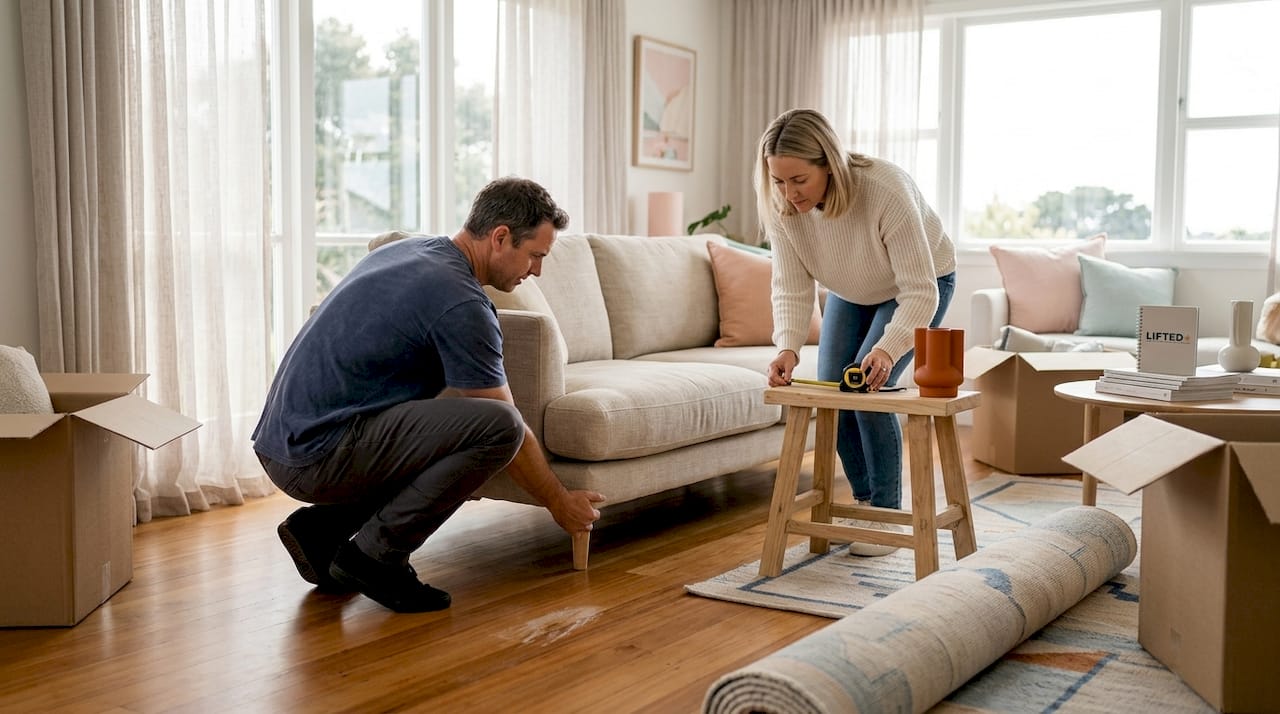
Choose a sofa whose length occupies roughly two-thirds of the wall it is placed against. This is a proportion that reads as intentional rather than arbitrary. For fabric, consider the room’s overall tone: linen and boucle read as relaxed and textural, velvet adds weight and presence, and performance fabrics are worth considering for households with children or pets.
Floating furniture away from walls is one of the most consistent differences between spaces that feel like a showroom and those that feel like a real, well-designed home. Pulling your sofa even 30 centimetres from the wall creates a defined seating zone, improves acoustic warmth, and makes the room feel larger rather than smaller.
Always maintain roughly 90 centimetres of walkway clearance around furniture groupings. This is the minimum for comfortable circulation and keeps the room from feeling cramped once occupied by more than one person.
| Furniture piece | Common sizing mistake | Better approach |
|---|---|---|
| Sofa | Too small for the wall length | Two-thirds of the wall for visual anchor |
| Coffee table | Too low or too far from the sofa | Same height as seat cushion; 40 cm clearance |
| Rug | Too small, sits under front legs only | 8×10 or 9×12 to anchor full seating area |
| Side tables | Mismatched heights with sofa arms | Level with or slightly below sofa arm height |
A rug should be large enough to sit under all major seating pieces, or at least under the front legs of every seat. Larger rugs anchor the seating and give the room its floor-level foundation. An undersized rug reads as an afterthought, no matter how well the rest of the room is styled.
3. Layer lighting to change how the whole room feels
If your living room only has overhead lighting, it will always look slightly institutional, no matter how good the furniture is. Layered lighting is, after furniture placement and colour, the single most impactful factor in creating a finished, inviting room.
Think in three layers. Ambient lighting provides the base level of illumination, typically through ceiling fixtures or recessed lights. Task lighting serves specific activities: a reading lamp beside an armchair, a pendant over a work surface. Accent lighting draws attention to architectural features or objects you want to highlight, a painting, a sculptural shelf arrangement, a textured wall.
Warm LEDs in the 2700K to 3000K range give a living room its glow. Paired with dimmers, they let you shift the room’s atmosphere from bright and functional in the afternoon to low and enveloping by evening. A well-chosen statement floor lamp does more than illuminate. It holds the corner of the room, gives the eye somewhere to travel, and brings shape to the air around it.
Pro Tip: Evaluate your lighting setup after 6 PM with the overhead lights off. If the room feels flat or uninviting, you need at least one more warm light source at low level. A room lit only by overhead fixtures will always read as unfinished.
Liftedplus has a considered guide on choosing statement lighting that goes deeper into silhouette, scale, and light quality for living spaces.
4. Style accessories and decor with intention, not accumulation
Accessories are where most living rooms go wrong. Not because people choose badly, but because they accumulate without editing. The result is a room that feels busy but not considered, full but not purposeful.
The principle of curated vignettes is what separates a styled room from a crowded one. A vignette is a small, intentional grouping of objects with a clear hierarchy: one dominant piece, one supporting piece, one detail. Varied heights, two to three textures, a moment of colour. This structure gives the eye a place to land and a reason to stay.
Group decor objects in odd numbers, particularly threes. A trio of vases in varying heights, a stack of books beside a sculptural object and a small plant. The odd number creates relaxed visual tension rather than the symmetry of a matched pair. It avoids the “hotel lobby” quality that over-matched arrangements produce.
Textiles are your fastest texture layering tool. Mix a linen cushion with a boucle throw and a velvet pillow. Plants and throw cushions remain two of the most effective, lowest-effort ways to add life and warmth to a room. A single indoor plant in a room with neutral tones does more visual work than three decorative objects of equivalent scale.
For wall art, position the centre of the piece at eye level, roughly 145 to 150 centimetres from the floor. When hanging art above a sofa, the bottom edge should sit 15 to 20 centimetres above the sofa back. Lower than this and the art reads as separate from the room; higher and it floats without connection. Liftedplus covers this in depth in their guide on large-scale wall art that holds a lounge.
5. Avoid the most common living room styling mistakes
Most styling problems trace back to four repeatable errors. Identifying them is the faster path to a better room.
Pushing all furniture against the walls is the most common. It creates a perimeter of seated pieces around an empty void, and floating furniture defines space more effectively by creating intimate zones rather than emphasising boundaries. The room feels more connected when furniture is grouped inward.
Using an undersized rug is the second. A rug whose edges stop before reaching the furniture legs does not anchor the seating area. It creates a disconnected island effect where the furniture appears to float above the floor rather than relate to it.
Over-collecting small furniture pieces rather than committing to fewer, larger ones is the third. Well-scaled foundation pieces create visual weight and prevent a room from feeling sparse or scattered. Replacing three small side tables with one confident occasional table changes the energy of a corner entirely.
The fourth is over-cluttering accessories. Styling should feel intentional, not autobiographical. Remove half of what is on your shelves and coffee table and live with the edit for a week. What you miss going back is worth keeping. What you do not notice being gone was probably diluting the impact of everything around it. Mixing non-matching pieces with varied textures and styles, rather than buying matching furniture sets, yields a far more interesting and layered result.
6. Applying these principles to small living rooms
The instinct in a small living room is to scale down everything. This is, in most cases, the wrong move. The same principles of proportion apply; the decisions just need to be more precise.
One large sofa will almost always read better than a sofa and a loveseat competing for the same wall. One large rug reads better than a small one surrounded by floor. Vertical art and tall shelving pull the eye upward and make ceiling height feel generous. Keep the colour palette for a smaller room cohesive and let your accent work harder, not broader.
Mirrors used as focal points rather than as fillers are genuinely useful in small rooms. They are not a design cliché if they are scaled well and positioned to reflect something worth reflecting, a lamp, a window, a piece of art.
A personal take on what actually changes a room
What I have come to believe, after thinking about and working with these principles across many different spaces, is that most people are solving the wrong problem. They are trying to find the perfect piece rather than establishing the right conditions.
Get the layout right, get the lighting layered, commit to your colour structure, and then the accessories almost find their own place. The rooms that feel genuinely good are not the ones with the most interesting objects. They are the ones where the structure is so sound that every object has room to breathe and a reason to be there.
The other thing I would say is: do not copy a mood board wholesale. Use references to understand a principle, not to replicate a result. Your room has its own proportions, its own light quality, its own character. The job of these styling principles is to help you work with that, not to impose someone else’s vision over it.
Lighting, in particular, is the element most people leave until last and treat as functional rather than expressive. Give it the same design intention you give your furniture, and the room will reward you every evening.
— Michelle
Bring your living room to life with Liftedplus
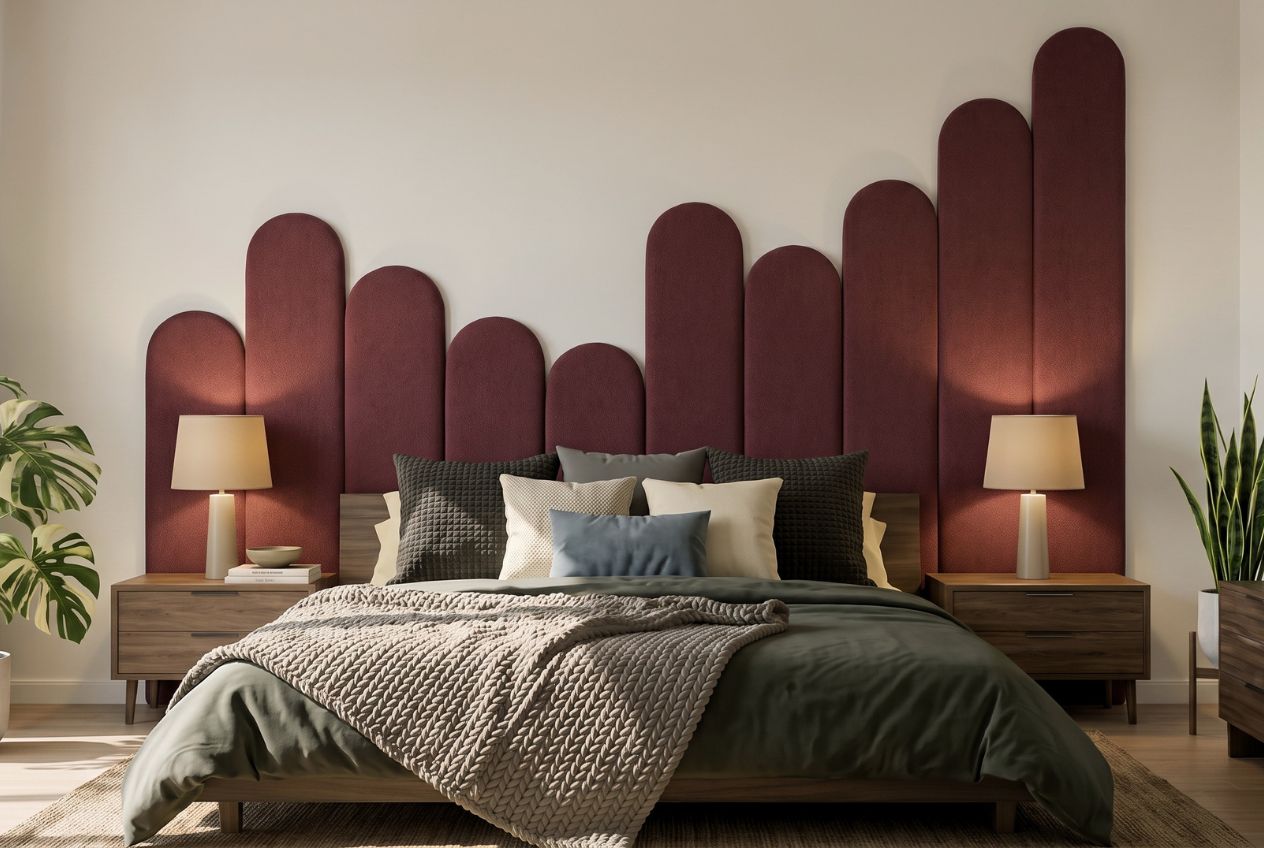
If you have worked through these principles and feel ready to move from concept to something tangible, Liftedplus curates a considered range of statement decor and lighting that does exactly what good accessories should: hold the room, carry the colour, and make the space feel finished rather than in progress. For renters or those working with restrictions, their guide on renter-friendly decor ideas offers practical solutions that do not compromise on presence or quality. And if you are still working through your colour direction, the Liftedplus Mood Library is a genuinely useful place to start.
FAQ
What is the most important living room styling tip?
Furniture layout and scale are the foundation of any well-styled living room. Getting proportions right before addressing accessories or colour makes every subsequent decision easier.
How do I make a small living room look bigger?
Float furniture away from walls, choose a large rug that anchors the seating area, and keep the colour palette cohesive. Fewer, larger pieces read better than many small ones.
What size rug should I use in a living room?
An 8×10 or 9×12 rug is recommended for most living rooms, sized to sit under all seating pieces or at minimum under their front legs, creating a unified floor plane.
How should I layer lighting in a living room?
Combine ambient ceiling light with task lamps and at least one accent source. Use warm LEDs and dimmers to shift the room’s atmosphere between day and evening use.
How do I style accessories without making the room look cluttered?
Group objects in odd numbers with varied heights and textures, and edit regularly. Intentional layered groupings with clear visual hierarchy create a curated feel rather than a cluttered one.