
TL;DR:
- Modern adhesive strips are reliable for damage-free wall decor when applied correctly and cured for one hour.
- Layering removable wallpaper, fabric panels, and leaning art enables stylish rental decorating without wall damage.
Renter-friendly wall decor is defined as any decorative treatment that can be applied and removed without leaving holes, paint damage, or adhesive residue on rental walls. The good news is that modern adhesive technology and temporary design techniques have made this far easier than most renters realise. Adhesive picture-hanging strips now hold up to 7.2 kg when applied correctly, which covers the vast majority of framed art. Combine that with removable wallpaper, fabric panels, and leaning art, and you have a full toolkit for wall decor ideas for renters without damage that looks anything but temporary.
What are the most reliable damage-free hanging methods?
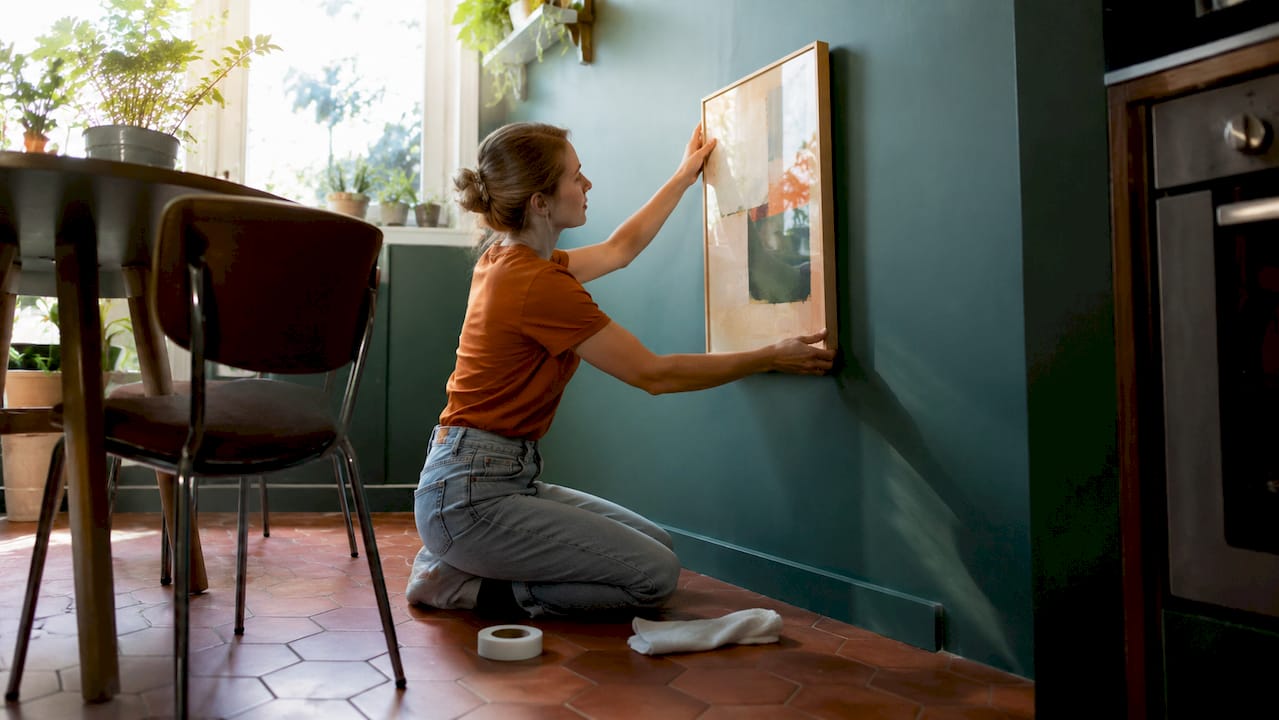
Modern adhesive strips are the foundation of lease-compliant decor. Applied with 30 seconds of firm pressure and left to cure for one hour before any weight is added, they hold up to 7.2 kg per set. That capacity covers most lightweight frames, small mirrors, and decorative objects with ease.
Surface preparation is the step most renters skip, and it is the most common reason adhesives fail. Cleaning with isopropyl alcohol before application removes dust and grease that would otherwise break the bond. A clean, smooth, painted surface gives you the best possible result.
Beyond adhesive strips, renters have several reliable options for non-damaging wall accents.
Removable adhesive hooks carry small to medium items like trailing plants, lightweight mirrors, and woven wall hangings. Tension rods fit inside window recesses or between two walls to suspend fabric panels, curtains, or hanging art without a single fixing. Adhesive-backed picture ledges sit flush against the wall and let you lean and layer frames at any height, which makes rearranging effortless.
Weight and wall type both matter. Frames under 2 kg work best with adhesive products. Anything heavier calls for a leaning or shelf-based solution. Textured walls or brick surfaces often reject adhesives entirely, so tension rods and floor-leaning arrangements are the right call on those surfaces.
Pro Tip: Press each adhesive strip firmly for the full 30 seconds and resist the urge to hang anything for at least an hour. That curing window is what separates a strip that holds for months from one that fails overnight.
How to plan a gallery wall without nails or drills
A gallery wall without nails is entirely achievable when you plan the layout before anything touches the wall. Lay every frame on the floor in the arrangement you want, then photograph it. That image becomes your reference when you transfer the layout upward.
Consistent spacing of 40–50 mm between frames gives a gallery wall its polished, curated quality. Irregular gaps make even beautiful art look accidental. Use a ruler or a folded piece of card as a spacer to keep the gaps even across the whole arrangement.
Frame weight is the other critical variable. Pieces under 2 kg are compatible with adhesive strips. For anything heavier, picture ledges or leaning arrangements are the right solution. Mixing hung and leaned pieces within a single display adds depth and visual interest.
Here is a practical sequence for executing a damage-free gallery wall.
- Curate your pieces and weigh each frame before you begin.
- Lay the full arrangement on the floor and photograph it from above.
- Clean each wall section with isopropyl alcohol and allow it to dry completely.
- Apply adhesive strips to frames, press firmly for 30 seconds, and allow one hour to cure.
- Transfer the layout to the wall using your photograph as a guide, maintaining 40–50 mm gaps.
- For heavier pieces, install a picture ledge with adhesive-backed brackets and lean the art against the wall.
| Method | Best for | Weight limit |
|---|---|---|
| Adhesive strips | Frames, small mirrors | Up to 7.2 kg per set |
| Picture ledges | Heavier frames, layered art | Depends on ledge length |
| Leaning art | Large canvases, statement pieces | No limit |
| Tension rods | Fabric panels, hanging textiles | Light to medium |
Pro Tip: Cut paper templates the same size as each frame and use painter’s tape to mock up the arrangement on the wall before committing. It costs nothing and saves a lot of repositioning.
What are effective temporary wall decor ideas beyond hanging art?
Removable wall art is only one part of the picture. Fabric panels, peel-and-stick wallpaper, decals, and hanging plants all add visual weight and personality to a rental wall without causing any damage.
Fabric panels work particularly well in open-plan apartments where walls feel bare and acoustics feel harsh. Panels sized at least 600 x 900 mm, positioned 50–100 mm from corners, absorb sound and add a layer of texture that paint alone cannot achieve. Hang them from tension rods or adhesive hooks, and they come down in minutes when you move out.
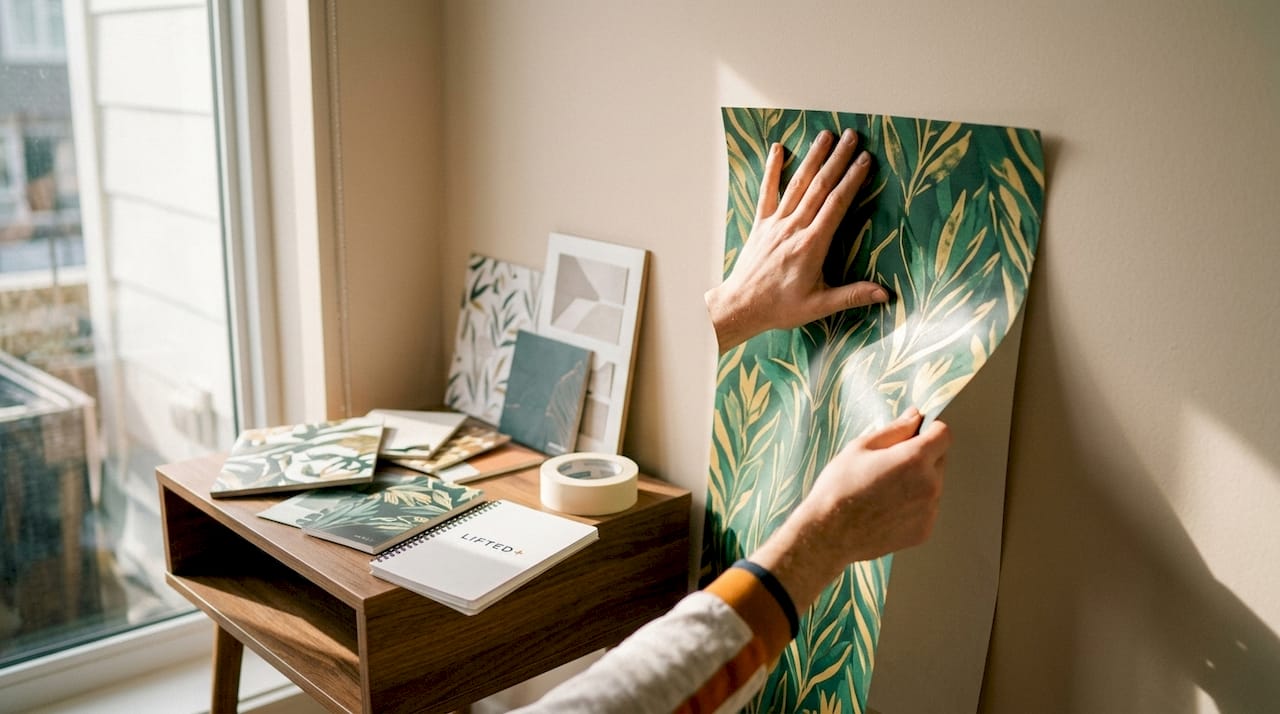
Peel-and-stick removable wallpaper has matured significantly as a product category. Modern versions apply cleanly to smooth painted walls, hold their position for years, and peel away without lifting paint when removed correctly. A single feature wall in a bold print or a subtle texture reads as a deliberate design choice, not a temporary fix.
Removable decals offer a lower-commitment version of the same idea. A large botanical print or a geometric pattern applied to one wall creates a focal point that costs far less than a full wallpaper installation. Decals also work well above a bed or behind a shelving unit where the effect is concentrated and intentional.
Hanging plants in lightweight ceramic or woven planters add a living dimension to wall decor for apartments. A single removable hook near a window supports a trailing pothos or a small fern, and the organic form softens the hard lines of a rental interior in a way that framed art alone cannot.
How to prepare, maintain, and safely remove damage-free wall decor
Correct preparation and removal are what protect your security deposit. Most adhesive failures and paint damage incidents come down to skipping one of these steps.
Follow this sequence every time you hang something with adhesive.
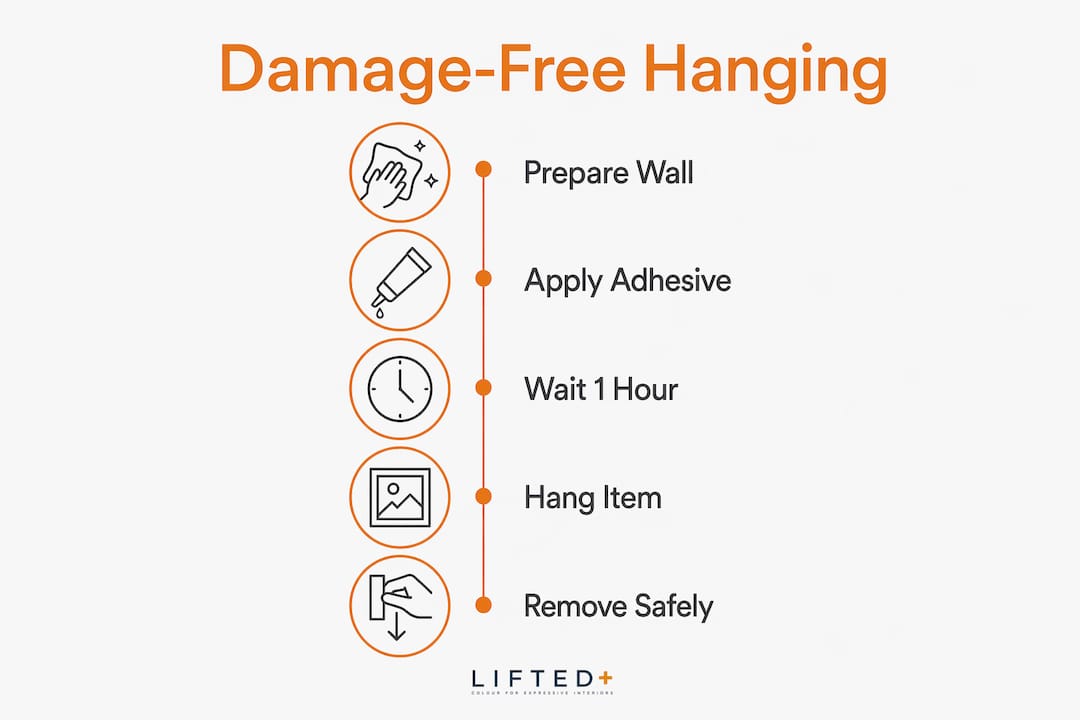
- Wipe the wall surface with isopropyl alcohol on a clean cloth and allow it to dry fully. This removes invisible grease and dust that would undermine adhesion.
- Apply the adhesive strip to the back of the frame or hook, press firmly, and wait 30 seconds.
- Press the frame against the wall and hold for another 30 seconds.
- Leave the item hanging without any additional weight for one full hour before adding anything to it.
- Check the bond after 24 hours by gently pressing the frame edges. Any movement signals the surface is not compatible with adhesive products.
Removal requires the same care as application. Pulling adhesive strips straight off the wall is the single most common cause of paint damage in rentals. The correct technique is to pull the tab slowly downward, parallel to the wall surface, stretching it rather than yanking it. If the adhesive resists, a hairdryer on a low heat setting softens the bond without damaging the paint beneath.
Treat every removal like the last thing standing between you and your full deposit. Slow, parallel, and patient is the only approach that works consistently.
Textured or non-porous surfaces such as brick, tile, or heavily embossed wallpaper are not suitable for standard adhesive strips. Test any adhesive product on an inconspicuous section first and check after 24 hours before committing to a full display.
Pro Tip: Keep a small bottle of isopropyl alcohol and a pack of spare adhesive strips in a drawer. Reapplying a strip after a seasonal decor change takes two minutes and keeps the bond fresh.
How to layer renter-friendly elements for a cohesive look
Layering multiple removable solutions is what separates a rental that feels considered from one that feels sparse. A single piece of removable wall art on an otherwise bare wall reads as an afterthought. The same piece anchored by a fabric panel, a picture ledge below it, and a pendant light beside it reads as a room with intention.
Start with the largest element in the focal area of the room. A renter-friendly art wall or a removable wallpaper feature panel establishes the visual anchor. Build outward from there with smaller pieces, textiles, and lighting that share a colour story or a material language.
Leaning art is not a compromise. Interior stylists treat it as a deliberate choice that adds informality and allows effortless seasonal rotation. A large canvas leaned against a wall beside a picture ledge holding smaller frames creates a layered, gallery-like effect without a single nail.
Seasonal rotation is one of the real advantages of damage-free decorating. Swap a warm-toned textile for a cooler one in summer, replace a botanical print with something more graphic, or shift a pendant light to a different corner. The whole character of a space can shift without touching the lease.
Pro Tip: Avoid the instinct to under-decorate out of caution. Fear of deposit loss often leads to sterile spaces. Master the preparation and removal steps once, and you will decorate with confidence.
Key takeaways
Damage-free wall decorating works when you combine correct adhesive technique, surface preparation with isopropyl alcohol, and a layered approach that mixes hanging, leaning, and textile elements.
| Point | Details |
|---|---|
| Adhesive capacity | Modern strips hold up to 7.2 kg when applied with 30 seconds of pressure and one hour of curing time. |
| Surface preparation | Clean walls with isopropyl alcohol before applying any adhesive product to prevent bond failure. |
| Gallery wall spacing | Maintain 40–50 mm gaps between frames for a professional, curated appearance. |
| Safe removal | Pull adhesive tabs slowly and parallel to the wall; use a hairdryer on low heat if the adhesive resists. |
| Layering for impact | Combine removable wallpaper, fabric panels, leaning art, and lighting to avoid the sterile look of under-decoration. |
What I have learned from decorating rentals the hard way
The first time I used adhesive strips without cleaning the wall first, I lost two frames and a small mirror to the floor within 48 hours. The strips looked fine going on. The surface was not. That single experience taught me more about surface preparation than any product instruction sheet ever did.
The mindset shift that changed everything for me was treating leaning art as a style choice rather than a fallback. Once I stopped seeing it as a compromise, I started using it deliberately. A large canvas leaned against a wall beside a picture ledge creates a layered, gallery-like quality that feels more relaxed and considered than a rigid hung arrangement.
The other thing I would tell any renter is this: the curing hour matters more than you think. It feels unnecessary when you are mid-decorating and impatient to see the result. Skip it and you will be rehanging the same piece the next morning. Respect the process and the result holds.
Rental decorating done well is not about working around limitations. It is about understanding how decor shapes a space and using every reversible tool available to make that space genuinely yours.
— Michelle
Liftedplus and the art of renter-friendly styling
Liftedplus curates wall art, lighting, and decorative objects designed to bring presence and colour to modern New Zealand interiors. Every piece in the collection is selected with form and impact in mind, which makes them well suited to the layered, damage-free approach described throughout this article.

Lightweight framed art from the Liftedplus range pairs directly with adhesive hanging systems, and the limited-edition wall art collection includes pieces sized for both gallery walls and single-statement displays. For renters ready to go further, the renter-friendly decor ideas guide on the Liftedplus site brings together product recommendations and styling advice in one place.
FAQ
What adhesive strips work best for rental walls?
Modern adhesive picture-hanging strips that specify a weight rating of at least 7.2 kg per set are the most reliable option. Apply them to a clean, smooth, painted surface and allow one hour of curing time before hanging anything.
Can removable wallpaper damage rental walls?
Peel-and-stick removable wallpaper is designed to come away cleanly from smooth painted surfaces. Remove it slowly at a low angle and it leaves no residue, though textured or older painted walls carry a higher risk of paint lifting.
How do I hang a gallery wall without nails?
Plan the layout on the floor first, then transfer it to the wall using adhesive strips on frames under 2 kg and picture ledges for heavier pieces. Maintain 40–50 mm spacing between frames for a polished result.
What should I do if adhesive strips won’t stick to my walls?
Textured, brick, or non-porous surfaces often reject standard adhesive products. Use tension rods, picture ledges with adhesive-backed brackets, or floor-leaning arrangements as alternatives on these surfaces.
How do I remove adhesive strips without damaging paint?
Pull the tab slowly downward, parallel to the wall surface, stretching it rather than pulling it away from the wall. If it resists, apply gentle heat from a hairdryer on a low setting to soften the adhesive before continuing.