

TL;DR:
- Interior styling enhances homes with texture, color, and personal objects without structural changes.
- Successful styling relies on principles like balance, proportion, contrast, and the 60-30-10 color rule.
- Breaking traditional rules often results in authentic, warm Kiwi interiors that reflect personal personality.
Interior styling is not reserved for magazine shoots or homes with unlimited budgets. It is something every New Zealand homeowner can use to shift a space from flat and forgettable to alive with personality and colour. The misconception that styling requires structural changes or a complete renovation holds a lot of people back from making meaningful improvements. In reality, styling works with what you already have, layering in texture, light, and carefully chosen objects to create rooms that feel intentional and expressive. This guide walks you through the principles, real-world applications, and practical steps to bring genuine vibrancy into your home.
Table of Contents
- What is interior styling and how does it differ from interior design?
- Core principles and methodologies for successful interior styling
- Styling for real homes: Small spaces, personality, and flexible solutions
- Practical styling action steps for vibrant, modern NZ interiors
- Why real-life NZ styling breaks the rules (and why that’s a good thing)
- Discover your next step: Personalise and elevate your space with Lifted+
- Frequently asked questions
Key Takeaways
| Point | Details |
|---|---|
| Styling vs. design | Styling brings vibrancy and personality after structure, making spaces feel lived-in and artistic. |
| Principles drive results | Core rules like balance, harmony, and layering colours/textures create visually appealing interiors. |
| Flexible for real homes | NZ homes benefit from practical styling—adaptable, clutter-friendly, and suitable for small spaces. |
| Actionable steps | Simple frameworks and checklists guide anyone to transform their decor with confidence. |
| Lifted+ enables creativity | Expert products and mood boards from Lifted+ help realise vibrant, modern styling solutions. |
What is interior styling and how does it differ from interior design?
Let’s start by clarifying what interior styling actually means, and how it’s distinct from interior design.
Interior styling is often confused with interior design, but the two disciplines sit at very different ends of the process. Interior design deals with spatial planning, architecture, structural changes, and the technical bones of a room. Styling, by contrast, is what happens after the structure is in place. It is the aesthetic arrangement of furniture, decor, accessories, textiles, and lighting to create cohesive, personalised, and visually appealing spaces. It focuses entirely on the decorative layer rather than anything structural.
For New Zealand homeowners, this distinction matters enormously. You do not need to knock down walls or hire a builder to transform how your home feels. Styling gives you the tools to refresh a living room, bedroom, or kitchen with considered choices that reflect who you are.
Here is a quick comparison to make the difference clear:
| Aspect | Interior design | Interior styling |
|---|---|---|
| Scope | Structural and spatial | Decorative and aesthetic |
| Who does it | Licensed designers | Stylists or homeowners |
| Cost | High (renovations) | Flexible (any budget) |
| Timeline | Months | Days to weeks |
| Changes | Permanent | Easily updated |
The four core elements of styling are furniture arrangement, textiles (cushions, rugs, curtains), decorative objects, and lighting. When these work together, they create a room that has presence and energy. When they are chosen without intention, a space can feel disconnected, no matter how expensive the individual pieces are.
Styling is post-structure polish for vibrancy, the layer that turns a functional room into a space with genuine character. For modern Kiwi homes, where open-plan living is common and spaces often serve multiple purposes, this kind of artistic layering is particularly powerful. You can explore layering decor objects to understand how this works in practice, or refer to our modern design guide for broader context. If you are interested in how structural elements like bespoke interior joinery can complement your styling efforts, that is worth exploring as a longer-term investment.
“Styling is not about perfection. It is about creating a space that feels like you, layered with intention and warmth.”
Core principles and methodologies for successful interior styling
With a clear understanding of interior styling, let’s dive into the proven principles and practical rules that drive stylish, vibrant rooms.
Every well-styled room is built on a handful of foundational principles. Balance, proportion, harmony, repetition, and contrast are not just design jargon. They are the invisible architecture that makes a room feel right even when you cannot immediately explain why.
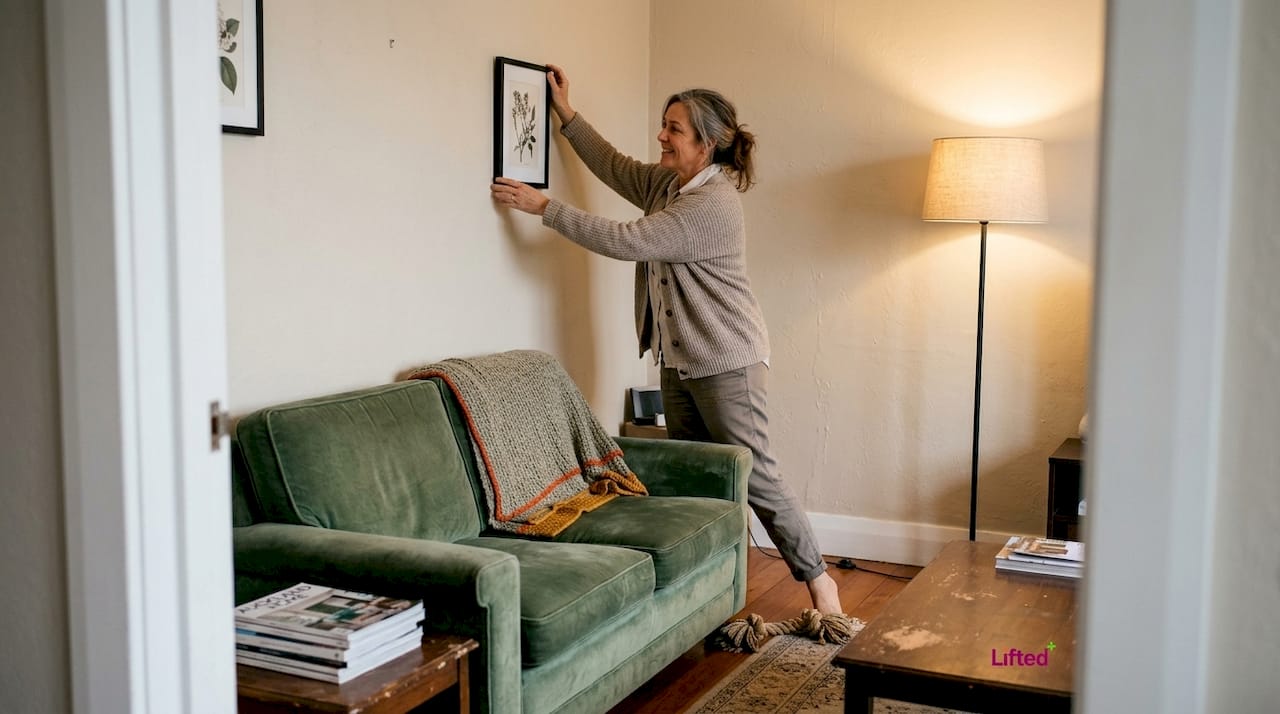
Key methodologies include balance (both symmetrical and asymmetrical), proportion and scale, rhythm through repetition, contrast, harmony, layering textures and colours, the 60-30-10 colour rule, and the rule of three for groupings. These frameworks give you a reliable starting point without locking you into rigid outcomes.
The 60-30-10 colour rule is one of the most useful tools in a stylist’s kit. Sixty per cent of the room takes a dominant colour (usually walls or large furniture), thirty per cent is a secondary colour (textiles, smaller furniture), and ten per cent is your accent (cushions, art, a single bold lamp). It creates visual hierarchy without chaos.
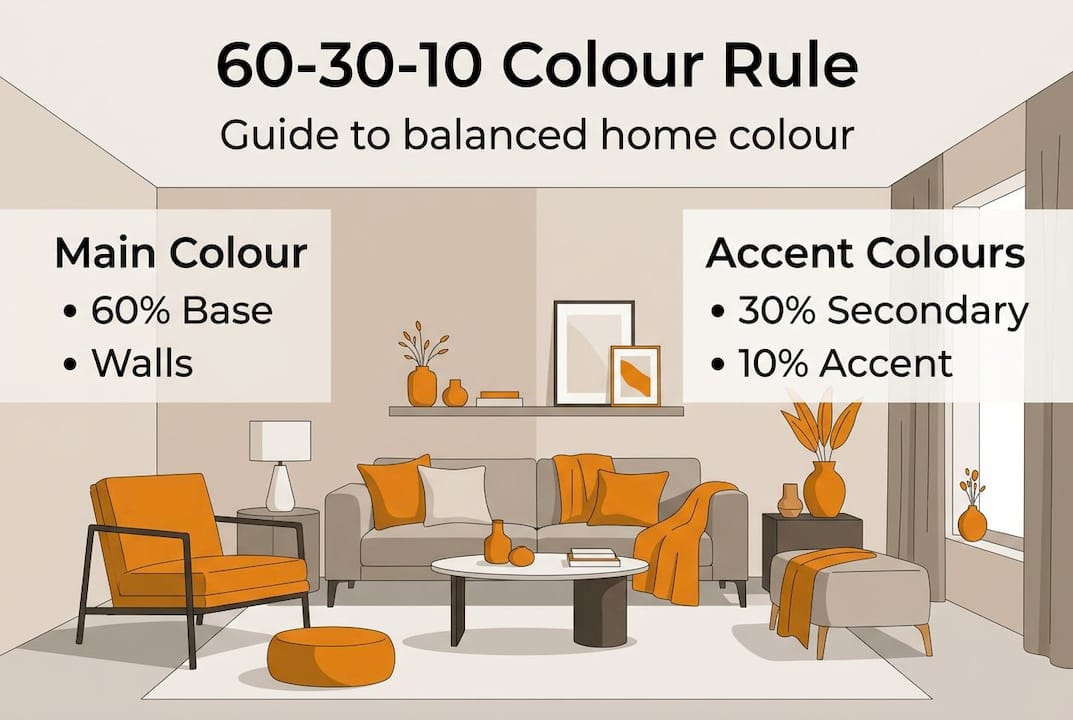
Here is a practical breakdown of the most effective styling frameworks:
| Framework | What it does | Best used for |
|---|---|---|
| 60-30-10 colour rule | Creates colour hierarchy | Whole-room colour planning |
| Rule of three | Odd groupings feel natural | Shelf and surface styling |
| Layering | Adds depth and texture | Any surface or corner |
| 80/20 budget rule | Focuses spend wisely | Purchasing decisions |
To start styling your space with confidence, follow these steps:
- Declutter first. Negative space is not emptiness. It is breathing room that lets your best pieces speak.
- Identify your anchor pieces, the sofa, the rug, the bed. These set the tone for everything else.
- Apply the 60-30-10 rule to your colour choices before buying anything new.
- Layer lighting across three levels: ambient (overhead), task (functional), and accent (decorative). Read more about layering lighting at home for a deeper look at this.
- Group objects in odd numbers and vary their heights for visual rhythm.
- Edit ruthlessly. If something does not contribute to the room’s story, remove it.
Pro Tip: Follow the 80/20 budget rule by spending eighty per cent of your budget on anchor pieces like your sofa and rug, and reserving twenty per cent for accents. This prevents the common mistake of spending equally across everything and ending up with a room that lacks a clear focal point. For practical shelf arrangements, our guide on styling shelves is a great companion resource. You can also find inspiration for incorporating textiles by looking at how decorating with linens can add warmth and softness to any room.
Common mistakes to avoid include pushing all furniture against the walls (which flattens a room), relying solely on overhead lighting (which creates a flat, uninspiring atmosphere), and ignoring scale. A tiny rug under a large sofa, for example, makes the whole arrangement feel unanchored.
Styling for real homes: Small spaces, personality, and flexible solutions
Now let’s look at how styling really works in everyday New Zealand homes, from tiny apartments to lived-in family spaces.
Not every New Zealand home is a generous open-plan space with high ceilings and natural light pouring in from every angle. Many of us are working with compact apartments, older villas with awkward proportions, or family homes where function has to come before form. The good news is that styling adapts beautifully to all of these situations.
In smaller spaces, the key is flexible and multi-purpose styling. Furniture that doubles as storage, mirrors that expand visual depth, and a restrained but intentional colour palette all help a compact room feel considered rather than cramped. Colourful apartment ideas can show you how to introduce vibrancy without overwhelming a smaller footprint.
Staged homes in NZ sell for up to 10% more and move approximately fifty per cent faster than unstaged properties. This is a compelling argument for treating your home’s styling as an investment, not just a personal indulgence. Whether you are preparing to sell or simply want to enjoy your space more fully, the principles are the same.
Real homes also carry the evidence of real life, and that is not a problem to solve. Clutter that tells a story, children’s artwork on the fridge, a well-worn reading chair, these things give a home its soul. The goal of styling is not to erase personality but to frame it. You want your home to feel curated, not sterile.
Pro Tip: In multi-purpose spaces, use rugs and lighting to define distinct zones rather than relying on walls or permanent partitions. A pendant light over a dining table and a floor lamp beside a reading chair can signal two entirely different functions within the same open room, without a single structural change.
For family homes, consider these practical approaches:
Choose textiles that are both beautiful and durable. Style shelves with a mix of meaningful objects and practical storage. Use shelf styling tips to keep surfaces looking intentional even when life gets busy. Embrace the idea that your home is a living document of who you are, and style it accordingly.
Practical styling action steps for vibrant, modern NZ interiors
Having explored principles and real-world adaptation, it’s time for hands-on strategies you can use to transform your own space.
Knowing the theory is one thing. Actually picking up an object, placing it, stepping back, and deciding whether it works is another. Here is a practical checklist to guide your next styling session.
- Start with the room’s dominant colour and build your palette outward using the 60-30-10 framework.
- Introduce at least three different textures. Think a smooth ceramic vase, a woven cushion, and a raw timber tray on the same surface.
- Layer your lighting. Ambient light sets the mood, task light serves function, and accent light creates drama. Explore sculptural lighting tips to find pieces that do more than illuminate.
- Create a focal point in every room. A statement artwork, a bold lamp, or a beautifully arranged shelf can anchor the entire space.
- Edit for negative space. Remove at least one item from every surface after styling. What remains will feel more deliberate.
- Repeat a colour or material across the room in at least three places to create visual flow and rhythm.
Personalisation is where styling moves from competent to genuinely memorable. Art that you have collected, objects from travels, family photographs styled with intention rather than simply stuck on a wall, these are the details that make a home irreplaceable. Layering lighting, mixing textures, and repeating elements for flow while prioritising personal items over perfection is what separates a styled room from a showroom.
For open-plan spaces, which are common in modern New Zealand homes, lighting becomes even more critical. A single overhead fitting rarely does the work that a room needs. Read our guide on statement lighting for open plan spaces to understand how to use light as a structural styling tool.
“Prioritise personality over perfection. The most beautiful homes are the ones that feel lived in, loved, and genuinely yours.”
Why real-life NZ styling breaks the rules (and why that’s a good thing)
Let’s wrap up by looking at why breaking interior rules leads to more authentic homes.
The interior styling world has a tendency to present a single vision of what a beautiful home looks like. Clean lines, neutral palettes, carefully curated objects arranged with mathematical precision. And while those spaces photograph beautifully, they do not always reflect how people actually live.
New Zealand homes thrive on a different kind of energy. There is a directness and warmth to Kiwi interiors that resists the overly polished. The tension between strict rules and flexible real-life adaptation, between minimalism and maximalism, between perfection and lived-in personality, is exactly where the most interesting homes are found.
We believe the best styling advice is to learn the rules thoroughly, then apply them with confidence and a willingness to deviate. The 60-30-10 rule is a guide, not a law. The rule of three is a starting point, not a ceiling. If your home feels more alive with four objects on a shelf than three, trust that instinct. Our guide on colourful minimalism advice explores how you can hold both restraint and vibrancy at the same time, which is perhaps the most honest description of great New Zealand styling.
Authentic homes are not built by following a checklist. They are built by people who pay attention to what they love and have the courage to put it on display.
Discover your next step: Personalise and elevate your space with Lifted+
Ready to transform your NZ home? Here’s how Lifted+ can help bring your styling vision to life.
The principles in this guide are only as powerful as the pieces you choose to bring them to life. At Lifted+, we curate vibrant, colour-led furniture, lighting, and wall art designed specifically for modern New Zealand interiors. Every piece is selected for its form, presence, and ability to hold a room with confidence.

Start by exploring how to personalise your decor with intention, then visit our mood board inspiration to find colour directions and styling combinations that resonate with your space. When you are ready to shop, our colourful furniture collection brings together statement pieces that anchor a room and elevate everything around them. Your home deserves more than safe choices.
Frequently asked questions
What is the main goal of interior styling?
The main goal is to create cohesive, personalised spaces using furniture, decor, textiles, and lighting without requiring any structural renovations. It is about making a room feel intentional and expressive.
Does interior styling require a big budget?
No. The 80/20 budget rule means you invest eighty per cent in anchor pieces and use the remaining twenty per cent on accents, making great styling achievable at almost any price point.
What are the must-have elements for artistic, vibrant styling in NZ homes?
Layered textures, bold colours, personal mementos, flexible layouts, and layered ambient and accent lighting are the essential ingredients for vibrant, characterful Kiwi interiors.
Can interior styling help sell my home faster?
Absolutely. Staged NZ homes sell 50% faster and can achieve up to ten per cent higher sale prices, making styling one of the most financially rewarding investments a homeowner can make before listing.
Recommended
- Modern Interior Design: A Guide To Timeless, Vibrant Homes
- Mood Lighting For Vibrant New Zealand Homes: 2026 Guide
- Apartment Living With Colour In NZ | Design For Small Homes
- Transform Your Space: The Role Of Colour In Interior Design
- Stylish blinds: boost energy savings & home style
- 7 Modern Carpet Design Trends 2025 Homeowners Should Know – Yarra Valley Carpet Cleaning