
TL;DR:
- Wall art significantly reduces stress and promotes emotional well-being through physiological effects. Original artworks have a stronger impact than prints, engaging viewers more deeply. Incorporating vibrant, locally inspired art enhances room vitality and personal expression.
Wall art is rarely treated as essential. It tends to arrive last, placed once the furniture is settled and the paint is dry, as if it were an afterthought rather than an anchor. But the evidence tells a very different story. Viewing original art measurably reduces cortisol levels and produces anti-inflammatory responses in the body, effects that reprints simply do not replicate. For New Zealand homeowners and design enthusiasts seeking to build interiors that feel genuinely alive, wall art is not a finishing touch. It is, in many ways, the beginning.
Table of Contents
- How wall art influences mood and wellbeing
- Choosing wall art that reflects your style and culture
- The practical impact: Wall art as a design anchor
- Practical steps: Curating and displaying art for maximum effect
- Why vibrant wall art is the missing link in NZ interiors
- Explore statement wall art and transform your space
- Frequently asked questions
Key Takeaways
| Point | Details |
|---|---|
| Wall art improves wellbeing | Original wall art reduces stress and enhances mood, according to scientific studies. |
| Reflects personal and cultural style | Combining local motifs with global trends creates vibrant, authentic NZ interiors. |
| Anchors and energises interiors | Strategically placed wall art defines the mood and colour palette of every room. |
| Practical curation maximises impact | Layering, grouping, and refreshing art displays keeps interiors dynamic and lively. |
How wall art influences mood and wellbeing
The relationship between art and the human nervous system is more direct than most people realise. When you stand before an original artwork, something shifts. Your breathing steadies. The visual stimulation triggers emotional processing centres in the brain, which in turn affects your physiological state. This is not a soft, anecdotal observation; it is measurable.
Research consistently supports this. One systematic review found that viewing original art produced a 22% drop in cortisol levels alongside anti-inflammatory effects, while a comparable study recorded stress reduction equivalent to spending time in live natural environments, measured through skin conductance. These are not minor or theoretical benefits. They represent a genuine shift in how a room can make you feel.
The distinction between originals and reprints is worth sitting with. A mass-produced print is visually similar to an original, yet it does not carry the same perceptual weight. The texture, the presence, the knowledge that a human hand shaped every mark: these qualities engage the viewer differently. For homeowners seeking environments that genuinely support rest and recovery, that distinction matters enormously.
Nature-inspired and biophilic art compounds these benefits. Research into biophilic art in urban settings found statistically significant reductions in both depression and anxiety symptoms over a twelve-month period, with partial η² of 0.058 recorded for depression. In practical terms, this means that art featuring natural forms, organic shapes, coastal references, or botanical elements does more than look beautiful. It actively supports emotional equilibrium over time.
This understanding should reshape how we approach transforming interiors with art. Wall art is not decoration in the conventional sense. It is an environmental condition, much like light or temperature, that shapes the experience of every person who occupies the space.
| Effect | Originals | Reprints |
|---|---|---|
| Cortisol reduction | Up to 22% | Minimal |
| Anti-inflammatory response | Documented | Not observed |
| Emotional engagement | High | Moderate |
| Stress reduction comparable to nature | Yes | No |
“Art is not what you see, but what you make others see.” The most powerful interiors understand this instinctively, using carefully chosen pieces to generate an emotional atmosphere that furniture and paint alone cannot produce.
Pro Tip: When selecting wall art for wellbeing benefits, prioritise pieces with tactile presence and authentic authorship. Even a single original work in a living space can shift the emotional register of the entire room.
Choosing wall art that reflects your style and culture
Once you understand art’s capacity to shape how a space feels, the next question becomes personal. What does your space need to say? Style choices in wall art are not superficial. They are a form of self-expression that, done well, makes a home feel genuinely inhabited rather than merely furnished.
For New Zealand homeowners, this conversation has a particularly rich dimension. Local design culture sits at a compelling intersection: deeply influenced by the natural landscape, shaped by Māori visual traditions, and increasingly engaged with global contemporary trends. Interior design directions for 2026 point toward oversized formats, textured surfaces, and deeply saturated palettes, movements that translate beautifully when grounded in local visual language.
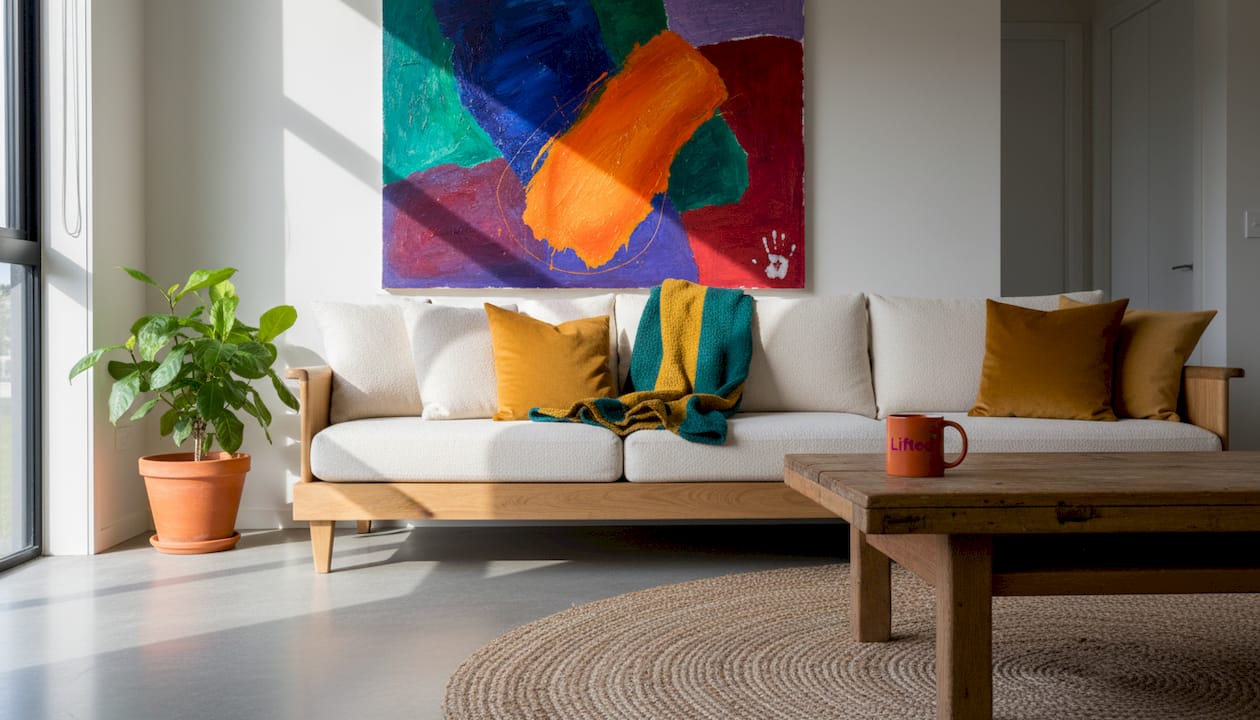
Kiwi motifs, whether native fern fronds rendered in ink, abstracted harbour light, or geometric patterns drawing from Pacific visual culture, carry meaning that purely imported art cannot replicate. These pieces do not just fill a wall; they locate a home within a place and a story. When you explore apartment wall art ideas for NZ, you will notice how local references anchor even the smallest spaces with cultural confidence.
That said, the most interesting interiors do not choose between local and global. They hold both in conversation. A large-format abstract landscape from a New Zealand artist paired with a contemporary European sculptural piece creates a dialogue that is genuinely sophisticated. The contrast generates tension in the best possible sense: it makes the room worth looking at twice.
| Style approach | Local NZ motifs | Global contemporary |
|---|---|---|
| Visual language | Ferns, landscape, Pacific geometry | Oversized abstracts, textured surfaces |
| Emotional tone | Grounded, cultural, personal | Bold, dynamic, internationally fluent |
| Best suited for | Living rooms, hallways, studies | Open-plan spaces, statement walls |
| Pairing potential | High (with neutral palettes) | High (with architectural interiors) |
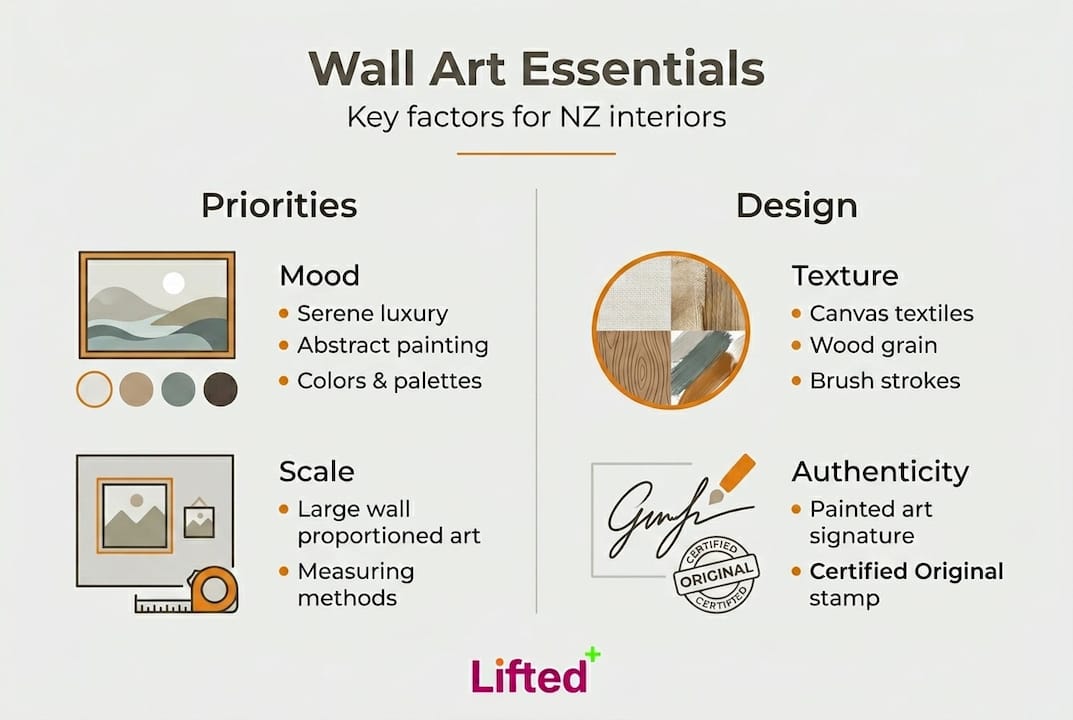
When selecting pieces, consider three factors above all others. Size is the first: art that is too small for a wall reads as tentative, even apologetic. Colour is the second: the most effective pieces either echo a tone already present in the room or introduce a contrasting accent that energises the entire palette. Personal connection is the third and most important. A piece you genuinely respond to will continue to reward attention over years. A piece chosen purely for aesthetic alignment with a mood board will stop working within months.
If you are building a collection rather than acquiring single pieces, colourful wall art for NZ homes offers an excellent entry point for understanding how bold, colour-led groupings can hold a room with real presence. Exploring modern 2026 wall art styles will also help you identify which aesthetic directions feel genuinely aligned with your home’s existing character.
Pro Tip: Build a collection with intention rather than filling walls piece by piece. Three works that speak to one another create far more impact than five that simply coexist.
The practical impact: Wall art as a design anchor
A well-chosen piece of wall art does something that very few other design elements can. It establishes hierarchy. In a room full of competing visual interests, the right artwork says: look here first. That ability to draw focus is architecturally powerful, particularly in open-plan New Zealand homes where rooms must perform multiple functions simultaneously.
The design anchoring role of wall art operates on several levels at once. At its most immediate, strong art defines a focal point, giving the eye somewhere to settle and the room a clear sense of intention. Beyond that, it establishes a colour palette from which every other element can draw. When your artwork carries a particular combination of warm amber, deep green, and ivory, those tones naturally filter through to your textiles, your ceramics, and even your lighting choices. The room becomes coherent without feeling designed.
There are common mistakes that undermine this potential. Scale is the most frequent culprit. A small piece mounted in a large expanse of white wall does not read as considered minimalism; it reads as indecision. Similarly, art hung too high disconnects from the human experience of the room. Eye level is the standard for good reason: it places the viewer in direct conversation with the work rather than looking up at it as if it were an afterthought mounted near the ceiling.
Placement errors aside, the mood-anchoring capacity of strategic wall art is well-documented. The same 22% cortisol reduction referenced earlier is not achieved simply by having art present in a room. It requires art that is visually engaging, appropriately scaled, and positioned where the viewer can genuinely encounter it. Placement is not a secondary consideration; it is part of the work.
“The right artwork does not just occupy a wall. It holds a room, giving every other element something to orient toward.”
Understanding how to curate wall art for impact is a skill that develops with attention and practice. Exploring unique types of wall art expands your sense of what is possible beyond the conventional framed print, including sculptural wall pieces, textile works, and ceramic panels that bring dimension as well as colour. And when you are exploring NZ home decor styles more broadly, you will see how wall art functions as the connective tissue that holds a room’s identity together.
The practical test is straightforward. Stand in your living room and remove the wall art mentally. Does the room still have a point of view? If the answer is no, your art is doing more work than you may have realised.
Practical steps: Curating and displaying art for maximum effect
You have thought carefully about why art matters and what it should express. Now comes the part that most people find surprisingly rewarding: the physical act of arranging, layering, and living with wall art in a way that makes your home genuinely sing.
A structured approach is far more effective than simply hanging pieces as you acquire them. Here is how to build a display that holds together with both visual clarity and emotional warmth.
-
Start with your largest or most significant piece. This is your anchor. Everything else in the grouping should relate to it in some way, whether through colour, tone, subject, or scale contrast.
-
Establish a visual relationship between pieces before committing to the wall. Lay works on the floor and experiment with spacing. You are looking for a grouping that reads as intentional, not crowded, with breathing room between pieces.
-
Vary scale deliberately. A collection of identically sized frames creates monotony. Mixing formats, say a large horizontal work with two smaller vertical pieces, generates visual rhythm.
-
Consider sightlines from multiple positions. Art in a dining room should read well from a seated position. Art in a hallway works best at standing eye level. The viewing context shapes the hanging height.
-
Light the work purposefully. Picture lighting or adjustable spotlights placed at the correct angle prevent glare and reveal texture. Natural light is beautiful but can be unpredictable, so supplementary lighting gives you control.
Maintaining your display is equally important. Viewing original art only delivers its wellbeing benefits when the work remains visually present and engaging. Dust builds imperceptibly, glass becomes foggy, and pieces that have hung in the same position for years eventually become invisible to the people who live with them.
Refreshing your display periodically, rotating a piece from another room, adding a new acquisition, or simply reordering an existing grouping, restores the novelty response that makes art psychologically activating in the first place. The guide to limited edition art prints is a valuable resource if you are considering adding genuinely rare or numbered works to your collection, as these carry particular investment value alongside their aesthetic contribution.
When you want bold, room-defining impact, statement wall art ideas provide a strong starting point. And if you are working toward a more fully realised artistic interior, the tips for artistic NZ interiors resource brings together the curation principles that elevate good taste into genuinely distinctive living environments.
Pro Tip: Refreshing your wall art display twice a year, perhaps seasonally, prevents visual habituation and keeps the psychological benefits of original art working actively in your space.
Why vibrant wall art is the missing link in NZ interiors
In our experience working with contemporary New Zealand interiors, the single most consistent pattern is this: homeowners invest carefully in furniture, in lighting, in surfaces and textiles, and then choose wall art from a position of caution. Safe choices. Small frames. Muted tones that will not disturb anything. The result is a room that is well-executed but curiously flat.
The conventional logic is that art should harmonise. It should not compete. It should blend. But this instinct, while understandable, misunderstands what art actually does in a room. It is supposed to pull your attention. It is supposed to carry emotional weight that a sofa or a rug simply cannot. When art is selected purely to avoid conflict, it loses the very quality that makes it valuable.
The boldest, most emotionally resonant interiors we have encountered have one thing in common: the art was chosen first, or at least chosen with the same authority as every other element. A large, vibrant, genuinely confronting piece on the wall of a well-curated apartment does not overwhelm the room. It gives the room a reason to exist. True transformation comes when you trust the art to do its work and build around it, rather than squeezing it in around everything else.
Explore statement wall art and transform your space
The next step is finding pieces that hold that same authority in your own home.
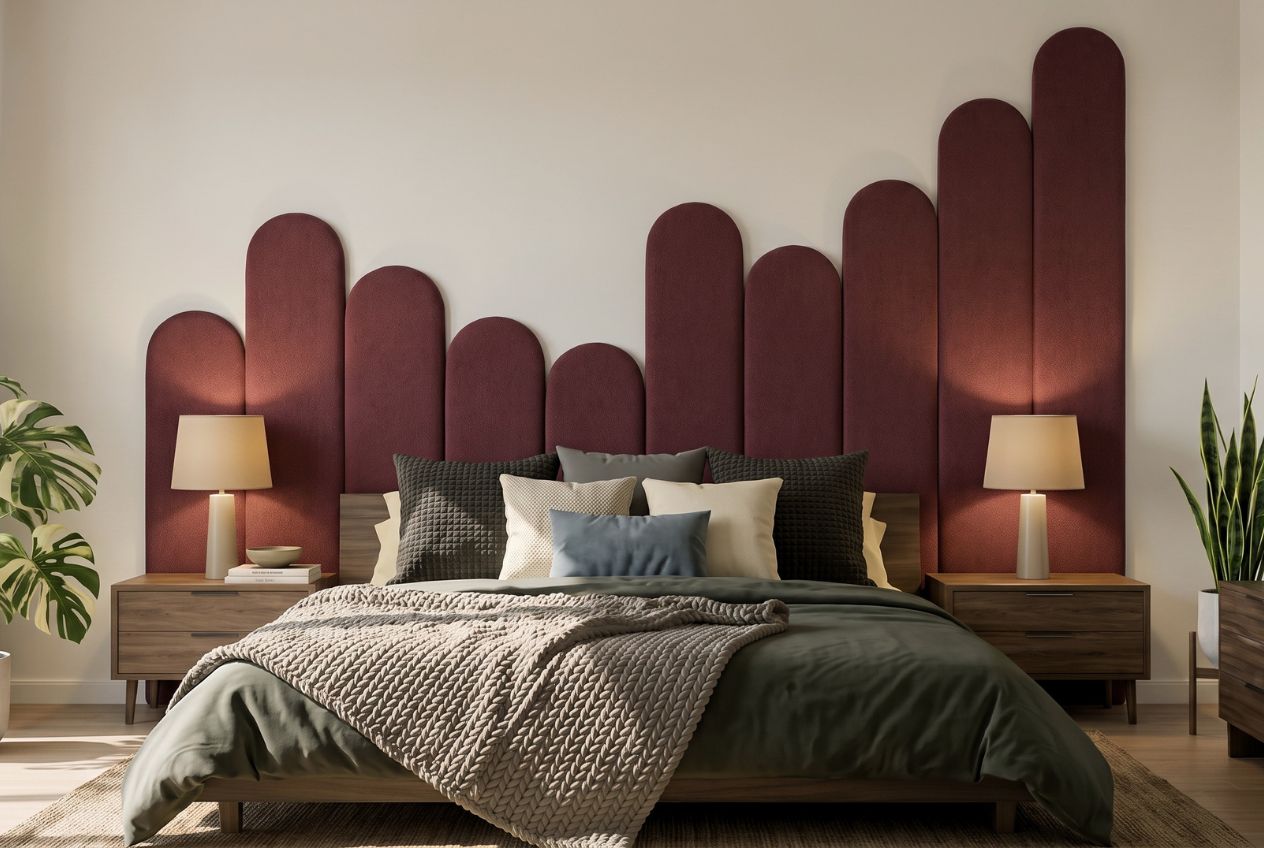
At Lifted+, we curate wall art selected specifically for its capacity to transform modern New Zealand interiors. Every piece is chosen for presence, colour depth, and lasting visual impact rather than trend alignment. From limited edition works that bring genuine rarity into your space to modern architectural wall art that holds its own in open-plan and high-ceiling environments, our collection is built for homeowners who want their spaces to feel genuinely alive. Explore the full range and find the piece that anchors your interior with intention.
Frequently asked questions
Does original wall art affect mental wellbeing differently than prints?
Yes. Empirical studies report a stronger reduction in stress and inflammation from viewing originals compared to prints, with one study documenting a 22% cortisol drop and measurable anti-inflammatory effects specifically associated with original artworks.
Which wall art themes are most popular for NZ homes in 2026?
Ferns, landscape abstracts, and oversized textured pieces are among the strongest directions, combining Kiwi motifs with global trends. According to NZ design week coverage, integrating local visual language with bold, contemporary formats is defining the most compelling New Zealand interiors in 2026.
How does biophilic wall art support emotional health?
Biophilic art, inspired by natural forms and organic elements, has shown significant reductions in depression and anxiety over time. Research tracking biophilic art in urban environments recorded meaningful symptom reduction over twelve months, making it a particularly strong choice for city-based New Zealand homes.
What is a practical way to make wall art stand out in small spaces?
Layering different art sizes and styles, and introducing bold colour through a single dominant piece, helps wall art anchor and energise even compact rooms. Scale up rather than down: one large, confident work will always outperform several small, tentative ones in a limited space.