
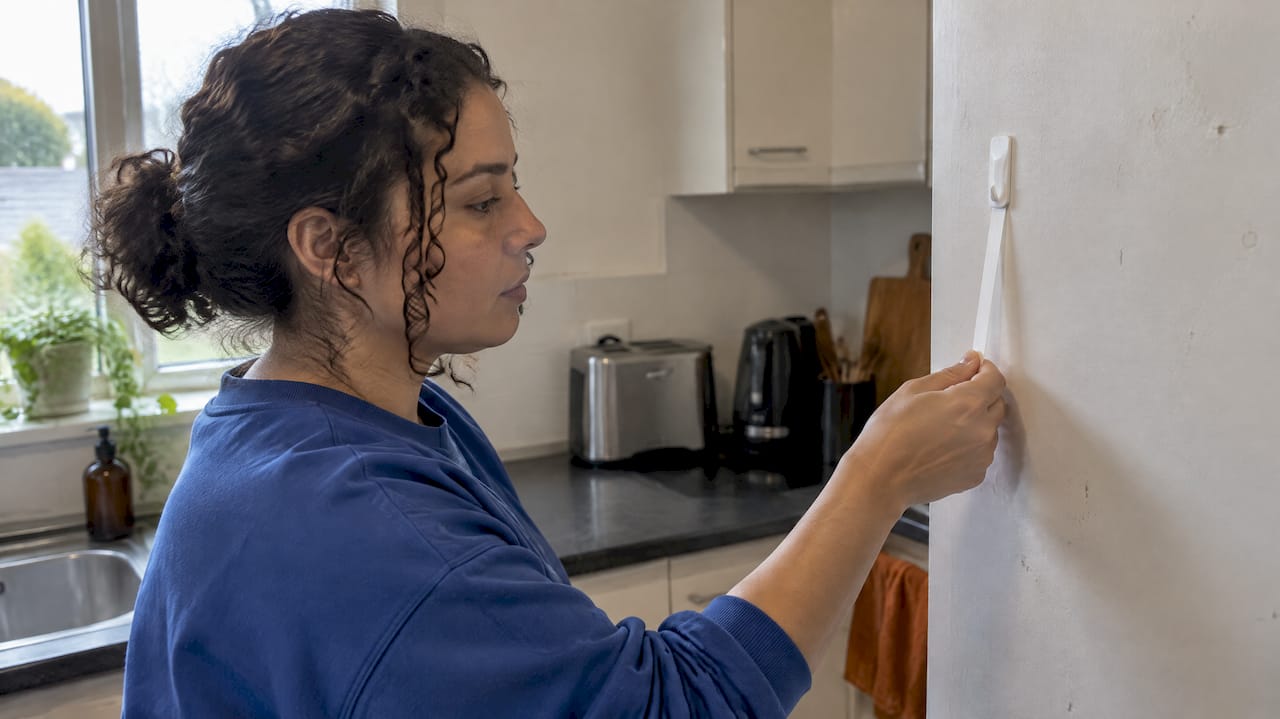
Adhesives can be a renter-friendly way to decorate, but only when you treat them with the same respect you’d give a power tool. Three rules decide whether you keep your bond or lose part of it: follow the manufacturer’s weight and temperature limits, run a small patch test before committing, and get landlord consent when a change might not count as minor. Done right, adhesives sit alongside no-drill options as genuinely low-risk ways to personalise a rented wall.
TL;DR:
- Adhesive strips must follow weight, surface, and time limits, and a test patch is essential before committing to visible walls.
- Fresh paint, wallpaper, and textured surfaces reduce adhesion and increase the risk of peeling or lifting paint when removing adhesives.
- Landlord consent is usually required for anything beyond minor, easily reversible changes, especially for heavy or bulkier decorations.
- Proper removal involves slow, straight-down pulling and can be aided by low heat, with damage minimized by careful technique and early communication with landlords.
- For heavy items or textured walls, no-drill modular panels and other renter-friendly alternatives offer lower risk than standard adhesive strips.
Table of Contents
- Common renters adhesive myths, and the truth behind each one
- Why adhesives sometimes damage paint or wallpaper
- Tenancy rules and landlord consent for minor changes
- How to use adhesive safely: pre-checks and application steps
- Safe removal: how to take adhesive off without peeling paint
- Renter-friendly alternatives when adhesive isn’t the right call
- A renter’s honest take on adhesive confidence
- Start with a DwellForms™ colour sample
- FAQ
- Sources
Common renters adhesive myths, and the truth behind each one
Most of the damage renters cause isn’t from recklessness. It’s from believing something that simply isn’t true. Here are the misconceptions we hear most often, paired with what actually holds up.
- Myth: Blu Tack is harmless on any wall. Truth: it can leave grease marks and pull paint on matt or newly painted surfaces, so test a hidden patch first and avoid it on fresh paint.
- Myth: all adhesive strips are damage-free. Truth: damage-free only applies when you follow the product’s surface, weight and removal instructions exactly, as outlined in the Command™ picture hanging strips user guidance.
- Myth: adhesive strips work fine on wallpaper or vinyl. Truth: some manufacturers specifically warn against these surfaces because the bond can lift the paper or vinyl layer itself.
- Myth: if a strip holds a photo frame, it’ll hold a mirror or shelf. Truth: every product has a stated weight limit, and exceeding it is the fastest way to lose both the item and a chunk of plaster.
- Myth: one night’s drying time after painting is enough. Truth: some manufacturers recommend waiting weeks, not hours, before applying anything adhesive to freshly painted walls.
- Myth: household spray cleaner is fine for prepping the surface. Truth: residue from standard cleaners reduces adhesion; isopropyl rubbing alcohol is the recommended prep, as detailed in the 3M picture hanging strips instruction sheet.
- Myth: pulling a strip off fast is less likely to damage paint. Truth: a quick yank tears paint; a slow, straight-down stretch is what separates the adhesive cleanly.
- Myth: hanging items over a bed or doorway is the same as anywhere else. Truth: some safety notes specifically caution against heavier or riskier placements like these, given the consequences if an item falls.
- Myth: any adhesive counts as a “minor change” under a tenancy agreement. Truth: whether it’s minor depends on the change itself and whether it causes lasting damage, which is a tenancy question, not just a product one.
- Myth: textured or recently plastered walls behave like smooth painted ones. Truth: texture reduces the real contact area an adhesive strip gets, so the same product can fail where it would hold on a flat surface.
- Myth: once it’s stuck, it’s permanent and can’t be moved. Truth: most quality adhesive strips are designed to be removed cleanly when the correct technique is used, which is exactly why they’re popular with renters in the first place.
The common thread: adhesive performance depends on the surface, the timing and the technique, not on luck.
Why adhesives sometimes damage paint or wallpaper
Adhesion is a contact problem before it’s a strength problem. A strip only holds as well as the surface area it touches, so dust, grease or an uneven texture all reduce the real bond even when the product itself is rated for far more weight. Temperature and humidity matter too: most adhesive strips are designed to perform within a stated range, often somewhere between +10°C and +40°C, and applying one outside that window weakens the hold well before you notice anything’s wrong, as the 3M picture hanging strips instruction sheet notes.
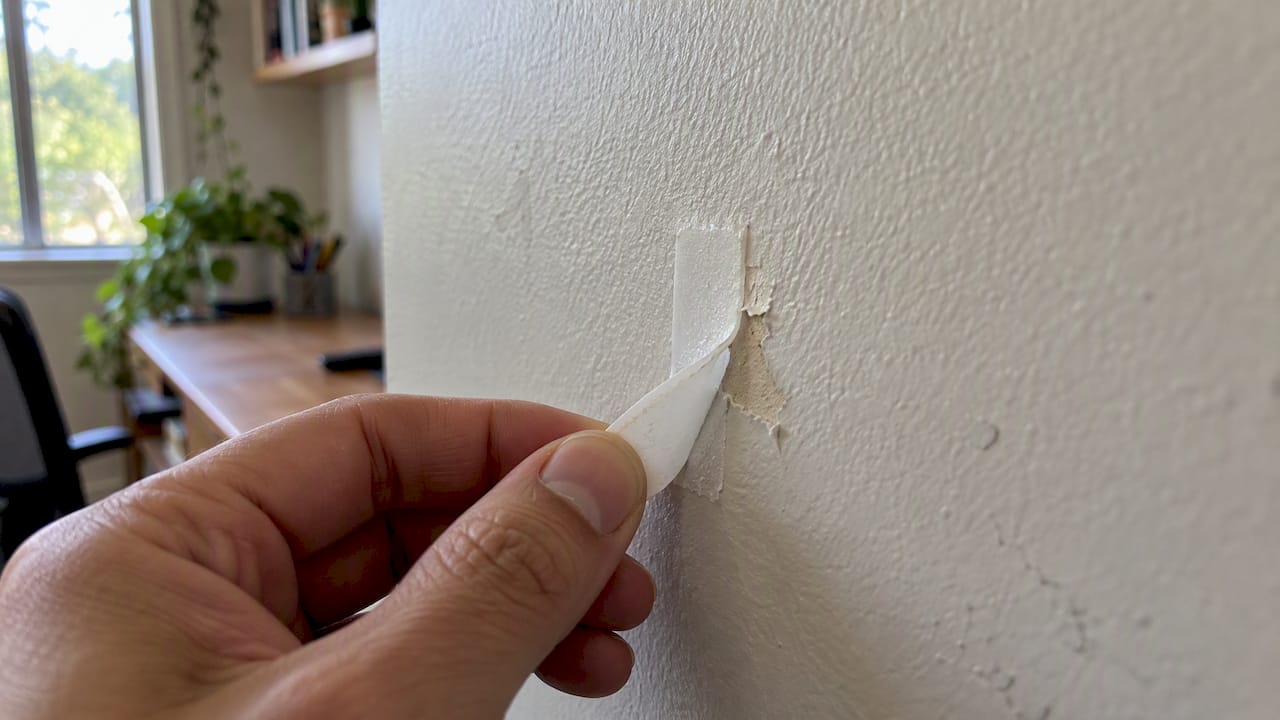
Paint adds its own risk. Fresh paint can take far longer to fully cure than it takes to dry, and an adhesive applied too early can bond more strongly to the paint film than the paint has bonded to the wall underneath. When you pull the strip off later, the paint comes with it. Matt finishes are especially vulnerable because they’re more porous and lower in adhesion strength than satin or gloss. Wallpaper and textured plaster carry a similar risk: the adhesive can grip the surface layer rather than the structure beneath it, so removal lifts paper or render instead of releasing cleanly.
Tenancy rules and landlord consent for minor changes
Under Tenancy Services guidance, tenants need written consent for any change that isn’t classed as “minor,” and landlords who receive a request for a minor change must respond within 21 days. Tenants are generally responsible for the cost of installing and removing whatever they’ve added, and for returning the property to substantially the condition it was in beforehand.
Adhesive-based decorating usually sits in a grey area: a few photo frames on strips is unlikely to raise concern, but a dense gallery wall, anything heavy, or anything applied to a feature surface is the kind of change where a landlord could reasonably ask for removal and repair. When in doubt, a short written request covers you: name the exact product, where you intend to use it, how you’ll remove it, and an offer to pay for any touch-up paint if needed. That single email is often the difference between a relaxed landlord and a bond dispute.
How to use adhesive safely: pre-checks and application steps
A few minutes of preparation prevents most of the damage renters worry about.
- Clean the surface with isopropyl rubbing alcohol rather than household spray cleaner, which can leave a residue that weakens the bond.
- Check how long the paint has been cured. Some manufacturers recommend waiting up to 28 days after painting before applying strips, so treat that as your benchmark on a freshly painted rental wall.
- Confirm the room temperature sits within the product’s stated range, generally +10°C to +40°C, and avoid applying adhesive on very cold or very hot days.
- Press the strip firmly for the time stated on the pack, usually around 30 seconds, then leave it for the recommended settling period, often an hour, before hanging anything.
- Respect the stated weight limit and spread heavier items across multiple strips rather than pushing one strip past its rating.
- Apply a test strip in a hidden spot, such as behind a door or inside a wardrobe, and leave it for at least 24 hours to see how it behaves before committing to a visible wall.
- If the wall is wallpapered, heavily textured, or you’re hanging anything irreplaceable, skip the adhesive and choose a no-drill alternative instead.
Pro Tip: Photograph the wall before and after applying anything adhesive, so you have a clear record of its condition if a question ever comes up at the end of your tenancy.
Safe removal: how to take adhesive off without peeling paint
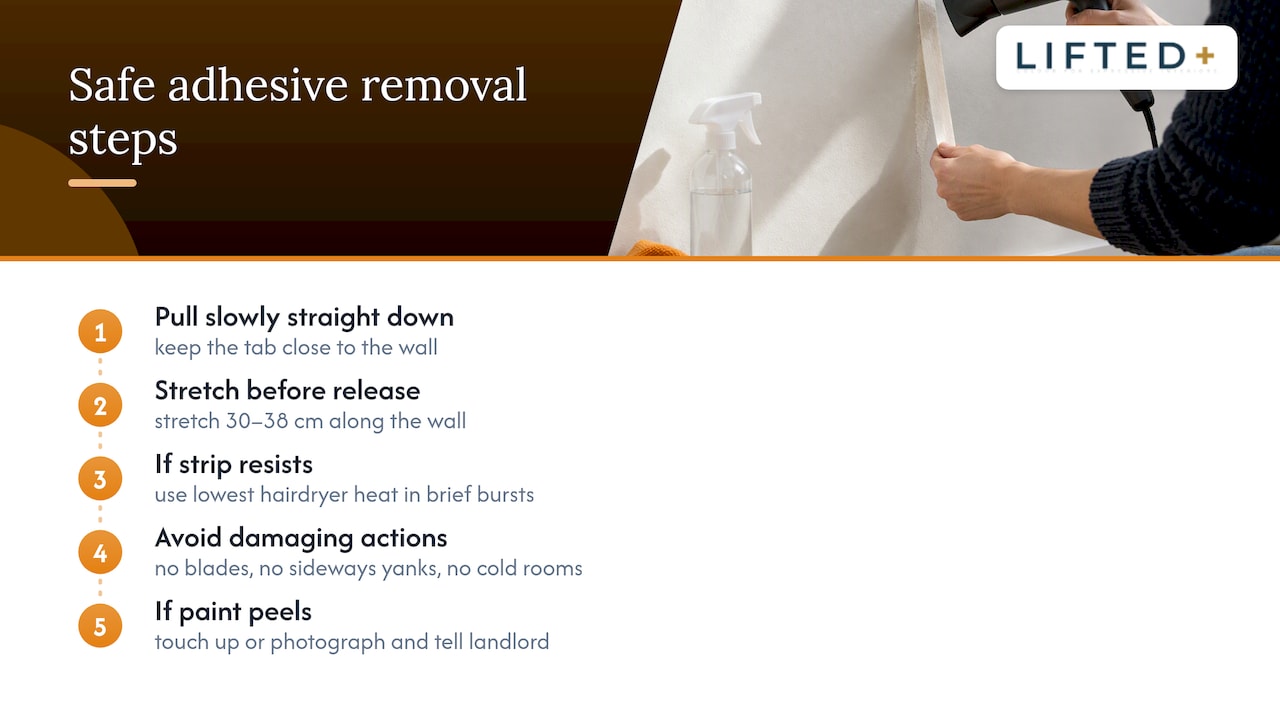
Removal technique matters more than almost anything else in this process. The safest method is to pull the tab slowly and straight down, keeping it close to the wall rather than pulling outward, and stretching it at least 30 to 38 centimetres before it releases, as described in the Command™ picture hanging strips user guidance. This slow stretch separates the adhesive from itself rather than tearing it away from the paint.
If a strip resists, a hairdryer on its lowest heat setting, held a short distance away for brief bursts, can soften the adhesive enough to continue the slow pull, a technique outlined in practical guidance on minor rental changes. Avoid scraping with a blade, yanking the strip sideways, or attempting removal in a cold room, since all three increase the chance of lifting paint. If paint does peel, a touch-up with matched paint is often enough as a temporary fix; for anything more visible, photograph the damage and let your landlord know early rather than waiting until the final inspection. For more background on why paint fails to hold in the first place, this overview of paint adhesion problems is a useful technical reference.
Renter-friendly alternatives when adhesive isn’t the right call
Some walls simply aren’t good adhesive candidates: fresh paint, heavy texture, wallpaper, or anything you’re not willing to risk. In those cases, a no-drill alternative gets you the same visual impact with none of the removal anxiety.
- Leaning art or a floor-standing mirror adds scale and colour without touching the wall at all.
- Tension rods and curtain rails can hold lightweight hangings in doorways or alcoves.
- Correctly rated removable hooks still work well for light items, provided you respect their own weight limits.
- Modular wall panels, like DwellForms™, use tested adhesive pads designed specifically for renter-friendly, no-drill installation, with sample kits available if you want to test a colour before committing to a full DwellForms™ core kit.
For heavier items, fresh paint, or textured walls, an alternative like this is the lower-risk choice over adhesive strips.
A renter’s honest take on adhesive confidence
We see the same pattern again and again: renters either avoid decorating altogether out of fear, or they overcommit with something too heavy for the strip they chose. Neither gets you a home that feels like yours. The emotional payoff of a wall that finally feels personal is worth the extra five minutes of checking a weight limit.
No method is entirely risk-free, which is exactly why we lean toward no-drill, removable solutions and always encourage a quick, friendly conversation with a landlord before anything goes up.
— Michelle
Start with a DwellForms™ colour sample
We built our modular panels around the idea that colour shouldn’t require a drill, a paint tin or a conversation with your landlord about holes. They use tested adhesive pads, not screws or construction adhesive, so you can install, rearrange or remove them without touching the wall underneath.

- Order a DwellForms™ colour sample to see how a shade reads on your own wall before buying a full kit.
- Follow our installation guide to apply your first panels in an afternoon, and add an extension kit later if you want to grow the feature wall.
Ready to see it on your wall? Browse the DwellForms™ core kits and start with whichever colour feels most like home.
FAQ
Is Blu Tack actually safe for rental walls?
Blu Tack can leave oily marks or pull paint on matt or freshly painted surfaces, so it’s not guaranteed to be safe. A hidden patch test for at least 24 hours is the safest way to check before using it anywhere visible.
How long should I wait after painting before using adhesive strips?
Manufacturer advice varies by product, with some recommending up to 28 days after painting according to the 3M picture hanging strips instruction sheet. Treat that longer window as the safer default on a rental wall where you can’t verify exactly when it was last painted.
Do I need landlord consent to use adhesive strips?
Small, easily reversible uses are generally considered minor changes, but anything heavier or more extensive may need written consent under Tenancy Services guidance. A short written request naming the product and your removal plan is the simplest way to stay covered.
What’s the correct way to remove an adhesive strip without damaging paint?
Pull the tab slowly and straight down, keeping it close to the wall and stretching it rather than yanking outward. Low heat from a hairdryer can help soften a stubborn strip before you continue the slow pull.
Are no-drill wall panels a safer option than adhesive strips?
For heavier items, fresh paint or textured walls, a no-drill panel system is generally the lower-risk choice because it is designed specifically for removable, renter-friendly installation. It won’t suit every single wall, but it avoids the weight and cure-time limits that apply to standard adhesive strips.
Sources
- Tenants making changes to the property » Tenancy Services
- 3M picture hanging strips instruction sheet
- Command™ picture hanging strips user guidance
- Understanding minor changes in a rental property (practical removal guidance)