
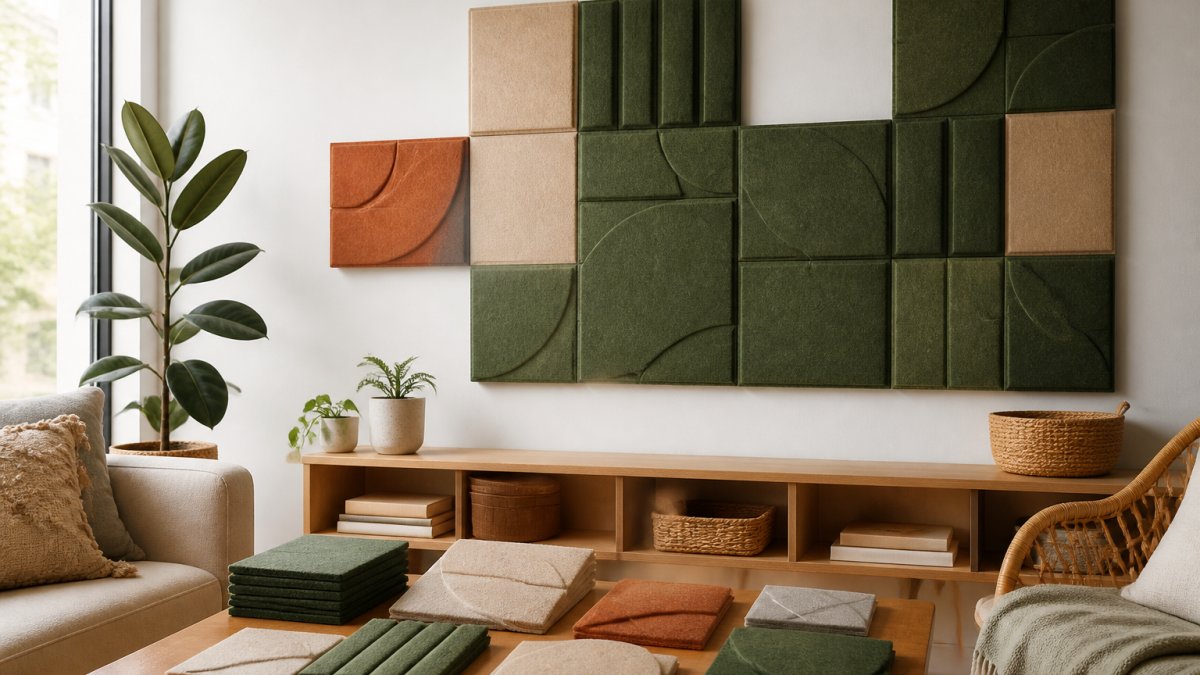
Table of Contents
- Why Modular Wall Decor Beats Traditional Wall Art in Apartments
- Renter-Friendly Wall Decor: What to Look For Before You Buy
- Wall Decor Without Drilling: Installation Methods Compared
- Small Apartment Wall Decor Ideas That Actually Work
- Modular Wall Art Configurations for Every Room Shape
- How to Measure, Plan, and Reconfigure Your Layout
- Pricing, Value, and What to Expect
- Frequently Asked Questions
Last Updated: October 21, 2026
Why Modular Wall Decor Beats Traditional Wall Art in Apartments
Modular wall decor is a system of separate panels or pieces that attach to a wall and can be arranged, moved and rearranged without paint or permanent fixings.
Traditional wall art locks you into one decision. You buy a framed print, hammer in a nail, and live with it until you move.
The core argument is simple. In a rental, your walls are borrowed space. Modular systems treat them that way.
Traditional art asks “what do I hang?” Modular decor asks “how do I want this wall to feel, and how easily can I change my mind?” That second question is the one renters actually need answered.
Renter-Friendly Wall Decor: What to Look For Before You Buy
Renter-friendly wall decor is any wall treatment that installs and removes without permanent marks, holes or paint damage. The two things that decide whether a product earns that label are how it attaches and what it is made of.
Damage-Free Hanging and Removal
The first question any renter asks is the right one: will this leave a mark? A genuinely damage-free system avoids nails, screws and wet adhesives that bond to paint. Look for panels that mount on removable strips or a lightweight rail, and check the removal instructions before you buy, not after.
Test on a small patch first if your walls are painted in a finish you cannot match. Landlords care most about visible damage at inspection, so a clean removal matters more than the marketing claim.
Material Quality and Durability
Recycled materials do not automatically mean flimsy. Density and thickness matter more than the label. A dense felt panel holds its shape and colour better than a thin, hollow alternative, and it also softens sound in a hard-surfaced apartment.
Ask two questions: does the panel keep its edge over time, and does the surface resist scuffing at the corners where hands brush past? Those are the failure points we see most often.
| What to check | Why it matters | Red flag |
|---|---|---|
| Mounting method | Decides whether you get your bond back | Requires nails or screws |
| Removal process | Determines wall condition at move-out | No published removal guide |
| Material density | Affects shape, colour and sound | Thin, hollow feel |
| Edge finish | First place wear shows | Fraying or peeling corners |
| Reusability | Lets you reconfigure or move it | Single-use adhesive backing |
Wall Decor Without Drilling: Installation Methods Compared
Wall decor without drilling falls into four main camps, and each suits a different wall, weight and budget. The comparison below goes beyond the marketing label to what actually decides whether a method survives a tenancy.
| Method | Typical weight per fixing | Best wall surfaces | Weakest wall surfaces | Removal risk | Reusable? |
|---|---|---|---|---|---|
| Removable adhesive strips | Light to moderate (check the pack rating) | Smooth painted plaster, sealed gib, tiles | Textured, fresh paint, wallpaper, brick | Can lift paint or leave residue if pulled too fast | Sometimes, with fresh strips |
| Peel-and-stick wallpaper and decals | Very light | Smooth sealed surfaces | Textured, dusty or damp walls | High, often pulls surface layers | No |
| Tension rails and lightweight hooks | Light | Inside window reveals, between two solid surfaces | Walls without a tension point | Low, but load is limited | Yes |
| Modular felt panel kits | Depends on the rail or strip system supplied | Most interior painted walls | Crumbling plaster, unsealed gib near wet areas | Low when the supplied removal method is followed | Yes, by design |
Matching the Method to the Wall
The wall surface matters more than the product photo. Smooth, sealed interior paint is the most forgiving surface for adhesive-based systems. Textured finishes, fresh paint (cured less than a few weeks), wallpaper and brick give adhesive far less to grip, and removal is where the damage usually shows up.
A practical sequence before committing:
- Identify the wall substrate, painted gib, plaster, brick, tile or wallpaper.
- Check the product’s stated weight limit per fixing and stay well under it.
- Clean the surface and let it dry fully; dust and kitchen film reduce grip.
- Test one fixing on a hidden patch for several days before loading the full layout.
- Remove slowly and at a low angle, following the manufacturer’s removal instructions rather than pulling straight out.
Weight Limits and Load Distribution
Every no-drill method has a per-fixing limit, and the limit drops on weaker surfaces. A modular panel system spreads load across multiple fixings, which is why a multi-panel kit can often carry more total weight than a single hook, but only if each fixing is within its own rating. Do not concentrate heavy pieces on one strip and assume the average holds.
Removal and Bond Condition
Landlords assess visible damage at inspection, so removal technique matters as much as the mounting method. Slow, low-angle removal with the correct strip or rail release is the difference between a clean wall and a patch job. Keep the removal instructions with the panels; they are the first thing you will want at move-out.
Do not skip the wall test. A strip that holds perfectly on smooth plaster can fail on textured or freshly painted walls, and the panel comes down in the night. Test one piece for a few days before committing the whole layout.
Small Apartment Wall Decor Ideas That Actually Work
The best small apartment wall decor ideas share one trait: they use vertical space instead of floor space. A studio or one-bedroom has limited footprint, but the walls are usually underused.
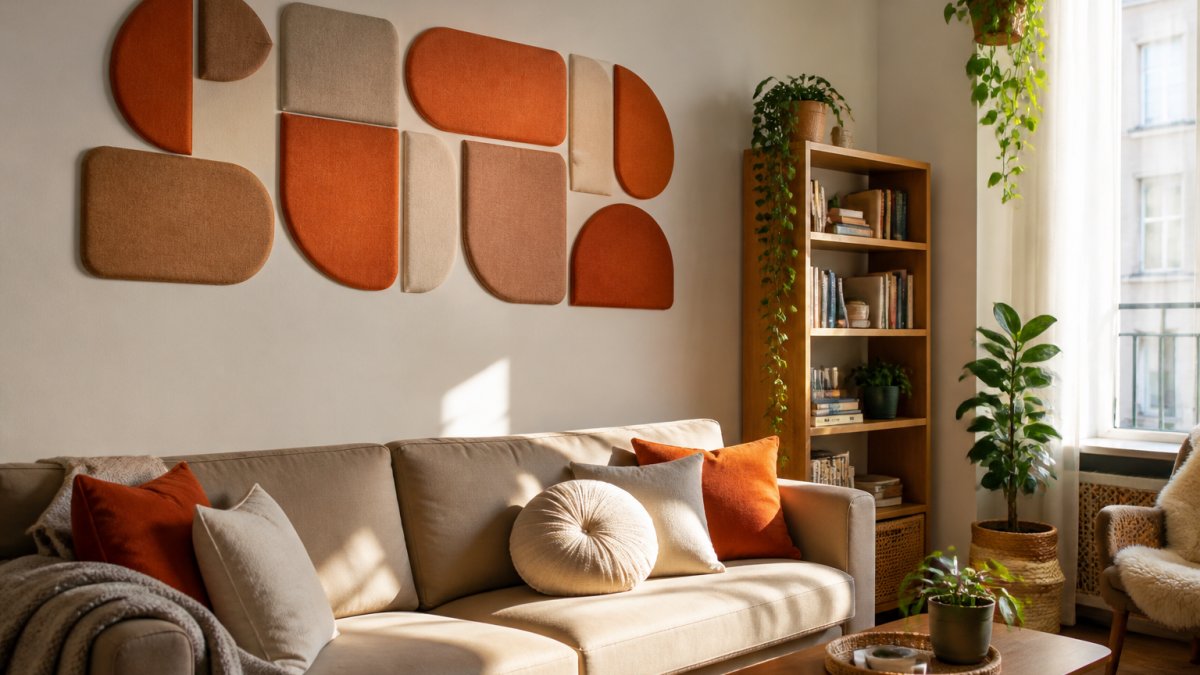
Start with the wall you see most, usually opposite the sofa or bed. A single large-scale arrangement reads as intentional; a scatter of small frames reads as clutter.
A few arrangements that work in tight rooms:
- One oversized panel grouping above a low sofa
- A vertical column beside a doorway to draw the eye upward
- A mirror paired with textured panels to add depth and light
- A freestanding bookshelf against a blank wall to combine storage and display
Modular Wall Art Configurations for Every Room Shape
Modular wall art configurations let you fit the same set of panels to very different rooms. The panels do not change; the layout does. That is what makes a system portable between apartments.
Gallery Wall Layouts
A gallery wall works best when you plan the grid before anything touches the wall. Lay the pieces on the floor or cut paper templates to size, then map the arrangement. Keep consistent gaps, align to a centre line, and leave breathing room from the ceiling and furniture.
Vertical and Oversized Arrangements
Awkward walls, the short ones beside a window or the tall narrow ones in a hallway, respond to vertical layouts. Stack panels in a column to make a low ceiling feel taller. For a bold statement, group panels into one oversized block rather than spreading them thin.
How to Measure, Plan, and Reconfigure Your Layout
Measuring first is the difference between a wall that looks designed and one that looks improvised. The process takes about twenty minutes and saves a return.
- Measure the wall’s width and height, and note where power points and light switches sit.
- Mark the furniture zone: how high the sofa back or bed head reaches.
- Decide the arrangement’s footprint, keeping clear space above furniture.
- Cut paper templates to the panel sizes and tape them up.
- Step back and check the balance from the doorway, your main viewing angle.
- Photograph the layout before installing, so you can rebuild it after a move.
- Install one panel, check level and adhesion, then continue.
Expected result: a layout you have already seen on the wall before a single panel is fixed, and a photo record you can reuse in the next apartment.
Photograph your finished layout from straight on and keep the measurements with it. When you move, you can rebuild the same arrangement or resize it to a new wall in minutes rather than starting from scratch.
Pricing, Value, and What to Expect
Pricing for modular wall decor is driven by things like the number of panels, the panel size, the mounting hardware supplied, and delivery. Because kits vary, the useful comparison is cost per panel and cost per square metre of wall covered, not the sticker price of a single bundle.
What Drives the Price
- Panel count and size. A small accent grouping of three to five panels costs far less than a full wall set of twelve or more. Larger panels cost more per unit but cover more wall per fixing.
- Material density. Denser felt and thicker cores cost more than thin, hollow alternatives, and they hold shape and colour longer.
- Mounting system. Kits that include a reusable rail or rated removable strips cost more up front but are built to come down and go back up.
- Delivery. Oversized panels and multi-box kits carry higher freight, especially to regional addresses.
Cost per Panel and Expansion Costs
The figure worth calculating is cost per panel, then cost per square metre of wall. That lets you compare different kits on equal terms. Expansion is the second number to check: adding panels later should cost roughly the same per panel as the original kit, plus any extra mounting hardware. If a system charges a premium for add-on panels, the initial price understates the true cost of covering a larger wall.
Value Over Time
A one-off print is used once and left behind at move-out. A modular kit that travels with you and is reconfigured across two or three apartments spreads its cost over years and multiple walls. That is the comparison worth making, not the sticker price alone.
Comparing Providers
Other providers sell similar-sounding systems, so compare on mounting method, material density, reusability and the cost of add-on panels rather than the photo alone. Ask for the per-panel price, the stated weight limit per fixing, and the published removal instructions before you buy.
Request a quote for the exact wall area you have in mind rather than comparing kit prices at face value. A per-square-metre figure makes two different-sized kits directly comparable.
Frequently Asked Questions
Are modular wall panels suitable for rental apartments?
Yes, modular wall panels are built for rental apartments because most systems mount without drilling or permanent adhesives. Look for panels that use removable strips or tension-based fixings, and check the product’s removal instructions before buying. Lifted Plus DwellForms panels are designed to lift off cleanly, so you can take them to your next place. Always test a small area first if your walls are textured or painted with low-sheen finishes.
How can I decorate apartment walls without drilling?
You can decorate without drilling using removable adhesive strips, tension rods, freestanding shelves, and modular panel systems. Modular wall decor is the most flexible option because panels reposition without new hardware. Avoid heavy mirrors and large frames on adhesive alone unless the product is rated for the weight. For textured or angled walls, choose panels with a flexible backing or ask the supplier for guidance on surface compatibility before you commit.
How do you arrange modular wall art in a small room?
Start with one anchor wall and keep the arrangement tight rather than spread out. A common approach is the 3-5-7 rule: group items in odd numbers at varying sizes for balance. In small rooms, go vertical to draw the eye up and leave floor space clear. Measure the wall first, mark your layout with paper templates, and keep at least 15cm between the furniture top and the lowest panel so the arrangement doesn’t feel crowded.
Can modular wall panels be moved and reconfigured?
Most modular systems are designed to be moved, but the fixings matter. Panels that clip, slot, or use removable adhesive can be taken down and reinstalled in a new layout or a new apartment. Check the removal process and whether the mounting hardware is reusable before buying. Lifted Plus DwellForms kits are made to move, so a layout that worked in a bedroom can be rebuilt in a living room or a differently shaped space without buying a new kit.
Apartment walls should not stay blank just because you rent. The challenge is finding decor that adds colour and shape without costing you your bond, and that is exactly what a modular system solves. At Lifted Plus, our DwellForms™ wall kits use 100% recycled PET felt panels that install without drilling, add texture and architectural shape, and move with you to the next place. Explore DwellForms™ and turn that blank wall into something that feels like yours.
