
Last Updated: November 3, 2026
Quick Summary
To work out how much bedroom wall covering you need, multiply the wall’s width by its height to get square metres, then subtract doors and windows and add 10% for cuts. For a single feature wall, measure only that wall; for all four walls, measure each separately and total them. Always divide your measured area by the stated coverage per pack, roll or panel and round up.
- Measure width at the skirting and near the ceiling, and use the larger figure.
- A typical feature wall of 3.6 by 2.4 metres gives roughly 9.5 square metres with the 10% allowance.
- Buy one extra roll for bold patterns, since a second order may come from a different batch.
- Modular felt panels are sold in kits with fixed coverage, so divide your wall area by the kit coverage.
- Clean, fill, sand and fully dry the wall before covering to prevent bubbling and peeling.
Table of Contents
- How to Measure a Wall for Wallpaper and Panels
- Working Out Coverage per Pack, Roll or Panel
- The Cost to Wallpaper One Wall and What Changes It
- Cheap Wall Covering Ideas That Still Look Considered
- Removable Wall Panels for Renters and Frequent Movers
- Preparing Your Bedroom Wall Before You Cover It
- Planning Your Bedroom Wall Makeover with Lifted Plus
- Frequently Asked Questions
How to Measure a Wall for Wallpaper and Panels
Working out how much bedroom wall covering you need starts with two numbers: the wall’s width and its height. Multiply them to get square metres, then subtract doors and windows. That’s the figure every product page, pack size and quote is built on, and getting it wrong is the single most common reason people over-order or come up short mid-install.
A common pattern is for people to buy on instinct, then discover a feature wall needs more material than they assumed. Measure twice, order once.
You’ll need a tape measure, a pencil and paper, and a step ladder if your ceiling is high. Measure the full width at the skirting and again near the ceiling, because walls are rarely perfectly square. Use the larger figure. Do the same for height at both ends of the wall.
Measuring a Single Feature Wall vs All Four Walls
A single feature wall is the cheapest and most common bedroom upgrade. Measure only that wall, then add a small allowance for cutting and pattern matching.
All four walls change the maths quickly. Measure each wall separately, add them together, then subtract the door and window openings. Don’t subtract small switches or power points; the saving is negligible and the risk of under-ordering isn’t worth it.
| Wall type | What to measure | Typical allowance |
|---|---|---|
| Single feature wall | Width x height of one wall | Add 10% for cuts |
| All four walls | Each wall separately, then total | Subtract doors and windows, add 10% |
| Wall with sloped ceiling | Height at the tallest point | Add 15% for angled cuts |
Working Out Coverage per Pack, Roll or Panel
Coverage per pack, roll or panel is the number that actually determines your order, and it’s the figure most product pages bury. Always check the stated coverage in square metres, then divide your wall area by it and round up.
Wallpaper rolls are the trickiest. A standard roll covers a set area, but pattern repeats eat into that. A large repeat can waste a meaningful strip per drop, so buy one extra roll for anything with a bold pattern. Peel-and-stick rolls usually state coverage more simply, but check whether the figure assumes a smooth wall.
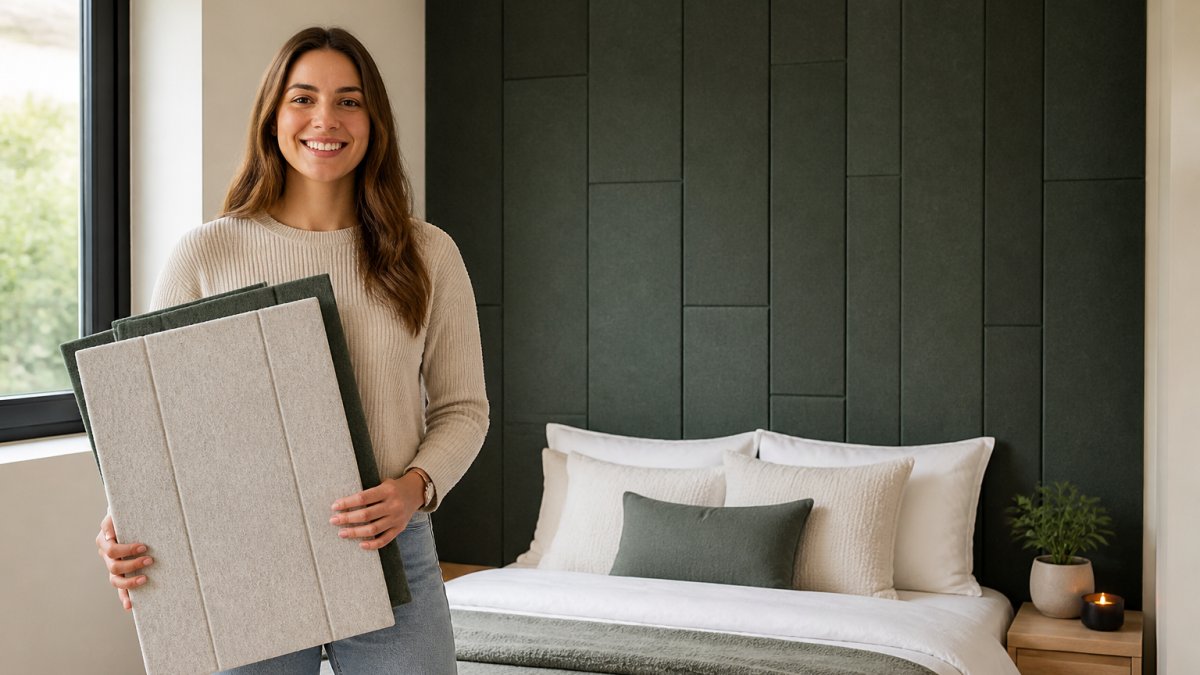
Panels are more predictable. Once you know your coverage, you can buy a DwellForms™ Linear Feature Wall Panels Kit sized to it. To see actual panel colour options and sample kits before you order, explore the DwellForms™ Colour Library Box.
The Cost to Wallpaper One Wall and What Changes It
Start with the area. A typical bedroom feature wall is around 3.6 metres wide by 2.4 metres high, which is 8.64 square metres.
Material cost scales directly with that area.
Labour is the bigger variable. Hanging wallpaper is fiddly work, and a professional will charge according to wall condition, ceiling height and how many drops are involved.
Prep changes everything. A wall with peeling paint, old wallpaper residue or patched cracks needs filling and sanding first, and that adds time whether you do it yourself or pay someone.
Pricing depends on the coverage you need and delivery. For current pricing on our kits, check the product pages directly, or request a quote.
Cheap Wall Covering Ideas That Still Look Considered
Cheap wall covering ideas work when they’re deliberate. A single well-chosen treatment on one wall reads as a design decision; five cheap treatments scattered around a room read as clutter.
Start with the wall you actually look at from the bed. That’s the one worth spending on. The rest can stay plain. Measure that wall as width times height, add 10% for cuts, and use that figure to compare options on cost per square metre rather than sticker price.
Here are the options that hold up, with what each actually involves:
- Peel-and-stick wallpaper. Removable, renter-friendly, and available in convincing patterns. Coverage is stated per roll, but the figure usually assumes a smooth, sealed wall; textured or poorly painted walls show through and may need lining paper first, which adds cost. Installation is DIY-friendly but unforgiving of misalignment, because most products allow only limited repositioning.
- Modular felt panels. No paint, no drilling, and they add texture as well as colour. Because they’re sold in kits with fixed coverage, divide your wall area by the kit coverage and round up; the maths is more predictable than wallpaper because there’s no pattern repeat. Surface prep is minimal, but the wall still needs to be clean and dry.
- Reclaimed wood or barnwood planks. Warm, textured and forgiving of imperfect walls, but heavier and harder to remove. Planks are sold by linear metre or pack, so work out the coverage per pack and allow extra for cuts around openings and corners. Fixing usually means battening or direct screwing, which is not renter-friendly.
- Paint geometry. Tape off a half-wall, an arch or a colour block. Cheap materials, real impact, and easy to paint over. The cost is mostly paint and tape, and the main variable is prep: filling and sanding a rough wall takes longer than the painting itself. A colour block covers a defined area, so you can calculate paint quantity from the area rather than buying a full tin for a small shape.
- Wall art arranged as a group. A tight grid of frames covers a large area for less than a full wall treatment. The cost is frames plus hooks, and the coverage is visual rather than physical, so there’s no waste allowance. Plan the grid on paper first; uneven spacing is what makes a gallery wall look accidental.
If you want more options beyond these, the guide to bedroom statement wall ideas walks through five approaches that work in real rooms.
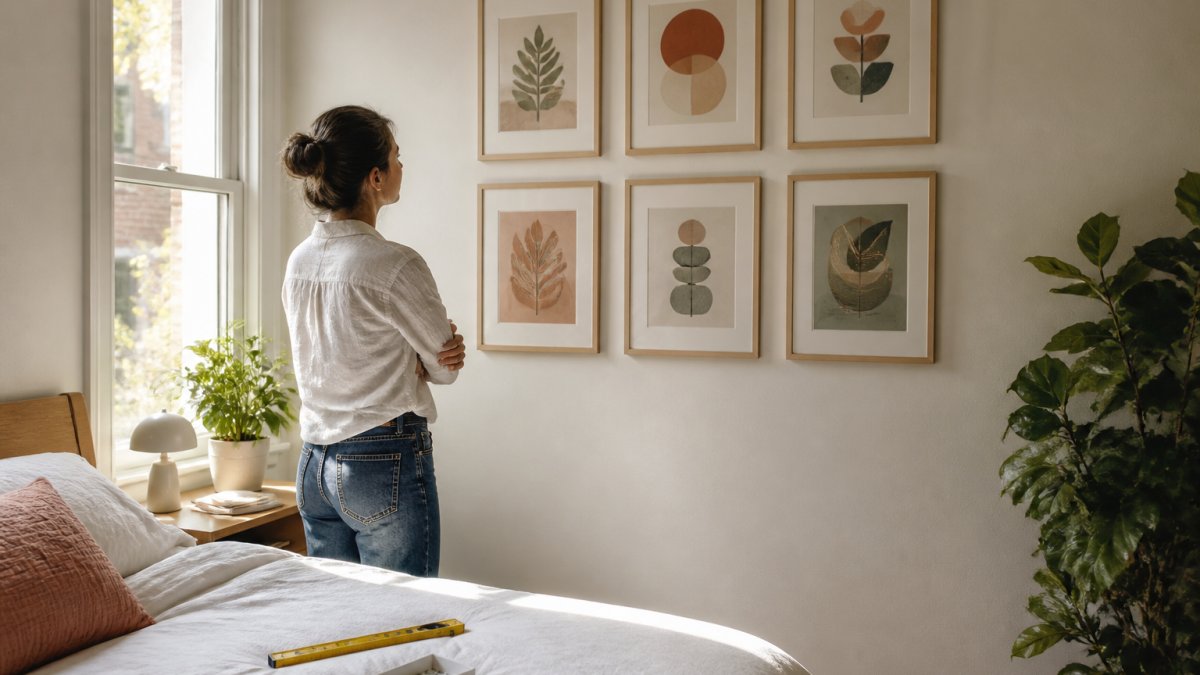
A measured grid of prints keeps the wall feeling balanced, while painted wooden letters can add a personal focal point when decorating your bedroom wall.
Removable Wall Panels for Renters and Frequent Movers
Removable wall panels are the practical answer for anyone on a lease. They go up without drilling, come down without leaving holes, and can be reconfigured in the next place. For renters, that’s the difference between decorating and not bothering.
The question we hear most is whether they’ll damage the wall. It depends on the fixing method and the wall itself.
Portability matters if you move often. Modular panels can be packed flat and rebuilt in a different layout, which means a kit bought for one bedroom still works in a smaller room later. That’s a genuine advantage over wallpaper, which is single-use.
For a wider set of no-drill options, the guide to renter feature walls covers removable ideas that don’t cost your bond.
Preparing Your Bedroom Wall Before You Cover It
Surface preparation decides whether your bedroom wall covering lasts. Clean the wall, fill any holes, sand patches flat, and let everything dry fully before you start. Skipping this step is why coverings bubble, peel or look lumpy within weeks.
Wipe down the wall with a damp cloth to remove dust and grease. Fill nail holes and cracks with filler, sand smooth, and spot-prime bare patches so the covering adheres evenly. On freshly painted walls, wait for the paint to cure fully; most paints need several days before they’re safe to cover.
Check for damp. A bedroom wall with rising damp or a cold spot that attracts condensation will ruin any covering, and the problem needs fixing first. If your wall is plasterboard, see Panels on Plasterboard: What Works, and What Doesn’t for how to check the wall and which fixing route suits you.
Planning Your Bedroom Wall Makeover with Lifted Plus
A bedroom wall makeover comes down to three decisions: how much wall you’re covering, which material suits your wall and your lease, and how much you want to spend. Get the measurement right and the rest follows.
Our DwellForms™ kits are designed for renters and homeowners who want to transform a space without paint or drilling. The panels are made from 100% recycled PET felt, and they’re designed to be moved and reconfigured. For renters, that means personalising a space without needing permission. For homeowners, it’s a fast update that doesn’t involve a renovation.
Measure your wall, work out your coverage, and pick your colours. That’s the whole process.
Frequently Asked Questions
How much does it cost to cover one bedroom wall?
It depends on the material and the wall’s size. Calculate the square metres first (width x height), then multiply by the price per square metre or per pack of your chosen covering. Paint is usually the cheapest per square metre, wallpaper sits in the middle, and modular panels cost more upfront but can be moved and reused. Lifted Plus lists current DwellForms kit pricing on its website, so check there for an exact figure rather than relying on estimates.
How do I calculate how much wall covering I need?
Measure the wall’s width and height in metres and multiply them to get the wall area. For a wall with a window or door, subtract that opening’s area from the total. Add 10 percent for trimming and pattern matching on wallpaper, or round up to the next full pack or panel count for modular systems. Always buy one extra pack if you can, since dye lots and batches can vary between orders.
What is the cheapest way to cover a bedroom wall?
A fresh coat of paint is usually the lowest-cost option per square metre, followed by budget wallpaper and large framed prints or fabric hangings. Cheap wall covering ideas that still look good include painted feature walls, second-hand frames grouped together, and self-adhesive panels bought in packs. Factor in tools and preparation time, because a cheap material that needs a lot of prep can cost more overall than a pricier one that goes up quickly.
Are wall panels cheaper than wallpaper?
Not per square metre, usually. Wallpaper tends to cost less upfront, but it is single-use and often needs replacing when you move or redecorate. Modular removable wall panels cost more initially yet can be taken down, reconfigured and reused across rentals, which spreads the cost over years. If you move frequently or rent, panels often work out better value over time; for a one-off refresh you plan to paint over later, wallpaper may be cheaper.
Can adhesive wall panels damage paint when removed?
Damage risk depends on the adhesive and the paint’s condition. Freshly painted or poorly bonded paint can lift when strong adhesive is pulled away, and textured or glossy surfaces grip unevenly. Test a small patch first, remove panels slowly rather than ripping them, and follow the manufacturer’s removal instructions. Modular systems that hang or clip rather than glue may avoid this issue.
Can I cover a wall without painting or drilling?
Yes. Removable wall panels, peel-and-stick wallpaper, fabric hangings, tension rods and freestanding screens all cover a wall without paint or drill holes. The key is matching the method to your wall surface: smooth painted walls suit adhesive products, while textured or uneven walls need a system that does not rely on full-surface adhesion. Check your lease first, and keep any packaging so you can reverse the change when you leave.
Ready to turn a blank wall into something intentional? Explore DwellForms™ and find the kit sized to your space, with colour samples you can see in your own light before you commit.

