
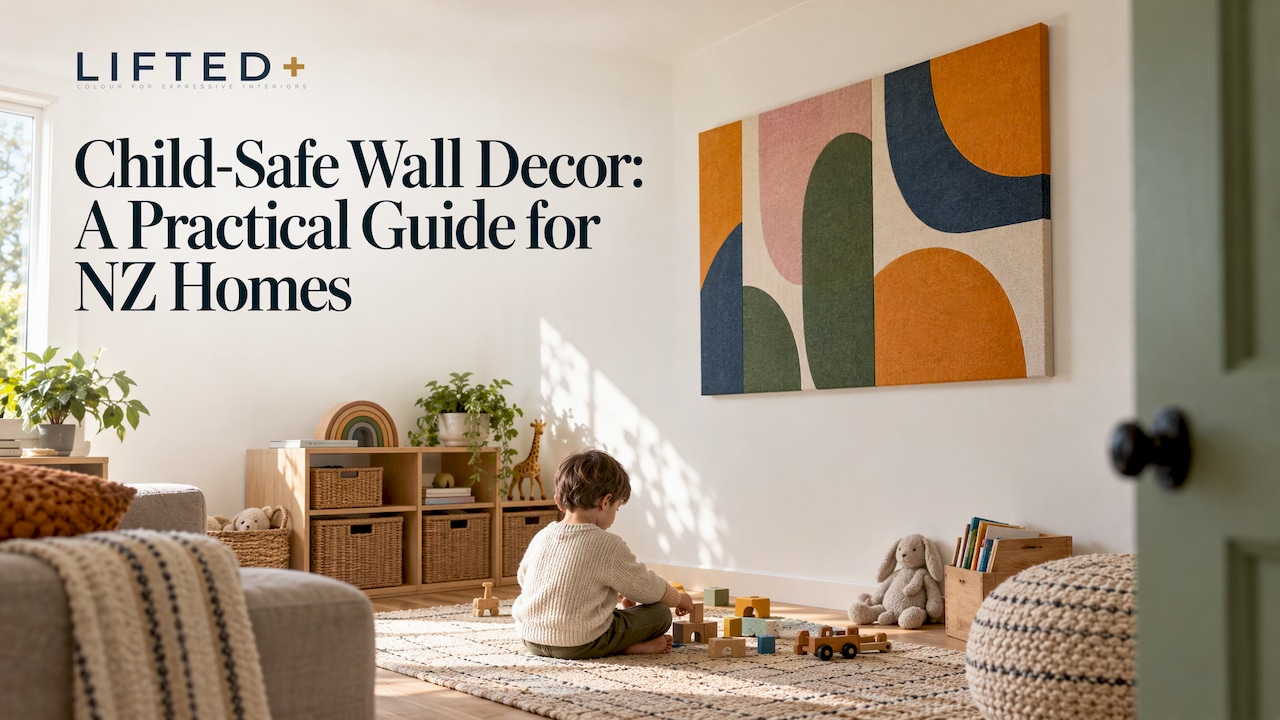
A child-safe wall starts with three questions: can it fall, can it be pulled down, and can any part of it end up in a small mouth? Answer those well and you can keep the colour, the texture and the personality. Safety is a matter of choosing the right pieces and putting them in the right place. It doesn’t mean a bare wall.
This guide walks through how to decorate around babies, toddlers and school-age children in New Zealand homes. It covers renters and owners, nurseries and shared living rooms. It leans on guidance from New Zealand safety bodies and adds the practical decorating sense we bring to every wall at Lifted+.
Key Takeaways
- Treat anything a child can reach as something they will touch, pull and possibly taste, and plan the wall from that starting point.
- Heavy, hard or glass-fronted pieces belong high and well away from cots and beds. Lighter textured pieces suit the lower and middle zones better.
- Small parts are the hidden risk: Plunket says anything smaller than a ping pong ball is a choking hazard, so skip pins, loose trims and fiddly add-ons.
- Furniture beside the wall matters as much as what hangs on it. Anchor tall pieces so they cannot tip.
- Colour is not the enemy of safety. A bold feature wall can sit comfortably above reach, with softer, changeable displays below.
Table of Contents
- Start With What a Child Can Reach
- The Three Hazards: Falling, Pulling and Swallowing
- Placing Decor by Height
- Frames, Glass and Mirrors
- Furniture Beside the Wall
- Paint, Finishes and Older Homes
- Where Felt Wall Panels Fit
- Colourful Ideas That Still Respect Safety
- A Quick Room-by-Room Check
- Ready to Plan a Colourful Wall?
- FAQ
- Sources
Start With What a Child Can Reach
Most decorating advice begins with taste. For a child’s space, begin with reach. A toddler on tiptoe, a climber on a bed rail, a seven-year-old standing on a beanbag: each defines a different zone, and your wall has to work in all of them.
Whānau Āwhina Plunket points out that anything a child can reach, such as pictures or wall hangings, could be a hazard. The same page lists the main home risks for children: suffocation, strangulation, choking, burns, drowning, falls and poisoning. Wall decor can touch several of those, which is why it deserves a little more thought than a quick trip to the shop with a hammer.
A useful habit is to get down to your child’s level and look at the wall. Kneel, then stand on a low stool. Notice which edges, corners, cords, hooks and loose bits appear at that height. It takes two minutes and shows you more than any checklist.
The Three Hazards: Falling, Pulling and Swallowing
Every risk on a child’s wall fits one of these three headings. Naming them makes decisions faster.
Falling
Heavy framed pieces, mirrors and shelves are the usual culprits. They stay up for years, then something shifts: a door slams, an earthquake rolls through, a child bounces on the bed beneath. Product Safety New Zealand advises placing cots and bunk beds away from windows, pictures, shelves and ceiling fans. That is the simplest rule on this page: the sleeping space and the heavy decor should not share the same patch of wall.
Pulling
Children tug. A dangling ribbon, a curled corner, a fabric tail: all are invitations. Pieces that sit flat to the wall give small hands less to grip. Pieces with loops, strings or hanging elements give them more. Plunket also recommends securing blind and curtain cords at least 1.6 m off the floor, and the same logic applies to any hanging cord on a wall display.
Swallowing
Small parts are the quiet danger. Plunket notes that anything smaller than a ping pong ball is a choking hazard. A New Zealand coroner reported in 2026 that a toddler died after choking on a drawing pin, and listed pins, coins, button batteries and magnets among everyday items that can be fatal for infants and toddlers. The coroner encouraged parents to review current first aid guidance for choking. It is worth doing now, while it is calm.
The practical takeaway for walls: avoid anything that relies on loose pins, tacks, small clips or detachable decorative bits within a child’s reach. If you do pin up artwork in a school-age child’s room, keep spares out of sight and count them.
Placing Decor by Height
Think of the wall in three bands. These are our practical suggestions rather than a regulation, so adjust them for your child’s age and climbing ambitions.
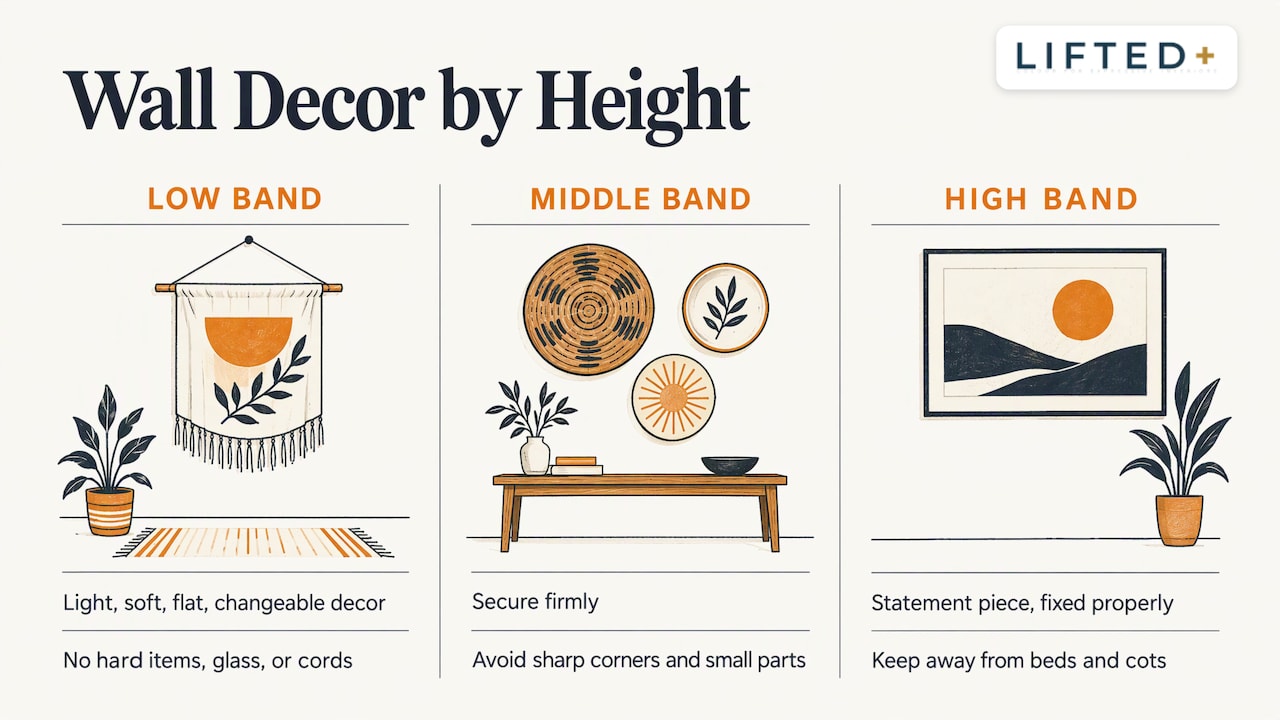
The low band (floor to about shoulder height of your child). This is the touch zone. Keep it for light, soft, flat or deliberately changeable displays. Nothing hard, nothing glass, nothing with a cord.
The middle band. Where an older child can reach by stretching or climbing. Secure everything firmly here, and avoid anything with sharp corners or small detachable parts.
The high band. Above where a child can reach even when climbing furniture. This is where a statement piece makes the most sense, provided it is fixed properly and not hung above a bed or cot.
The point of banding is permission as much as restriction. It tells you where the bold, dramatic piece can live and where the children’s own gallery can grow.
Frames, Glass and Mirrors
Glass above a sleeping child is a decision most families would rather not make. Safer alternatives include acrylic glazing, stretched canvas, unframed prints and fabric hangings. If you love a glazed frame, hang it in a part of the room that is not over a cot, bed or play zone, and check the fixing with a firm tug before you walk away.
Mirrors need the same respect. Place them where they cannot be reached from a bed or climbed to, and fix them securely. Our wall art and mirrors work best in shared spaces, hallways and living rooms, at adult eye level, rather than as the first thing a toddler can lean on.
For heavier pieces on plasterboard, fixing method matters. If you own your home and are hanging something substantial, a stud finder and fixing into the timber or steel framing is the standard approach, and a tradesperson can do it properly. If you rent, check what your tenancy allows before any drilling, and see our guide to what works and what doesn’t on plasterboard.
Furniture Beside the Wall
A child-safe wall is not only about what hangs on it. The bookshelf, the chest of drawers and the television stand are part of the same wall, and often the bigger hazard.
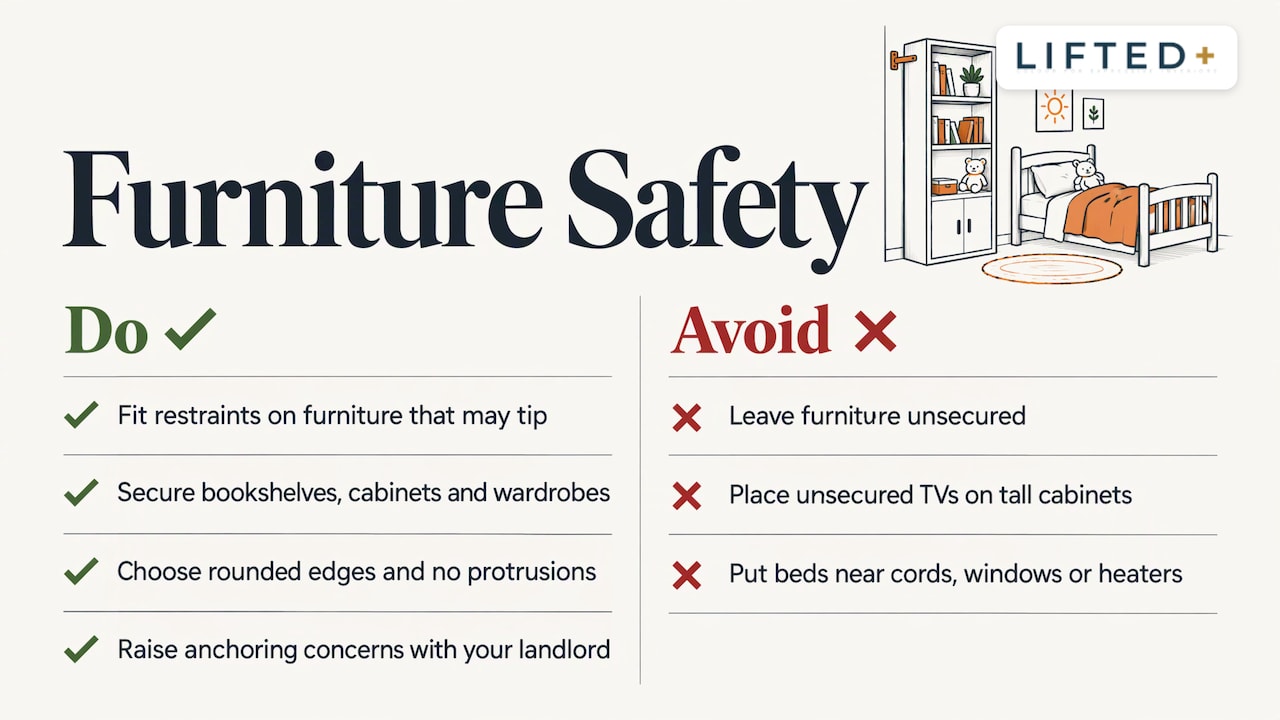
The Ministry of Business, Innovation and Employment’s guide states that tall items like bookcases and chests of drawers can fall when children climb on them, or in an earthquake, and recommends fitting restraints on furniture that may tip. Starship’s Safe As Houses report says furniture should be stable and secured to walls, and also recommends rounded edges and no protrusions to reduce injuries if a child collides with it. It adds a pointed warning about unsecured televisions, which should never sit on a tall cabinet a child could climb.
Plunket’s advice is to anchor bookshelves, cabinets and wardrobes to the wall and to keep a child’s bed away from blind cords, windows, mobiles with long strings, curtains, power points and heaters.
Renters often worry that anchoring furniture means putting holes in the wall. It is a fair concern, and one to raise with your landlord, who may well prefer a small fixing to a toppled wardrobe. Our guide to landlord-friendly wall decor for NZ renters covers how to approach that conversation.
Paint, Finishes and Older Homes
Sometimes the safest thing is to look at the wall itself. In older New Zealand houses, the surface under your decor may be old paint. The MBIE Building Performance guide notes that paint from the 1970s and earlier often contained lead pigments, that even small amounts of lead can cause poisoning, and that small children are at greater risk because they are more likely to get dust in their mouths.
WorkSafe’s guidelines add that overcoating lead-based paint is unsuitable where surfaces can be chewed or reached by children, such as architraves, window sills and handles. If your home is old and the paint is flaking, get advice before sanding, scraping or disturbing it, and keep children away while it is dealt with.
The same MBIE guide says wall coverings made from inert materials such as polyester and plant fibres are generally more breathable and less toxic than those based on PVC, and that water-based acrylic paints have lower solvent emissions. That is general guidance on material families, and it is a useful lens when you compare options: ask what a product is made of, and look for products that are open about it.
Where Felt Wall Panels Fit
Here is where our own experience comes in. DwellForms™ by Lifted+ is a modular wall system made from precision-cut PET felt, which is a polyester felt, and we make it from 100% recycled plastic. The panels attach with adhesive pads, so there are no pins, nails or screws in the picture, and nothing loose to be dropped on a floor. That alone removes one of the hazards we discussed above.
Felt is also a soft, flat, textured surface, which suits a feature wall in a family room, a hallway or a home office. It is the opposite of a heavy glazed frame. Even so, we would never call any wall treatment childproof, and neither should you. A sensible approach for a child’s room looks like this:
- Choose your layout so the main arrangement sits in the middle and upper bands, away from cots and beds.
- Press each panel firmly and give the full arrangement a check after the first few days and again from time to time.
- Keep any spare adhesive pads and offcuts out of reach, because small items are a choking risk.
- Reassess as your child grows. A wall that suits a crawler may need adjusting for a climber.
On adhesives, we tested several options before settling on our nano-adhesive pads. We deliberately discounted one very popular pull-tab brand, because our pads performed significantly better in our own testing at minimising damage to walls. We cannot promise that any adhesive is completely damage-proof, and wall condition, paint type and humidity all play a part. That is why we suggest a small, unobtrusive test area first, and why our guide to protecting your bond with no-drill panels walks through the steps.
If you are choosing for a tiled or unusual surface, panels on tile walls explains what tends to work in New Zealand homes.
Our Perspective
A child’s room is often the one room where adults forget colour is allowed. We reach for pale, polite and neutral because it feels safe. We would argue that safe and bland are different things.
The safest wall is one planned around reach: heavy things high and secured, soft things within hand’s reach, and nothing small enough to swallow. Within those limits, the room can be as bold as you dare. That is why we designed DwellForms™ around flat, sculptural felt panels that attach with adhesive pads rather than pins or screws. It gives a wall shape, texture and colour, without drilling or paint.
We are clear about what we know. We have tested our adhesive pads against other options and chose the one that performed best for us at minimising wall damage, and we still do not call any adhesive damage-proof. We make our panels from 100% recycled PET felt. Every family’s walls, ages and stages differ, so we encourage you to use the placement guidance above, and your own judgement, as you plan.
Colour that lifts a room is not a risk. A thoughtful layout is how you keep it that way.
Michelle
Colourful Ideas That Still Respect Safety
Safety guidance can sound like a list of what you cannot do. Here is what you can.
A felt feature wall above the reach line. A bold panel arrangement behind a desk, a reading chair or a dresser (anchored, of course) gives the room an architectural anchor. Our Skyline kit is one way to build that effect. If you want help choosing, the Choose My Kit tool narrows the options.
A rotating art wall for children. Now to Love suggests creating an art wall where children display their own work, framing special pieces in a gallery and using Blu-Tack for others so they are easy to swap. That is lovely advice. For children who still put things in their mouths, keep the removable fixings out of reach or wait until they are older. A magnetic or fabric display at low height is another option, as long as magnets are never small enough to swallow.
Colour on the surfaces that cannot fall. Paint a door, a skirting board or a piece of furniture. Colour does not need to hang off the wall to transform it. For colour pairing, our practical guide to mixing colours in interiors and our piece on using colour to lift a room will help you stay confident.
A nursery without the nails. If you are preparing a baby’s room and cannot or do not want to paint or drill, we have collected ideas in 10 nursery wall ideas that need no paint or drilling. Plunket’s advice for the sleeping space is worth keeping beside it: a firm, flat mattress with no pillows, toys, duvets or bumper pads, and furniture sturdy enough that a child cannot pull it over.
A gallery wall for the family room. In the shared parts of the home, a considered grouping works beautifully at adult height. Our step-by-step gallery wall guide shows how to plan the layout on the floor first.
A Quick Room-by-Room Check
Before you finish a room, run through a short routine. Look above the bed: nothing heavy, glazed or hanging. Look at the cords: blinds, mobiles and decor strings secured or removed. Look at the furniture: tall pieces anchored. Look at the floor beneath the wall: pins, clips, spare pads or loose trims gone. Look at the surface: if the house is old and the paint is flaking, deal with that first.
Then revisit every few months. Children change quickly, and a wall that was perfect for a crawler may need a rethink once they discover climbing. Product Safety New Zealand is blunt that parents and caregivers are responsible for supervising children, even when they are asleep, and no choice of decor replaces that.
Ready to Plan a Colourful Wall?
If you are planning a feature wall in a family room, hallway or home office, our DwellForms™ Core Kits give you a full arrangement of sculptural felt panels in one purchase, and the Extension Kits let you grow the design later.
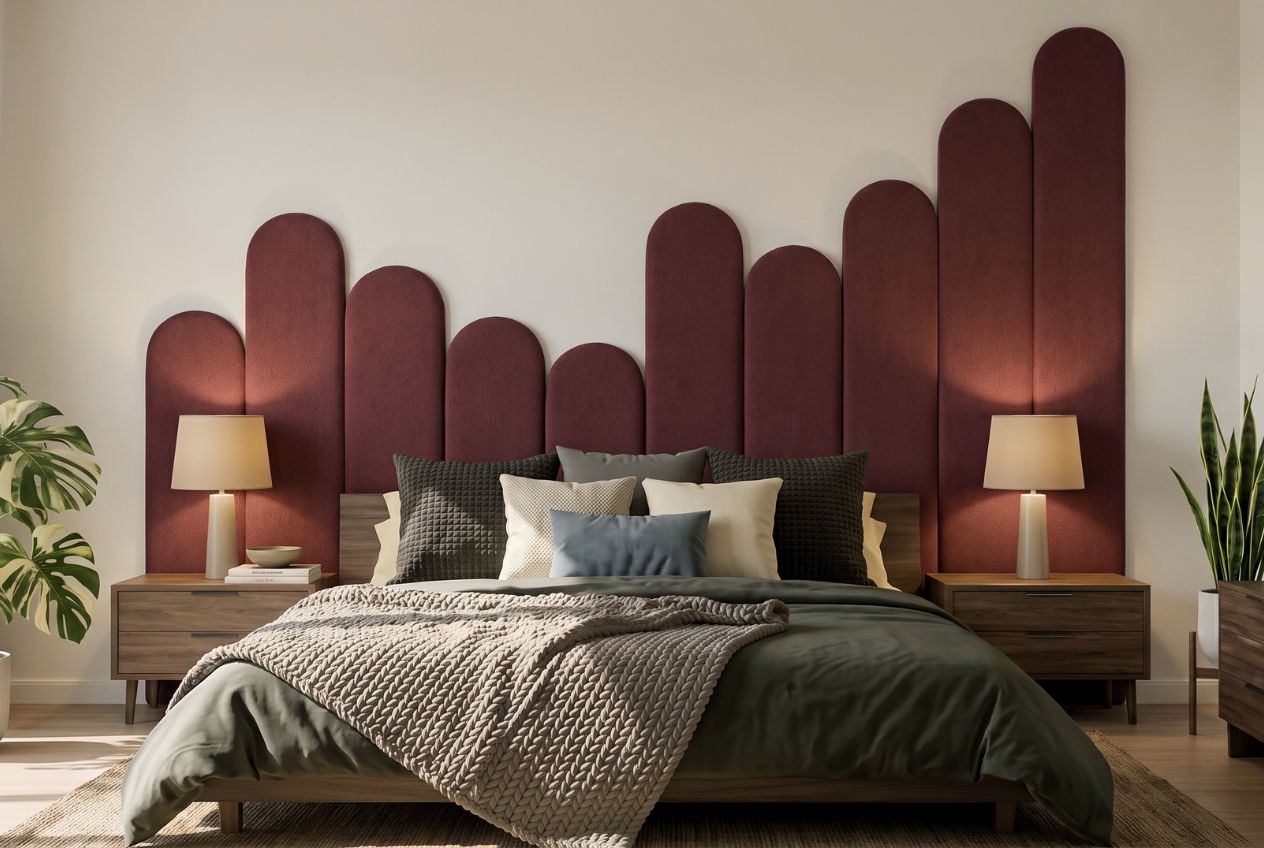
Not sure about colour? Start with the Colour Samples, and hold them against your wall in different light. Sample kit purchases are credited towards a full kit order. When you move, the panels can come with you.
FAQ
What is the safest type of wall decor for a nursery?
Light, flat and securely fixed pieces are the sensible choice, such as fabric hangings, canvas or acrylic-glazed prints. Keep them away from the cot, as Product Safety New Zealand advises keeping cots clear of pictures and shelves. Avoid anything with cords, loops or small detachable parts.
Can I use adhesive wall decor around young children?
Yes, as long as the fixing is firm, the piece is light and flat, and nothing small can come loose. Keep spare pads and offcuts out of reach, and check the arrangement regularly. No adhesive is completely damage-proof, so test a small area on rental walls first.
How high should I hang art in a child’s room?
There is no single official figure, so go by your child. Put heavier or glazed pieces above the height they can reach even when climbing, and keep low areas for soft, light or changeable displays. Reassess as they grow.
Does child-safe decor matter in an older home?
It does, mainly because of what is under the decor. Paint from the 1970s and earlier often contained lead, according to MBIE’s Building Performance guide. If paint is flaking or you plan to sand, get advice from the relevant professionals before starting.
Should I anchor furniture even if I rent?
MBIE and Starship both recommend securing tall furniture that could tip. Talk to your landlord about a fixing method they are comfortable with, because a small fixing is usually a better outcome than a toppled wardrobe.
Sources
- Keeping kids safe: Children’s and nursery products (MBIE)
- Painting and decorating, Building Performance
- Guidelines for the Management of Lead-based Paint, WorkSafe New Zealand
- SAFE AS HOUSES, Safekids Aotearoa
- Safety around the home, Whānau Āwhina Plunket
- Babyproofing your home, Whānau Āwhina Plunket
- Toddler died after choking on drawing pin, coroner
- Keeping kids safe at home, Product Safety New Zealand
- Decorating children’s rooms, Now to Love
Recommended
- Landlord Friendly Wall Decor For NZ Renters
- Save Your Bond: NZ Renters Protect Walls Behind Furniture, No Drill
- Renters: 10 Nursery Wall Ideas That Need No Paint Or Drilling
This article is for general information and inspiration only. Product performance and results may vary depending on individual circumstances, surfaces and installation.
