

TL;DR:
- Mood lighting shapes room atmosphere, emotional response, and perceived space through deliberate color, brightness, and placement.
- Properly layered and adjustable mood lighting can enhance relaxation, expand small rooms, and suit individual preferences.
- Personal observation and home architecture are key to customizing effective mood lighting for wellbeing and aesthetic impact.
The colour and brightness of your lights can shift how a room feels, how your body relaxes, and even how large a space appears, often more powerfully than a furniture rearrangement or a fresh coat of paint. Most homeowners treat lighting as an afterthought, something to sort after the sofa is chosen and the artwork is hung. But light influences circadian rhythms and spatial perception in ways that directly shape your daily wellbeing. This guide cuts through the confusion, offering clear, practical advice on how to use mood lighting to transform your New Zealand home with both artistic intention and genuine comfort.
Table of Contents
- Understanding mood lighting: The science and art
- How mood lighting shapes emotion, space, and wellbeing
- Choosing colour and brightness for mood: Warm vs cool, blue vs red
- Layering and positioning: Mood lighting solutions for New Zealand homes
- Why perfect mood lighting defies one-size-fits-all advice
- Elevate your space with statement mood lighting solutions
- Frequently asked questions
Key Takeaways
| Point | Details |
|---|---|
| Mood lighting is intentional | Artistic lighting shapes emotions and atmospheres, unlike ordinary room lights. |
| Warm colours foster relaxation | Low-intensity, warm light supports wellbeing, especially in bedrooms and lounges. |
| Layering enhances space | Using corners, pendants, and different brightness levels expands small rooms and improves home comfort. |
| Personalise for best results | Lighting choices must adapt to room function and individual preferences for mood and practicality. |
| Blue light uplifts, red can drain | Blue light generally boosts mood, while saturated reds need cautious use to avoid fatigue. |
Understanding mood lighting: The science and art
Mood lighting is not simply about dimming the overhead fixture and calling it atmosphere. It is a deliberate practice of tuning colour, brightness, and placement to shape how a room feels and functions. Where general lighting prioritises visibility and task performance, mood lighting layers in emotional intent. It brings shape to the air, pulls a space out of the safe, polite middle, and gives a room a distinct character that holds long after guests have arrived.
The distinction matters more than most people realise. General lighting floods a space evenly, which is efficient but emotionally flat. Transformative mood lighting works with shadow and warmth, creating hierarchy and visual interest that makes a room feel considered rather than merely functional.
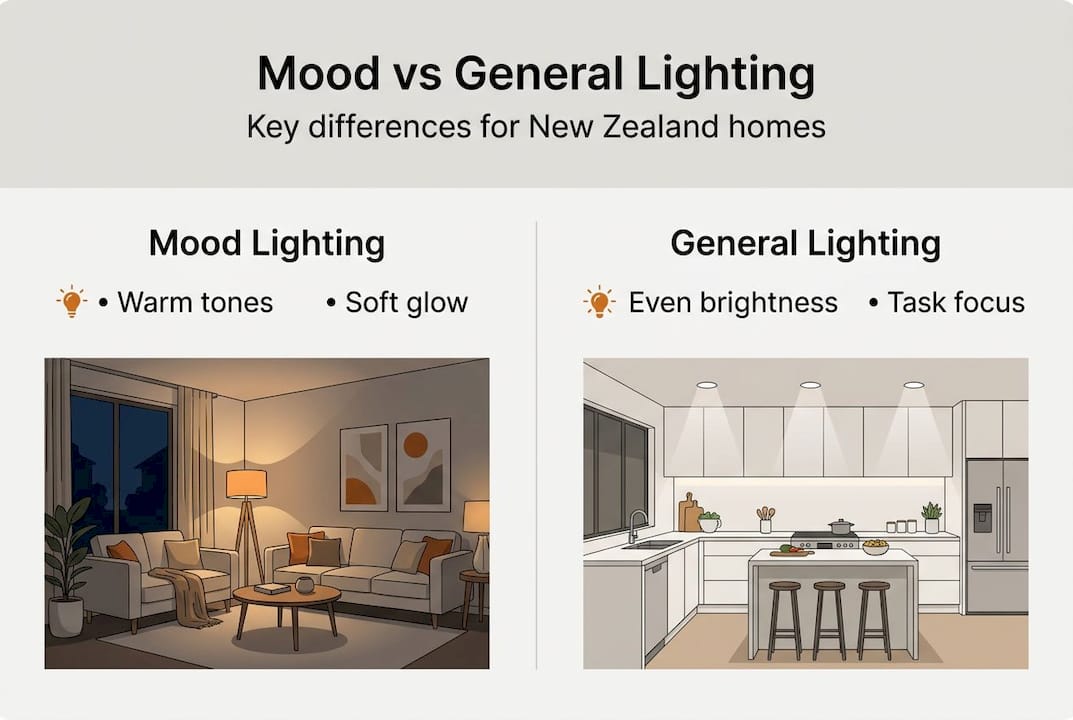
| Feature | Mood lighting | General lighting |
|---|---|---|
| Primary purpose | Emotional atmosphere | Task visibility |
| Colour temperature | Warm to tunable | Typically cool-neutral |
| Brightness level | Low to medium | High |
| Placement | Layered, directional | Overhead, uniform |
| Artistic intent | High | Low |
The science behind this is grounded in colour temperature and intensity. Research confirms that warm low light boosts pleasure and immersion, while cool, high-illuminance lighting increases arousal and alertness. These are not subtle differences. They are measurable shifts in how your nervous system responds to a room.
The core elements of mood lighting come down to three things:
Colour: The warmth or coolness of your light source, measured in Kelvin, shapes the emotional register of a space.
Brightness: Lower intensity encourages relaxation; higher intensity promotes focus and energy.
Directionality: Where light falls, whether upward, downward, or across a wall, determines texture, depth, and perceived scale.
Designers and homeowners who understand these levers use them the way a painter uses tone. Browse our mood board inspiration or the quiet voltage mood board to see how these principles translate into real interiors.
How mood lighting shapes emotion, space, and wellbeing
With the foundations of mood lighting clear, it is time to see how it actually shapes how you feel and experience your space.
The emotional effects of lighting are not abstract. Light influences circadian rhythms, cortisol levels, and spatial perception in ways that directly support or undermine relaxation and wellbeing. Warm mood lighting in the evening signals to your body that rest is approaching. Harsh overhead light at the same hour does the opposite, keeping your system in a state of alertness that makes winding down genuinely harder.
| Lighting quality | Colour temperature | Emotional effect |
|---|---|---|
| Warm, low intensity | 2700K to 3000K | Pleasure, calm, immersion |
| Cool, high intensity | 4000K to 5000K | Arousal, alertness, focus |
| Blue-toned | Variable | Positive affect, mood lift |
| Red-toned | Variable | Negative affect, potential fatigue |
Research also shows that preferences shift to lower illuminance over time, and that blue-toned light tends to produce the most positive affect, while red-toned light scores the most negative. This has real implications for how you choose and layer your lighting at home.
Spatially, lighting is one of the most powerful tools for reshaping perceived scale. A low pendant over a dining table draws the eye downward and creates intimacy. Uplighting in a corner expands the sense of height. Understanding colour and spatial effects alongside lighting placement gives you two levers working in the same direction.
“Lighting is not just a design element. It is a physiological one. The quality of light in a space directly affects how the body regulates stress, rest, and attention.”
Pro Tip: Layer your lighting by combining a warm mood layer with a focused task layer. This reduces eye strain during reading or cooking while preserving the atmospheric quality of your space. Think of it as two instruments playing different roles in the same composition, with colour psychology in interiors guiding your palette choices.
Choosing colour and brightness for mood: Warm vs cool, blue vs red
Once you understand mood lighting’s emotional impact, the next step is to pick the right colours and brightness for your room and lifestyle.
Research confirms that blue light produces the most positive affect in mood lighting contexts, while red-toned light scores the most negative. Cool light also aids cognitive tasks, which is worth factoring into spaces where you work or study. However, coloured lighting risks fatigue when used at high saturation over long periods, so restraint matters.
Here is a practical sequence for choosing your colour temperature and brightness:
1. Identify the room’s primary function. A bedroom calls for rest; a kitchen calls for clarity; a lounge sits somewhere between the two.
2. Set your base colour temperature. Use 2700K for cosy, intimate spaces like bedrooms and lounges. Move toward 3500K to 4000K for kitchens and home offices where cognitive sharpness matters.
3. Introduce accent colour thoughtfully. A soft blue-toned accent lamp can lift mood without overwhelming the space. Avoid highly saturated reds as a dominant source, reserving them for small decorative moments only.
4. Calibrate brightness to the time of day. Brighter during the morning and afternoon, progressively lower through the evening to support your body’s natural rhythm.
5. Build in flexibility. Dimmable fittings and tunable bulbs allow you to shift the room’s register as your needs change throughout the day.
Pro Tip: Do not lock your lighting into a single setting. Preferences genuinely shift over time and across seasons, and New Zealand homes experience dramatic changes in natural light between summer and winter. A tunable system gives you the range to respond. Explore the spatial effects of colour alongside your lighting choices for a fully considered approach, and use our colour psychology guide to refine your palette decisions.
Layering and positioning: Mood lighting solutions for New Zealand homes
With colour and brightness chosen, the focus shifts to layering and positioning to maximise your home’s mood lighting potential.
New Zealand homes present specific challenges. Many older villas and bungalows have limited natural light, particularly in south-facing rooms. Newer builds often feature high stud ceilings that can feel cold and cavernous without deliberate lighting strategy. Small rooms, a common reality in urban Auckland and Wellington, benefit enormously from well-placed light sources that expand perceived scale.
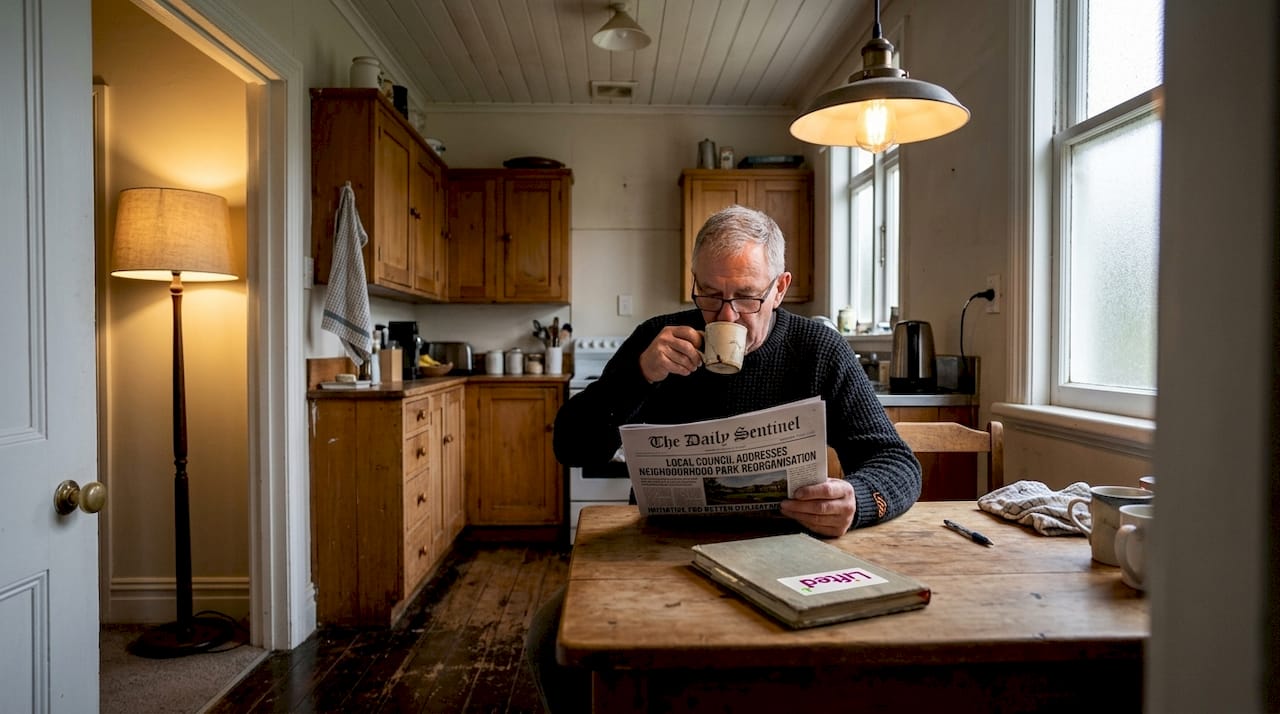
Layering lighting to compensate for low natural light, using corner lighting to expand small rooms, and lowering pendants in high-ceiling spaces are among the most effective architectural responses available to homeowners. These are not decorative flourishes. They are spatial tools.
Key strategies for New Zealand homes:
Layer for low-light rooms: Combine a warm ambient source with a mid-level floor lamp and a focused task light. This creates depth and prevents the flatness that a single overhead fitting produces. Our bright room ideas offer further inspiration for light-challenged spaces.
Use corners to expand small rooms: A lamp placed in a corner throws light across two walls simultaneously, visually widening the space. This is one of the simplest and most effective tricks available.
Lower pendants in high-ceiling rooms: Dropping a pendant to just above head height in a high-stud room creates intimacy and draws the eye to a human scale. Explore statement lighting tips for open-plan spaces where ceiling height is a factor.
Account for gender preferences in shared spaces: Research shows women tend to prefer lower illuminance and colour temperatures in mood lighting contexts. In shared living areas, err toward the warmer, softer end of the spectrum and build in dimming flexibility.
Avoid overdimming: Dropping light too low creates adjustment uncertainty and can feel uncomfortable rather than atmospheric. There is a threshold below which mood lighting stops feeling considered and starts feeling neglected. Our ambient lamp guide and sculptural lighting options can help you find the right balance.
Why perfect mood lighting defies one-size-fits-all advice
Most lighting guides hand you a formula: use warm light here, cool light there, dim to 30 percent for atmosphere. The problem is that these rules are built on averages, and your home is not average.
The research on personalisable lighting confirms that adjustable systems benefit task-switching and comfort, but the evidence for universal alertness or mood outcomes remains inconclusive. In other words, what works beautifully in one household may feel wrong in another. This is not a failure of design. It is the nature of light and human perception.
Our view is that the most effective mood lighting starts with honest observation. How does your household actually use each room? When does the space feel right, and when does it feel off? These are more useful starting points than any Kelvin chart.
The architecture of your home matters too. A north-facing lounge in a Wellington terrace house behaves completely differently from a south-facing bedroom in a Christchurch villa. Formulaic advice cannot account for that. What it can do is give you a vocabulary and a set of tools. From there, the real work is yours. Visit our statement lighting perspective for a deeper look at how lighting choices hold a room together when the formula falls short.
Elevate your space with statement mood lighting solutions
Ready to put your mood lighting knowledge into action? At Lifted+, we curate lighting that does more than illuminate. Each piece is selected for its sculptural presence, its ability to shape atmosphere, and its relevance to the way New Zealanders actually live.

Whether you are starting from scratch or refining a space that almost works, our mood lighting solutions offer a clear starting point. Browse the full lighting collection for statement pieces that bring genuine presence to any room, or visit our shop to explore the complete range of artistic lighting and decor. The right light does not just fill a room. It defines it.
Frequently asked questions
What makes mood lighting different from standard lighting?
Mood lighting uses colour, brightness, and placement to shape emotional atmosphere, while standard lighting focuses primarily on practical task illumination. The artistic intent and emotional effect are fundamentally different in purpose and outcome.
How do I pick the right colour temperature for relaxing spaces?
Opt for warm, low-intensity light around 2700K for bedrooms and lounges, as warm low light boosts pleasure and supports the kind of immersion that helps you genuinely unwind.
What are the risks of using coloured mood lighting for long periods?
Highly saturated coloured lighting, particularly reds, can cause fatigue and discomfort with extended use. Research shows that coloured lighting risks fatigue when saturation is high and exposure is prolonged.
Can mood lighting help small or dark New Zealand homes?
Layered mood lighting and well-placed corner lights can expand small rooms and compensate for limited natural light. Corner lighting expands perception and makes spaces feel considerably larger and brighter.
Do lighting preferences differ between men and women?
Yes. Research shows that women prefer lower illuminance and cooler colour temperatures in shared mood lighting contexts, which is worth factoring into your layering decisions.
Recommended
- Apartment Living With Colour In NZ | Design For Small Homes
- 9 Small Living Room Colour Ideas For NZ – Lifted+ | More Colour. More Mood. More Life.
- Mood Lighting That Actually Changes A Room – Lifted+ | More Colour. More Mood. More Life.
- Colourful Wall Art NZ That Holds A Room – Lifted+ | More Colour. More Mood. More Life.
- Lighting adjustment tips for photos to enhance interiors