

TL;DR:
- Modern interior design focuses on timeless, structured principles with clean lines and high-quality materials.
- Trends in New Zealand for 2026 emphasize warm neutrals, natural textures, and a connection to nature.
- Sustainability and bold, meaningful decor are essential for creating warm, intentional modern homes.
Most homeowners use the words ‘modern’ and ‘contemporary’ as if they mean the same thing. They don’t, and that confusion quietly shapes every decorating decision you make, often pulling a space away from the coherent, vibrant identity it deserves. Understanding what modern interior design actually means, where it comes from, and how it applies to New Zealand homes in 2026 is the difference between a room that simply looks tidy and one that genuinely holds the room. This guide cuts through the noise so you can make purposeful, lasting choices.
Table of Contents
- Defining modern interior design: history, key traits and distinctions
- The evolution of modern interior design for New Zealand homes
- Essential materials, colours, and forms in modern interiors
- How to apply modern interior design principles at home
- Modern interior design in New Zealand: what truly works (and what doesn’t)
- Enhance your modern space with unique decor and expert support
- Frequently asked questions
Key Takeaways
| Point | Details |
|---|---|
| Modern vs contemporary | Modern interior design is structured and timeless, while contemporary is always changing with the trends. |
| New Zealand trends 2026 | Warm neutrals, layered textures, and sculptural forms are key for vibrant modern homes in New Zealand this year. |
| Sustainable choices matter | Choosing eco-friendly materials and unique pieces is essential in modern interiors and highly preferred by homeowners. |
| Practical transformation | Focusing on a few bold, quality elements like artwork or lighting brings lasting impact and individual style to a home. |
Defining modern interior design: history, key traits and distinctions
Clarifying the roots of modern interior design is the first step to applying its principles in your own home.
Modern interior design is not a moving target. It refers to a specific design movement rooted in the early to mid-20th century, shaped by the Bauhaus school, Scandinavian functionalism, and the broader modernist philosophy that form should follow function. It is structured, resolved, and built around a clear visual language: clean lines, open floor plans, minimal ornamentation, and a deep respect for high-quality materials. It does not chase trends. It resists them.
Contemporary design, by contrast, is fluid. It reflects what is happening right now, borrowing freely from multiple eras and movements. As modern and contemporary styles are often confused, the key distinction is that modern is timeless and structured while contemporary is trend-driven and constantly evolving. One is a fixed point in design history. The other is a moving one.
This distinction matters enormously when you are choosing furniture, art, or finishes. A truly modern interior will look as considered in twenty years as it does today. A purely contemporary space may feel dated within a decade.
| Trait | Modern design | Contemporary design |
|---|---|---|
| Time reference | Mid-20th century movement | Present moment, always shifting |
| Lines and forms | Clean, geometric, deliberate | Fluid, curved, eclectic |
| Colour palette | Neutral base with warm accents | Varies widely, often bold |
| Materials | Wood, steel, glass, natural fibres | Mixed, experimental |
| Longevity | Timeless | Trend-dependent |
The core characteristics of modern design are worth knowing by heart. Think clean horizontal and vertical lines, open and uncluttered spaces, a restrained but intentional use of colour, sculptural furniture forms that earn their place, and materials chosen for both beauty and integrity. Apartment colour trends NZ often reflect this restrained palette, while wall art ideas for NZ apartments show how a single bold piece can anchor the whole composition. Modern and contemporary styles together cover around 65% of the global interior design market, which tells you just how dominant this visual language has become.
The evolution of modern interior design for New Zealand homes
Understanding the evolution of modern design sets the stage for seeing how it’s interpreted for today’s New Zealand homes.
Modern design arrived in New Zealand through a combination of post-war architecture, international influences, and a growing appreciation for honest, well-made objects. By the 1960s and 70s, the clean lines of Scandinavian and American modernism were appearing in New Zealand homes, often softened by local timber species and an openness to the landscape outside. The floor-to-ceiling window became a signature move, blurring the boundary between interior and exterior in a way that felt distinctly Kiwi.
Each decade brought its own refinements. The 1980s leaned into industrial materials. The 1990s and 2000s introduced more warmth through layered textiles and organic forms. By the 2010s, sustainability had moved from a niche concern to a central design value. And now, in 2026, NZ design trends show a clear shift toward warm neutrals, layered textures, sculptural forms, and a deep connection to nature.
| Decade | Global modern design | NZ interpretation |
|---|---|---|
| 1950s-60s | Bauhaus, mid-century modern | Timber-framed homes, open plans |
| 1970s-80s | Industrial materials, minimalism | Raw concrete, native timber |
| 1990s-2000s | Organic forms, global eclecticism | Layered textiles, indoor-outdoor flow |
| 2010s | Sustainability, Scandinavian warmth | Eco materials, natural light focus |
| 2026 | Sculptural forms, warm neutrals | Nature-led palettes, tactile layering |
Local timeless home trends for 2026 reinforce this direction, pointing toward homes that feel genuinely lived-in rather than staged. The following steps will help you blend international modern principles with a distinctly Kiwi sensibility.
- Start with the landscape. Let the colours and textures outside your window inform your palette inside.
- Choose natural materials first. Timber, stone, and linen connect your interior to the local environment.
- Layer textures rather than patterns. Tactile depth adds warmth without visual noise.
- Introduce mood lighting to shift the energy of a room from day to evening.
- Select colour ideas that feel grounded rather than reactive to short-lived trends.
Essential materials, colours, and forms in modern interiors
With an understanding of local trends, homeowners can take control by curating the right materials, colours and forms.
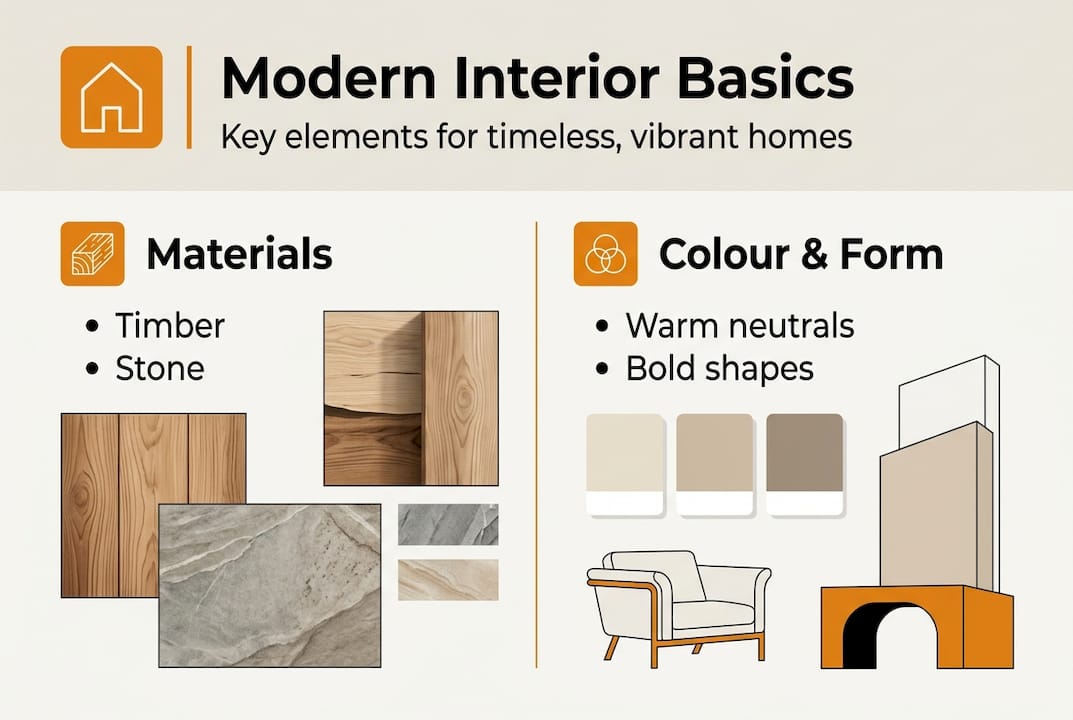
Materials are the bones of a modern interior. Get them right and everything else follows. The most enduring choices include solid and engineered timbers, particularly species with warm grain like oak and walnut, alongside glass, brushed steel, and natural stone. Textured finishes such as limewash plaster and honed concrete add depth without decoration. Natural fibres, including linen, jute, and wool, bring softness and tactile warmth to spaces that might otherwise feel austere.
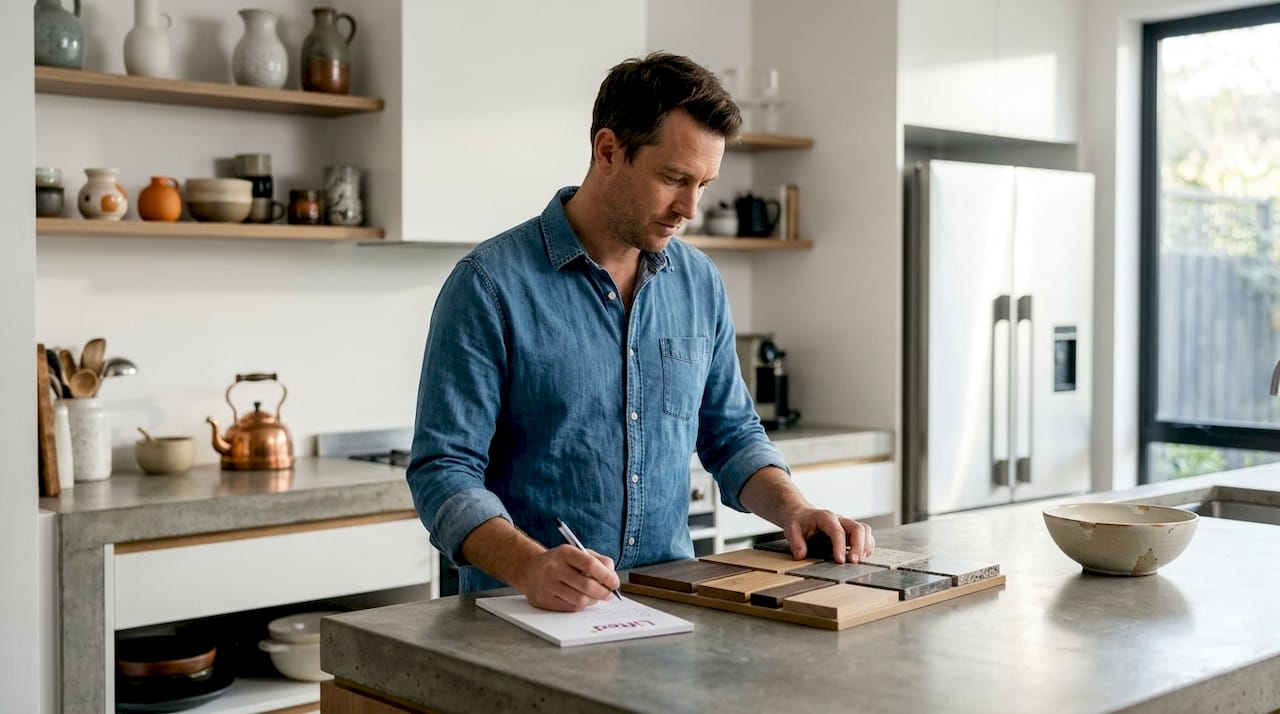
Sustainability is no longer optional in this conversation. 68% of consumers now prefer sustainable materials in interior design, and this preference is particularly strong in New Zealand homes. Recycled timber, low-VOC finishes, and ethically sourced textiles are not just responsible choices. They are increasingly the mark of a discerning, modern interior.
Colour in a modern interior is not an afterthought. It is a considered act. The dominant palette for New Zealand homes in 2026 leans toward warm whites, soft ochres, terracotta, and deep forest greens. These are colours that feel connected to the land. Bold pops of colour, whether through a unique modern wall art piece or a single upholstered chair, work precisely because the surrounding palette is restrained. Colourful wall art for modern spaces can hold a room in a way that ten smaller decorative objects never could.
Form is the third pillar. Modern interiors favour shapes that have presence: rounded sofas that anchor a living area, geometric pendants that bring shape to the air, sculptural vases that earn their place on a shelf. These forms are not decorative in the traditional sense. They are architectural. They give the room structure and intention.
Pro Tip: If you are introducing a showpiece into a minimalist room, give it space. Clear a metre of visual breathing room around it and resist the urge to add supporting objects. The power of a sculptural piece comes from its isolation, not its company.
How to apply modern interior design principles at home
Armed with the principles, here is how you can put modern design into practice to transform your living space.
The most common mistake is trying to do too much at once. Modern design rewards patience and restraint. NZ design priorities in 2026 centre on unique, high-quality pieces, layered textures, and a genuine connection to nature. These are not quick fixes. They are considered investments.
Here is a practical sequence for achieving a modern interior at home.
- Clear the clutter. Remove anything that does not serve a clear visual or functional purpose. Empty space is not wasted space in a modern interior. It is the canvas.
- Identify your focal piece. Every modern room needs one element that commands attention, whether that is a statement wall art piece, a sculptural sofa, or an architectural light fitting.
- Build texture through layers. Introduce a linen throw, a textured rug, a rough-hewn timber shelf. Texture adds warmth and dimension without adding visual noise.
- Curate your colour. Choose a base of two or three tones and introduce one accent colour through a single bold element. Discipline here is what separates a modern interior from a merely tidy one.
- Get the lighting right. Layered lighting, combining ambient, task, and accent sources, gives a modern room its drama and focus. Explore guidance on layering lighting to understand how each layer contributes to the overall mood.
The best statement wall art does more than decorate a wall. It defines the emotional register of the entire room. A large-scale artwork in a warm ochre or deep rust can pull a space out of the safe, polite middle and give it genuine character.
Pro Tip: Invest in one transformative feature before buying anything else. An oversized artwork or a sculptural floor lamp will do more for your space than a dozen smaller accessories. Start there, then build around it.
Modern interior design in New Zealand: what truly works (and what doesn’t)
Even after learning the rules, it pays to dig deeper into what genuinely separates a vibrant, lasting modern home from a forgettable one.
The most common mistake we see is homeowners treating modern design as a checklist. Neutral walls, tick. Timber floor, tick. A few geometric cushions, tick. The result is a room that looks vaguely correct but feels hollow. It has the vocabulary of modern design without the conviction.
What actually works is prioritising fewer, bolder, more meaningful pieces. One artwork that genuinely moves you. One lamp that brings shape to the air. One piece of furniture with a silhouette you would recognise across the room. These choices accumulate into a space that feels intentional rather than assembled.
The other thing worth saying plainly: a truly modern home still feels warm and lived-in. It is not a showroom. How colour transforms small homes shows that warmth comes from considered colour, not from adding more objects. The discipline of modern design is not about removing personality. It is about distilling it.
Enhance your modern space with unique decor and expert support
To put these ideas into action, having the right resources and inspiration can make all the difference.
At Lifted+, we curate unique modern decor pieces selected for their sculptural presence, colour integrity, and lasting relevance. Whether you are searching for a statement artwork, a bold lighting form, or a single piece that redefines a room, our collections are built around the principle that one exceptional object outweighs ten ordinary ones.

Explore our mood board ideas to find your direction before you buy, or browse the full wall art collection to discover pieces that hold a room with genuine presence. We are here to help you make choices that last.
Frequently asked questions
What makes modern interior design different from contemporary style?
Modern design is timeless and structured, rooted in a specific 20th-century movement, while contemporary design adapts to current trends with a more fluid, evolving look that shifts from year to year.
Which colours are popular in modern New Zealand interiors in 2026?
Warm neutrals, organic earth tones, and layered textures with vibrant accent pieces are on trend, with 2026 NZ trends pointing clearly toward sculptural forms and a strong connection to nature.
How important is sustainability in modern interior design today?
Sustainability is now central to modern design, with 68% of consumers in 2026 preferring eco-friendly materials, making ethical sourcing and natural finishes a mark of quality rather than a niche preference.
What is the most impactful way to add vibrancy to a modern home?
Introducing one bold, sculptural piece or colourful artwork as a focal point can dramatically elevate a modern space, as NZ design principles in 2026 prioritise unique, high-quality pieces over accumulation of smaller accessories.
Recommended
- Minimalist Home, But Make It Colour – Lifted+ | More Colour. More Mood. More Life.
- Interior Design Trends Bold Colour 2026 – Lifted+ | More Colour. More Mood. More Life.
- Layer Lighting At Home For Modern Style: A Guide
- Colour Palette Ideas For Optimistic Interiors – Lifted+ | More Colour. More Mood. More Life.
- Timeless Design: Elevating Luxury Stone Interiors – Marmorique