
TL;DR:
- Decorative home accents are non-functional objects that add personality, texture, and visual interest to a room. They include items like vases, sculptures, and wall art that enhance a space’s character and perceived value. Choosing the right accents with intention and proper scaling transforms a functional room into a warm, cohesive, and stylish home.
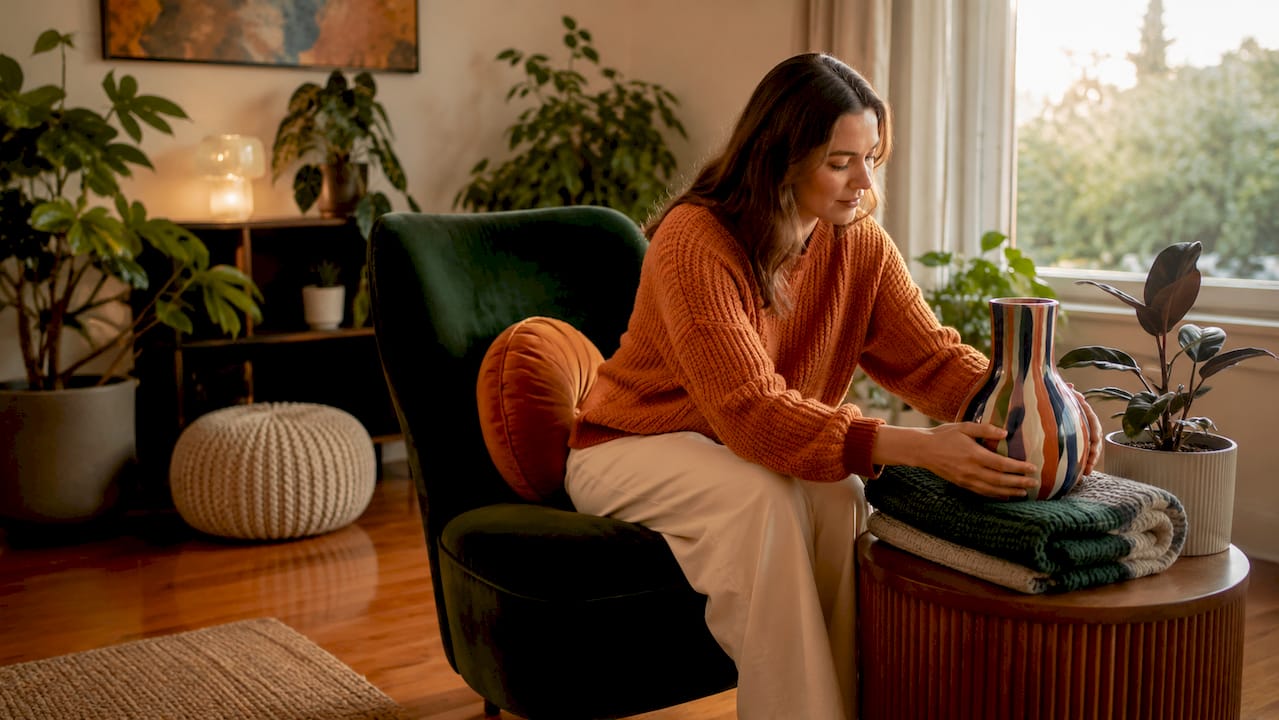
A decorative home accent is any non-structural, non-functional item placed in a room primarily to add personality, colour, texture, or visual interest. Think sculptural vases, woven throws, ceramic bowls, framed wall art, and statement candle holders. These pieces do not hold up walls or serve a primary utility. They shape the mood of a space, pull a room out of the safe, polite middle, and give it something to say. If you have ever wondered what is a decorative home accent and why designers treat these pieces as seriously as furniture, this guide answers that question with real depth.
What is a decorative home accent and why does it matter?
A decorative home accent is defined in interior design as any object chosen for its aesthetic contribution rather than its structural or functional role. The industry term is accent piece, and it covers everything from a hand-thrown ceramic vase on a shelf to a sculptural side table that exists as much to be looked at as to hold a drink.
Accent decor adds character and personal expression, bringing rooms from ordinary to extraordinary through layers, colour, and texture. That is not a vague claim. A room without accents reads as a showroom. A room with the right accents reads as a home.
The distinction matters because it changes how you shop. Furniture carries the room. Accents finish it. When you understand that role clearly, you stop buying random objects and start choosing pieces with intention.
What are the main types of home accents?
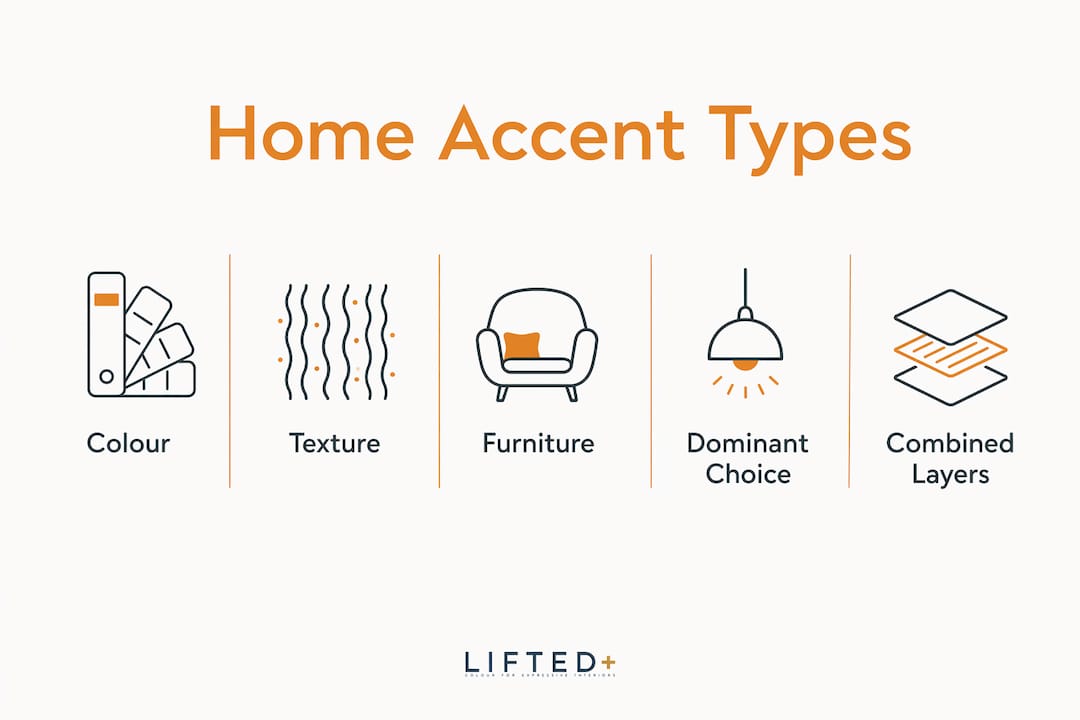
Three primary categories define the world of decorative accents: colour accents, texture accents, and furniture accents. Each serves a distinct purpose, and the most considered interiors use all three in deliberate combination.
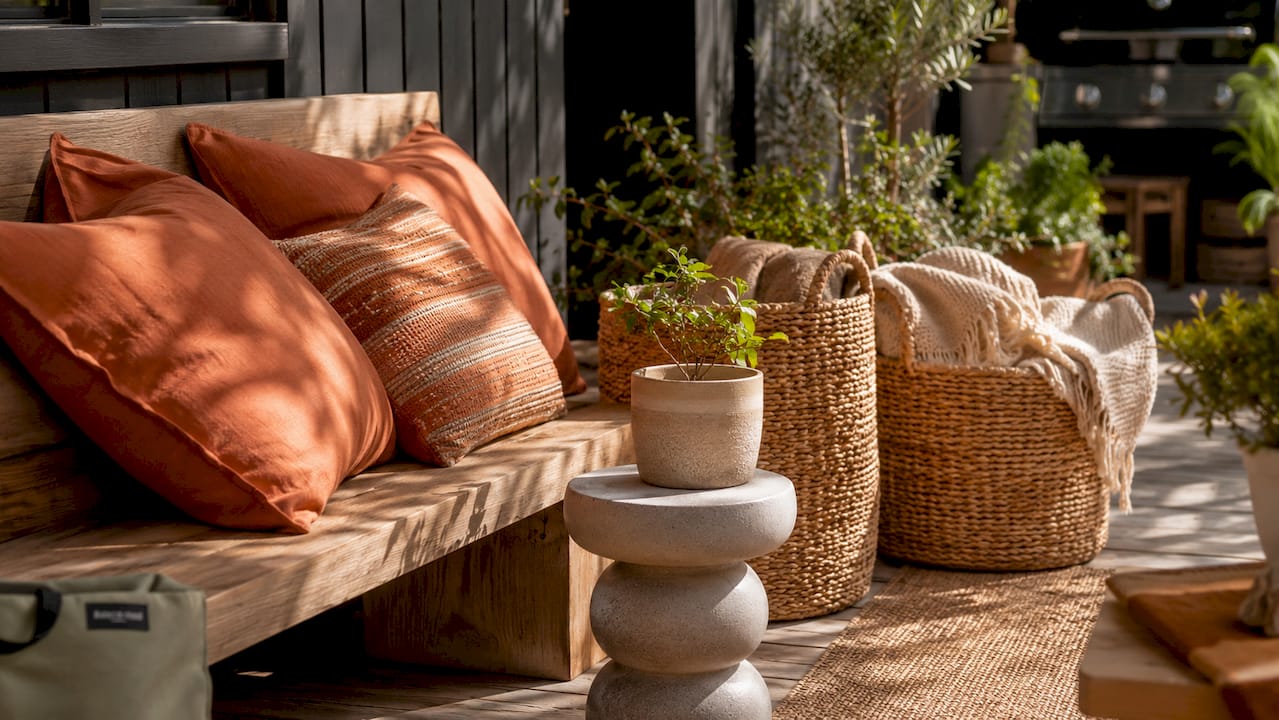
Colour accents are the most immediate. Throw pillows in terracotta, cobalt vases on a white shelf, a burnt-orange ceramic bowl on a kitchen bench. These pieces introduce or reinforce the room’s colour story without requiring a repaint. They are also the easiest to rotate seasonally, which is why Liftedplus builds its collections around grounded, autumnal palettes that shift with the year.
Texture accents work at a different register. Woven baskets, plush throws, rattan trays, and linen cushion covers add tactile depth that colour alone cannot achieve. A room with strong colour but no texture variation feels flat. Texture accents are what make a space feel genuinely inhabited rather than staged.
Furniture accents are the most architectural of the three. A sculptural side chair in a reading corner, a statement bedside table, a bar stool with an unexpected silhouette. These pieces carry visual weight and create focal points that anchor the room. They sit at the intersection of function and form, which is exactly where the most interesting design decisions happen.
| Accent Type | Examples | Primary Role |
|---|---|---|
| Colour accents | Vases, throw pillows, ceramic bowls | Introduce or reinforce the room’s colour palette |
| Texture accents | Woven baskets, plush throws, rattan trays | Add tactile depth and warmth |
| Furniture accents | Sculptural chairs, statement side tables | Create focal points and visual hierarchy |
Pro Tip: When combining all three accent types in one room, let one category lead. Choose your dominant accent type first, then use the other two to support it. This prevents visual competition and keeps the room feeling considered rather than cluttered.
How do decorative accents affect the feel and value of your home?
The impact of well-chosen accent pieces is measurable. Incorporating accents like vases, sculptures, mirrors, and textiles can increase the perceived value of a room by up to 20%. That figure reflects how strongly human perception responds to visual richness, texture, and colour hierarchy. A well-accessorised room simply reads as more valuable, more considered, and more liveable.
Beyond perceived value, accents shape emotional tone. A room with warm-toned ceramics and layered textiles feels grounding and intimate. A room with cool-toned glass and metallic accents feels crisp and energised. Neither is wrong. Both are intentional.
“Accent pieces are the secret to great design because they create focal points that draw the eye and anchor the room visually. Accents that clash or are too small fail to harmonise.” — Berkley Vallone
Accents that create focal points unify the interior by drawing the eye and harmonising colour and scale across the room. This is why scale matters as much as style. A vase that is too small on a large console disappears. A throw pillow that is too large on a compact sofa overwhelms. Getting scale right is what separates a room that feels finished from one that feels almost there.
Interior designers working on residential projects in New Zealand and Australia consistently point to interior design’s impact on home value as a reason to treat accent selection seriously, not as an afterthought. The right pieces do real work.
What should you consider when choosing durable accent pieces?
Durability is the consideration most homeowners skip, and it is the one they most regret skipping. A beautiful ceramic tray that scratches after two weeks of daily use stops feeling beautiful very quickly.
For high-traffic accent pieces, the material finish determines longevity. Pieces used frequently benefit from a minimum of two coats of catalysed varnish for timber surfaces, or durable powder-coated metal for metal pieces. These finishes resist the kind of surface wear that comes from everyday handling, and they maintain their appearance far longer than standard lacquer or bare metal.
Before purchasing ceramic or timber accent pieces, perform a simple scratch test. Running a coin across the surface of a ceramic or wooden piece reveals whether the finish will hold up to regular contact. If the surface marks easily in a shop, it will mark easily at home.
Kitchen accents require a separate set of considerations entirely. Decorative pieces used near food preparation must be food-safe, moisture-resistant, and free of open-pore finishes that trap bacteria and stain over time. A beautiful unglazed ceramic bowl might look stunning on a kitchen bench, but if it is not sealed correctly, it will absorb oil, moisture, and colour from whatever sits in it.
The practical checklist for durable accent selection comes down to four questions. Where will this piece live? How often will it be handled? What surfaces will it contact? And does the finish match those conditions? Answering those questions before purchase saves considerable disappointment later.
Pro Tip: For pieces that will sit on timber furniture, check the base of the accent for felt pads or a smooth, non-abrasive finish. Hard ceramic or metal bases will scratch timber surfaces over time, no matter how durable the accent itself is.
How do you style and layer decorative accents effectively?
Styling accents well is less about following rules and more about understanding a few principles that hold across every room type and design style.
-
Match accent colours to your existing palette, not to each other. The goal is harmony with the room, not a matching set of objects. Pull one or two colours from your existing furniture or wall colour and use accent pieces to echo and deepen those tones. Liftedplus offers colourful interior styling tips that show exactly how this works in practice across different room types.
-
Consider scale before style. A single large accent piece creates more visual impact than three small ones competing for attention. If you are working with a large surface like a dining table or a wide console, choose one or two substantial pieces rather than filling the space with smaller objects.
-
Use dual-purpose accents to add lived-in warmth. Stylish drink tables and decorative baskets that serve both a functional and aesthetic role create spaces that feel genuinely used and comfortable, not just decorated. A woven basket that holds blankets, a sculptural tray that organises remotes, a ceramic vase that also holds dried botanicals. These pieces earn their place twice over.
-
Create one clear focal point per room zone. Every seating area, dining space, or bedroom corner benefits from one accent that holds the room. This might be a piece of wall art for your living space, a sculptural lamp, or a statement vase. Everything else in that zone should support rather than compete with it.
-
Edit ruthlessly. The most common styling mistake is adding too much. If a room feels busy, remove one piece and reassess. The right number of accents is the number that makes the room feel complete, not the number that fills every surface.
Key takeaways
Decorative home accents are the layer of design that transforms a functional room into a space with genuine character and presence.
| Point | Details |
|---|---|
| Definition of accent pieces | Decorative accents are non-functional items chosen to add colour, texture, and focal interest to a room. |
| Three accent categories | Colour, texture, and furniture accents each serve a distinct role and work best in deliberate combination. |
| Perceived value impact | Well-chosen accents can increase a room’s perceived value by up to 20% through visual richness and texture. |
| Durability matters | High-traffic pieces need catalysed varnish or powder-coated finishes; kitchen accents must be food-safe and sealed. |
| Styling principle | Create one focal point per room zone and use dual-purpose accents to add warmth without clutter. |
Why i think most people underestimate the accent layer
I have spent years looking at interiors that are technically correct but emotionally flat. The furniture is good. The paint colour is considered. The layout makes sense. And yet the room does not hold you. It does not make you want to stay.
Almost every time, the missing ingredient is the accent layer. Not more furniture. Not a renovation. A few pieces chosen with genuine intention.
The mistake I see most often in active family homes is treating accents as the last thing to think about and the first thing to compromise on. People spend months choosing a sofa and ten minutes choosing what goes on the shelf above it. That imbalance shows. The shelf is what you actually look at when you sit on the sofa.
The other mistake is buying accents that match rather than accents that resonate. Matching is safe. Resonating is what makes a room feel like yours. A piece of artistic home accent work that genuinely moves you will do more for a room than a perfectly coordinated set of objects that leave you cold.
My honest advice is to buy fewer pieces and buy them better. One sculptural vase that holds the room is worth more than six small objects that collectively say nothing. Give each accent space to breathe, and let it do its work.
— Michelle
How Liftedplus helps you find accents that actually hold a room

Liftedplus curates decorative home accessories with a specific philosophy: every piece should have presence. The Liftedplus range spans textiles, ceramics, sculptural furniture, and limited-edition wall art designed for modern New Zealand interiors. Each collection is built around grounded colour palettes and sculptural form, so the pieces work as focal points rather than background noise. If you are ready to move from a room that functions to a room that feels like something, explore how decor shapes mood and find the accent pieces that will hold your space with confidence.
FAQ
What is a decorative accent piece exactly?
A decorative accent piece is any object placed in a room for aesthetic rather than functional reasons. Common examples include vases, sculptures, throw pillows, woven baskets, and framed wall art.
What are the main types of home accents?
The three primary types are colour accents, texture accents, and furniture accents. Each serves a different design purpose, from reinforcing a colour palette to adding tactile depth or creating a visual focal point.
How do i choose the right home accents for my space?
Match accent colours to your existing room palette, choose scale appropriate to your surfaces, and prioritise durability finishes for high-traffic pieces. One strong focal point per room zone is more effective than many small competing objects.
Do decorative accents really add value to a home?
Well-chosen accents can increase the perceived value of a room by up to 20% by adding visual richness, texture, and a sense of considered design. This perception directly influences how buyers and guests experience a space.
What materials should i avoid for kitchen decorative accents?
Avoid unglazed ceramics, open-pore timber, and any finish not labelled food-safe. Kitchen accents need moisture-resistant, sealed surfaces to maintain both hygiene and appearance over time.