
TL;DR:
- Interior design influences emotional health by shaping how spaces trigger physiological responses. Prioritizing natural light, soft textures, and personalized colors creates comfort and reduces stress. Small adjustments, like decluttering and emotional zoning, significantly enhance mental well-being without structural changes.
Interior design is a direct influence on emotional health, shaping how you feel, think, and recover in the spaces you inhabit every day. This is not a soft claim. Human-centred design significantly increases psychological comfort and well-being, as validated in both real-world field studies and VR experiments. The emotional benefits of interior design reach far beyond aesthetics. Colour, light, texture, and spatial organisation each trigger measurable physiological responses before you consciously register them. Understanding these mechanisms gives you genuine power over how your home feels to live in.
What are the emotional benefits of interior design?
Interior design acts as a silent nervous system co-regulator, influencing stress levels before conscious thought. Your body reacts to a room’s proportions, materials, and light quality instinctively. A cluttered, poorly lit space raises cortisol. A well-proportioned room with natural light and considered texture lowers it. This is the core mechanism behind emotional interior design, a practice that the field of neuroaesthetics has been studying with increasing rigour.
The industry term for this approach is emotional design, a framework that prioritises how a space makes inhabitants feel over how it looks in a photograph. Emotional design treats your home as an active participant in your mental health, not a passive backdrop. When you apply it deliberately, your home stops being just a place you live and starts being a place that works for you.
How does colour psychology affect your mood at home?
Colour is the most immediate tool in colour psychology in interiors, and its effects are measurable. Blue-toned rooms are linked to nearly two hours longer sleep than purple rooms. Blue is also the most studied colour for lowering stress and calming physiological responses. That single fact reframes how you should think about bedroom colour choices.
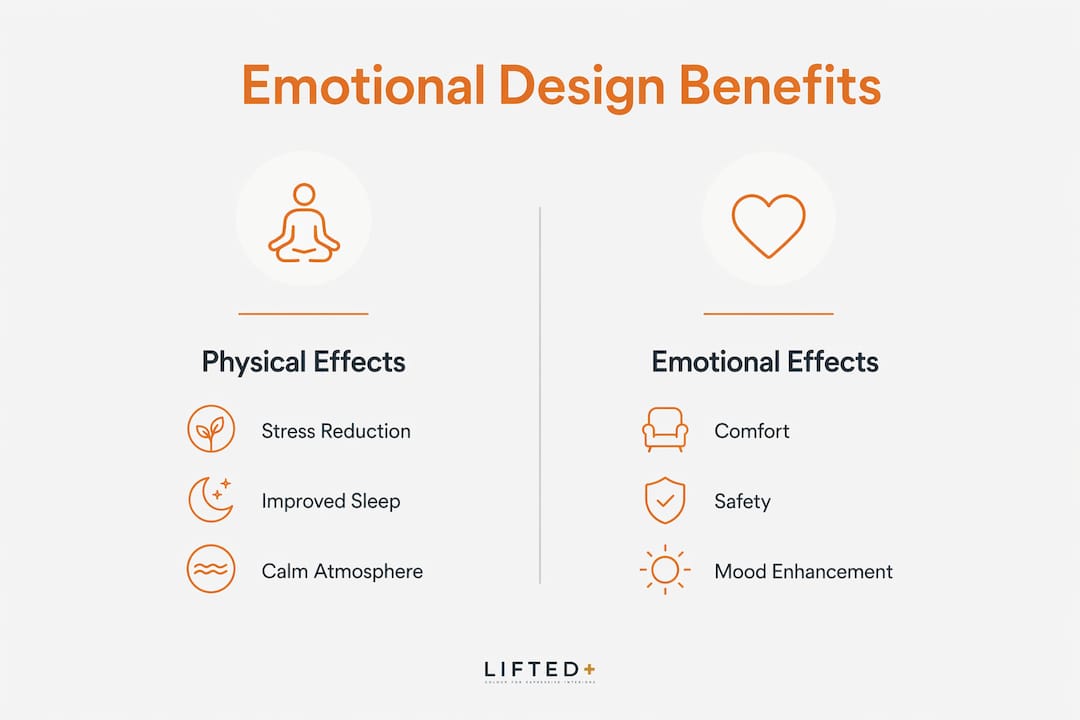
Warm tones tell a different story. Reds, oranges, and yellows stimulate heart rate and arousal, making them well-suited to social spaces like dining rooms and kitchens where energy and appetite are welcome. Greens carry the restorative quality of nature indoors, supporting focus and mental recovery in home offices and reading nooks. The science of how design affects mood is grounded in these physiological responses.
Saturation and brightness matter as much as hue. A deeply saturated red wall reads as aggressive. The same red at low saturation reads as warm and grounding. Natural light shifts both perception and effect throughout the day, so a colour that feels calm at noon may feel heavy by evening. Testing paint samples across different times of day is not optional; it is the only reliable method.
Personal associations with colour often override universal rules. If you associate yellow with anxiety rather than warmth, no amount of colour theory changes that. Effective emotional design always starts with your own responses, not a generic palette guide.
Pro Tip: Paint a large swatch, at least A3 size, and live with it for 48 hours before committing. Observe it in morning light, afternoon sun, and artificial evening light before deciding.
Does natural light and spatial organisation really reduce stress?
Maximising natural light and reducing clutter are two of the most evidence-backed strategies for improving emotional comfort at home. Natural light regulates circadian rhythms, which directly affects sleep quality, mood stability, and energy levels. Clutter, by contrast, fragments attention and increases mental fatigue, creating a low-level cognitive load that accumulates across the day.
The practical steps are straightforward.
- Remove heavy window treatments and replace them with sheer or linen curtains that diffuse rather than block light. Expert tips for maximising natural light consistently point to window coverings as the single highest-impact change most people can make.
- Position mirrors on walls perpendicular to windows, not opposite them. This bounces light deeper into a room without creating glare.
- Audit surfaces for objects that have no function and no emotional resonance. Remove them. A clear surface does not just look tidier; it genuinely reduces the number of visual decisions your brain makes every moment.
- Arrange furniture to create clear pathways. When movement through a room feels easy and unobstructed, the body registers safety. Cramped layouts signal constraint, which reads as stress.
- Introduce reflective surfaces selectively. A single lacquered side table or a glazed ceramic piece catches and distributes light in a way that feels alive rather than clinical.
Pro Tip: Before buying new furniture or decor, spend one weekend decluttering your existing space. Most people find the emotional shift from clearing space alone is more significant than any purchase they make afterwards.
How do materials and texture create emotional safety?
Soft natural textures signal comfort and safety to the nervous system, while harsh synthetic finishes can elevate stress. This is tactile design, and it operates below conscious awareness. Running your hand across a linen cushion or a timber surface sends a different neurological signal than touching cold polished concrete or hard plastic. The material speaks before you form an opinion about it.
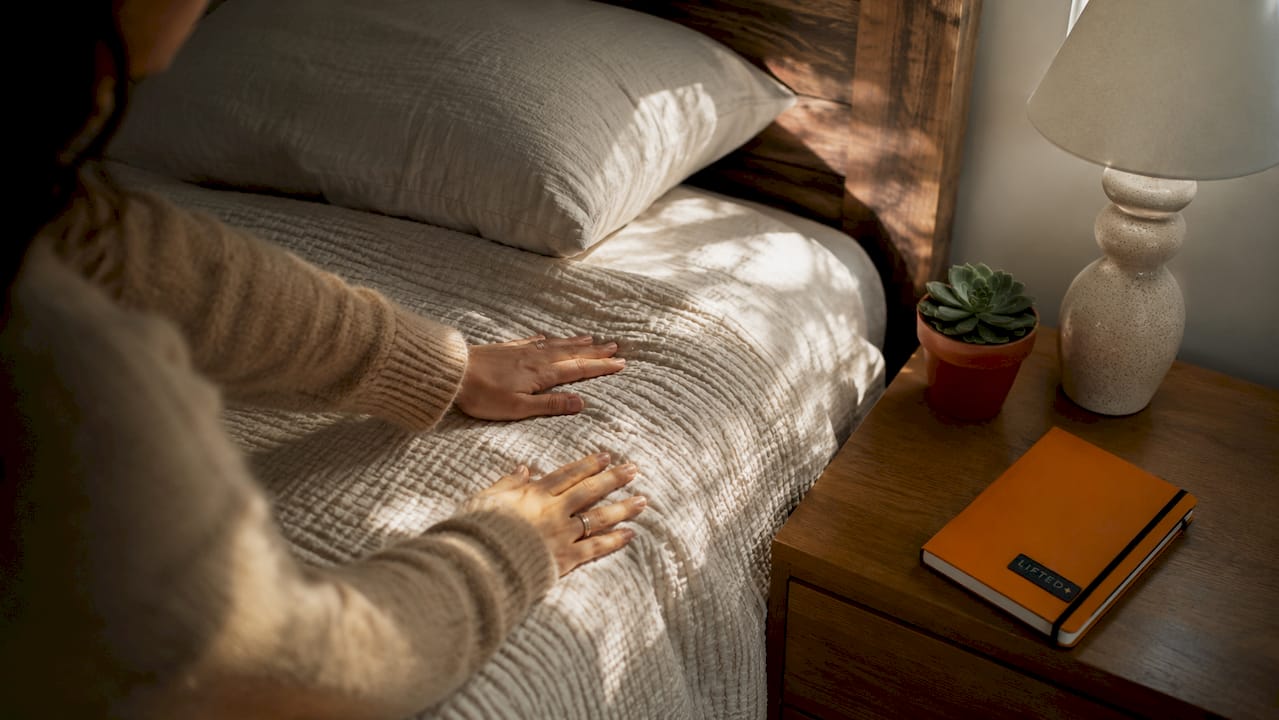
The emotional impact of home decor is partly a story of contrast and restraint. A room filled entirely with soft textures can feel formless and heavy. The same room with one or two harder surfaces, a ceramic lamp base, a lacquered tray, gains definition without losing warmth. Texture creates visual interest that the eye can rest on without being overstimulated.
For bedrooms and bathrooms, the psychological benefits of space are most strongly felt through material choices. Linen, cotton, wool, and timber each carry a sensory warmth that synthetic alternatives do not replicate. These materials also age well, developing character rather than deteriorating, which supports a sense of permanence and emotional grounding in the spaces where you are most vulnerable.
The furniture you choose carries this same weight. A sculptural timber chair communicates something fundamentally different from a mass-produced plastic equivalent, even before you sit in it. Form and material together shape the emotional atmosphere of a room.
What is emotional zoning and how does it work?
Emotional zoning is the practice of creating micro-spaces within a room that trigger specific emotional states, such as calm, focus, or creativity, without structural renovation. A reading corner with a warm lamp, a textured throw, and a low side table functions differently from the rest of the living room, even if they share the same floor plan. The zone signals a shift in purpose and, with it, a shift in mood.
Personal memory and emotional associations are the engine behind this. Individual responses to colours, objects, and layouts matter more than universal design rules. A small collection of objects that carry personal meaning, a photograph, a ceramic piece from a trip, a plant you have tended for years, anchors a zone emotionally in a way that no styled shelf from a catalogue can replicate.
| Emotional zone | Design approach |
|---|---|
| Calm zone | Warm, low-level lighting; natural textiles; minimal objects; cool or neutral tones |
| Focus zone | Bright, directional light; clear surfaces; upright seating; muted, non-stimulating colour |
| Creative zone | Layered lighting; saturated accent colour; tactile surfaces; personal objects and art |
| Restorative zone | Soft, diffuse light; deep textures; grounding earth tones; sensory comfort prioritised |
Design professionals increasingly use neuroaesthetic language when consulting clients, explaining the physiological basis of design choices rather than relying on taste alone. This shift builds genuine confidence in design decisions. When you understand that a warm amber lamp in your reading corner lowers cortisol rather than just “looking cosy,” you stop second-guessing the choice.
Pro Tip: You do not need a separate room to create an emotional zone. A single armchair angled away from the main seating, with its own lamp and a small side table, is enough to signal a distinct space to your nervous system.
Key takeaways
Interior design shapes emotional health through colour, light, texture, and spatial organisation, making every design choice an act of care for your own well-being.
| Point | Details |
|---|---|
| Colour affects physiology | Blue tones support longer sleep and lower stress; warm tones stimulate energy and appetite. |
| Natural light is non-negotiable | Maximising daylight regulates circadian rhythms and reduces mental fatigue throughout the day. |
| Texture signals safety | Soft natural materials lower stress responses; harsh synthetic finishes can elevate them. |
| Emotional zoning works without renovation | Small changes in lighting, textiles, and furniture placement create distinct mood micro-spaces. |
| Personal associations override universal rules | Your own colour memories and object connections matter more than any generic design formula. |
Design as emotional stewardship: a personal view
What strikes me most, after years of thinking about how spaces shape people, is how consistently we underestimate the rooms we live in. We treat design as decoration, something to sort out once and then ignore. But interior design is stewardship of emotional conditions. The room you wake up in sets a tone for your entire day before you have made a single decision.
The changes that matter most are rarely the expensive ones. I have seen people spend thousands on new furniture while leaving a single overhead fluorescent bulb in their bedroom, which undoes everything. I have also seen a $40 warm-toned lamp and a linen throw shift the entire emotional register of a space. The principle is always the same: attend to what your body actually responds to, not what looks impressive in a photograph.
What I find most underappreciated is the role of clutter as a mood suppressant. People tolerate visual noise for years, assuming it is just an aesthetic issue. It is not. Every object your eye lands on that has no purpose and no meaning is a small tax on your attention. Clear the surfaces first. Then add back only what earns its place.
The shift from “decorating” to “designing for how I want to feel” is not a philosophical one. It is practical. Start with one room, one corner, one lamp. Notice what changes. Then keep going.
— Michelle
Bring emotional design into your home with Liftedplus
Liftedplus curates colour-led furniture, sculptural lighting, and wall art designed to shift the emotional atmosphere of a room with intention. Every piece is selected for presence and feeling, not just visual appeal.

Whether you are building a calm zone in your bedroom or adding warmth to a living space, the Liftedplus Mood Library gives you curated mood boards to guide your choices. For those who want to personalise their space for mood, the Liftedplus shop brings together colourful furniture, statement lighting, and limited-edition wall art in one place. If you rent, the renter-friendly decor guide shows you how to apply these principles without permanent changes.
FAQ
What is emotional design in interior spaces?
Emotional design is a framework that prioritises how a space makes you feel over how it looks. It draws on neuroaesthetics research showing that materials, light, colour, and spatial proportions trigger immediate physiological responses before conscious thought.
Which colours are best for reducing stress at home?
Blue and green tones are the most studied for stress reduction. Blue-toned rooms are linked to nearly two hours longer sleep than purple rooms, making them particularly effective in bedrooms.
Can small decor changes really improve mental health?
Yes. Emotional zoning research shows that small changes in lighting, textiles, and furniture placement create distinct mood micro-spaces without structural renovation. A single warm lamp and a textured throw can shift the emotional register of a corner meaningfully.
How does clutter affect emotional well-being?
Clutter increases mental fatigue by creating a continuous low-level cognitive load. Reducing visual noise on surfaces lowers the number of unconscious decisions your brain makes, freeing mental energy and reducing stress.
Do I need to follow universal colour rules for my home?
Personal memory and emotional associations often override universal colour psychology rules. The most effective emotional design starts with your own responses to colour and space, not a generic formula.