
TL;DR:
- Form focused furniture emphasizes the three-dimensional shape and structure of pieces, shaping a room’s mood before color or pattern. It creates harmony between form and function, making spaces appear larger and more emotionally calming. Choosing a strong, sculptural piece as an anchor guides cohesive design, especially in small or neutral rooms.
Form focused furniture is defined as furniture where three-dimensional shape, structure, and physical volume are the primary design elements, taking precedence over surface decoration, colour, or pattern. The industry term for this approach is “form-driven design,” and it sits at the heart of how professional interior designers build rooms that feel intentional rather than assembled. Understanding what is form focused furniture gives you a powerful lens for reading any space. A piece’s silhouette, its mass, and the way it occupies air all shape your home’s ambiance before a single cushion or coat of paint enters the picture.
What is form focused furniture and why does it matter?
Form focused furniture prioritises the three-dimensional body of a piece, its height, width, and depth, as the defining design statement. This is the physical structure that exists before colour, pattern, or texture are applied. Think of it as the skeleton of a room. The skeleton determines how you move through a space, where your eye travels, and whether a room feels calm or restless.
Form is often the quietest element in a room, yet it carries the most structural weight. You can repaint walls, swap cushions, and change rugs without altering the fundamental feeling of a space. Change the form of the furniture, and the entire room shifts. A low, horizontal sofa pulls a room into a relaxed, grounded mood. A tall, angular cabinet brings formality and vertical tension.
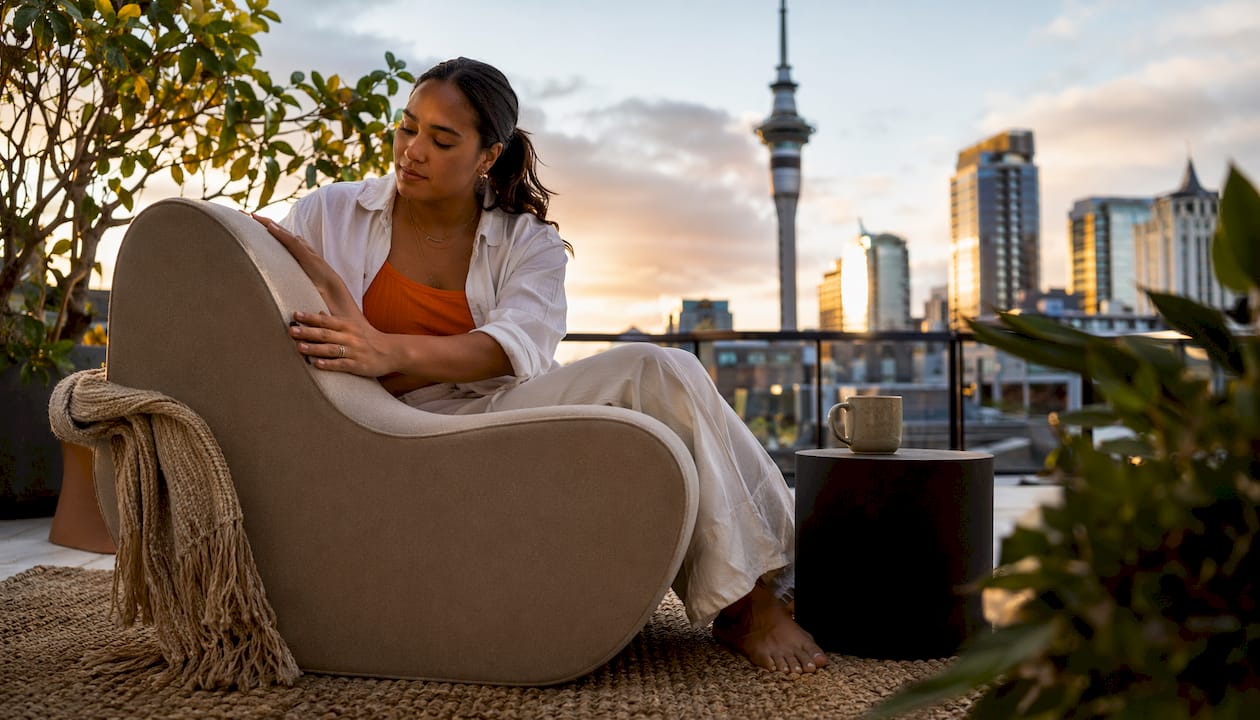
The definition of form focused furniture also separates it from purely decorative pieces. A sculptural lounge chair with a sweeping curved back is form focused because its shape is the statement. A plain rectangular shelf dressed in ornaments is not. The shape serves the room, not the other way around.
How does form differ from function in furniture design?
Form and function are distinct but not opposing forces. Form refers to physical appearance, visual weight, and shape. Function refers to what the piece is designed to do, how it performs, and how it fits with other elements. A dining table can be both form focused and highly functional. The two qualities only conflict when one is sacrificed entirely for the other.
| Attribute | Form | Function |
|---|---|---|
| Primary concern | Shape, silhouette, volume | Performance, usability, purpose |
| Design question | How does it look and feel in space? | What does it do and how well? |
| Emotional impact | Mood, atmosphere, spatial flow | Comfort, practicality, ease of use |
| Example quality | Curved back, tapered legs, sculptural base | Storage capacity, seat depth, weight rating |
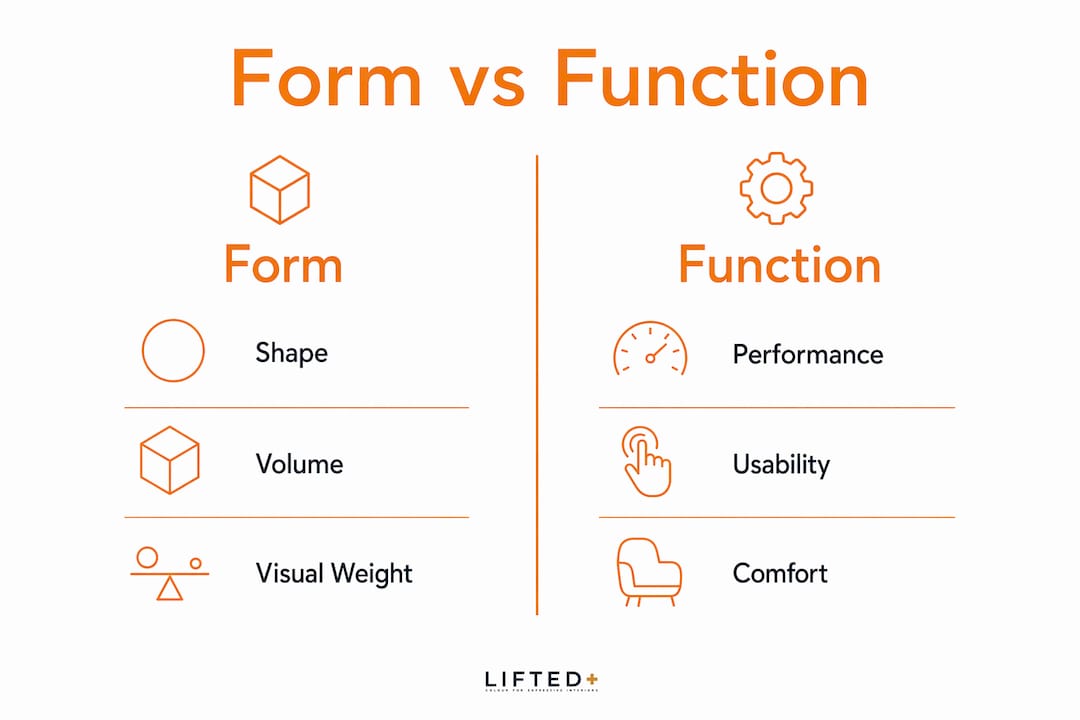
The most enduring furniture pieces score well on both. A sculptural form in furniture does not mean a piece is uncomfortable or impractical. It means the shape was considered as carefully as the seat height or the drawer mechanism. When form and function are balanced, a piece looks right and works right.
The risk of ignoring form is a room that functions perfectly but feels flat. The risk of ignoring function is a room that looks arresting but frustrates daily life. Neither extreme serves you well. The goal is furniture whose shape holds the room and whose construction holds up to living in it.
What are the key benefits of form focused furniture?
Form focused furniture does more than look considered. It actively changes how a room feels and performs.
The most measurable benefit is spatial perception. Replacing several single-use pieces with a few multi-functional, form-conscious items can make rooms feel 15–25% larger. That figure reflects the reduction in visual clutter when fewer, more deliberate pieces occupy a space. Less furniture with stronger form reads as more room.
The emotional benefit is equally real. Form changes emotional tone from busy to calm without changing colours or accessories. A room full of competing shapes and scales feels anxious. A room anchored by two or three considered forms feels resolved. This is why form focused furniture matters for mental wellbeing at home, not just aesthetics.
Practical benefits include:
- Reduced visual clutter. Fewer, stronger pieces mean less to look at and less to maintain.
- Improved spatial flow. Furniture with clear, intentional form guides movement through a room naturally.
- Longer design life. A piece chosen for its form rather than a surface trend stays relevant as colours and accessories change around it.
- Space efficiency. Multi-functional form focused pieces, such as a storage ottoman with a sculptural silhouette, replace two or three single-use items.
Form focused FF&E choices also support well-being in work environments, where balanced shape and purpose act as a silent influence on comfort and productivity. The same principle applies at home. A well-formed reading chair does not just look good. It holds the room and holds the person in it.
What forms are used in furniture and how do they affect a room?
Furniture forms divide broadly into geometric and organic categories, and each carries a distinct emotional register. Geometric forms use straight lines, right angles, and symmetrical proportions. Organic forms use curves, asymmetry, and shapes drawn from nature. Neither is superior. Each serves a different spatial intention.
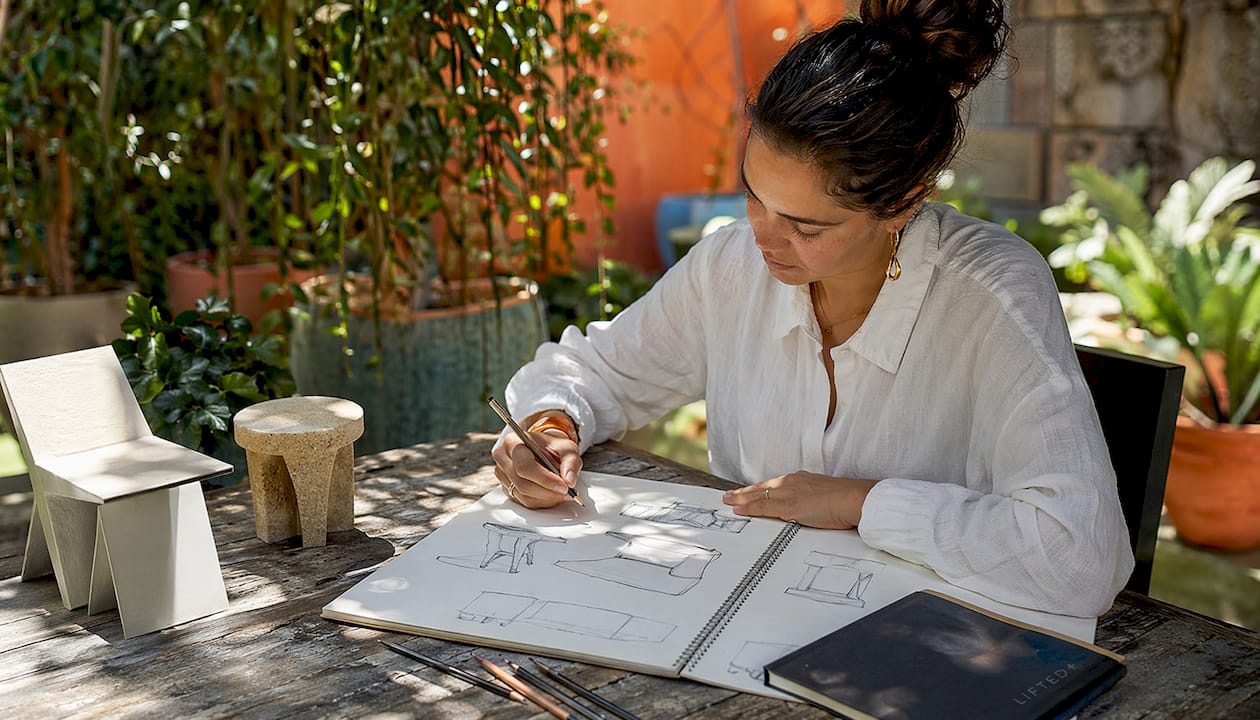
Geometric forms create order and formality. A rectangular dining table with clean, tapered legs reads as precise and deliberate. It suits rooms where clarity and structure are the goal. Organic forms create warmth and ease. A round side table or a curved armchair softens a room and invites lingering.
Scale and volume matter as much as shape. A large, low sofa anchors a room and lowers the visual centre of gravity, making ceilings feel higher. A tall, narrow bookcase draws the eye upward and adds vertical energy. Getting scale wrong is the most common form mistake in residential interiors. A piece that is too small for its space disappears. A piece that is too large for its space crowds and dominates.
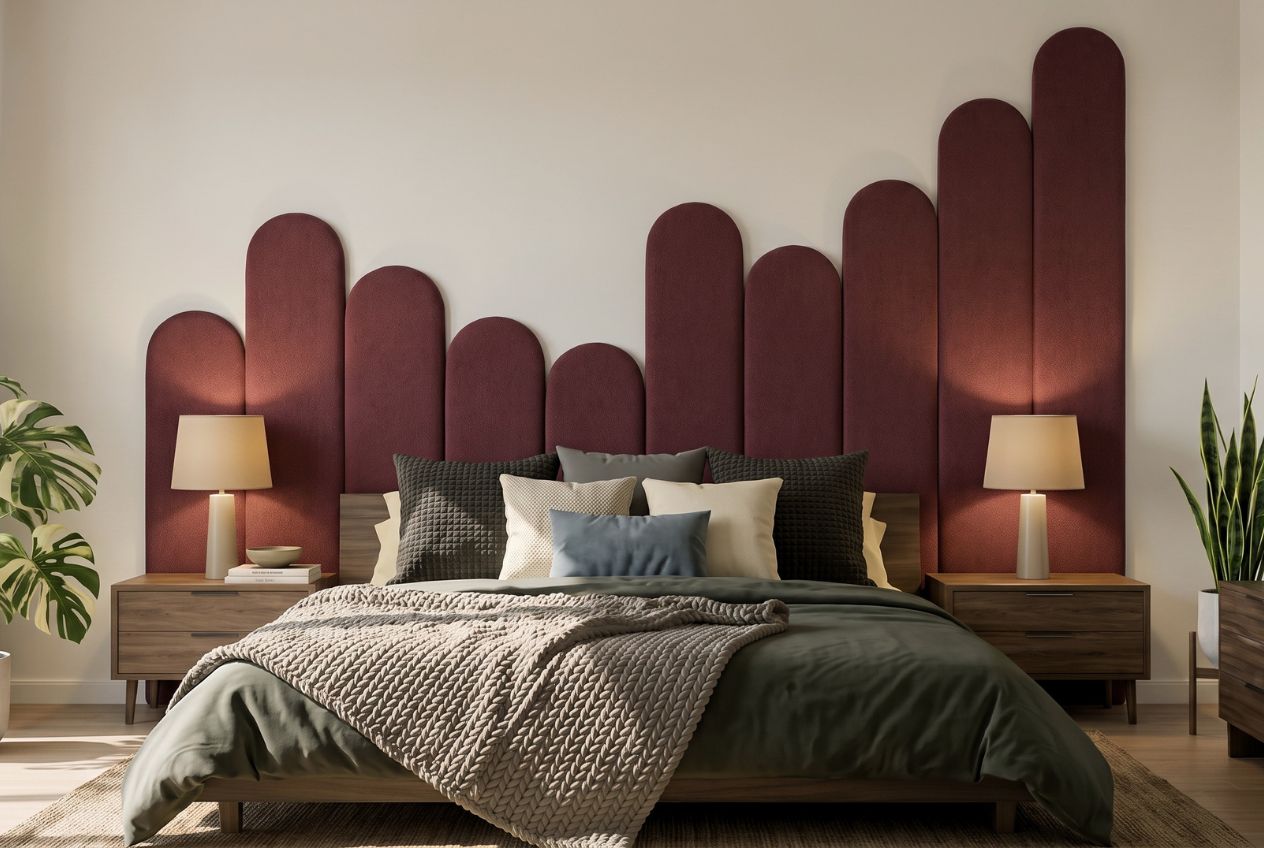
Form also creates focal points and spatial hierarchy. One strong sculptural piece, a statement chair, a curved console, a bedside table with a considered silhouette, gives the eye a place to land. Everything else in the room can be quieter because that one form holds the weight. This is the principle behind modern bathroom accessories that use a single bold form to anchor an otherwise neutral space.
How do you choose and integrate form focused furniture?
Choosing form focused furniture starts with reading the room before you shop.
- Assess the room’s primary function. A living room built for conversation needs forms that face inward and invite proximity. A home office needs forms that support focus and reduce distraction.
- Map the spatial flow. Walk the room and note where movement naturally wants to go. Furniture form should support that path, not interrupt it.
- Identify the dominant form you want. Decide whether the room calls for geometric precision or organic softness before selecting individual pieces.
- Choose one anchor piece with strong form. Build the room around that piece. A woven lounge chair with a sculptural frame, for example, sets the formal register for everything else.
- Balance strong forms with quieter ones. A room of all statement pieces competes with itself. Pair one strong form with two or three simpler supporting pieces.
Colour and texture should follow form, not lead it. Once you have the right forms in place, colour confirms the mood that form has already established. A warm terracotta cushion on a curved chair deepens the organic feeling. A cool linen throw on a geometric sofa reinforces its precision.
Pro Tip: When mixing geometric and organic forms, keep the larger pieces in one category and use the smaller pieces to introduce the contrast. A geometric sofa with an organic coffee table works. Two competing statement forms of equal scale create tension without resolution.
For small spaces, multi-functional form focused furniture is the most practical path. A storage ottoman with a strong sculptural silhouette replaces a coffee table and a storage box. A curved bench at the foot of a bed replaces a side chair and adds form without consuming floor space.
Key takeaways
Form focused furniture is the single most powerful lever for changing how a room feels, because it operates at the level of structure rather than surface.
| Point | Details |
|---|---|
| Form is the foundation | Shape, volume, and structure define a room’s mood before colour or texture are applied. |
| Form and function complement each other | The strongest furniture pieces score well on both visual form and practical performance. |
| Spatial benefits are measurable | Multi-functional form focused pieces can make rooms feel 15–25% larger by reducing visual clutter. |
| Geometric vs organic forms | Straight forms create order; curved forms create warmth. Choose based on the room’s emotional intention. |
| One anchor piece is enough | A single strong form holds a room. Supporting pieces can be quieter and simpler. |
Why form is the design element most people overlook
People often ask me whether they should repaint before they redecorate. My honest answer is almost always: change the furniture first.
Colour gets all the attention because it is the most visible and the most easily changed. Form gets overlooked because it is quiet. It does not announce itself the way a bold wall colour does. But form is what you feel when you walk into a room and cannot immediately explain why it works or why it does not. That feeling is form doing its job.
I have seen rooms with beautiful colour palettes that still feel unsettled, because the furniture forms are competing rather than conversing. I have also seen rooms in near-neutral tones that feel completely resolved, because two or three pieces with considered silhouettes hold the space with confidence. The colour was almost irrelevant.
The misconception I encounter most often is that form focused furniture means cold or minimal. It does not. A deeply curved, generously proportioned armchair is as form focused as a sharp-edged Bauhaus bench. The difference is in the emotional register of the form, not in whether form was considered at all.
My advice for anyone starting out: choose one piece whose shape genuinely moves you, something whose silhouette you would notice even in an empty room. Place it. Live with it. Then build the rest of the room in response to what that form asks for. That process teaches you more about form than any amount of reading.
— Michelle
Form focused furniture at Liftedplus
Liftedplus curates furniture and decor where form is the starting point, not an afterthought. The collections are built around sculptural silhouettes, grounded colour palettes, and pieces that hold a room with presence.
If you are ready to see how form changes a space, the Liftedplus colourful furniture collection brings together chairs, bar stools, and tables where shape and colour work as one. For broader inspiration on how individual pieces personalise your space for mood and style, the Liftedplus editorial guides offer practical, visually grounded advice for modern New Zealand interiors. Every piece in the range is selected because its form earns its place in the room.
FAQ
What is the definition of form focused furniture?
Form focused furniture is furniture where three-dimensional shape, structure, and volume are the primary design considerations, taking precedence over surface decoration, colour, or pattern. The physical form of the piece is its defining statement.
How does form focused furniture benefit small spaces?
Replacing several single-use pieces with multi-functional, form-conscious items can make rooms feel 15–25% larger by reducing visual clutter and freeing floor space. Fewer, stronger forms read as more room.
What is the difference between geometric and organic furniture forms?
Geometric forms use straight lines and angles to create order and formality, while organic forms use curves and asymmetry to create warmth and ease. The choice between them depends on the emotional tone you want the room to carry.
Does form focused furniture have to sacrifice comfort?
No. Form focused furniture prioritises shape as the primary design consideration, but the best pieces balance strong visual form with practical performance, including seat depth, material quality, and structural durability.
How do I start incorporating form focused design into my home?
Choose one anchor piece with a strong, considered silhouette and build the room around it. Supporting pieces can be quieter in form, with colour and texture used to confirm the mood the anchor piece has already established.