

TL;DR:
- Pets are allowed in most Australian rentals, but approval depends on specific state laws, landlord conditions, and assistance animal exemptions. Clear written requests, documented agreements, and durable interiors help manage pet-related damages and disputes effectively. Assistance animals are not classified as pets and do not require permission or pet fees under the law.
Pets are welcome in most Australian rental properties, but the rules around how, when, and under what conditions vary by state and housing type. The short version: landlords generally cannot refuse a pet request without a reasonable ground, assistance animals are exempt from permission requirements entirely, and tenants carry responsibility for any damage beyond normal wear and tear. Pet-friendly rentals tend to lease faster in some markets, which gives landlords a genuine financial reason to say yes.
Here is what both renters and landlords need to know:
- Pets require written landlord permission in most states, with assistance animals the legal exception under the Disability Discrimination Act 1992.
- Landlords must respond to pet requests within a set timeframe under state Residential Tenancies Acts.
- Tenants are responsible for pet care, behaviour, and any damage the pet causes beyond reasonable wear and tear.
- Landlords can set reasonable conditions, including pet bonds or deposits, but cannot impose blanket refusals without grounds.
- Carpet useful life is generally about 10 years; landlords cannot claim excessive replacement costs when carpet is already near end of life.
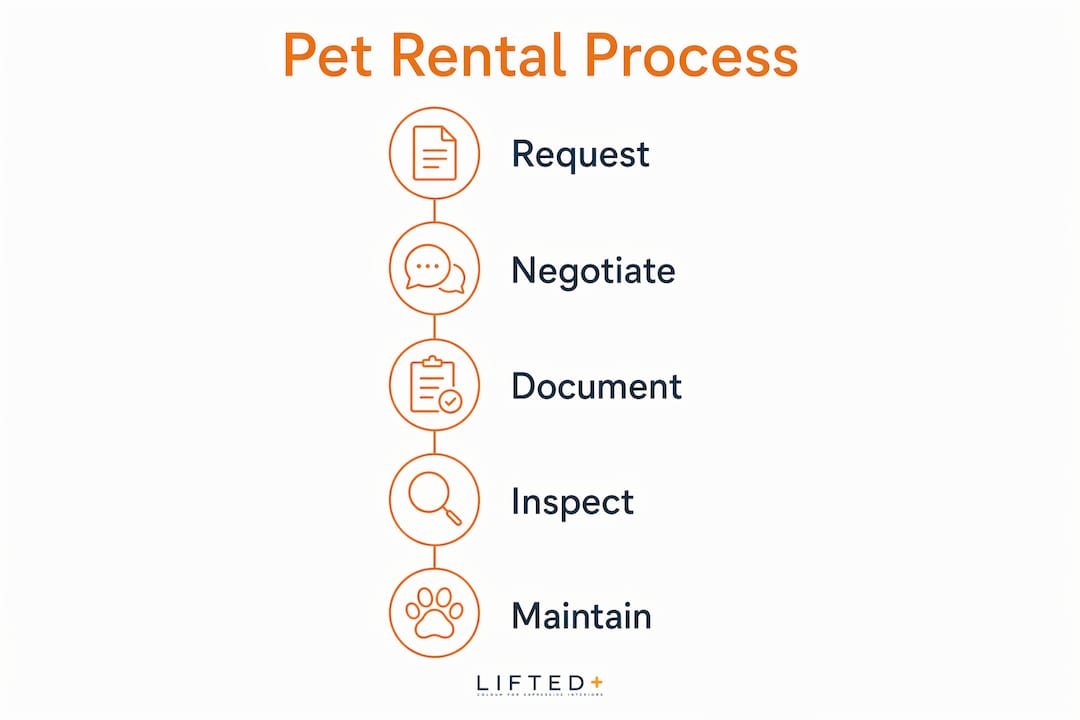
How do you request permission to keep a pet in a rental?
A written request is the starting point in every Australian state. Verbal agreements carry no legal weight when disputes arise, so put everything in writing from day one.
Your request should cover the pet’s type, breed, size, age, and temperament. Attach supporting documents: vaccination records, council registration, and a recent photo. Some tenants also prepare a pet resume, a one-page summary of the animal’s training history, behaviour, and any references from previous landlords or a vet.
- Address the request to the landlord or property manager in writing, by email or through the tenancy platform they use.
- State the pet’s full details and confirm it is desexed, microchipped, and registered with the local council where required.
- Offer to discuss conditions proactively, such as professional cleaning at the end of the tenancy.
- Follow up if you receive no response within 14 days; under most state acts, silence does not equal consent.
Pro Tip: A pet resume that includes a photo, a brief behaviour summary, and a reference from a previous landlord or vet can shift a hesitant landlord’s position more effectively than any formal letter alone.
Negotiating conditions for keeping a pet in your rental
Clear, written conditions protect both sides. A detailed pet addendum attached to the lease is the most effective way to formalise what has been agreed, and it reduces the ambiguity that leads to bond disputes at the end of a tenancy.
Conditions worth negotiating include:
- Pet type, number, and any breed or size restrictions the landlord considers reasonable.
- Behavioural rules: no pets on furniture, leash requirements in common areas, noise management.
- Financial terms: a pet bond or deposit where permitted by state law, and any agreed end-of-tenancy cleaning obligations.
- Tenant responsibilities for waste disposal, garden maintenance, and prompt repair of minor pet-caused damage.
- A clear process for reporting damage and resolving disagreements before they escalate to a tribunal.
A blanket “No Pets” policy is increasingly outdated. Pet-friendly policies with defined limits and fee structures are now recognised as operational tools that improve landlord income and tenant retention. Managing pets with clear applications and conditions turns them into a revenue-positive feature rather than a liability.
Managing pet damage and disputes in rental properties
The line between reasonable wear and tear and pet damage is where most disputes begin. Under Australian tenancy law, normal deterioration from everyday living is not chargeable to the tenant. Pet scratches on a skirting board after a five-year tenancy sit in a different category to a door frame clawed through in six months.
Document everything. A thorough condition report with dated photos at the start of the tenancy is your strongest protection, for both parties. Revisit it at every routine inspection and update it with any new observations.
When damage does occur:
- Refer to the pet addendum first. If it specifies repair obligations, those terms govern the claim.
- Assess whether the damage is genuinely beyond normal wear. Carpet depreciation limits what a landlord can recover, particularly when carpet is already several years into its useful life.
- Carpets in pet-friendly rentals often need replacement more frequently than those in low-turnover properties, so factor a shorter replacement cycle into your condition reporting.
- If agreement cannot be reached, state tribunals such as VCAT in Victoria handle residential tenancy disputes, and their decisions are binding.
Regular inspections, conducted with proper notice, give landlords the opportunity to identify issues early and give tenants the chance to address them before bond time.
Pet policies in apartments, units, and special housing situations
Higher-density living adds a layer of complexity. In apartments and units, the landlord’s permission is only part of the picture. Strata schemes and body corporate bylaws can impose their own pet restrictions, and those rules sit alongside the tenancy agreement rather than replacing it.
Key considerations by housing type:
- Apartments and units: Body corporate bylaws may restrict pet size, breed, or access to shared spaces. Check both the lease and the strata rules before committing.
- Rooming houses: Shared living arrangements often carry stricter pet conditions due to the impact on other residents. Landlords have broader grounds to refuse.
- Caravan and residential parks: State-specific legislation governs these tenancies separately. In Victoria, the Residential Tenancies Act 1997 covers residential parks, but conditions differ from standard rentals.
- Assistance animals: These are not legally classified as pets anywhere in Australia. Under the Disability Discrimination Act 1992, assistance animals do not require landlord permission and cannot be subject to pet fees or addenda.
Local council regulations also apply. Most councils require dogs and cats to be registered, microchipped, and in some areas desexed. Confirm your council’s requirements before the pet moves in.
Pet-friendly modifications and durable interiors for rentals
The right interior choices reduce pet-related damage before it happens. This is where landlords and tenants can work together to protect the property and keep the tenancy running smoothly.
Flooring
Luxury Vinyl Plank is the strongest choice for pet-friendly rentals. It is waterproof, scratch-resistant, and some ranges offer coatings that provide up to 50% more scratch resistance than standard vinyl. Soft carpet is the opposite: it retains odours, traps allergens, and wears faster under pet traffic. When carpet is the only option, low-pile, tight-loop constructions in solution-dyed polyester are more stain-resistant and bleach-tolerant, extending the replacement cycle when maintained well.
Walls
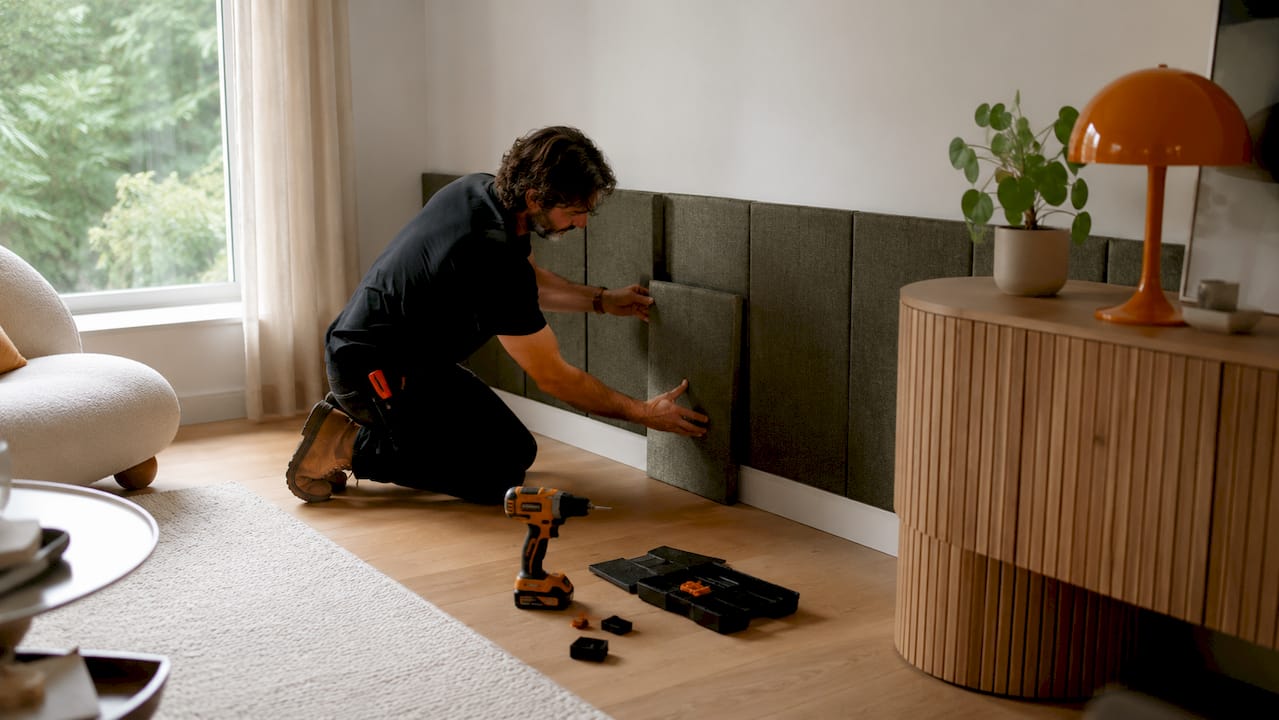
Walls take more pet-related punishment than most landlords anticipate. Clawing, scuffing, and the acoustic impact of an anxious or active animal are all real concerns, particularly in apartments. PET felt acoustic panels address all three. Made from recycled plastic, they absorb sound, protect the wall surface beneath, and add genuine colour and texture to a room.
Modular systems like DwellForms™ by Liftedplus are designed specifically for renters. The panels attach without drilling, can be rearranged or removed without leaving damage, and travel with you to the next property. For anyone looking at renter-friendly wall solutions, they sit at the intersection of practical protection and considered design. You can explore the full range of recycled PET felt panels to see how they work in real interiors.
| Interior element | Pet challenge | Recommended solution |
|---|---|---|
| Flooring | Scratches, moisture, odour | Luxury Vinyl Plank (LVP) with scratch-resistant coating |
| Carpet | Staining, odour retention | Low-pile, solution-dyed polyester; replace every 3–5 years |
| Walls | Clawing, scuffing, noise | Removable PET felt acoustic panels |
| Skirting boards | Chewing, scratching | Solid timber or MDF with durable paint finish |
Pro Tip: Combine LVP flooring with removable PET felt wall panels to address the two surfaces pets damage most, without making any permanent changes to the property.
For homes with shutters, pet-friendly shutter options are worth considering as a durable alternative to fabric blinds that pets tend to destroy.
What forms do you need for a pet request or approval?
The paperwork varies by state, but the core documents are consistent across Australia.
In NSW, the government publishes a specific form to apply to keep a pet in a rental property. Tenants complete it and submit it to the landlord or agent. In Victoria, Consumer Affairs Victoria provides guidance on the process, though the request can be made in writing without a prescribed form. South Australia and Western Australia follow similar written-request models under their respective tenancy legislation.
Beyond the request form, a complete pet application typically includes a signed pet addendum, the pet’s council registration certificate, vaccination records, and a photo. Where a pet resume is included, attach it to the addendum rather than sending it separately. Keep copies of everything, including the landlord’s written approval and any conditions attached to it.
Insurance implications of keeping pets in a rental
Pets affect insurance on both sides of the tenancy. Tenants with contents insurance should check whether their policy covers accidental damage caused by their own pet, as many standard policies exclude it. Specialist renters’ insurance products do cover pet-related incidents, but the terms vary widely.
Landlords face a different exposure. Standard landlord insurance policies typically cover malicious damage by tenants but treat pet damage inconsistently. Some policies cover it under accidental damage; others exclude it entirely or require a specific pet endorsement. Landlords who allow pets should review their policy wording carefully and consider whether a pet bond provides adequate additional cover for their situation.
In South Australia, pet bonds are permitted under the Residential Tenancies Act. In other states, the rules differ. Western Australia’s Consumer Protection guidance outlines what landlords can and cannot charge. Always confirm what is lawful in your state before collecting any additional deposit.
Best practices for documenting and communicating pet agreements
Good documentation is the single most effective way to prevent disputes. A clear pet policy with defined limits, behaviour rules, and fee structures protects both the landlord’s asset and the tenant’s bond.
These practices make the biggest difference in practice:
- Put every agreement in writing, including any verbal conversations that follow. A follow-up email confirming what was discussed is sufficient.
- Attach a signed pet addendum to the lease before the pet moves in, not after.
- Conduct a joint inspection at the start of the tenancy and photograph every room, including walls, skirting boards, and flooring.
- Schedule routine inspections at agreed intervals and document the property’s condition each time.
- If conditions change, such as a new pet or a change in the animal’s behaviour, update the addendum and get it signed again.
Transparency builds trust. Tenants who communicate proactively about their pet tend to have fewer disputes at the end of a tenancy, and landlords who set clear expectations from the start spend less time at tribunal.
Key takeaways
Pet-friendly rentals in Australia require clear written agreements, documented conditions, and the right interior choices to protect both the property and the tenancy.
| Point | Details |
|---|---|
| Written permission is required | Submit a formal written request with pet details, vaccination records, and council registration before the pet moves in. |
| Landlords must respond promptly | Most state acts require a response within 14 days; silence does not constitute consent. |
| Assistance animals are exempt | Under the Disability Discrimination Act 1992, assistance animals need no permission and attract no pet fees. |
| Document everything | A signed pet addendum and dated condition photos are your strongest protection at bond time. |
| Durable interiors reduce disputes | LVP flooring and removable PET felt wall panels address the two surfaces pets damage most, without permanent modification. |
FAQ
Can a landlord refuse a pet request in Australia?
Yes, but only on reasonable grounds. Landlords cannot issue a blanket refusal; they must provide a specific reason, such as a strata bylaw or the property’s unsuitability for the animal’s size.
Are assistance animals treated the same as pets in rentals?
No. Assistance animals are not classified as pets under Australian law and do not require landlord permission or pet fees under the Disability Discrimination Act 1992.
What counts as reasonable wear and tear versus pet damage?
Reasonable wear and tear is normal deterioration from everyday use. Pet damage, such as deep scratches, staining, or structural harm, goes beyond that and can be claimed against the bond, subject to carpet depreciation rules.
How do I write a pet resume for a rental application?
A pet resume should include the animal’s name, breed, age, and photo, alongside vaccination and registration records, a note on training, and a reference from a previous landlord or vet. Keep it to one page.
What is a pet bond and which states allow it?
A pet bond is an additional deposit collected to cover potential pet-related damage. South Australia permits pet bonds under its Residential Tenancies Act; rules in other states vary, so confirm what is lawful in your state before paying or collecting one.