
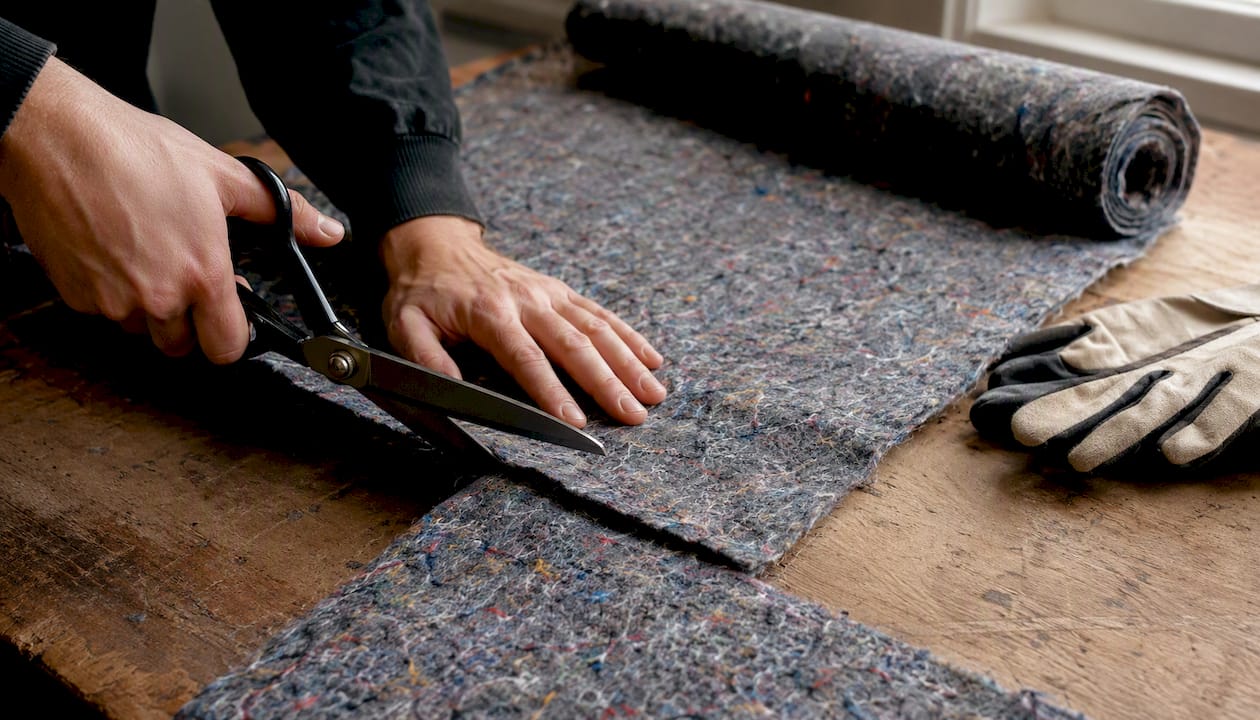
PET felt is a non-woven sheet material made from recycled polyethylene terephthalate (PET) fibres, used for acoustic absorption, decorative wall panels, and modular feature-wall kits. Designers and renters reach for it because it sits at the intersection of sustainability, colour, and practical acoustic improvement without requiring heavy renovation. Three uses capture its range well:
- Wall panels and feature walls for living rooms and home offices, where it adds texture, colour, and mid-to-high frequency sound absorption.
- Suspended ceiling baffles and clouds for open-plan spaces, where hanging panels reduce echo and reverberation.
- Modular, no-drill feature-wall kits for rental homes, where removable adhesive mounting means colour and texture without landlord conflict.
Key takeaways
PET felt is a recycled-polyester non-woven material that delivers acoustic improvement and decorative impact in one — but always verify acoustic and fire test reports before specifying for any project beyond straightforward residential decoration.
| Point | Details |
|---|---|
| Material identity | PET felt is made from recycled polyethylene terephthalate fibres, thermally or mechanically bonded into a porous non-woven sheet. |
| Acoustic performance | Absorbs mid-to-high frequencies; mounting with an air gap materially improves low-frequency results. |
| Specification musts | Always request acoustic test reports (ISO 354 or ASTM C423) and fire test reports before specifying for any project. |
| Renter-friendly installation | Adhesive pad mounting and removable systems suit rental homes; avoid screws or permanent fixings in tenanted spaces. |
| DwellForms™ by Liftedplus | Modular, 100% recycled PET felt kits with adhesive mounting and sample credits — designed for colour-led, no-drill feature walls. |
Table of Contents
- What is PET felt and what is it made from?
- How is PET felt made?
- How does PET felt absorb sound?
- Where is PET felt used in interiors?
- What are the benefits and limitations of PET felt?
- Safety, flammability and Australian compliance checks
- Cutting, handling and renter-friendly installation
- How to source and specify PET felt in Australia
- DwellForms™ modular PET felt kits: a renter-friendly example
- PET felt is worth choosing — when the context fits
- DwellForms™ kits: colour, texture and no drilling required
- Sources
- FAQ
What is PET felt and what is it made from?
PET stands for polyethylene terephthalate, the same thermoplastic polymer used in water bottles and food-grade packaging. PET felt is made from recycled PET — post-consumer bottles and polyester fibres that would otherwise enter landfill — processed into a dense, porous sheet through a non-woven manufacturing method.
The construction is fundamentally different from woven textiles. Fibres are mechanically or thermally bonded into a matted sheet rather than interlocked by weaving. The result is a material with consistent porosity throughout its cross-section, which is precisely what makes it useful for acoustic absorption.
How does PET felt compare to wool felt?
The two materials share a similar hand and visual weight, which is why they are often confused. Practically, though, they behave quite differently. PET felt is synthetic, colour-fast, low-shedding, and more tolerant of moisture than wool. It holds dye uniformly, so the colour range available is far broader and more consistent across production runs. Wool felt, by contrast, offers a naturally warmer hand, biodegrades at end of life, and tends to perform better in fire situations without chemical treatment — it chars rather than melts. Wool and polyester felt each suit different applications, and the choice often comes down to sustainability priorities, fire requirements, and budget.
Always confirm recycled content percentages and recyclability claims with a supplier datasheet rather than relying on marketing copy alone.
How is PET felt made?
The manufacturing process moves from waste stream to finished panel in a series of well-defined steps. Understanding them helps you judge quality and sustainability claims when comparing products.
- Collection and sorting — post-consumer PET bottles are collected, sorted by colour and resin type, and inspected for contamination.
- Cleaning and flake production — bottles are shredded into small flakes, washed, and dried to remove labels, adhesives, and residue.
- Melt extrusion and fibre formation — clean flakes are melted and extruded through fine spinnerets to produce continuous polyester fibres, which are then cut to staple length.
- Carding and cross-lapping — fibres are combed into a web and layered at alternating angles to build thickness and structural integrity.
- Thermal or mechanical bonding — the layered web is either heat-pressed (thermal bonding) or needle-punched (mechanical entanglement) to lock fibres into a coherent sheet. Thermal bonding tends to produce a denser, stiffer panel; needle-punching creates a softer, more porous structure.
- Finishing — panels are dyed, cut to size, and optionally CNC-routed into decorative shapes or acoustic profiles.
This bottles-to-felt workflow produces a dimensionally stable sheet well suited to architectural panel applications. The bonding method matters: thermal bonding affects stiffness and edge quality, while mechanical entanglement can increase acoustic porosity. When specifying, ask the manufacturer about recycled content percentage, batch colour tolerance, and whether pigments or surface finishes introduce VOCs or affect flammability ratings.
How does PET felt absorb sound?
PET felt absorbs sound through porous absorption: sound waves enter the open fibre matrix and their energy is converted to heat through friction as air molecules vibrate within the material. The mechanism works most effectively in the mid-to-high frequency range (roughly 500 Hz and above). Low-frequency absorption is limited by panel thickness alone, which is why mounting method matters as much as material choice.
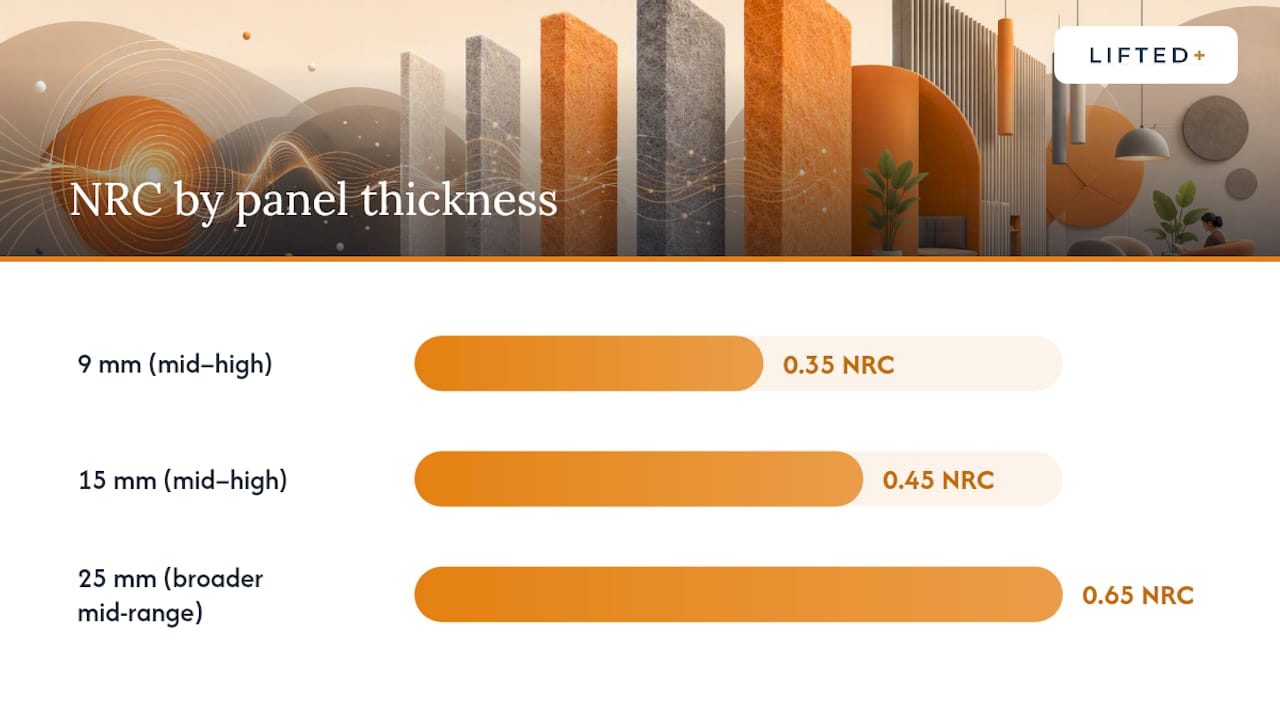
The table below shows illustrative absorption coefficient ranges by panel thickness. These are indicative only — always verify with the manufacturer’s published acoustic test report, which should reference an ISO or ASTM test method.
| Panel thickness | Typical NRC range (illustrative) | Primary frequency benefit |
|---|---|---|
| 9 mm | 0.35 | Mid-to-high frequencies |
| — | 0.45 | Mid-to-high frequencies |
| — | 0.65 | Broader mid-range coverage |
Pro Tip: Mounting a PET felt panel with an air gap of 50–100 mm behind it significantly improves low-frequency absorption. A suspended ceiling cloud achieves this naturally; for wall panels, a simple timber batten frame creates the same effect. Ask your supplier for test data measured with an air gap if low-frequency control matters for your project.
Practical absorption performance is strongly influenced by mounting: an air gap behind a panel or a suspended cloud materially improves low-frequency results. Request acoustic test certificates that specify the mounting condition used during testing — a result measured flush to a hard surface will differ from one measured with an air gap.
For Australian projects, ask suppliers for test reports referencing ISO 354 (reverberation room method) or ASTM C423, and confirm whether the stated NRC or αw value was measured under the same mounting conditions you plan to use.
Where is PET felt used in interiors?
PET felt’s combination of acoustic performance, colour range, and workability makes it one of the more versatile materials in contemporary interior design. Common applications include:
- Feature walls and wall panels in living rooms, home offices, and bedrooms, where large-format panels or modular kits create both visual texture and acoustic damping.
- Ceiling clouds and suspended baffles in open-plan kitchens, dining areas, and commercial fit-outs, where hanging panels reduce reverberation without touching the walls.
- Freestanding screens and desk dividers in home offices and co-working spaces, providing localised acoustic separation and visual privacy.
- Modular feature-wall kits for rental homes, where adhesive mounting means colour and texture without drilling or permanent wall damage.
- Decorative trims and soft furnishings — headboard panels, pinboards, and acoustic artwork.
For renters, the most practical entry point is a modular kit mounted with adhesive pads. A panel arrangement behind a bed or sofa creates a renter-friendly feature wall with genuine visual impact and some acoustic benefit, without touching the lease agreement. PET felt is not a soundproofing material and will not block sound transmission between rooms; it reduces echo and reverberation within a space, which is a meaningful but different outcome.
What are the benefits and limitations of PET felt?
The material’s strengths are well matched to inhabited residential and light commercial spaces. Its recycled content supports circular-economy credentials when suppliers publish verified figures. The colour range available through pigment dyeing is broad and consistent, and the surface is durable, low-maintenance, and resistant to the kind of fibre shedding that makes some natural felts impractical near upholstery or electronics.
Fabrication is straightforward: PET felt cuts cleanly, holds a CNC-routed edge well, and can be shaped into complex decorative profiles without specialist tooling. Cost sits at a moderate level for standard sheet sizes, though custom CNC shapes and thicker acoustic grades add to the price.
The limitations are worth knowing before you specify. Low-frequency absorption is modest unless panels are thick or mounted with an air gap. PET is a thermoplastic: under sustained direct heat or flame, it melts rather than chars, which has implications for fire safety that vary by product treatment and test result. Batch colour variation is a real consideration for large installations — always request samples from the same production batch when colour consistency matters. And for heavy industrial acoustics, theatre, or spaces requiring certified noise-control ratings, PET felt panels are generally not the right primary solution.
Safety, flammability and Australian compliance checks
PET is a polyester thermoplastic. Without fire-retardant treatment, it tends to melt and can ignite under sustained heat. Fire performance varies significantly between products depending on the manufacturer’s treatment process and the test standard applied, so marketing language alone is not a reliable guide.
When specifying PET felt for any Australian interior project, request the following from your supplier:
- Fire test report referencing a recognised standard. Australian projects typically require compliance with AS/NZS standards; some suppliers publish ASTM E84 or ISO 11925 results as an indication of performance. A manufacturer spec sheet example shows the kind of flammability classification and recycled content data designers should request. Confirm which standard applies to your specific building type and occupancy class with your certifier.
- Flammability class or group rating, as stated on the test report.
- VOC or indoor air quality documentation, particularly if the product has been dyed or surface-treated.
- Acoustic test certificate, with the test method and mounting condition clearly stated.
For renters using adhesive-mounted panels, check the adhesive manufacturer’s guidance on heat resistance and keep panels away from open flames, cooktops, and high-heat sources. The adhesive’s fire behaviour is a separate consideration from the panel itself.
Cutting, handling and renter-friendly installation
PET felt is forgiving to cut and shape, but technique affects edge quality. Recommended cutting methods depend on panel thickness: a sharp utility knife or Stanley knife works well for sheets up to around 9 mm; a jigsaw or band saw suits thicker panels; CNC routing delivers the cleanest, most repeatable edges for complex shapes or large runs.
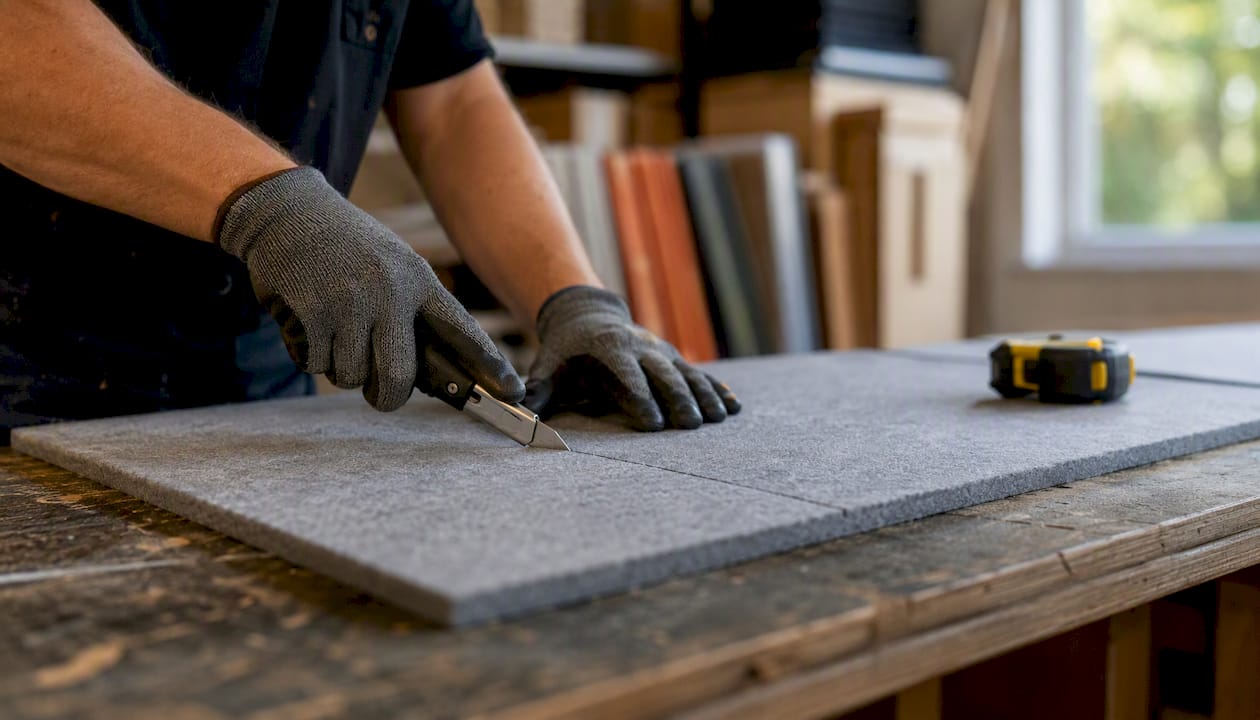
Always score the cut line before running the full cut, and keep blades sharp — a dull blade compresses and tears fibres rather than slicing them cleanly. Use gloves and eye protection when cutting, and avoid applying heat to the cut edge. PET fibres melt under direct heat and can produce fumes; keep cutting tools cool and work in a ventilated space.
Pro Tip: For a feature-wall look with clean seams, plan your panel layout on paper before cutting. A consistent reveal between panels — even 3–5 mm — reads as intentional and architectural rather than accidental. Measure twice, cut once, and dry-fit before committing adhesive.
For renter-friendly installation, the approach changes entirely. Screws, battens, and construction adhesive are off the table when you are working within a tenancy. Tested adhesive pads, removable mounting systems, and picture-hanging strips rated for the panel weight are the practical options. DwellForms™ by Liftedplus uses this adhesive-pad approach specifically because it suits rental walls. Command-style strips can work for lighter panels, but always check the weight rating against your panel size and test on a small area of your wall surface first. For a broader look at noise-reducing interior options that complement wall panels, acoustic door treatments are worth considering alongside your wall treatment plan.
How to source and specify PET felt in Australia
Specifying PET felt for an Australian project involves more than choosing a colour. A practical checklist before you commit:
- Verify recycled content percentage and whether the product is recyclable at end of life.
- Request acoustic test reports with the test method (ISO 354 or ASTM C423) and mounting condition stated.
- Request fire test reports referencing AS/NZS or an equivalent standard, and confirm applicability with your building certifier.
- Order sample swatches from the same production batch you intend to purchase.
- Check lead times for on-shore stock versus imported product, and confirm colour tolerance across batches for large installations.
- Ask for installer guidance specific to your wall type and mounting method.
Australian suppliers worth contacting include Refelt, a specialist PET felt manufacturer with product and specification data available directly; and Avenue IS (also listed as Avenue Interiors), an Australian supplier carrying PET felt products for commercial and residential projects. Both should be able to provide acoustic and fire test documentation on request. For a full guide to recycled PET felt panels in the Australian context, including sourcing notes and specification guidance, Liftedplus’s resource covers the local market in detail.
For renters and homeowners who want a ready-made, colour-led solution without the specification process, DwellForms™ by Liftedplus offers modular kits with adhesive mounting designed for no-drill installation. These are not positioned as commercial acoustic panels; they are a decorative, renter-friendly option with acoustic benefit. Confirm test reports with Liftedplus directly if acoustic or fire performance is a project requirement.
DwellForms™ modular PET felt kits: a renter-friendly example
Key product details worth knowing:
- Made from 100% recycled PET, supporting circular-economy credentials when verified against the product datasheet.
- Modular kit format with extension packs available, so you can start with one wall section and expand the arrangement over time.
- Adhesive pad mounting designed for renter-friendly installation — no screws, no battens, no wall damage from the installation method itself. Always test on your specific wall surface before full installation.
- Sample kits credited to full orders, so you can confirm colour and texture in your actual space before committing.
- Layout guides and styling support for bedrooms, living rooms, hallways, and home offices.
Pro Tip: Order a sample kit before committing to a full wall arrangement. Colour reads differently under artificial light than in product photography, and the texture of PET felt has a tactile quality that photographs cannot fully convey. The sample credit means you lose nothing by testing first.
DwellForms™ panels are designed for decorative and acoustic improvement in inhabited residential spaces, not for certified commercial acoustic treatment. If your project requires verified NRC ratings or fire compliance documentation, contact Liftedplus directly to request the relevant datasheets and test reports before specifying. For acoustic design in eco-conscious interiors, the Liftedplus resource covers how PET felt panels contribute to residential living comfort.
PET felt is worth choosing — when the context fits
PET felt earns its place in interiors where colour, texture, sustainability, and mid-to-high frequency acoustic improvement all matter. For a renter staring at a blank wall, or a designer specifying a home office that needs warmth and some acoustic damping, it is one of the most practical materials available.
Choose PET felt when you want visual impact, a credible recycled-content story, and acoustic improvement in an inhabited space. Consider alternatives when the project demands certified low-frequency noise control, outdoor durability, or fire-critical compliance that the available product test reports cannot support.
The practical action is simple: test a sample in your actual space, confirm the datasheet covers your acoustic and fire requirements, and choose a mounting method compatible with your tenancy rules. Colour without commitment is a real outcome with this material — but only when the specification is done properly.
DwellForms™ kits: colour, texture and no drilling required
If you have read this far and your wall is still blank, DwellForms™ by Liftedplus is the most direct route to a no-drill feature wall made from 100% recycled PET felt. The kits are designed specifically for renters and homeowners who want colour and sculptural texture without painting, drilling, or renovating. Adhesive pad mounting, modular layouts, and sample kits credited to full orders mean you can test before you commit and take the whole arrangement with you when you move.
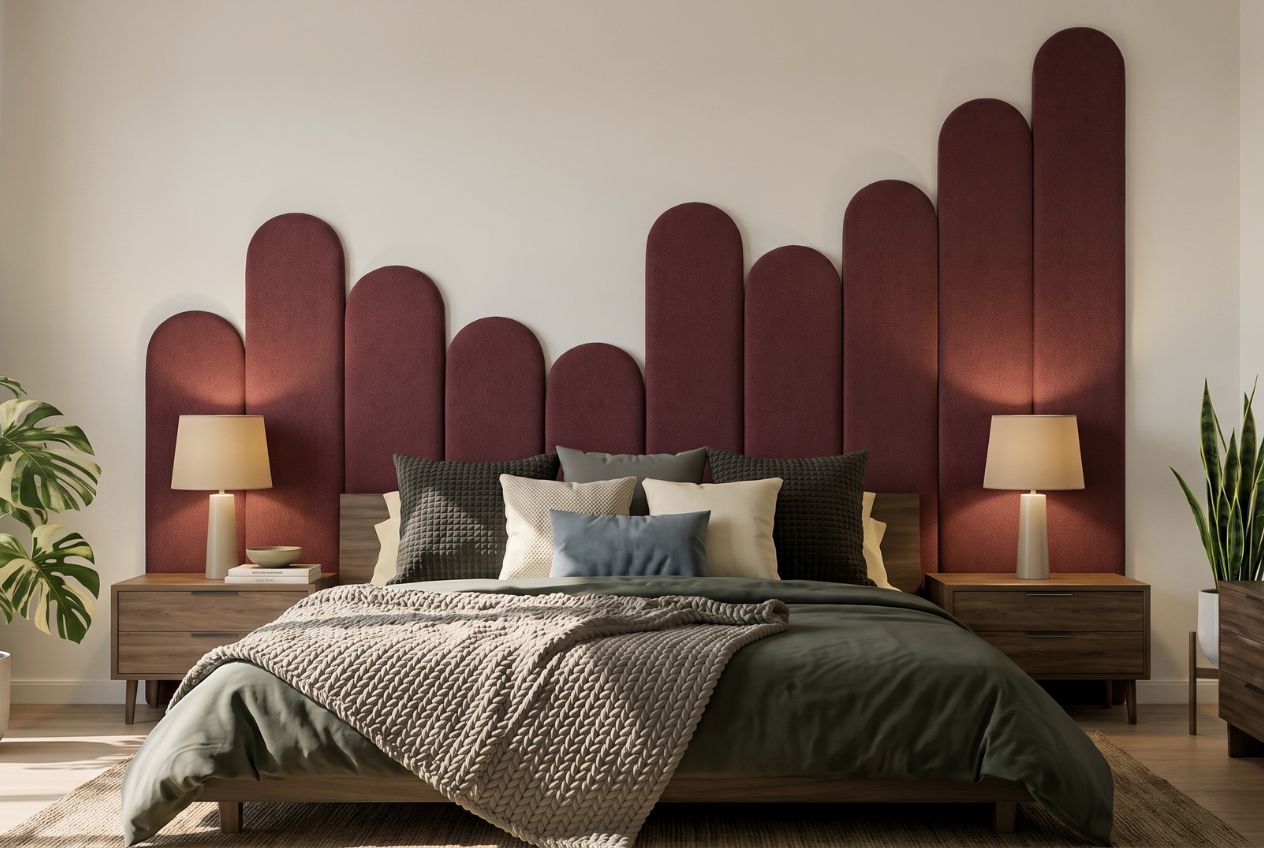
DwellForms™ is a decorative and acoustic improvement solution for residential spaces, not a commercial acoustic treatment. For projects requiring certified acoustic or fire performance, request the relevant test documentation before specifying. Browse the DwellForms™ core kits or order a sample to see the colour and texture in your own space.
Sources
These resources are worth bookmarking when you are specifying PET felt or comparing products:
- PET Felt Acoustic Panels: Everything You Should Know
- PET FELT Spec sheet (example manufacturer PDF)
- What Does PET Stand For in Felt? Understanding PET Felt Acoustic Panels and Eco‑Friendly Sound Control – BEIEN Acoustic Panel Factory
FAQ
What is PET felt made of?
PET felt is made from recycled polyethylene terephthalate fibres — the same polymer used in plastic bottles — processed into a dense, porous non-woven sheet through thermal or mechanical bonding.
Is PET felt safe to use indoors?
PET felt is generally considered safe for indoor use, but always request VOC documentation and fire test reports from your supplier, particularly if the product has been dyed or surface-treated.
Does PET felt burn?
PET is a thermoplastic that tends to melt rather than char under sustained heat, and can ignite. Fire performance depends on manufacturer treatment; always request a fire test report referencing AS/NZS or an equivalent standard before specifying for any interior project.
How do you cut PET felt?
Use a sharp utility knife for sheets up to around 9 mm thick, a jigsaw or band saw for thicker panels, and CNC routing for precision shapes. Score the cut line first and keep blades sharp for a clean edge.
Can renters use PET felt wall panels without damaging walls?
Modular kits like DwellForms™ by Liftedplus use adhesive pad mounting designed for renter-friendly installation. Always test the adhesive on your specific wall surface first, as results vary by wall type and surface condition.