

For a no-drill, renter-friendly feature wall with real colour and sculptural presence, removable PET felt wall panels are the stronger choice over art prints. They cover more wall, add texture and depth that a flat print cannot, and come down without a fight when you move out.
- Removable PET felt panels (like DwellForms™ by Lifted+) attach with tested adhesive pads, cover a full feature wall in one cohesive arrangement, and can be packed up and taken to your next home. The visual impact is architectural, not decorative.
- Art prints win on image specificity and lower cost per single piece, but scaling them to fill a wall multiplies frames, hooks, and damage risk fast.
Key takeaways
For a renter-friendly, no-drill feature wall, removable PET felt panels deliver more visual impact, better reusability, and lower damage risk than scaling art prints across a full wall.
| Point | Details |
|---|---|
| Panels win on feature walls | Modular PET felt panels cover a full wall with sculptural depth that flat prints cannot replicate. |
| Prints win on single images | Art prints are the better choice when you want one specific photograph or artwork at a defined size. |
| Adhesive and cure time matter | Allow 30 days for paint to cure before applying adhesive pads; warm-peel branded adhesives remove more cleanly than cheap rubber alternatives. |
| Check your lease first | Most Australian residential leases permit removable adhesive decor, but read the “alterations” clause and seek written permission if in doubt. |
| DwellForms™ by Liftedplus | Modular, removable PET felt kits with tested adhesive pads, sample kit credit, and 100% recycled construction — designed for renters wanting colour without commitment. |
Table of Contents
- How do wall panels and art prints actually compare for renters?
- When should you choose panels, and when do prints still make sense?
- How do you install and remove no-drill wall panels safely in a rental?
- How do PET felt panels and canvas prints hold up in Australian homes?
- How do you style a feature wall versus a grouped art arrangement?
- What does a feature wall actually cost, and how should renters budget?
- A quick decision checklist before you order
- The case for colour in rentals deserves more credit than it gets
- DwellForms™ by Liftedplus: colour-led, no-drill feature walls for renters
- Sources
- FAQ
How do wall panels and art prints actually compare for renters?
The decision between decorative wall panels and art prints comes down to six practical dimensions. Modular wall panels offer non-permanent installation that lets renters personalise a space without painting or permanent alteration — a meaningful advantage when your bond is on the line.
| Dimension | Removable PET felt panels | Art prints (canvas or framed) |
|---|---|---|
| Visual impact | Sculptural, textural, architectural depth | Flat image; strong for photography and illustration |
| Installation | Tested adhesive pads, no drill, modular layout | Adhesive strips or hooks; glass frames add complexity |
| Weight and wall damage risk | Lightweight felt; distributed across multiple pads | Canvas lighter than glass frames; glass adds stress to adhesives |
| Room suitability | Living rooms, bedrooms, home offices, hallways | Any room; best where a single image is the focal point |
| Durability and maintenance | Durable felt; dust with a soft brush | Canvas resists glare; paper prints fade in direct sun |
| Cost for a large feature wall | Higher up-front, lower per-square-metre at scale | Lower per piece; cost multiplies quickly across a wall |
| Restyle flexibility | Rearrange, extend, or recolour without new holes | Rehang freely on picture rails; new prints needed for new look |
A few decisive tradeoffs worth naming plainly:
- Panels deliver sculptural depth that a flat print cannot replicate, regardless of print size.
- Art prints offer image specificity — a photograph, a painting, a map — that felt geometry cannot.
- For echo reduction in hard-floored apartments, PET felt panels offer a meaningful acoustic benefit, though peel-and-stick installs sit at the lower end of published absorption ranges.
- Canvas prints avoid glass glare, making them well-suited to bright Australian homes where light is strong and unfiltered.
- Recycled PET felt carries clear environmental credentials; canvas and paper prints vary widely by supplier.
When should you choose panels, and when do prints still make sense?
Choose removable PET felt panels when:
- You want a full feature wall behind a sofa or bed — one cohesive arrangement reads as intentional design, not a collection of objects.
- Your apartment has hard floors and bare walls, and you notice echo or sound bounce. PET felt panels can reduce that noticeably in a small room.
- You work from home and want a considered backdrop for video calls without repainting.
- You move regularly and want wall decor that travels with you and reinstalls in a new space.
Art prints remain the better choice when:
- Your budget covers one or two pieces and you want a specific photographic image or artwork.
- You have a picture rail already installed and enjoy rotating prints seasonally without touching the wall at all.
- You are styling a formal dining room or study where a single large canvas print suits the mood and the glare-free quality of canvas is an advantage.
- You want to display a personal photograph at large scale — panels cannot replicate that.
For wall decor ideas that sit between the two, peel-and-stick wallpaper and removable decals offer a mural-style option worth considering when neither panels nor prints fit the brief.
How do you install and remove no-drill wall panels safely in a rental?
The short answer: DwellForms™ kits use tested adhesive pads that press directly onto the wall surface. No screws, no battens, no construction adhesive. That is a fundamentally different process from hanging framed art, which relies on a single hook or strip bearing the full weight of the piece.
Wall surface types in Australian rentals and what suits each:
- Painted plasterboard (most common): adhesive pads perform well on a smooth, fully cured surface. This is the ideal substrate.
- Textured or rendered walls: adhesive contact is reduced on heavily textured surfaces. Test a corner patch first and allow extra cure time.
- Masonry or brick: adhesive pads are not designed for porous masonry. Consider a freestanding or leaning display instead.
Removal best practice:
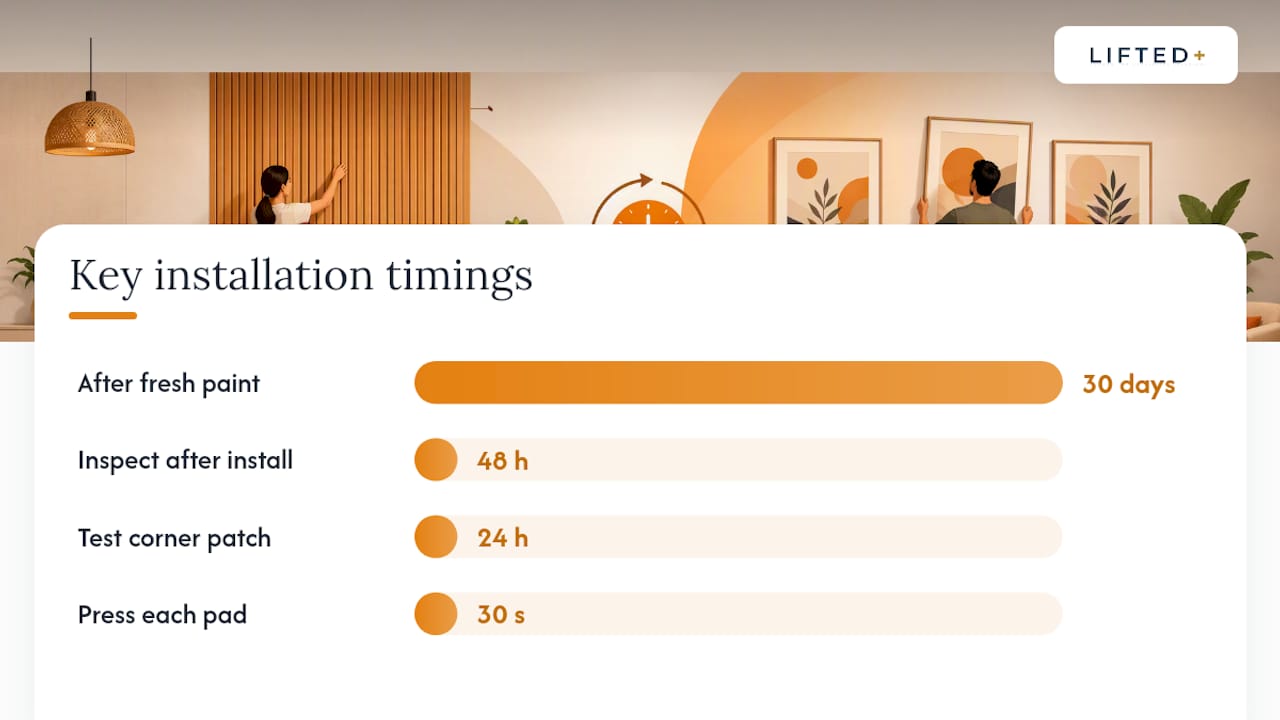
- Wait at least 30 days after any fresh paint before applying adhesives. Applying adhesive to uncured paint is the leading cause of paint damage at removal and bond disputes.
- Warm the adhesive pad gently with a hairdryer on a low setting before peeling. Cheap rubber adhesives skip this step and pull paint; branded acrylic adhesives with warm-peel instructions remove far more cleanly.
- Peel slowly at a low angle, parallel to the wall surface rather than pulling straight out.
- Test one panel in a discreet corner before installing the full arrangement.
Installation sequence:
- Clean the wall surface with a dry cloth and allow it to dry fully.
- Measure the wall and mark your layout lightly with a level and pencil.
- Install one panel in a corner patch and leave it for 24 hours to test adhesion.
- Complete the full arrangement, pressing each pad firmly for 30 seconds.
- Inspect edges and corners after 48 hours and press any lifting sections back.
Pro Tip: Order a sample kit before committing to a full arrangement. Beyond colour-testing, a sample lets you run a real adhesion test on your specific wall surface — painted plasterboard in a 1970s block behaves differently from a freshly painted new build.
How do PET felt panels and canvas prints hold up in Australian homes?
DwellForms™ panels are made from precision-cut PET felt produced from 100% recycled plastic. The material is dimensionally stable, does not warp in humidity, and resists the kind of fading that paper prints show within a few years of direct sun exposure. Canvas prints share some of those advantages — they are glare-free and hold colour reasonably well — but paper-based prints behind glass are the most vulnerable to UV damage in the bright, high-UV conditions common across Australian homes.
Practical maintenance by material:
- PET felt panels: dust with a soft dry brush or a low-suction vacuum attachment. Spot-clean with a barely damp cloth for marks. Avoid steam cleaners and prolonged humidity near the surface.
- Canvas prints: wipe gently with a dry microfibre cloth. Keep away from steamy bathrooms and kitchens where moisture can cause canvas to sag or warp over time.
- Framed paper prints: the most fragile option. Glass protects the image but adds weight and glare, and condensation behind glass can damage the print in humid rooms.
Decorative wall panels tend to cost more up-front but deliver a longer lifespan and lower maintenance over time, which matters when you are investing in something you plan to take to your next home. The recycled PET construction also aligns with the values of renters and homeowners who want their purchases to carry less environmental weight. For a deeper look at the material, the recycled PET felt guide covers provenance and sustainability credentials in detail.
How do you style a feature wall versus a grouped art arrangement?
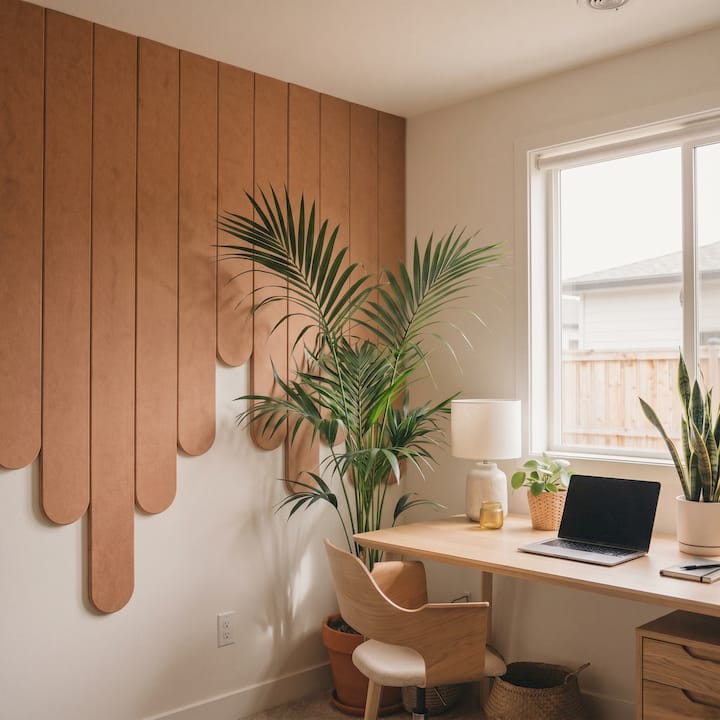
Scale and sightline come first. A feature wall works when it anchors the room’s primary sightline — the wall you see as you enter, or the wall behind the main piece of furniture. A grouped art arrangement works when it fills a defined zone without needing to carry the whole room.
Styling principles that apply to both:
- Choose one focal point per room. Two competing feature walls create visual noise.
- Scale panels or prints to at least two-thirds the width of the furniture they sit above. Smaller pieces float and feel unresolved.
- Use colour contrast deliberately. A warm-toned panel arrangement against a cool white wall reads with more presence than tone-on-tone.
- Repeat a shape or colour from the panels in a cushion, rug, or throw to pull the room together without overworking it.
- Add a directional light source — a wall sconce or angled floor lamp — to cast shadow across textured panels and deepen the sculptural effect.
For a living room, panels behind a sofa give the space an architectural spine. For a bedroom, a panel arrangement behind the bed head replaces the need for a bedhead entirely. In a home office, a considered panel backdrop adds visual weight to video calls without the distraction of a busy print gallery. For styling colourful wall art in smaller rooms, the same scale principles apply — proportion to furniture, not to the wall alone.
Pro Tip: Use a sample kit to test colour and scale on your actual wall before ordering a full kit. Natural light in an east-facing Sydney apartment reads completely differently from afternoon light in a west-facing Melbourne terrace. The sample is the only reliable test.
What does a feature wall actually cost, and how should renters budget?
Panels cost more up-front than a single art print. That is simply true. But the cost shape changes when you are covering a full feature wall rather than hanging one piece.
Budget items to plan for:
- Sample kit: a low-cost entry point that lets you test colour, adhesion, and scale. With DwellForms™, sample kit costs can be credited towards a full kit order.
- Full panel kit: covers a defined wall area; extension packs let you scale up without buying a second full kit.
- Adhesive pads: typically included with DwellForms™ kits; worth confirming before ordering.
- Delivery: factor this into the total, particularly for regional Australian addresses.
- Framing (if choosing prints): a large canvas print needs no frame, but paper prints do. Framing costs for multiple pieces across a wall add up faster than most people expect.
Decorative wall panels deliver longer lifespan and lower maintenance than paint or wallpaper, which makes the up-front cost more defensible over a multi-year tenancy. The reusability is the real budget argument: panels move with you, prints stay on the wall or go in the bin.
Budgeting approach for renters: start with a sample, plan your wall in zones, and use the sample credit to reduce the cost of the full kit. Avoid buying a full arrangement before you have seen the colour in your actual light.
A quick decision checklist before you order
The single decision rule: if you want sculptural depth, colour, and texture across a full wall, choose panels. If you want one specific image at a defined size, choose a print.
Decision checklist:
- Measure the wall you want to cover — width and height.
- Order a sample kit and test the colour in your room’s natural light.
- Read your lease for the word “alterations” — most standard Australian residential leases permit removable, non-permanent wall decor but prohibit drilling or painting.
- Test one adhesive pad on a small, discreet patch of your wall and leave it for 48 hours before installing the full arrangement.
- Choose your kit size based on the measured wall area, not a rough estimate.
Three questions to ask your property manager:
- “Are removable adhesive wall panels permitted under my lease?”
- “Does the lease define ‘alteration’ to include temporary adhesive products?”
- “Is there a specific process for notifying you before I make any wall changes?”
Red flags that suggest seeking written permission first:
- Your lease includes a blanket “no alterations” clause with no carve-out for removable products.
- The walls are freshly painted (less than 30 days ago).
- The wall surface is textured render, exposed brick, or heritage-listed material.
For a no-drill guide to movable wall art in rental conditions, the Liftedplus resource covers Australian-specific lease considerations in more detail.
The case for colour in rentals deserves more credit than it gets
The conversation about wall panels versus art prints tends to focus on practicalities — adhesives, weight, cost. Those things matter. But the more interesting question is what it actually feels like to live in a space you have shaped with intention, even temporarily.
Renters are often told to keep things neutral, keep things reversible, keep things small. The result is a generation of apartments that look like they are waiting to be lived in. A modular panel arrangement does something a print gallery rarely achieves: it makes the wall itself feel designed, not just decorated. The colour and geometry hold the room in a way that a collection of frames, however well-curated, usually does not.
The practical case for removable panels is strong. The emotional case is stronger. A home that feels genuinely yours — even if you are renting it — is not a luxury. It is worth the thirty minutes it takes to install a kit.
DwellForms™ by Liftedplus: colour-led, no-drill feature walls for renters
If you want a renter-friendly feature wall with real colour and sculptural presence, DwellForms™ modular PET felt kits are built for exactly that brief.
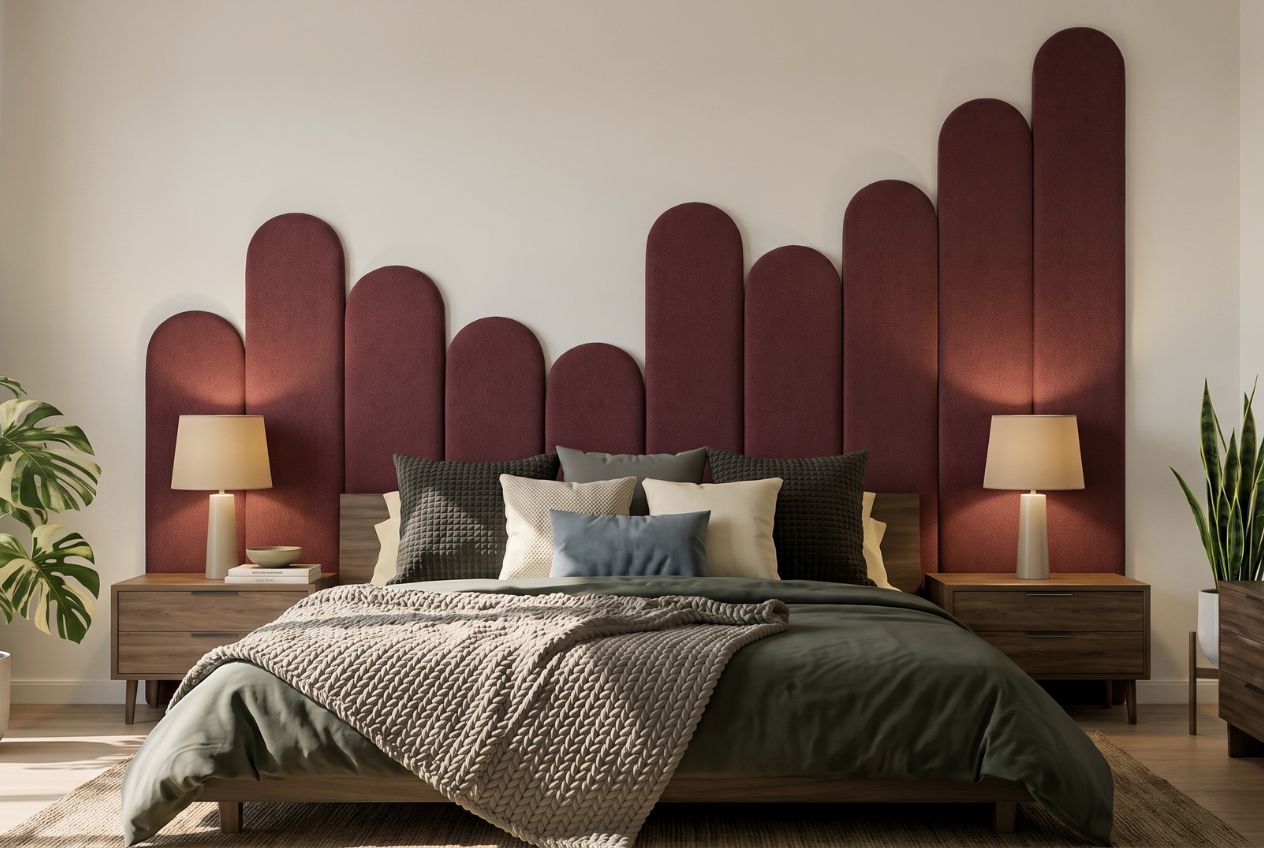
- Tested adhesive pads included with every kit — no drilling, no battens, no permanent changes.
- 100% recycled PET felt construction, precision-cut for clean geometry and consistent colour across the arrangement.
- Sample kit credit policy: order a sample first, test colour and adhesion in your actual space, and the sample cost credits towards your full kit.
- Kit sizes suited to living room feature walls and bedroom arrangements, with extension packs to scale up without buying a second full kit.
The next step is simple: view the DwellForms™ core kits and order a sample to test in your space before committing to a full arrangement.
Sources
- Why modular wall panels are perfect for renters
- Peel-and-stick wall panels for renters: 7 picks (2026)
- How to hang wall art without nails: The ultimate damage‑free guide for Australian homes
- Canvas vs framed prints — which should you choose?
FAQ
Are removable wall panels safe for rental walls in Australia?
Removable PET felt panels attached with tested adhesive pads are generally safe on smooth, fully cured painted plasterboard. Always allow 30 days after fresh paint, test one panel in a discreet spot first, and check your lease’s “alterations” clause before installing.
Do wall panels or art prints cost more for a large feature wall?
Panels cost more up-front but are reusable and cover a full wall more cost-effectively at scale. Art prints are cheaper per piece but multiply in cost and damage risk when you need many to fill a wall.
Can I take DwellForms™ panels with me when I move?
Yes. DwellForms™ modular kits are designed to be removed, repacked, and reinstalled in a new space, which is one of their core advantages over painted or wallpapered feature walls.
Which is better for echo reduction in a hard-floored apartment?
PET felt panels offer meaningful echo reduction in small rooms with hard floors, though peel-and-stick installs typically sit at the lower end of published absorption ranges. Art prints provide no acoustic benefit.
Do I need permission from my landlord to install adhesive wall panels?
Most standard Australian residential leases permit removable, non-permanent wall decor, but the specific wording varies. Read your lease for the word “alterations” and ask your property manager in writing if the clause is ambiguous.