
TL;DR:
- Sculptural lighting combines art and function, serving as a room’s focal point.
- Proper selection and placement of sculptural fixtures enhance room mood and coherence.
- Integrating sculptural lighting from the start creates personalized, impactful interior designs.
Lighting is one of the most overlooked decisions in a home. Most New Zealand homeowners choose a fixture that works, hang it in the centre of the room, and move on. The result is a space that feels functional but flat, polished but somehow lifeless. Sculptural lighting changes that entirely. It brings shape to the air, creates mood, and pulls a room out of the safe, polite middle. This guide walks you through everything you need to know, from understanding what sculptural lighting actually is, to selecting the right piece, placing it with intention, and troubleshooting for lasting impact.
Table of Contents
- Understanding sculptural lighting and its impact
- Preparing your space: Selecting sculptural lighting
- Step-by-step: Decorating with sculptural lighting
- Troubleshooting, verification, and maximising impact
- Our perspective: What most guides miss about sculptural lighting
- Elevate your space with Lifted+ sculptural lighting
- Frequently asked questions
Key Takeaways
| Point | Details |
|---|---|
| Sculptural lighting transforms interiors | Choosing statement lighting makes your space more expressive and stylish. |
| Selection matters | Match lighting scale and design to your room for best results. |
| Layer for ambience | Layered sculptural lighting creates effective mood and practical illumination. |
| Troubleshoot placement | Fix common mistakes like improper sizing or placement for lasting impact. |
Understanding sculptural lighting and its impact
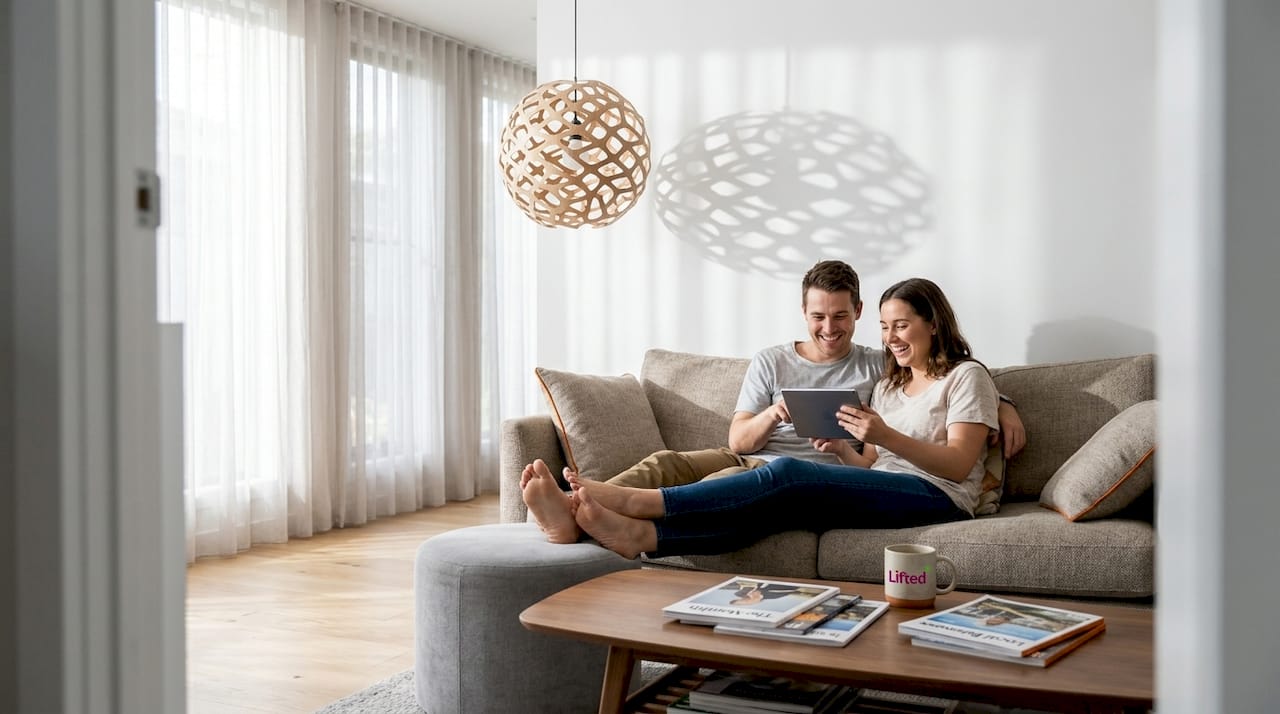
Sculptural lighting sits at the intersection of art and function. Unlike a standard pendant or recessed downlight, a sculptural piece is designed to be seen as much as it is designed to illuminate. The form carries as much weight as the light itself. Think of a hand-blown glass globe suspended at eye level, or a floor lamp with an asymmetric silhouette that casts dramatic shadows across a wall. These are not background objects. They are the room.
What separates sculptural lighting from conventional fixtures is intentionality of form. Standard lighting prioritises output: lumens, beam angle, coverage. Sculptural lighting adds a third dimension, treating the fixture as a designed object with presence, texture, and visual hierarchy. As statement lighting holds a room and sets the tone for interior design, the fixture itself becomes the anchor around which everything else is arranged.
The impact is measurable. Studies in residential interior design consistently show that homeowners who invest in statement fixtures report significantly higher satisfaction with their overall room aesthetic. The fixture becomes a reference point. Other decisions, such as furniture placement, wall colour, and textile choices, begin to orbit around it.
Scultural lighting works across a wide range of spaces. Consider where it can shift the energy of a room:
- Entryways: A striking pendant or sculptural wall sconce creates an immediate first impression.
- Living rooms: A floor lamp with architectural form adds vertical interest and warmth.
- Dining areas: An overhead sculptural piece draws the eye downward and anchors the table.
- Bedrooms: A bedside table lamp with organic curves softens the space without sacrificing style.
- Home offices: A sculptural desk lamp signals intention and personality in a working environment.
The comparison below illustrates how sculptural lighting differs from standard options across key design considerations.
| Feature | Standard lighting | Sculptural lighting |
|---|---|---|
| Primary purpose | Illumination | Illumination and visual impact |
| Design focus | Function | Form and function equally |
| Room role | Background element | Focal point |
| Aesthetic contribution | Neutral | Defines the room’s character |
| Emotional effect | Practical | Mood-setting and expressive |
For open plan lighting choices, sculptural pieces are especially valuable because they define zones within a larger, undivided space. They give each area its own identity without the need for walls. Understanding layering lighting alongside sculptural pieces creates depth and dimension that no single fixture can achieve alone.

Preparing your space: Selecting sculptural lighting
Before you choose a piece, you need to understand the space it will inhabit. This is where most people go wrong. They fall in love with a fixture online, order it, and only then realise it is too large for a low ceiling or too delicate for a room with heavy, dark furniture. Preparation prevents regret.
Start with these practical steps before making any decision.
- Measure your room dimensions, including ceiling height. A pendant that works beautifully in a three-metre ceiling will feel oppressive in a standard two-point-four-metre space.
- Identify your decor theme. Is the room leaning towards organic and natural, or is it more geometric and industrial? Your sculptural light should feel like a considered extension of that language.
- Note existing light sources. Understand what ambient, task, and accent lighting you already have. Sculptural lighting works best as part of a layered system, not as the sole source.
- Consider the room’s function. A dining room needs a fixture that draws focus downward. A reading nook needs directional warmth. A hallway benefits from something that reads well from multiple angles.
- Assess natural light. Rooms with strong natural light during the day will show a sculptural piece differently at night. Think about how the piece will look in both conditions.
Pro Tip: Scale is the single most common mistake in sculptural lighting selection. A piece that looks proportional in a showroom or product photograph may be far too small to hold your actual room. When in doubt, go slightly larger than your instinct suggests.
For room-specific guidance, sculptural lamp selection by room type offers practical direction on matching form to function. If you are focused on creating a softer, more diffuse glow, ambient lighting advice can help you identify which sculptural forms work best for that purpose.
The table below outlines the key evaluation tools and considerations for selecting sculptural lighting.
| Evaluation factor | What to assess | Why it matters |
|---|---|---|
| Ceiling height | Minimum clearance for pendants | Prevents visual overcrowding |
| Room dimensions | Width and length in metres | Guides fixture scale |
| Existing colour palette | Warm, cool, or neutral tones | Ensures cohesion |
| Decor style | Organic, geometric, eclectic | Aligns fixture form to room language |
| Lighting layers present | Ambient, task, accent | Identifies gaps sculptural piece fills |
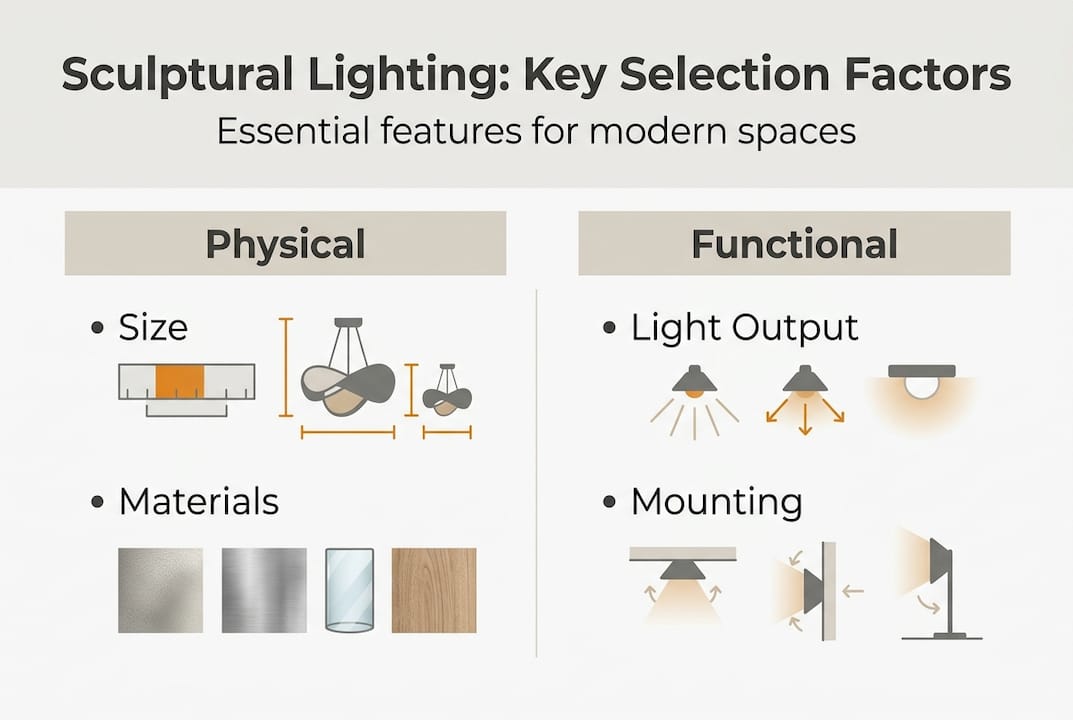
Following layer lighting tips during the selection phase means you are not choosing a sculptural piece in isolation. You are choosing how it will interact with everything else in the room.
Step-by-step: Decorating with sculptural lighting
With the right piece selected, the process of decorating with sculptural lighting becomes a matter of placement, installation, and styling. Each step matters.
- Establish your focal point first. Decide where the sculptural piece will live before anything else is arranged. The fixture should inform the layout of the room, not the other way around.
- Install at the correct height. For pendants over a dining table, the standard guideline is approximately seventy to eighty centimetres above the table surface. For floor lamps, position so the light source sits at or just above eye level when seated.
- Consider the shadow play. Sculptural lighting often casts as much interest through its shadows as through its direct light. Before finalising placement, test the fixture at night and observe how shadows fall across walls and ceilings.
- Layer with complementary sources. A sculptural floor lamp reads far more powerfully when paired with a dimmed overhead and a smaller accent light. Isolation flattens the effect.
- Style the surrounding space intentionally. The objects around a sculptural light either support it or compete with it. Keep nearby surfaces considered and uncluttered so the fixture can hold its presence.
- Step back and assess from the room’s entry point. This is how guests will first see the space. The sculptural piece should read clearly from this vantage point.
Important installation note: Always ensure your ceiling or wall structure can support the weight of the fixture before installation. For heavier sculptural pendants, consult a licensed electrician. Never exceed the recommended wattage for any fitting.
Pro Tip: Mixing textures and finishes in the surrounding decor creates visual depth that makes a sculptural light feel even more intentional. A matte ceramic lamp base, for instance, reads differently against a linen shade than against a glossy wall. Contrast is your friend.
For glass table lamp inspiration, the interplay between translucent form and warm light offers a masterclass in how a single piece can define a surface. If you are considering overhead installation, pendant installation guidance can walk you through the technical and aesthetic considerations. For floor-level presence, the floor lamp guide covers placement and styling in detail.
Troubleshooting, verification, and maximising impact
Even well-chosen sculptural lighting can underperform if something in the broader context is off. Here are the most common issues and how to address them.
The fixture feels disconnected from the room. This usually means the scale is wrong or the surrounding decor is not supporting it. Try removing clutter from nearby surfaces and reassessing. Sometimes a single piece of art or a considered object placed near the light is all it takes to anchor it.
The light output feels too harsh or too dim. Sculptural lighting is not always optimised for pure output. Use a warm-toned bulb (around 2700K) to soften the effect, and pair with a dimmer switch where possible. This gives you control over mood across different times of day.
The piece looks great in isolation but feels lost in the room. This is a layering issue. Layered sculptural lighting transforms ambience in a home by creating depth and visual hierarchy. Add a secondary light source at a different height to give the sculptural piece context.
The fixture draws the eye but for the wrong reasons. If the piece feels jarring rather than striking, it may be conflicting with the room’s existing colour palette or material language. Consider whether the finish, tone, or form is working against the room rather than with it.
Pro Tip: Verify your lighting arrangement by photographing the room at night with only the sculptural lighting active. The camera reveals what the eye adjusts to. If the image feels flat or unbalanced, that is your signal to layer in additional sources.
The comparison below outlines different evaluation approaches for assessing sculptural lighting success.
| Evaluation method | What it reveals | Best used when |
|---|---|---|
| Daytime assessment | Form and proportion | Choosing and placing the piece |
| Night photography | Light distribution and mood | Verifying ambience after installation |
| Guest feedback | First impressions and impact | Assessing focal point effectiveness |
| Living with it for a week | Practical comfort and daily mood | Confirming long-term satisfaction |
For broader context on statement lighting in open spaces, the principles of verification and adjustment apply equally, though the scale of the challenge is larger.
Our perspective: What most guides miss about sculptural lighting
Most lighting guides treat sculptural pieces as a finishing touch. Something you add once the room is otherwise complete. We think that gets it backwards.
The homes we have seen transformed most dramatically by sculptural lighting are the ones where the fixture came first. Where the homeowner chose a piece that genuinely moved them and then built the room around it. That approach requires confidence, but it produces results that feel cohesive and deeply personal rather than assembled.
There is also the question of mood, which most guides address only in passing. Sculptural lighting does not just look good. It changes how you feel in a room on an ordinary Tuesday evening. It shifts the quality of light in a way that affects your energy, your sense of calm, and even your willingness to spend time in a space. That is not a decorating detail. That is a quality of life consideration.
Personalisation matters too. As decor personalises your space, the fixtures you choose are among the most expressive decisions you make in a home. Do not default to safe. Choose something that holds the room.
Elevate your space with Lifted+ sculptural lighting
If this guide has sparked something, the next step is finding the piece that speaks to your space and your sensibility.

At Lifted+, our sculptural lighting range is curated with exactly this in mind. Each piece is selected for its form, presence, and ability to anchor a modern New Zealand interior. Whether you are starting from scratch or refining a room that is almost there, our home decor shop offers considered options across styles and scales. Pair your chosen fixture with our lighting style guide to build a layered arrangement that delivers genuine ambience. The right light is waiting.
Frequently asked questions
What makes lighting ‘sculptural’ and how is it different from standard fixtures?
Scultural lighting uses artistic form, distinctive materials, and intentional silhouette to function as a focal point in a room, whereas standard fixtures prioritise illumination with little regard for aesthetic presence.
How can I choose the right sculptural light for my living room?
Measure your ceiling height and room dimensions, identify your existing decor language, then select a piece that provides both visual impact and appropriate light output for the space. Room-specific guidance can help narrow your options.
What are common mistakes when decorating with sculptural lighting?
The most frequent errors are choosing a piece that is too small for the room, placing it without considering shadow play, and failing to layer with other sources to create depth and ambience.
Is sculptural lighting suitable for small spaces?
Absolutely. A compact sculptural table lamp or wall sconce can add significant character and warmth to a small room without overwhelming it. Selecting by room type ensures the scale remains appropriate.
Recommended
- Layer Lighting At Home For Modern Style: A Guide
- 11 Best Sculptural Lamps For Sideboards – Lifted+ | More Colour. More Mood. More Life.
- Statement Lighting That Holds A Room – Lifted+ | More Colour. More Mood. More Life.
- How To Choose Statement Lighting For Open Plan Spaces – Lifted+ | More Colour. More Mood. More Life.
- Top 7 advantages of marble lighting for elegant interiors – Marmorique