
TL;DR:
- The best home office backdrop walls for 2026 use dark, matte accent colors, biophilic elements, and layered décor. These design choices improve camera appearance, create calm, and reflect genuine personality without visual noise. Proper positioning and styling of shelves, art, and plants further enhance a professional, intentional space.
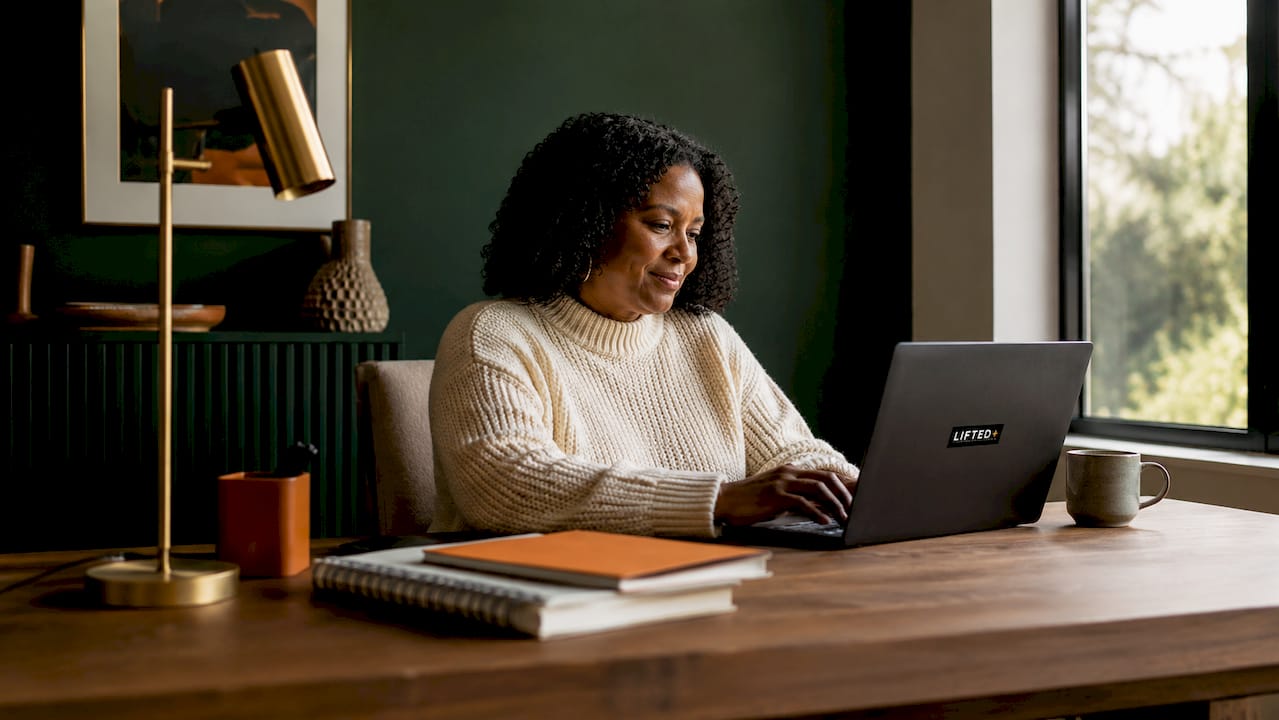
Your home office backdrop wall is defined as the intentional design of the wall visible behind you during video calls, shaping how colleagues and clients perceive your professionalism. A bare white wall or cluttered corner sends a message you probably did not intend. The best home office backdrop wall ideas treat that space as a considered visual statement, one that works for your camera, your nervous system, and your sense of style. In 2026, the shift is toward restorative dark hues, biophilic textures, and styled shelving that holds the room without shouting.
1. What are the best home office backdrop wall ideas for 2026?
The strongest backdrop walls share three qualities: they read well on camera, they create a sense of calm, and they reflect genuine personality without visual noise. Designers now refer to this as “virtual set” thinking, where camera geometry and lighting are considered as carefully as the décor itself. A wall that looks beautiful in person can still flatten or distort on a webcam sensor if the colour, finish, or depth is wrong.
The five approaches that consistently deliver on all three qualities are restorative dark accent walls, biophilic elements, styled shelving, statement art and wallpaper, and deliberate spatial positioning. Each one is explored in depth below.
2. Restorative dark accent walls: calm, rich, and camera-ready
Saturated, earthy tones outperform sterile white walls on webcam sensors because they absorb light rather than reflect it, reducing the blown-out effect that flattens faces on video calls. The 2026 colour direction confirms this shift, with Transformative Teal, Midnight Plum, and Forest Edge Green emerging as the leading choices for home office accent walls. These tones do something white walls cannot: they signal intention.
Deep teal grounds a space without making it feel heavy. Midnight plum adds drama that reads as authority on screen. Forest green connects the room to something organic, which matters for long work days when the nervous system needs visual rest. All three perform best in a matte finish. Matte finishes with appropriate LRV prevent glare and improve on-camera lighting by avoiding reflections from screens and overhead lights.
When choosing your shade, look for a Light Reflectance Value between 10 and 30. That range absorbs enough light to prevent glare while still showing colour depth on camera. Avoid anything with a sheen, including eggshell, satin, or semi-gloss, as these create hot spots that distract from your face. For a deeper look at accent wall approaches for New Zealand homes, Liftedplus has a practical guide worth reading before you commit to a colour.
Pro Tip: Paint a large piece of cardboard in your chosen colour and live with it on the wall for two days before committing. View it on your webcam at different times of day to check how it reads on screen.
3. How to incorporate biophilic design into your backdrop
Biophilic design in home offices, including live or preserved plants, reduces stress and adds soft texture that improves video call aesthetics. Plants do two things at once: they soften the visual field behind you and they absorb sound, reducing the hollow echo that plagues hard-walled rooms. That dual function makes them one of the most efficient investments in your backdrop.
The options range from low-effort to architectural. A single sculptural potted plant, such as a fiddle leaf fig or a large monstera, placed slightly off-centre behind your desk adds organic form without requiring much maintenance. Vertical gardens and moss walls create a more immersive backdrop but suit those who want a genuine statement. Preserved moss panels are the practical middle ground: they look alive, require no watering, and hold their colour for years.
For remote workers who travel or rent, trailing plants on floating shelves offer a flexible, renter-friendly approach. The key is scale. A small succulent disappears on camera. You need something with presence, a plant whose silhouette reads clearly even at low resolution.
Pro Tip: Position plants slightly behind and to the side of your head rather than directly behind it. This creates layered depth and prevents the visual effect of something growing out of your head.
4. How to style shelves for a balanced, professional backdrop
Floating shelves are especially effective for layering décor without crowding a desk, making them ideal for clean, modern home office backdrops. The challenge is not filling shelves. It is editing them. A shelf that holds everything you own reads as clutter on camera, even if it feels organised in person.
The 60-30-10 styling rule gives you a reliable ratio: 60% books or large anchor items, 30% secondary décor such as plants or small sculptures, and 10% personal accents like a framed photo or a ceramic piece. That ratio creates visual hierarchy without monotony. It also ensures the shelf reads as intentional rather than accidental.
Follow these steps when styling your shelves:
- Clear everything off first. Start from zero rather than editing in place.
- Group books by colour or size to create visual rhythm rather than alphabetical order.
- Place your tallest items at the ends of each shelf to frame the composition.
- Add one plant per shelf at minimum to break the hard geometry of books and objects.
- Leave deliberate negative space. Empty shelf space is not wasted. It is breathing room.
- Manage cables before styling. A visible power cord undoes careful arrangement instantly.
- Step back and check the whole wall on your webcam before finalising placement.
For more on styling shelves without clutter, Liftedplus covers the approach in detail, including how to apply current trends without losing the clean background you need for calls.
5. What art, wallpaper, and textured features make impactful backdrop walls?
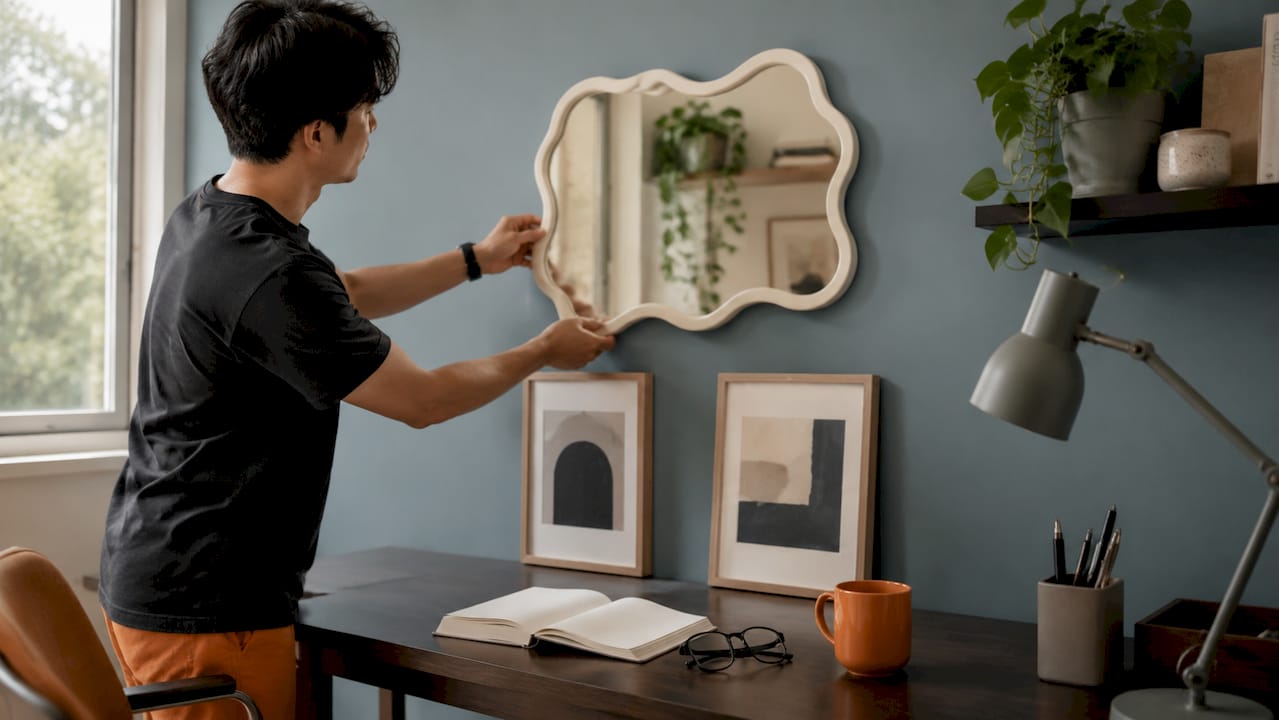
Statement wall art and textured surfaces bring warmth and visual interest that paint alone cannot achieve. Painting an accent wall in a bold colour or applying peel-and-stick wallpaper defines your workspace visually while maintaining professionalism. Peel-and-stick options are particularly useful for renters, as they leave no permanent mark and can be changed seasonally. For ideas on decorating without painting, Liftedplus has a dedicated guide for exactly this situation.
Textured wall panels add a dimension that flat paint cannot replicate. Fluted timber panels create vertical rhythm that reads beautifully on camera. Three-dimensional plaster or resin panels add sculptural depth. Acoustic panels, when covered in fabric, absorb sound and add warmth simultaneously. Each of these options changes the tone of a video call in a way that is felt before it is consciously noticed.
When selecting wall art, consider scale and contrast against your wall colour. A single large-format piece reads more powerfully on camera than a grid of small frames. Minimalist geometric prints in earthy tones complement restorative dark walls without competing with your face. Liftedplus carries limited edition wall art designed specifically for presence and impact in modern interiors.
The table below compares the main creative backdrop options by effort, cost, and camera impact.
| Feature type | Effort to install | Cost range | Camera impact |
|---|---|---|---|
| Peel-and-stick wallpaper | Low | Low to medium | High visual interest |
| Fluted timber panels | Medium | Medium to high | Strong depth and texture |
| Large-format wall art | Low | Medium to high | Bold focal point |
| Acoustic fabric panels | Medium | Medium | Warm, soft background |
| Moss wall panel | Low to medium | Medium | Organic, layered texture |
6. How to position your desk, camera, and backdrop for video calls
Keeping 3–4 feet of space between your desk and the backdrop creates natural depth of field, making video calls look more professional and less cluttered. That distance mimics the spatial relationship used in professional photography studios. Without it, your backdrop merges with you visually, losing the separation that makes a well-designed wall register as a deliberate choice.
Camera angle matters as much as wall design. Aiming your camera at a room corner creates a claustrophobic, unprofessional visual. Face a flat, uniform backdrop wall instead. Position your camera at eye level or very slightly above. Anything lower creates an unflattering upward angle that also reveals more ceiling than backdrop.
Lighting placement completes the setup. Place your primary light source in front of you, between your face and the camera, not behind you. A light behind you silhouettes your face and overexposes the backdrop. For a deeper look at how designer lighting changes a room, Liftedplus covers the principles that apply equally to video call setups and everyday living.
Pro Tip: Use a ring light or a softbox positioned at a 45-degree angle to your face. This creates even, flattering light that does not bounce off a matte backdrop wall.
Key takeaways
The most effective home office backdrop wall combines a camera-ready matte finish, deliberate depth between desk and wall, and layered décor that reads as intentional rather than accidental.
| Point | Details |
|---|---|
| Choose restorative dark tones | Deep teal, midnight plum, and forest green perform best on webcam sensors in matte finish. |
| Apply the 60-30-10 shelf rule | Fill shelves with 60% anchor items, 30% plants or sculptures, and 10% personal accents. |
| Maintain 3–4 feet of depth | Space between you and the backdrop creates professional depth of field on video calls. |
| Face a flat wall, not a corner | Flat backdrops project calm and professionalism; corners create a trapped visual effect. |
| Layer texture for warmth | Fluted panels, moss walls, and large-format art add dimension that flat paint cannot achieve. |
My honest take on backdrop walls after years of remote work
I have watched remote workers spend hours on their desk setup and five minutes on the wall behind them. That imbalance shows on every call. The backdrop is the first thing a colleague sees before you speak. It sets the register of the entire conversation.
The shift I have seen make the biggest difference is treating the backdrop as a virtual set rather than a leftover wall. That means thinking about what the camera sees, not just what you see when you walk into the room. A deep forest green wall that feels slightly dark in person can look extraordinary on screen because the webcam sensor reads it as rich and grounded rather than dim.
Biophilic elements are the most underrated tool in this space. I have seen a single large monstera plant transform a flat, forgettable backdrop into something that draws genuine comments from meeting participants. Plants bring life to a space in a way that art and paint cannot fully replicate. They also signal something about the person behind the desk: that they tend things, that they notice detail.
The mistake I see most often is overcrowding shelves with meaningful objects and then wondering why the backdrop feels chaotic. Meaning does not translate on camera. Composition does. Edit ruthlessly, keep the ratio, and let the negative space do its work.
— Michelle
Liftedplus and your home office backdrop
Your backdrop wall is one of the most visible parts of your home, seen by colleagues and clients every day. Liftedplus curates décor that brings colour, form, and presence to exactly this kind of space.

Whether you are working with a rental property or a permanent home, the Liftedplus collection includes wall art, lighting, and decorative objects chosen for their visual weight and staying power. The mood library is a good starting point if you want to see how colours and pieces work together before committing. For renters, the renter-friendly décor guide covers practical options that leave no permanent mark. Browse the full range and find the pieces that hold your room.
FAQ
What colour works best for a home office backdrop wall?
Deep teal, midnight plum, and forest green are the top 2026 choices for home office backdrop walls. These tones absorb light, reduce glare, and read as calm and professional on webcam sensors when applied in a matte finish.
How far should I sit from my backdrop wall?
Keeping 3–4 feet between your desk and the backdrop wall creates natural depth of field on video calls. That distance makes the background appear intentional and prevents visual merging between you and the wall.
Can renters create a professional home office backdrop?
Renters can use peel-and-stick wallpaper, moss panels, floating shelves, and large-format art to create a professional backdrop without permanent changes. These options are fully removable and deliver strong visual impact on camera.
What is the 60-30-10 rule for shelf styling?
The 60-30-10 rule recommends filling shelves with 60% large anchor items such as books, 30% secondary décor like plants or sculptures, and 10% small personal accents. This ratio creates visual hierarchy that reads as deliberate and calm on camera.
Should I use a real or virtual background for video calls?
A real, well-designed backdrop wall outperforms virtual backgrounds on every measure. Virtual backgrounds create edge artefacts around hair and movement, while a real wall adds genuine depth, texture, and personality that builds credibility over time.