
TL;DR:
- Interior design influences mental wellbeing by shaping spaces that impact mood, stress, and cognition. Integrating natural elements, personal authenticity, and thoughtful layout enhances emotional health in daily environments. Small adjustments in lighting, clutter, and personalization provide immediate psychological benefits.
Interior design directly shapes mental wellbeing by creating environments that influence mood, stress management, and cognitive performance. The field of environmental psychology defines this relationship as the study of how physical spaces alter psychological states, and the evidence is now substantial. Five core design elements reliably influence psychological health: spatial layout, lighting, natural elements, physical comfort, and aesthetic harmony. Understanding how interior design affects mental wellbeing gives you the power to make deliberate choices rather than leaving your emotional state to chance.
Which interior design elements most strongly influence mental health?
Artificial, nature-disconnected interiors drive up stress and impair cognition. That finding alone reframes how we think about decorating. A space that looks polished on a mood board can quietly work against you if it strips away warmth, texture, and organic form.
Research identifies five elements that carry the most psychological weight.
Spatial layout determines how freely you move and breathe within a room. Cramped, poorly arranged furniture creates a low-level sense of confinement that accumulates over time.
Lighting regulates your circadian rhythm and melatonin production. Harsh cool-toned lighting raises mental load, while insufficient light drains energy. The quality and temperature of light you live under shapes your alertness, mood, and sleep.
Natural elements such as plants, timber, stone, and water features reduce stress and negative affect. Their psychological benefit comes from activating the brain’s stress recovery systems, which evolved in natural environments.
Physical comfort covers ergonomic furniture, soft fabrics, and tactile materials. Soft fabrics and natural materials function as signals of safety, reducing stress through emotional and sensory anchors.
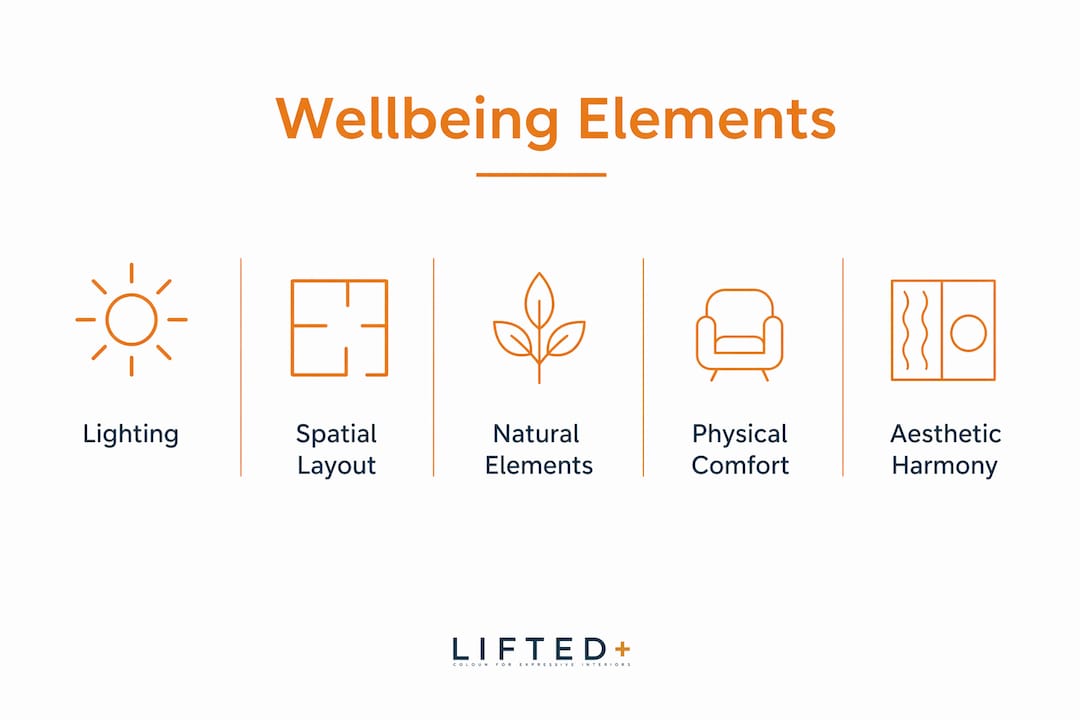
Aesthetic harmony refers to the coherence between colour, form, and proportion in a space. A room where these elements feel resolved produces a quiet sense of order that supports concentration and calm.
These five elements rarely operate in isolation. A well-lit room with poor spatial flow still generates friction. A beautifully arranged space stripped of texture or warmth still feels cold. The psychological effects of interior design emerge from how these elements work together, not from any single feature in isolation.
How does biophilic design improve psychological wellbeing?
Biophilic design is the practice of integrating natural elements into built environments to support human health. It draws on the principle that humans have an evolved need for connection with nature, and that severing this connection carries a measurable psychological cost.
The evidence is striking. A longitudinal study of 300 urban residents found that exposure to biophilic environments over 12 months produced a 67% improvement in depression symptoms and a 72% reduction in anxiety. These are not marginal gains. They suggest that the presence or absence of natural elements in your daily environment carries clinical significance.
“Real plants and water features yield stronger mental health benefits than representations or posters. The dose-fidelity gradient in biophilic design shows that authenticity matters: a living plant outperforms a botanical print, and a small water feature outperforms a nature photograph.”
This distinction matters practically. Direct nature exposure produces stronger emotional balance and mood improvement than simulated nature. A poster of a forest is not the same as a fiddle-leaf fig in the corner of your living room.
Effective biophilic integration does not require a conservatory or a complete renovation. A cluster of potted plants near a window, a timber side table, a jute rug, or a piece of wall art drawn from natural forms all contribute to the sensory vocabulary of nature within a space.
Pro Tip: Place living plants at eye level rather than on the floor. Eye-level greenery enters your peripheral vision throughout the day, delivering a continuous, low-dose stress recovery effect without demanding your attention.
The spa-inspired approach to interior wellness offers a useful model here. Layering natural textures, soft lighting, and organic materials creates an environment that signals calm through sensory cues, a principle that applies well beyond the bathroom.
What is the role of personalisation and autonomy in interior design?
Human-centred interior design shifts the focus from aesthetics alone to supporting autonomy, engagement, and personal meaning. A multi-stage validation study involving a VR experiment with 180 participants and field testing with 46 participants confirmed that design environments built around personal control and flexibility produce significantly higher psychological wellbeing than those built around visual appeal alone.
The mechanism is straightforward. When you feel ownership over your space, your nervous system registers it as safe territory. When a space feels imposed, whether by a landlord’s neutral palette or a trend you followed without conviction, it generates a low-level sense of alienation that compounds over time.
Personalisation in practice looks like this:
- Display meaningful objects. Photographs, inherited pieces, and objects tied to personal memory activate emotional connection. They tell your brain that this space belongs to you.
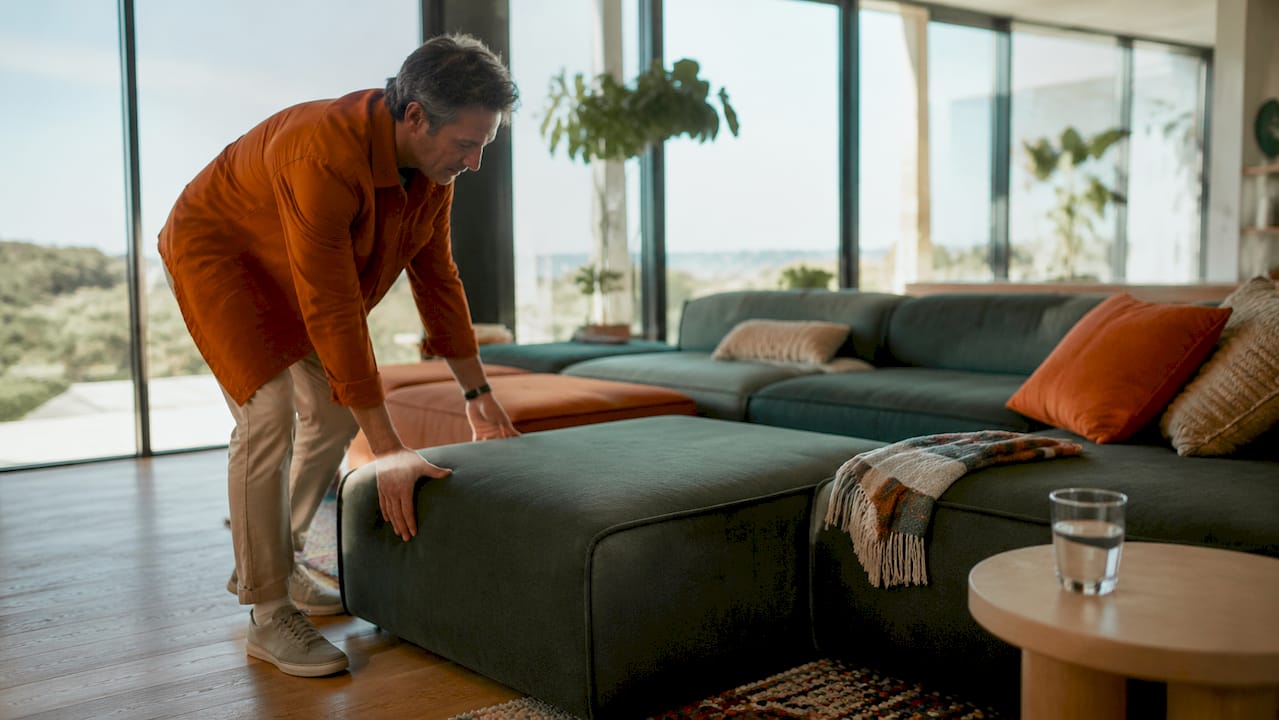
- Choose flexible layouts. Furniture you can rearrange gives you perceived control. The ability to shift a room’s configuration in response to your mood or needs is itself a psychological resource.
- Select colours that resonate with you personally. Colour psychology offers general guidance, but your individual response to a specific shade matters more than any rule. A deep terracotta that grounds one person may feel oppressive to another.
- Resist trend-driven decorating. Prioritising personal authenticity over design trends prevents a long-term sense of alienation and mental tension. A space that looks current but feels foreign to you is not serving your wellbeing.
Pro Tip: Before purchasing a statement piece, live with a fabric swatch or colour sample in the room for a week. Your emotional response at day seven is more reliable than your first impression in a showroom.
The emotional benefits of interior design are most durable when the space reflects who you actually are, not who you think you should be.
How can practical design adjustments support mental wellbeing at home?
Small, deliberate changes to your existing space can produce immediate neuropsychological relief. Micro-adjustments in lighting temperature and decluttering consistently outperform trend-driven aesthetic overhauls in terms of lasting psychological benefit.
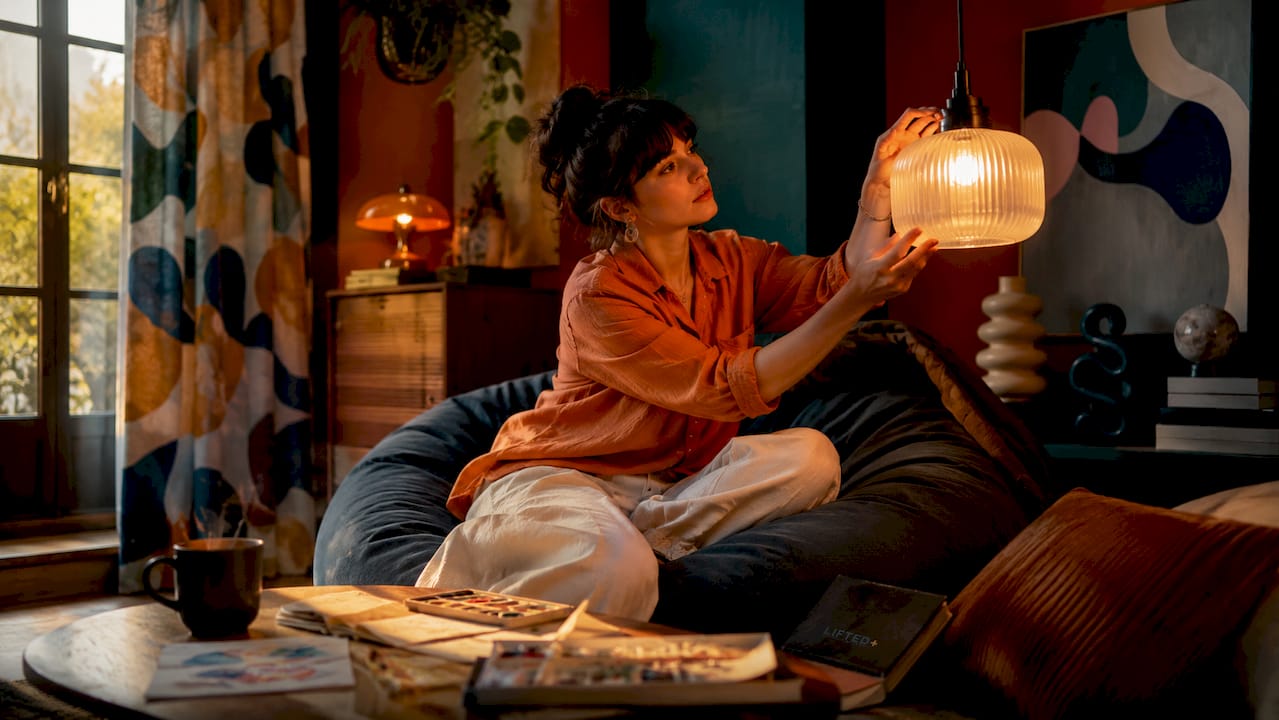
Lighting is the fastest lever. Swap cool-white globes in living areas for warm-white alternatives in the 2700K–3000K range. Use mood lighting in the evening to support melatonin production and signal to your body that the day is winding down. Layered lighting, combining ambient, task, and accent sources, gives you control over the emotional register of a room at different times of day.
Visual clutter is the second lever. Visible disorganisation raises cognitive load and subconscious stress. The solution is not simply to hide things in storage. Hidden clutter still generates low-level anxiety. The more effective approach is to limit what you display to objects that are either functional or genuinely meaningful to you.
Pro Tip: Do a single-surface audit. Choose one surface in your home, a bench, a shelf, a bedside table, and remove everything from it. Then return only what earns its place. The clarity you feel from one resolved surface is disproportionate to the effort.
Furniture choices carry weight beyond aesthetics. How furniture shapes ambiance and mood comes down to scale, material, and placement. Oversized furniture in a small room compresses the perceived space. Furniture with hard, angular lines in a bedroom works against rest. Soft curves, natural materials, and appropriate scale all contribute to a room that feels like it is working with you rather than against you.
Colour deserves deliberate attention. Warm, grounded tones such as terracotta, ochre, and deep olive tend to produce a sense of settledness in living spaces. Cooler tones support focus in work areas. The psychological effects of colour are real, but they are also personal. Use them as a starting point, not a prescription.
Key takeaways
Interior design shapes mental wellbeing through five measurable elements: lighting, spatial layout, natural integration, physical comfort, and aesthetic harmony, and personalisation amplifies every one of them.
| Point | Details |
|---|---|
| Five core elements drive wellbeing | Lighting, spatial layout, natural elements, physical comfort, and aesthetic harmony each influence mood and stress. |
| Biophilic design produces measurable gains | A 300-person study found 67% depression improvement and 72% anxiety reduction from biophilic environments over 12 months. |
| Real nature outperforms simulated nature | Living plants and water features deliver stronger psychological benefits than botanical prints or nature photography. |
| Personalisation protects mental health | Spaces built around personal meaning and autonomy produce lasting wellbeing; trend-driven spaces can cause subconscious tension. |
| Small adjustments yield real relief | Lighting temperature changes and visual clutter reduction deliver immediate neuropsychological benefit without full renovation. |
What I’ve learned from designing spaces that actually feel good
I’ve spent years watching people make the same mistake: they design for the photograph rather than for the person who lives there. A room can be visually perfect and emotionally exhausting. The two are not the same thing.
The research on biophilic design confirmed what I had already observed intuitively. Spaces with living plants, natural textures, and organic forms feel different to inhabit. Not just prettier. Quieter. The nervous system responds to them differently, and once you know that, you cannot unknow it.
What I find most compelling in the recent human-centred design research is the emphasis on autonomy. The spaces that support people most consistently are not the ones that follow a coherent design philosophy. They are the ones where the person living there made deliberate, personal choices. A hand-thrown ceramic on a shelf. A colour on the wall that nobody else would have chosen. These are not decorating accidents. They are psychological anchors.
My honest advice: start with one room and ask yourself what it currently makes you feel. Not what it looks like. What it makes you feel. Then make one change that addresses that feeling directly. Lighting, a plant, a piece of art that means something to you. The evidence supports the idea that these choices compound over time. A space that feels genuinely yours is one of the most underrated contributors to everyday mental health.
— Michelle
Liftedplus and the art of designing for how you feel
Colour, texture, and form are not decorative afterthoughts. They are the primary tools through which a space communicates with the people inside it. Liftedplus curates furniture, lighting, and wall art with this in mind, selecting pieces that carry presence and emotional weight rather than simply filling a room.
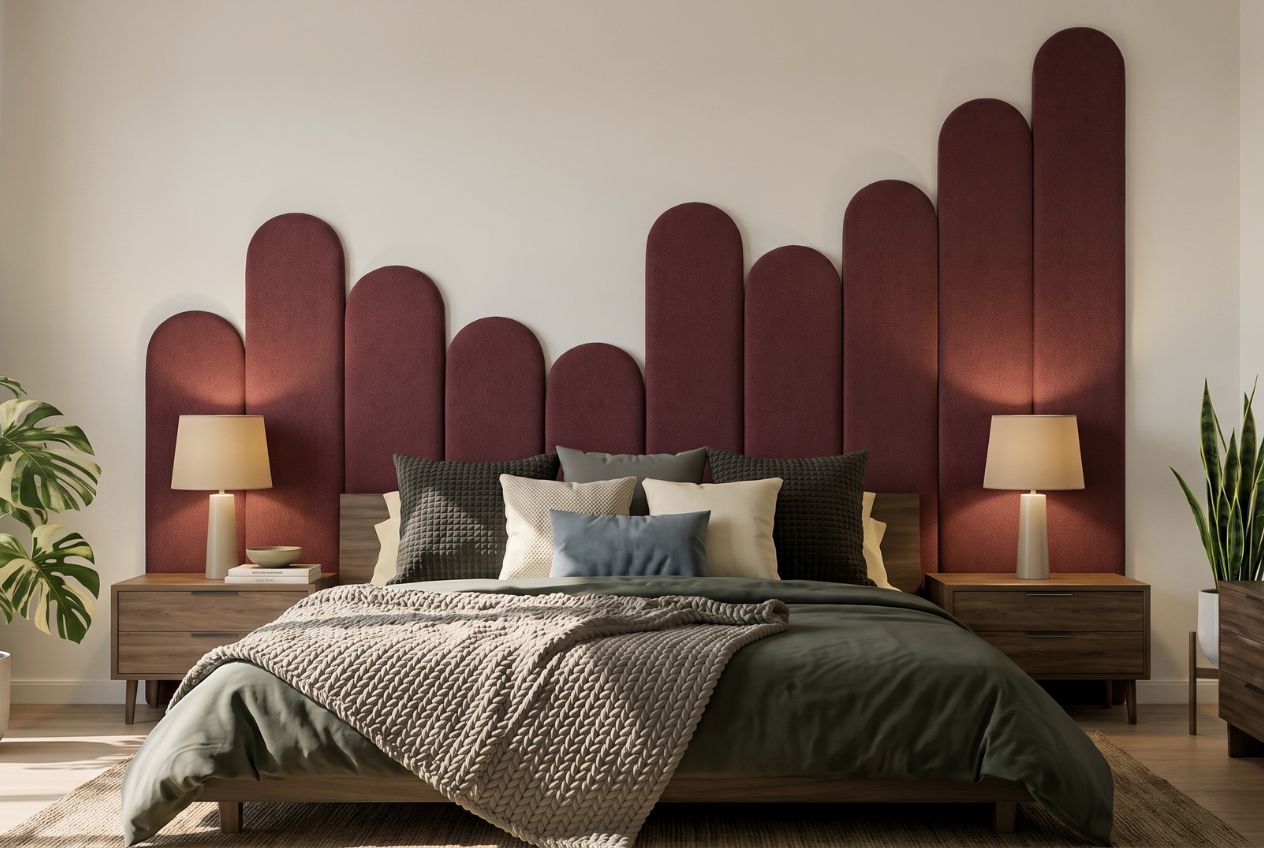
Whether you are working with a rented flat or a home you own, the principle holds. Liftedplus offers renter-friendly decor ideas that give you genuine autonomy within the constraints of a lease. The Lifted+ Mood Library is a practical starting point if you want to see how colour and form work together before committing to a piece. For those ready to make a statement, the wall art collection brings natural form and grounded colour into a room with real visual authority.
FAQ
How does interior design affect mental health directly?
Interior design affects mental health by shaping the sensory inputs your nervous system processes continuously. Lighting, spatial layout, colour, and natural elements each trigger measurable psychological responses including changes in stress hormones, mood, and cognitive load.
What colours support mental wellbeing at home?
Warm, grounded tones such as terracotta, ochre, and deep olive tend to reduce stress in living spaces, while cooler tones support focus in work areas. Personal resonance with a colour matters more than any universal rule.
Does biophilic design really make a difference to mental health?
A longitudinal study of 300 participants found biophilic environments produced a 67% improvement in depression symptoms and a 72% reduction in anxiety over 12 months. Living plants and water features deliver stronger benefits than nature imagery or prints.
How does visual clutter affect psychological wellbeing?
Visual clutter raises cognitive load and subconscious stress. Limiting displayed items to functional or personally meaningful objects is more effective than simply hiding clutter in storage.
Can small design changes genuinely improve mood?
Yes. Adjusting lighting temperature, introducing a living plant, and resolving a single cluttered surface each produce measurable neuropsychological relief. Personalisation-focused micro-changes consistently outperform large-scale trend-driven renovations in terms of lasting wellbeing.