
TL;DR:
- Wall art enhances emotional connection and cultural expression in New Zealand homes.
- Choosing the right art type depends on durability, budget, and whether one is a renter or owner.
- Investing in original or limited-edition NZ art can yield significant future value and personal fulfillment.
Wall art is so often treated as an afterthought, something chosen quickly to fill empty space after the furniture arrives. But that thinking leaves a great deal on the table. The right piece of art shapes how a room feels, how you experience your home each morning, and, in some cases, how much your collection is worth years from now. For New Zealand homeowners and renters, wall art carries particular weight: it offers a way to connect with local culture, express personal identity, and bring seasonal warmth to spaces that deserve more than a generic print from a chain retailer.
Table of Contents
- The hidden impact of wall art in NZ homes
- Types of wall art: Comparing prints, originals, and textured pieces
- Wall art as a smart investment: Value and future potential
- How to choose wall art that enhances and retains value
- Why investing in wall art is more than financial gain
- Bring art investment into your NZ home
- Frequently asked questions
Key Takeaways
| Point | Details |
|---|---|
| Emotional and style value | Investing in wall art boosts mood and reflects personal taste in NZ homes. |
| Investment potential | Original works from rising NZ artists have shown significant value growth. |
| Longevity matters | Durable canvas prints and textured art offer lasting returns for both renters and homeowners. |
| Smart selection tips | Choose art based on size, colour, provenance, and local artist reputation for both style and potential value. |
The hidden impact of wall art in NZ homes
Having set the context, let’s explore the subtler reasons wall art matters beyond simple visual appeal. Most people sense that a bare wall feels unfinished, but fewer stop to consider why. Art does something to a room that furniture simply cannot. It anchors the eye, sets an emotional tone, and signals something personal about the people who live there.
For New Zealand homes specifically, the connection to place runs deep. Māori motifs, Pacific colour palettes, native flora rendered in abstract form: these are not just decorative references, they are expressions of belonging. When a piece of art resonates with your cultural context, the emotional payoff is immediate and lasting.
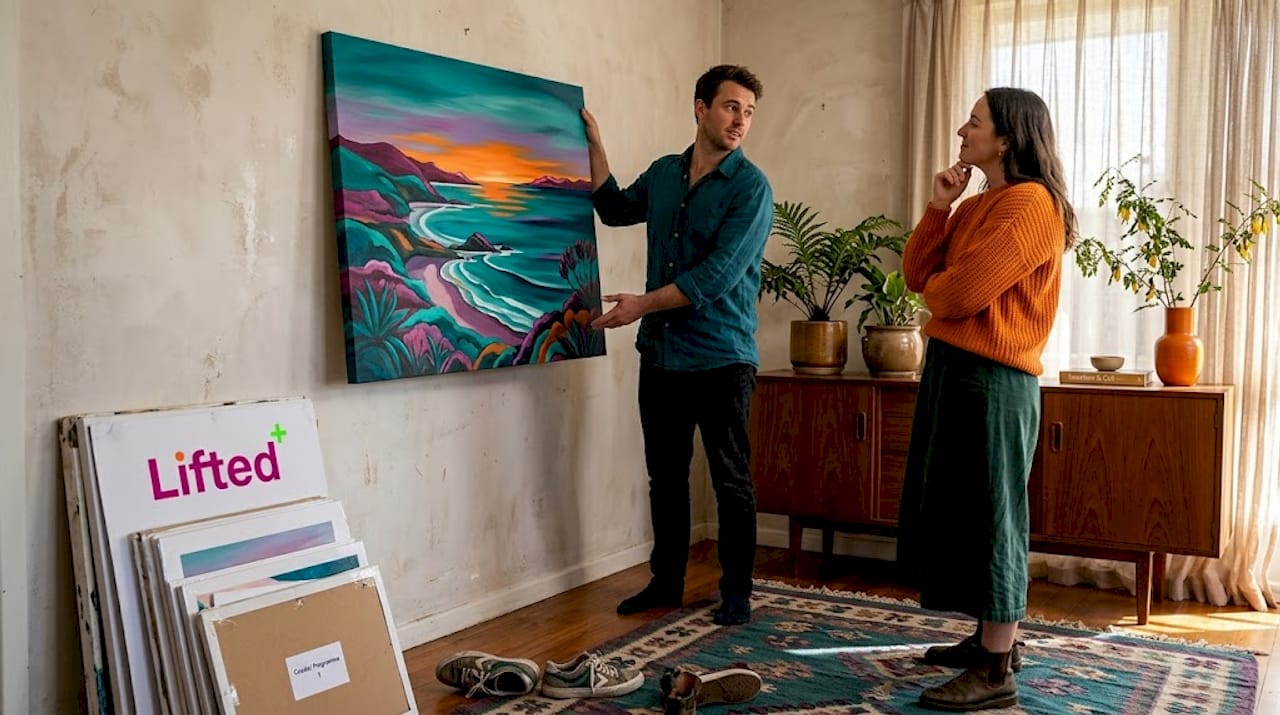
Renters, in particular, benefit enormously from thoughtful apartment wall art ideas NZ. Unlike paint or wallpaper, art requires no permanent modification. You can transform a rental from a blank, impersonal shell into a space that genuinely feels like home, without risking your bond.
“The primary reasons most people invest in art are aesthetic enhancement and personalisation, not financial return. The emotional connection to a piece consistently outweighs pure financial considerations for the majority of collectors.”
Seasonality also plays a role in how we relate to art. Autumnal tones, warm terracottas, dusty pinks, and deep ochres respond to the light of April and May in ways that cool-season palettes simply do not. Choosing colourful wall art NZ with seasonal intention means your space feels considered throughout the year, not just at the moment of purchase.
Pro Tip: When selecting art for a rental, choose pieces on canvas or hung with removable adhesive strips. You protect your walls, keep your flexibility, and still create genuine visual impact.
Types of wall art: Comparing prints, originals, and textured pieces
Understanding wall art’s impact sets the stage for choosing the right type to invest in. Not all wall art is created equal, and the differences matter more than most people realise when they are standing in front of a gallery wall trying to decide what to buy.
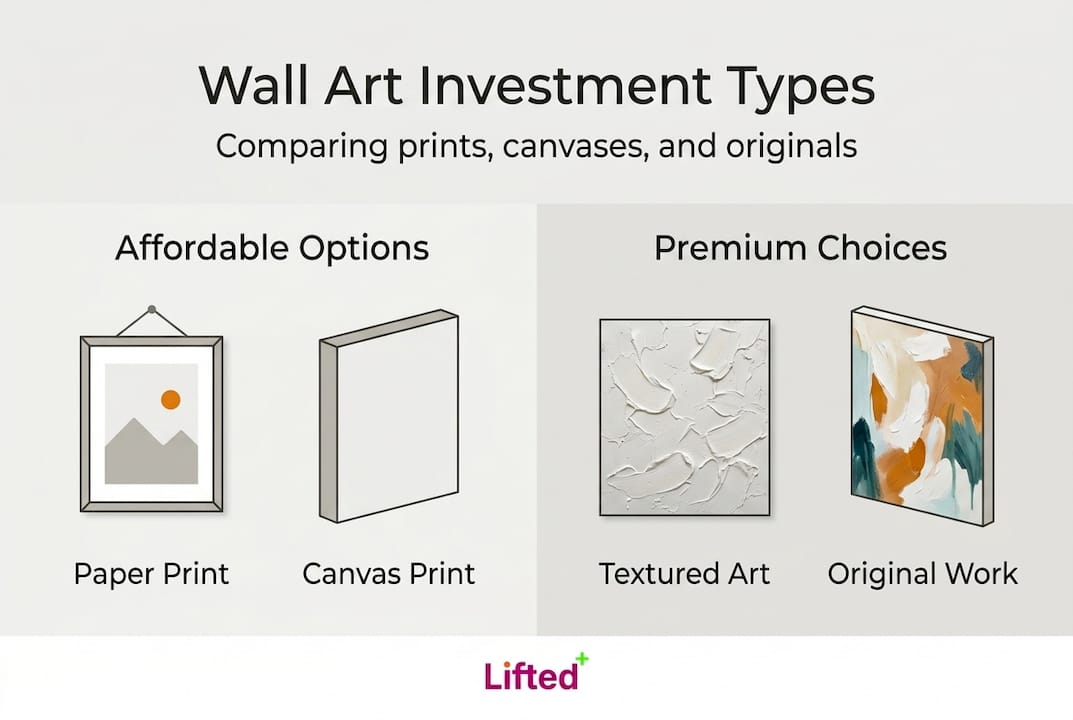
There are three broad categories worth understanding: affordable prints on paper or card, canvas prints, and original works. Each serves a different purpose and carries a different set of trade-offs.
Paper and card prints are accessible and immediately satisfying. They reproduce beautifully, come in a wide range of sizes, and cost a fraction of an original. The limitation is longevity. Without museum-quality framing and UV-protective glass, paper prints are vulnerable to fading, moisture damage, and warping over time, particularly in New Zealand coastal environments where humidity is a genuine concern.
Canvas prints sit in a different category altogether. Canvas prints and textured art offer durability that lasts decades without fading, making them a far stronger long-term proposition than paper alternatives. They also carry a sculptural quality that paper cannot replicate. The slight texture, the way light plays across the surface, the sense that the image has physical presence rather than sitting flat behind glass: these are qualities that shift how a room reads.
Original works occupy their own tier. They are unique, irreplaceable, and in some cases appreciable in value. They also demand more commitment, financially and aesthetically. But for those who can make the investment, they bring something that no print can fully match.
| Art type | Durability | Price range | Investment potential | Best for |
|---|---|---|---|---|
| Paper print | Low to moderate | $20 to $200 | Minimal | Renters, seasonal updates |
| Canvas print | High | $100 to $800 | Low to moderate | Renters and homeowners |
| Original artwork | High | $300 to $30,000+ | Moderate to strong | Homeowners, collectors |
| Textured mixed media | High | $200 to $5,000 | Moderate | Statement walls, long-term spaces |
As NZ gallery experts point out, renters prioritise non-damaging options while homeowners lean toward larger, bolder statements that commit to a space. Neither approach is wrong. They simply reflect different relationships with the walls around you.
Understanding how different formats fit your situation is essential before spending. A well-chosen guide on how to choose wall art NZ can help you navigate size, medium, and placement with confidence. If you are curious about formats beyond the conventional, exploring unique types of wall art opens up a much richer set of possibilities.
Wall art as a smart investment: Value and future potential
Once you are familiar with art types, the next question is whether wall art can actually grow in value. The answer, for the right pieces, is a clear yes. But it requires some understanding of what drives that growth.
The NZ art market shows strong growth, with artists like Pauline Yearbury rising from $300 per work to a peak of $31,000, and Brent Wong achieving results exceeding $395,000 at auction. These are not anomalies. They reflect a market in which discerning early collection can yield extraordinary returns over time.
What drives value in the NZ art market? The following factors consistently emerge:
- Originality. An original work by an identifiable artist, signed and provenance-documented, will always hold more value than a reproduction.
- Artist profile and trajectory. Artists who are exhibiting regularly, winning prizes, or being acquired by public collections are on an upward curve.
- NZ provenance. Work with a clear connection to New Zealand’s cultural and geographic identity tends to resonate more strongly with both local and international collectors.
- Medium and condition. Works on canvas or board, properly framed and stored, retain condition far better than works on paper.
- Scarcity. Limited edition prints from respected artists can appreciate when editions sell out and demand exceeds supply.
| Artist | Price in 2020 | Peak auction price | Growth factor |
|---|---|---|---|
| Pauline Yearbury | ~$300 | ~$31,000 | 100x+ |
| Brent Wong | Established | $395,000+ | Significant |
For those wanting to build a collection with genuine aesthetic and financial depth, understanding wall art styles NZ is a useful starting point. From there, learning the principles of wall art curation NZ helps you move beyond individual pieces toward a coherent visual language that works across your whole space.
How to choose wall art that enhances and retains value
Knowing what drives value, it is time to apply this knowledge to your own selections. Choosing well is not complicated, but it does require slowing down and asking the right questions before you commit.
Here is a practical sequence to follow:
-
Define the scale. Measure your wall before anything else. Art that is too small for a space disappears; art that is too large overwhelms. For high or double-height walls, specific guidance on how to choose art for tall walls will prevent costly mistakes.
-
Anchor with colour. Choose art that either draws from your existing palette or deliberately introduces a new tone. Autumnal oranges, warm earth tones, and deep forest greens work exceptionally well in NZ interiors, particularly in rooms with natural timber or concrete.
-
Consider the artist’s trajectory. If investment potential matters to you, research the artist before buying. Look at their exhibition history, whether they are represented by a gallery, and how their prices have moved.
-
Think about framing from the start. A poor frame can undermine even a strong work. Framing protects, presents, and completes. UV-protective glass is worth the additional cost for paper works.
-
Prioritise placement and lighting. Art placed in direct sunlight fades faster and reads less clearly. Placing a picture light or directing a track light at your art changes how it reads entirely. Good lighting for wall art in modern rooms is the difference between a piece that lives on the wall and one that holds the room.
-
Balance what you love with what might grow. The best art decisions are the ones you can live with happily even if the financial return never comes. As the investment research consistently shows, original collectible pieces from rising NZ artists carry the highest potential, but buying something that moves you aesthetically should always come first.
Pro Tip: Attend local art school graduate shows and open studio events. This is where tomorrow’s sought-after NZ artists are showing today, often at prices that feel almost too reasonable. Buying early from an artist whose work genuinely resonates with you is both the most financially sound and the most personally satisfying strategy.
Why investing in wall art is more than financial gain
Here is the perspective that gets lost in conversations about art as an asset: the most meaningful return is rarely financial. It is lived.
Consider what happens when a piece of art genuinely suits a space. You notice it differently each day. The light shifts from morning to afternoon and the colours respond. A work that felt bold at purchase settles into familiarity over months and becomes part of how you experience your home. That is not something that shows up in a valuation spreadsheet, but it is real and cumulative.
We have seen this pattern consistently among collectors who start with a purely investment-minded approach and gradually find themselves making decisions based on what moves them emotionally. The two are not mutually exclusive, but the emotional dimension tends to win over time. And rightfully so.
New Zealand’s artistic identity is also genuinely distinctive. The particular quality of light here, the relationship between landscape and culture, the influence of both Māori and Pacific traditions on contemporary visual practice: these are not generic art world references. They are the conditions that produce work with a specific character, a character that holds meaning for people who live in these landscapes and carry these cultural references.
When you choose art that reflects your place in the world, whether that is an abstract interpretation of the Coromandel coastline or a contemporary work in the rich pigments of Te Ao Māori, you are doing something more than decorating. You are staking a claim about who you are and what matters. That is the kind of investment that holds value in ways a market cannot measure.
Exploring artistic NZ interiors shows how other collectors and homeowners have approached this balance. The patterns are consistent: spaces that feel most alive are those where the art was chosen with genuine intention, not just for what it might be worth one day.
Bring art investment into your NZ home
If this has shifted how you think about wall art, you are ready to start making more purposeful choices. At Lifted+, we curate wall art that works on both levels: pieces that hold a room visually and carry the kind of quality that lasts.
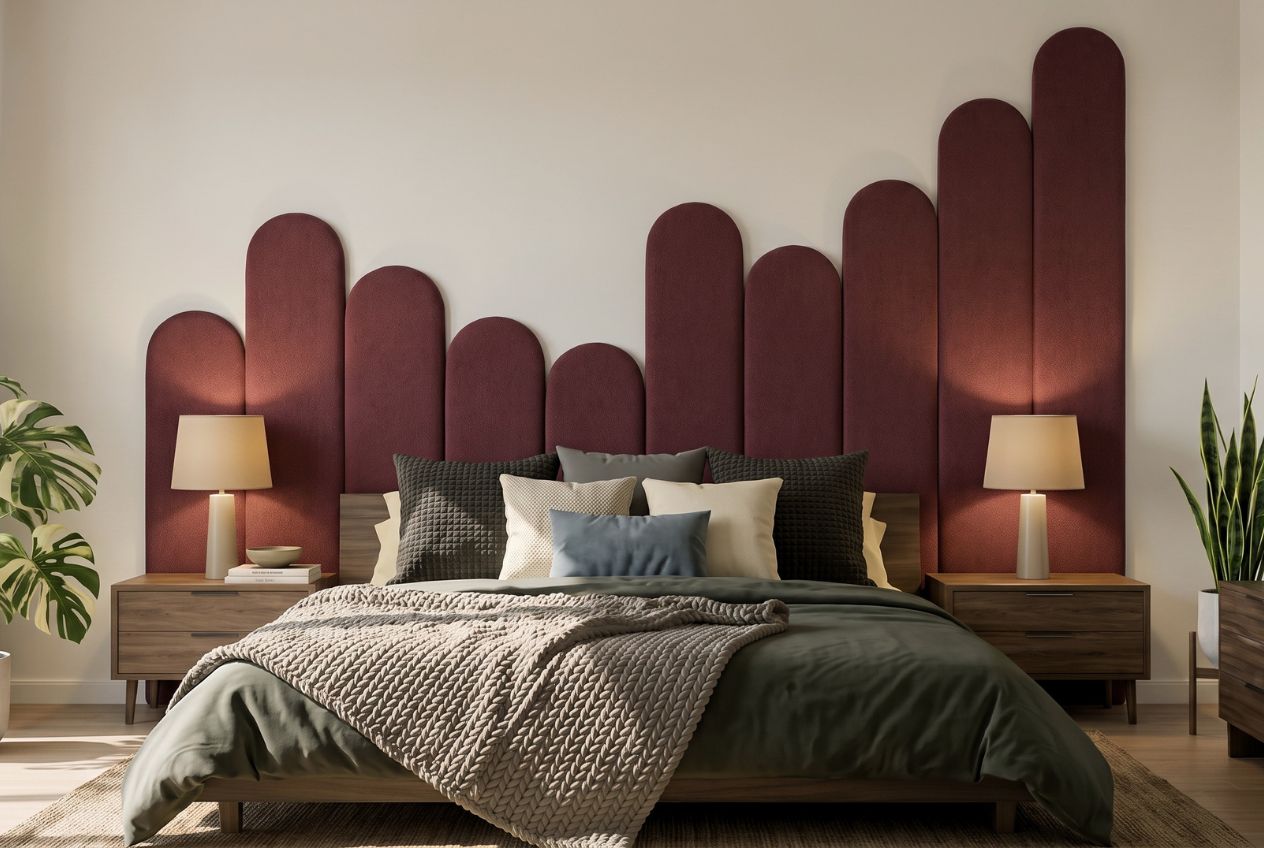
Our collections are seasonal, considered, and shaped by a genuine understanding of what New Zealand interiors need. Whether you are a renter looking to personalise your space without permanent fixtures, or a homeowner ready to make a bold statement, our range offers something with real presence. Browse our curated selection at liftedplus.com and find the piece that earns its place on your wall for years to come.
Frequently asked questions
Does wall art really add value to my NZ home?
Yes, on multiple levels. Original works from NZ artists have shown strong price growth at auction, while all wall art contributes to the emotional appeal and perceived quality of a space.
What kind of wall art is best for renters in NZ?
Canvas prints and affordable decor that can be hung with removable fixtures are ideal, as renters prioritise non-damaging options that personalise a space without affecting the bond or lease.
How can I identify NZ wall art with real investment potential?
Focus on original pieces by emerging NZ artists with an active exhibition history, since original collectible pieces from rising artists consistently show the strongest appreciation over time.
Are canvas prints worth investing in for durability?
Absolutely. Canvas prints and textured art can last decades without fading, offering far better long-term value and visual presence than standard paper prints.