
Last Updated: October 24, 2026
Quick Summary
Adhesive wall panels can damage paint when the paint is old, flaking, or poorly bonded, the adhesive grips harder than the paint grips the plasterboard, or the panel is ripped off in one fast pull. Remove any one of those three factors and the risk drops sharply. Most damage comes down to prep, product choice, and patience on removal.
- Wait at least 7 days before applying adhesive to freshly painted walls, and 14 days for oil-based paint.
- Test a small strip of adhesive on an inconspicuous area for a few days before committing.
- Warm panel edges with a hairdryer on low for 30 to 60 seconds before removal.
- Set aside 10 to 15 minutes per panel and lift slowly at a shallow angle.
- Avoid permanent double-sided foam tape and construction adhesive on painted walls.
Table of Contents
- Will Adhesive Wall Panels Damage Paint? The Honest Answer
- Adhesive Wall Panels on Painted Walls: What You Need to Know
- The Best Adhesive for Painted Walls (and What to Avoid)
- How Long to Wait Before Applying Adhesive to Fresh Paint
- How to Remove Adhesive Wall Panels Without Damaging Paint
- Pros and Cons of Adhesive Wall Panels
- Frequently Asked Questions
Will Adhesive Wall Panels Damage Paint? The Honest Answer
Yes, adhesive wall panels can damage paint, but only when the adhesive is stronger than the paint’s grip on the wall. This guide from Lifted Plus explains exactly when that happens and how to avoid it.
Here is the short version. Most paint damage is not caused by the panel. It is caused by weak paint, the wrong adhesive, or pulling too fast.
Quick answer
Adhesive wall panels damage paint when three things line up:
- The paint is old, flaking, or poorly bonded to the wall
- The adhesive grips harder than the paint grips the plasterboard
- The panel is ripped off in one fast pull instead of eased away
Remove any one of those three and the risk drops sharply.
Adhesive Wall Panels on Painted Walls: What You Need to Know
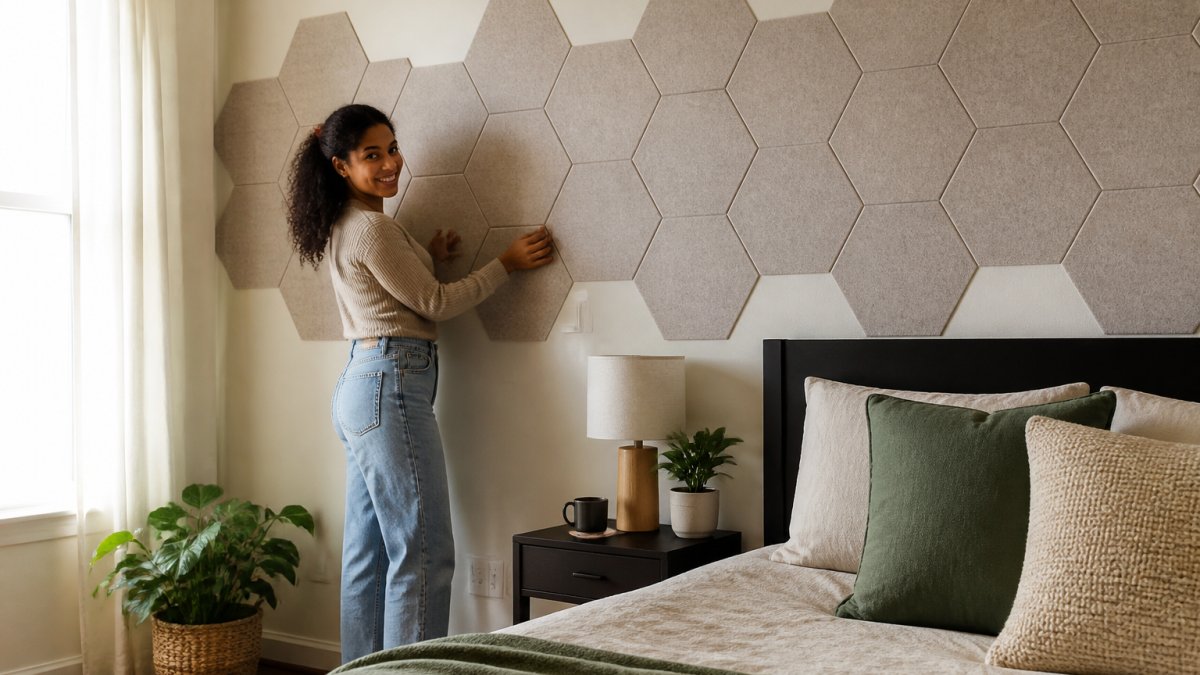
Adhesive wall panels are lightweight decorative panels fixed to a wall with a self-adhesive backing or mounting strips, with no drilling required. Our guide on common adhesive myths NZ renters believe debunks the myths and shows the safe rules and removal steps.
Think of it as a tug of war. The adhesive pulls one way. The paint clings to the plasterboard the other way. Whichever bond is weaker gives way first.
How Paint Condition and Type Affect Adhesion
Paint condition decides most outcomes. Fresh, well-bonded paint on a sound surface usually survives clean removal. Old paint that has gone chalky, bubbled, or flaked has already lost its grip, and any adhesive can lift it.
Paint type matters too:
- Matte and low-sheen paint have a more porous surface, so adhesive bites harder and can lift the top layer on removal
- Gloss and semi-gloss are slicker, so adhesive grips less but residue wipes off more easily
- Fresh paint needs time to fully cure before anything sticks to it
- Multiple old coats are the highest risk, because the weakest layer fails first
Never stick anything to paint that is already peeling, bubbling, or flaking near the edges. The panel will pull that loose section away with it, and the fix is a full patch and repaint, not a wipe-down.
Wall Surface and Texture: Smooth vs Textured
Smooth walls give the most predictable results. Textured walls, brick, and rough plaster offer less continuous contact, so adhesive holds unevenly and panels can sag or drop.
Test before you commit. Press a small strip of your chosen adhesive to an inconspicuous area, leave it for a few days, then ease it off. Our guide on fitting panels on textured walls without drilling walks through the 30 by 30 cm test.
The Best Adhesive for Painted Walls (and What to Avoid)
The best adhesive for painted walls is a removable, low-tack option rated for painted surfaces, applied to clean, fully cured paint. High-strength permanent tapes and construction-grade adhesives are the wrong tool here. But “removable” on a label covers several different chemistries, and they behave very differently on paint. Understanding these chemical nuances is essential for maintaining wall integrity, especially when hanging gallery walls that require precise placement without compromising the underlying finish.
Adhesive types compared
- Repositionable acrylic strips (the removable-command-strip family): low initial tack, peel off cleanly from sound gloss and semi-gloss, but can lift matte paint if left for months. Best for lightweight panels under about 1 kg per strip.
- Removable foam tape: conforms to slight texture and holds more weight, but the foam can tear and leave residue that needs solvent. Choose a low-tack foam, not a permanent mounting foam.
- PET felt panels with a peel-and-replace backing: the panel itself is the fixing, so there is no separate tape to fail. The risk shifts to the backing adhesive, which is usually a low-tack acrylic.
- Permanent double-sided foam tape and construction adhesive: built never to let go. Avoid on any painted wall you want to keep intact.
Panel material changes the risk
- Foam and PET felt panels are light, so they need less adhesive and come away with less force. Lowest paint risk.
- PVC and rigid plastic panels are heavier and often use stronger tape, so removal pulls harder.
- Wood-look and MDF-core panels are the heaviest common option and may need mechanical fixing or a stronger adhesive, which raises the stakes on weak paint.
A practical rule: the heavier the panel, the more you should question whether adhesive alone is the right fixing on painted plasterboard. If the panel needs permanent tape to stay up, it is probably too heavy for a damage-free removal on old paint.
What to look for on the label:
- Removable or repositionable on the label
- Low-viscosity so it flows into the surface rather than locking onto it
- Rated for painted walls, not just “walls”
- Damage-free strips for lighter panels
What to avoid: permanent double-sided foam tape, high-strength mounting tape, and any adhesive described as “permanent” or “heavy duty”. These are built to never let go, which is exactly the problem when you want your bond back.
Warm the adhesive slightly with a hairdryer on low before removal. A little heat softens the bond so the panel eases away instead of fighting you. Keep the nozzle moving and never hold it in one spot.
Renters should also check which products are genuinely safe for a tenancy. Our breakdown of renter safe adhesives covers what the law says.
How Long to Wait Before Applying Adhesive to Fresh Paint
Wait at least 7 days before applying adhesive to freshly painted walls, and longer in cool or humid conditions. Paint feels dry within hours but keeps curing for days or weeks underneath.
Applying too early traps solvent under the adhesive. When you later remove the panel, the soft paint underneath can come away in patches.
A safe rule of thumb:
- Water-based paint: wait 7 days minimum
- Oil-based paint: wait 14 days
- Cool, damp weather: add several extra days
- When in doubt: wait longer, then do a test patch
How to Remove Adhesive Wall Panels Without Damaging Paint
Removal is where damage usually happens, and slow and steady wins every time. Heat the adhesive, work from a corner, and let the panel tell you when it is ready to come away.
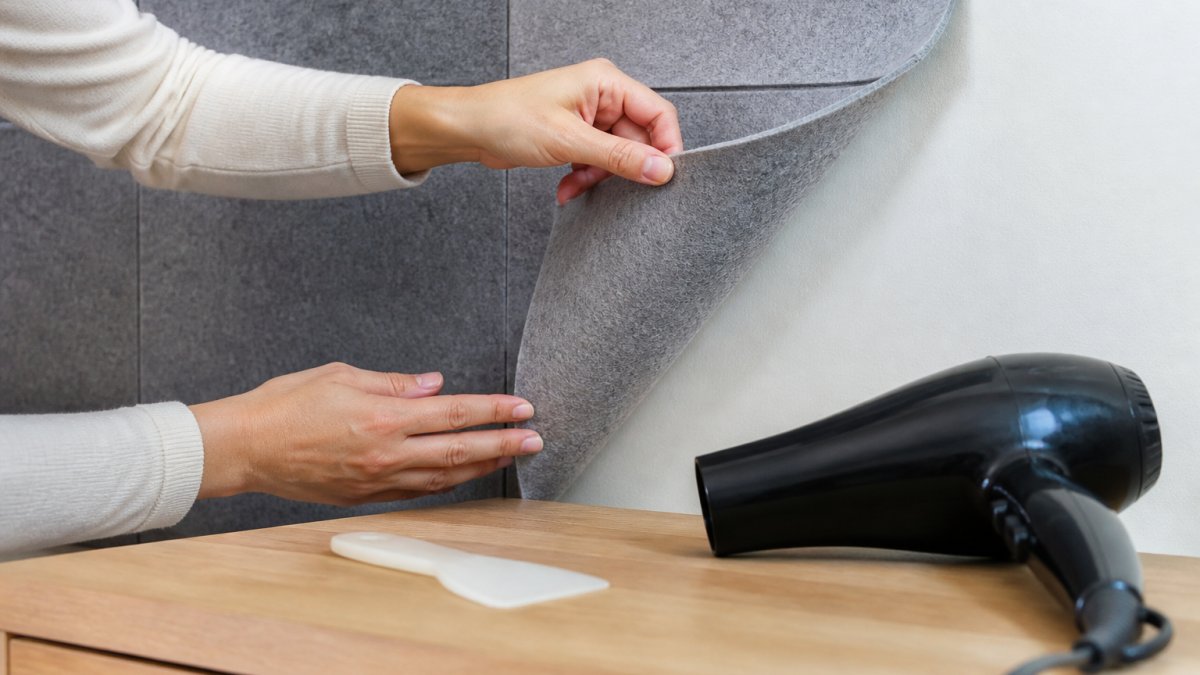
Step-by-step removal for wall panels
Set aside 10 to 15 minutes per panel and follow this order:
- Clear the area and lay a drop sheet below the wall
- Warm the panel edges with a hairdryer on low for 30 to 60 seconds
- Slide a plastic scraper under one corner, never metal
- Lift the panel slowly at a shallow angle, close to the wall
- Keep warming as you go if resistance builds
- Support the panel with your free hand as it releases
- Set panels face-up on a clean surface
If the panel fights you, stop. More heat, less force.
Adapting the method to the panel and the room
- Large rigid panels (PVC, wood-look): warm the full perimeter first, then work one corner at a time. A rigid panel concentrates force at the corner, so a fast pull is more likely to tear paint than with a flexible felt panel.
- Felt and fabric panels: these flex, so lift at a lower angle and let the panel bend away rather than levering it.
- Cold rooms: adhesive is stiffer below about 10°C, so warm longer and expect more resistance. Do not remove panels in an unheated room in winter if you can avoid it.
- Humid or recently steamed rooms: moisture can soften both adhesive and paint, so wait until the wall is dry before starting.
Repairing paint damage and removing residue
Residue comes off with warm soapy water and a soft cloth. For sticky patches, dab a little rubbing alcohol onto a cloth and blot, never scrub.
If paint does lift, you have options:
- Small flakes: touch up with matching paint and a fine brush
- Sticky residue: warm it, then roll it gently with a clean thumb
- Visible patches: patch, sand lightly, and repaint the section
Renters facing a move-out inspection should document the wall before and after. Learn how to hide wall damage in a rental and protect your bond before you move out.
For a deeper walkthrough with tools and tips, see our full guide on how to remove adhesive wall panels without wrecking the wall.
Pros and Cons of Adhesive Wall Panels
Adhesive wall panels suit renters and frequent movers well, but they are not risk-free on every wall. Here is the honest trade-off.
| Factor | Pros | Cons |
|---|---|---|
| Installation | No drilling, no tools, quick to fit | Surface must be clean and sound |
| Paint risk | Low with removable adhesive and good prep | Higher on old, flaking, or matte paint |
| Reusability | Panels can be moved and reconfigured | Adhesive may need replacing after removal |
| Rental friendly | No holes to patch | Landlord approval still worth confirming |
| Wall types | Works well on smooth, sound walls | Textured and rough walls need extra care |
The panels are rarely the problem. Weak paint and rushed removal are. Prep the wall, choose removable adhesive, and remove slowly, and the risk of damage drops to near zero.
At Lifted Plus, our DwellForms™ kits are built around this reality. The panels are made from 100% recycled PET felt, fit without drilling or paint, and are designed to move with you from one rental to the next. They add colour, texture, and architectural shape without the commitment, and you can reconfigure them when your space changes.
Frequently Asked Questions
What adhesive does not damage a painted wall?
Low-tack or removable adhesives are the safest choice for painted walls. Look for products labelled removable or low-viscosity, such as those used in peel-and-stick panels designed for renters. Avoid permanent or high-strength adhesives, which can pull paint layers when removed. Always test on an inconspicuous area first and ensure the paint is fully cured and well adhered before applying any adhesive.
How do you remove adhesive wall panels without peeling paint?
Warm the adhesive with a hairdryer on low heat to soften it, then gently lift the panel from a corner using a plastic scraper. Work slowly and steadily, pulling the panel back at a low angle rather than straight out. Never rip the panel off. If resistance is high, apply more heat. After removal, wipe away residue with a damp cloth and mild soap, then dry the wall completely.
Can adhesive wall panels be applied to textured or freshly painted walls?
Textured walls can reduce adhesion, so panels may not stick firmly or may fall off. For freshly painted walls, wait at least 7 days for the paint to fully cure before applying adhesive panels. Applying to uncured paint can trap moisture and cause peeling when removed. Always check the paint manufacturer’s cure time and test a small area first.
How long should paint cure before applying adhesive wall panels?
Most interior paints need 7 to 14 days to fully cure, even if they feel dry to the touch. Check the paint manufacturer’s instructions for the specific cure time. Applying adhesive panels before full cure can cause the paint to blister or peel when the panel is removed. In humid conditions, allow extra time. A simple test patch on an inconspicuous area can confirm readiness.
Adhesive wall panels only damage paint when the paint was already failing or the removal was rushed. Control those two things and you can decorate a rental with confidence. Explore DwellForms™ from Lifted Plus to add colour, texture, and shape to your walls with a no-drill, made-to-move system you can take to your next place.

