
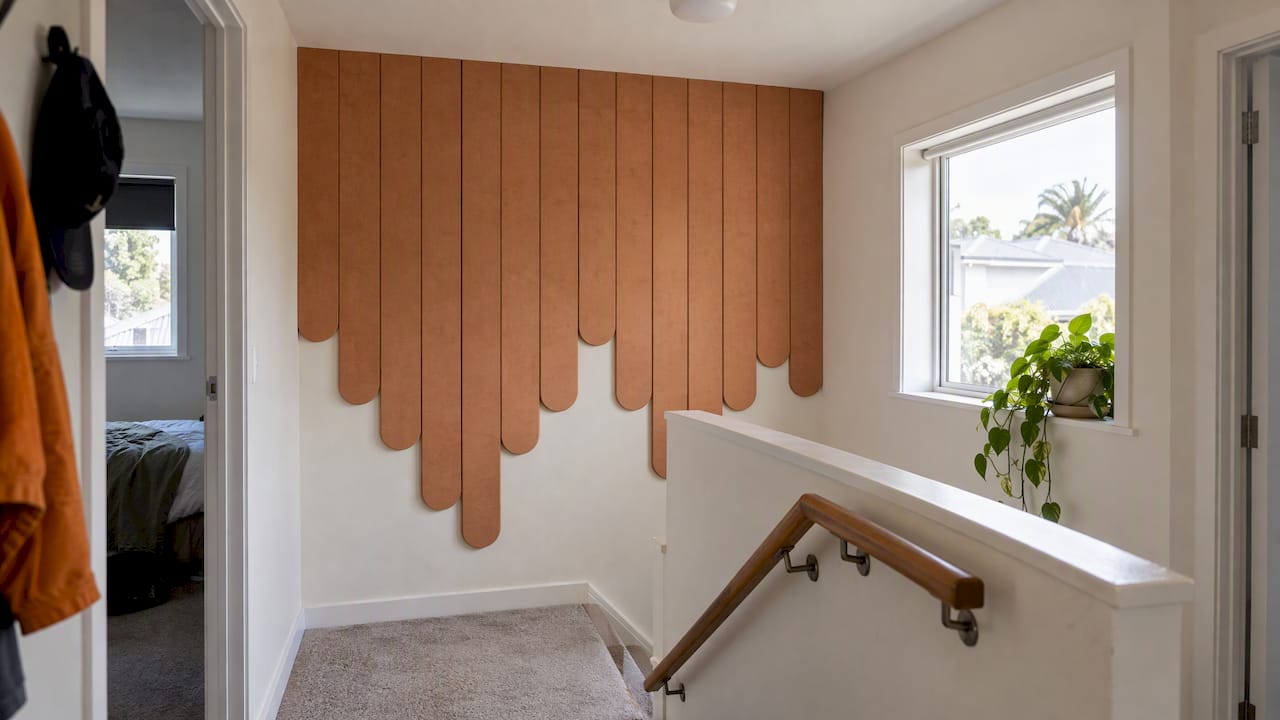
Yes, you can decorate a rental in New Zealand: you just need to ask first. Under the Residential Tenancies Act, tenants can request minor, reversible changes, and landlords must respond in writing within 21 days and cannot unreasonably say no. Whatever you install should come down cleanly, returning the wall to something close to its original state.
TL;DR:
- For minor changes, send a written request naming the item, location, installation method, costs, and removal plan, with photos or product details.
- Landlords may set reasonable installation or removal conditions, but Tenancy Services says they cannot unreasonably refuse low risk, reversible changes.
- Rugs, tension rod curtains, lamps that plug into outlets, leaning art, and freestanding shelves can refresh a room without attaching anything to walls.
- Your bond is at risk when removal causes damage beyond fair wear and tear; photograph walls beforehand, test adhesive, and keep repair receipts.
Table of Contents
- What NZ law and Tenancy Services require before you decorate
- How to write a landlord request that gets a quick yes
- High-impact decorating ideas that respect your tenancy
- End-of-tenancy obligations: removal, repairs and the bond
- Pro tips that reduce risk and protect your bond
- Why colour without commitment works for renters
- A note on asking early and choosing reversible options
- Colour without commitment, done properly
- FAQ
- Sources
What NZ law and Tenancy Services require before you decorate
The phrase “minor change” does a lot of work in New Zealand tenancy law, and it is worth understanding properly before you pick up a paintbrush or a packet of hooks. Tenancy Services describes a minor change as one that is low risk to the property and easily reversed, such as hanging picture hooks, installing shelving brackets, or mounting a removable wall feature. Anything structural, like knocking out a wall or rewiring a light fitting, sits outside this category entirely and needs separate negotiation.
Both sides carry obligations once a request lands. You must put your request in writing, and your landlord must reply in writing within 21 days. Refusing a genuinely minor, reversible change without good reason can be treated as unlawful under the same guidance. Landlords can still attach reasonable conditions, such as requiring professional installation or a specific removal method, but they cannot simply ignore the request or delay their response indefinitely.
A few points worth keeping front of mind:
- Written consent comes before the change, not after you have already drilled or painted.
- The 21-day reply window applies specifically to minor change requests, not general maintenance queries.
- Reasonable conditions (installation method, timing, who pays) can be attached, but a blanket refusal of a low-risk, reversible change is harder to justify.
The Residential Tenancies Act 1986 backs this up at a statutory level. Sections 42, 42A and 42B cover tenant fixtures, confirming that tenants must not install fixtures or make alterations outside the tenancy agreement without the landlord’s prior written consent, though tenants generally retain the right to remove fixtures they added, provided doing so does not cause irreparable damage. Tenancy Services’ guide to good renting PDF is worth bookmarking too, since it sets out tenancy agreement basics, including the Healthy Homes compliance statement landlords must include on new or varied agreements.
How to write a landlord request that gets a quick yes
A vague text message asking “can I put some stuff on the walls” rarely gets a fast answer, and it gives a cautious landlord every reason to stall. A clear, specific written request does the opposite: it shows you have thought the change through and removes the guesswork that makes landlords nervous.
Structure your request around these steps:
- Name the exact change: what you want to install, where in the property, and roughly how large it is.
- Describe the installation method, specifying that it involves no drilling, screws or permanent adhesive if that is the case.
- State who covers any cost, both for installation and for eventual removal.
- Outline your removal and reinstatement plan, including how you will return the wall to its original condition.
- Attach photos or product details so your landlord can picture the finished result rather than imagining the worst case.
Pro Tip: Send your request by email rather than text, so there is a dated written record both of your request and of the landlord’s 21-day response window.
If your landlord comes back with conditions, such as wanting a particular installation date or asking for photos once it is done, treat that as a normal part of the process rather than a knock back. A short, polite follow-up at the two-week mark is reasonable if you have heard nothing.
High-impact decorating ideas that respect your tenancy
You do not need permission for most of what actually changes how a room feels. Layering textiles, lighting and freestanding pieces does more for atmosphere than most people expect, and it sidesteps the consent process altogether because nothing touches the wall or the structure of the property.
- A large rug anchors a living space and adds warmth underfoot without any landlord involvement.
- Curtains on a tension rod or portable track soften a window and change the whole feel of a room.
- Plug-in lighting, including floor lamps and plug-in wall sconces, adds mood without any wiring changes.
- Leaning art against a wall or on a shelf gives a gallery feel with zero installation risk.
- Framed wallpaper panels or peel-and-stick treatments on a single accent board can be removed entirely if you move.
For genuine feature-wall impact, a modular panel system is worth considering as a step up from leaned art or rugs alone. Panels that rely on tested adhesive pads rather than drilling or construction adhesive can be arranged into a sculptural, colour-led design and then taken down cleanly when you leave, which makes them a reasonable fit for a minor-change request rather than a renovation. For more layout inspiration suited to flats and small floor plans, our apartment decorating guide and our list of renter-friendly décor ideas both work through options room by room.
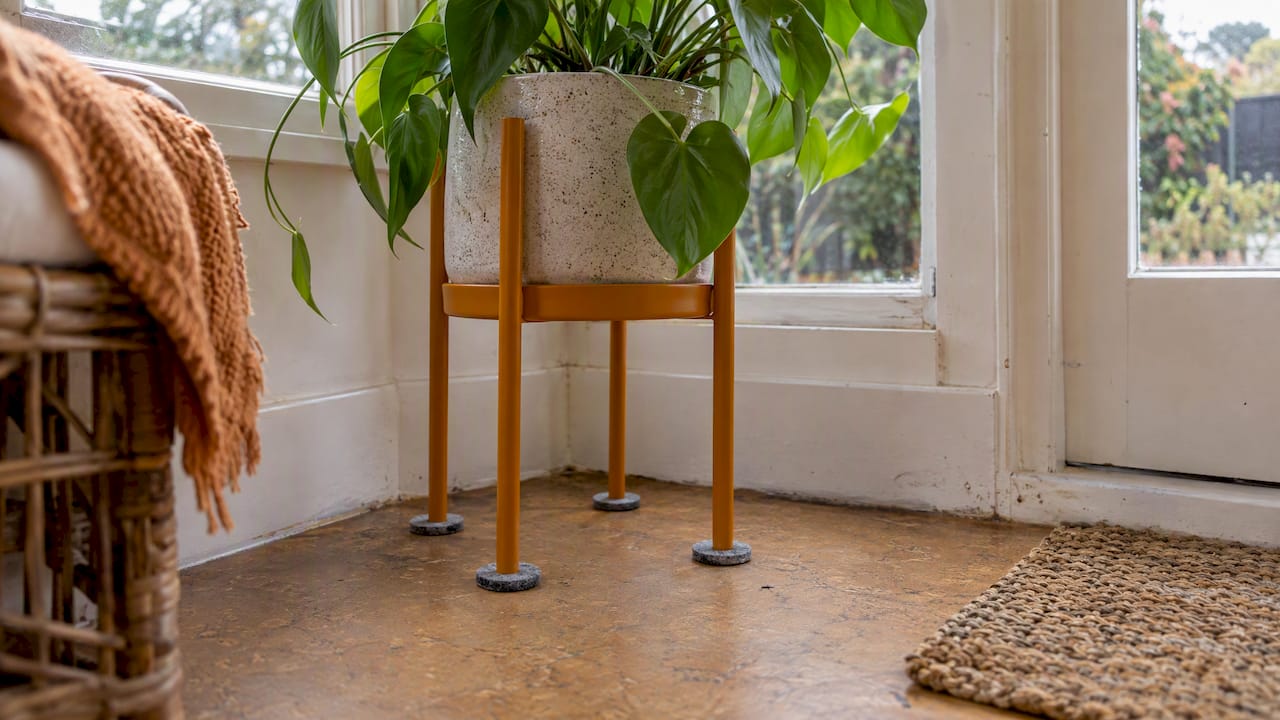
Beyond walls, command hooks rated for your wall type, a freestanding gallery ledge, modular shelving units that need no fixing, and a protected plant stand on a felt pad all add personality without a single structural change.
End-of-tenancy obligations: removal, repairs and the bond
“Substantially the same condition” is the standard you are working towards, not pristine or untouched. Tenancy Services draws a line between fair wear and tear, which is the gradual, unavoidable result of normal living, and damage you caused, which you are responsible for repairing or compensating.
A faded patch where furniture sat for two years is wear and tear. A gouge from removing a shelf bracket without care is damage. The difference usually comes down to how carefully something was installed and removed.
A few habits protect your bond:
- Test any adhesive on a small, hidden patch of wall before committing to a full installation.
- Note the original paint brand and colour code before you paint over it, so reinstatement is exact.
- Photograph wall condition before you start and again once everything comes down.
- Keep receipts for any repairs or touch-ups, in case your bond is queried later.
If removal does cause damage, tell your landlord promptly, offer to repair it or cover the cost, and keep a written record of that conversation. Our guide on protecting your bond walks through this process in more detail.
Pro tips that reduce risk and protect your bond
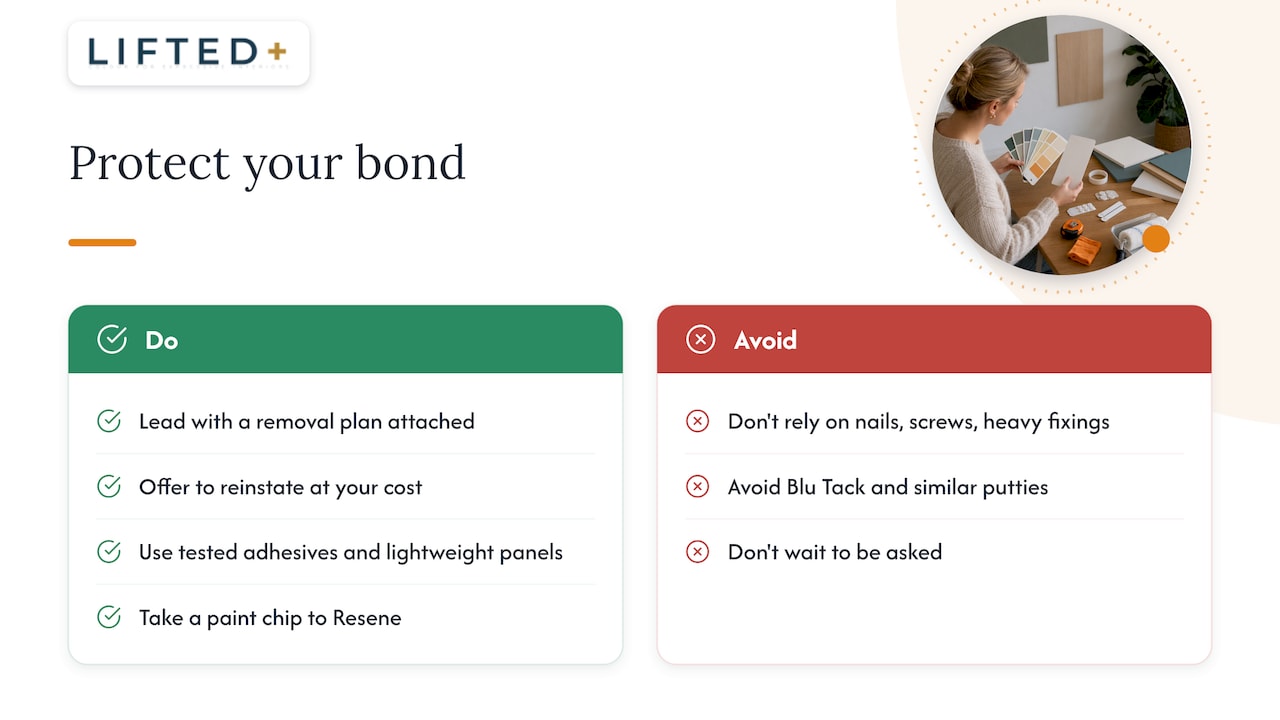
Lead every request with your removal plan already attached, rather than waiting to be asked. Offering to reinstate at your own cost, or to leave a well-installed item behind if your landlord prefers, signals you have thought past move-in day.
Favour tested adhesive systems and lightweight panels over anything relying on nails, screws or heavy-duty fasteners. Blu Tack and similar putties feel harmless but can pull paint and plaster away on removal, turning a simple swap into a repair bill; our piece on Blu Tack and bond risk covers exactly how that happens.
Pro Tip: If paint is on the table, take a small chip to a Resene ColorShop for an exact match before you move out, which speeds up reinstatement and keeps your bond intact.
Lay down a drop sheet and protect skirting boards during any installation, however minor, since scuffed trim is one of the most common small disputes at final inspection.
Why colour without commitment works for renters
We built DwellForms™ panels around a simple problem: renters want personality on their walls without risking their bond. Each panel uses tested adhesive pads rather than drilling, screws or construction adhesive, and the modular design means pieces can be rearranged, reduced or taken down entirely and moved to your next home. For a deeper look at how the panels behave over time, our removable wall panel guide covers installation and removal step by step.
When you write to your landlord, a single sentence describing the adhesive-pad method and your removal plan usually answers their first concern before they even ask it.
A note on asking early and choosing reversible options
We have seen the difference it makes when a tenant asks early, documents the conversation, and chooses something genuinely reversible over something merely hopeful.
Good landlord relationships are built on this kind of small, upfront honesty, and a home can still feel entirely yours within those boundaries.
— Michelle
Colour without commitment, done properly
It is straightforward to add a renter-friendly feature wall without touching paint, plaster or drilling equipment. Our DwellForms™ Core Kits give you a full sculptural panel arrangement to start with, our Extension Kits let you grow the design as you settle in, and our Colour Samples let you test a palette against your actual wall before you commit to a full kit.
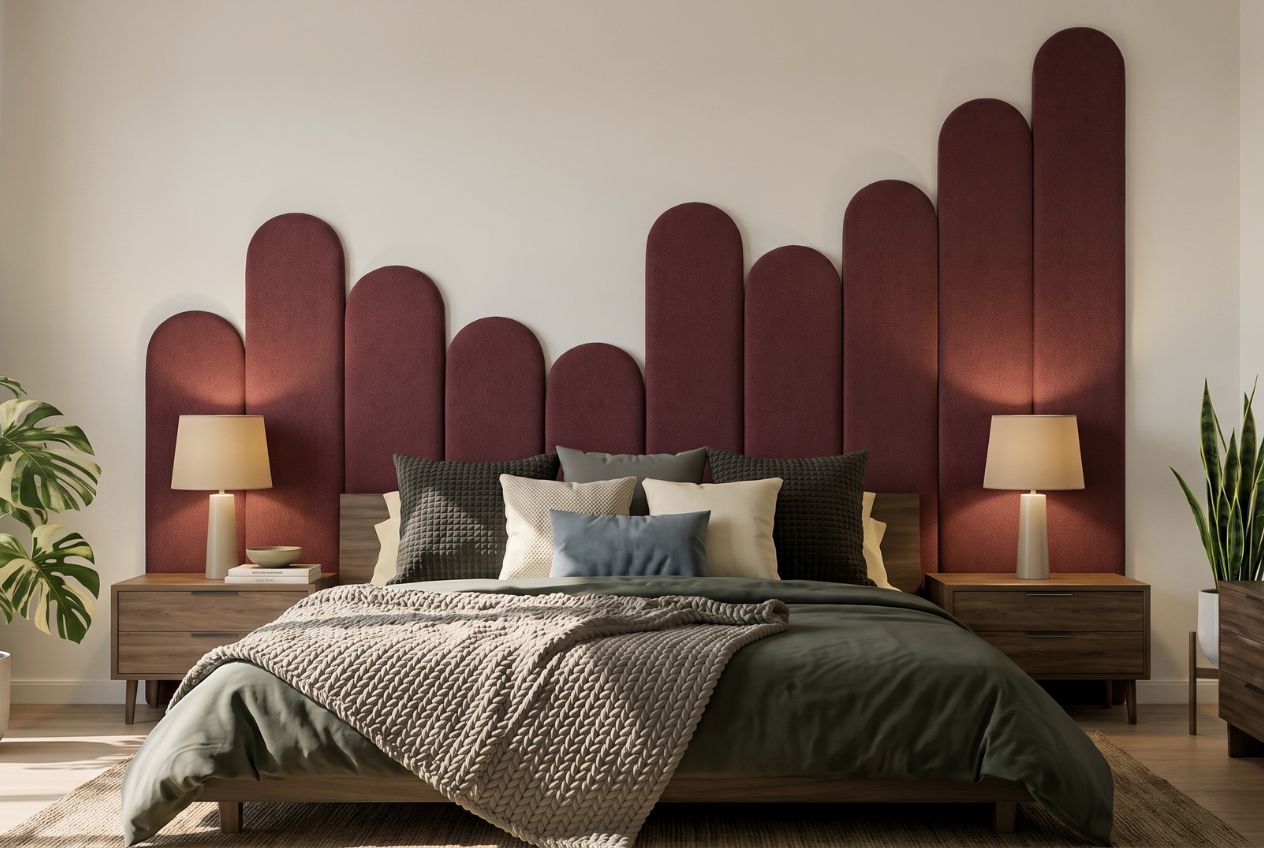
A few things worth knowing before you order:
- Kits install with tested adhesive pads, with no drilling, screws or permanent fixing involved.
- Panels can be rearranged or removed entirely, which makes them easy to describe in a landlord consent request.
- Our bond protection guide walks through exactly what to say in that request.
Browse the DwellForms™ Core Kits range to see which arrangement suits your wall, your lease, and the home you are building inside it.
FAQ
What are the rules for renting in New Zealand?
Tenancy agreements in New Zealand must be in writing and follow the Residential Tenancies Act, which sets out obligations for both landlords and tenants, including fixtures, alterations and bond handling. Landlords must also include a Healthy Homes compliance statement on new or varied agreements, as outlined in the guide to good renting.
What is the youngest age to rent an apartment?
The general minimum age to enter a tenancy agreement in New Zealand is 18, under the Residential Tenancies Act. Minors who are married or in a civil union may have the legal capacity to sign a tenancy agreement, and the agreement should note if a tenant is under 18.
Can a tenant decorate a rental property?
Yes, tenants can request minor, reversible changes such as picture hooks, shelving or removable wall panels, provided they get written consent first. Landlords must respond within 21 days and cannot unreasonably refuse a low-risk, reversible change under Tenancy Services guidance.
Can you paint a rental if you agree to paint it back?
Painting generally needs written landlord consent before you start, even if you plan to repaint the original colour before you leave. Keeping the original paint brand and colour code makes reinstatement exact, and a Resene ColorShop match can help you return the wall to its starting condition as described in design guidance for rentals.
What happens if removing décor damages the wall?
If removal causes damage beyond fair wear and tear, you are generally responsible for repairing it or compensating your landlord, under Tenancy Services guidance. Notify your landlord promptly, offer a repair or compensation, and keep a written record of the conversation to avoid a bond dispute.
Sources
- Tenants making changes to the property » Tenancy Services
- Residential Tenancies Act 1986 — Tenant’s fixtures (NZ legislation)
- Add flair to your rental home — OneRoof