

You have a blank wall, a lease that forbids drilling, and a growing suspicion that another framed print will not fix it. Felt wall panels can, and in New Zealand you will find them sold in three quite different ways: as acoustic products for commercial fit-outs, as imported decorative pieces shipped from overseas, and as colour-led kits designed for ordinary homes. This guide explains which is which, what to check before you buy, and how to get colour and texture onto a wall without a single drill hole.
Key Takeaways
- Felt wall panels are sold for very different jobs. Decide first whether you want a design feature for a home or a technical product for a commercial space, because the listings look similar and the products are not.
- Scale matters more than most buyers expect. Match panel size and pattern to the proportions of the room, and plan the layout on the floor before anything touches the wall.
- For rentals, the fixing method is the real purchase decision. Look for removable systems, test on an inconspicuous patch, and read your tenancy agreement first.
- In New Zealand, fire performance of internal linings is regulated. Ask any supplier for documented fire test information, especially for bedrooms and exit routes.
- Colour is where felt earns its place. Order samples before committing to a full kit.
Table of Contents
- Why a blank wall is harder than it looks
- What felt wall panels actually are
- What felt can and cannot do for a room
- Choosing shape, size and colour
- Planning the layout before you fix anything
- Fixing felt panels without drilling
- Fire safety and building requirements in NZ
- Caring for felt panels
- Perspective: why we built DwellForms™ around colour
- Where our kits fit
- Beyond panels: other ways to dress a blank wall
- A short checklist before you buy
- FAQ
- Sources
Why a blank wall is harder than it looks
A plain wall is rarely a design choice. More often it is the leftover of a rental: magnolia paint, a few scuffs, and a landlord who would like the bond intact. The problem is not a lack of ideas. It is a lack of permission.
Paint is out unless you are willing to repaint on the way out. Wallpaper, even the peel-and-stick kind, makes some tenants nervous. Hanging art means nails, and a gallery wall of nails is a very small renovation. So the walls stay bare, and the room feels like it belongs to the previous tenant.
Felt panels answer this neatly. They add depth, pattern and a soft, tactile surface, and the better systems are designed to come off again. That is the promise behind searching for where to buy them. The harder question is which kind to buy.
What felt wall panels actually are
Most felt panels sold today are made from PET, the polyester used in drinks bottles, pressed into a dense, flexible sheet. The material can be cut precisely, dyed in a wide range of colours and moulded or laser-cut into shapes. Some panels are flat and graphic. Others are three-dimensional, with raised geometry that catches light and throws shadow.
In the NZ search results you will see several families of product:
Commercial acoustic panels
These are typically full sheets, often 2400 mm by 1200 mm or similar, sold for offices, hospitality venues and studios. They are specified by thickness, fire rating and sound-absorption data, and usually fixed permanently with adhesive or mechanical fasteners. They are excellent at what they are made for. They are not designed with a tenant’s bond in mind.
Framed and imported decorative felt
Small framed or pin-board style felt pieces, often shipped from overseas marketplaces, sit at the lower end of the price range. They are easy to hang, but hanging means a nail or screw, and delivery times and returns can be less convenient than buying locally.
Modular, removable design kits
This is the category we work in. Modular kits use precision-cut PET felt shapes arranged into a pattern across the wall, fixed with adhesive pads rather than screws. The emphasis is on design: colour, rhythm and composition. DwellForms™ by Lifted+ belongs here, and our felt is made from 100% recycled PET.
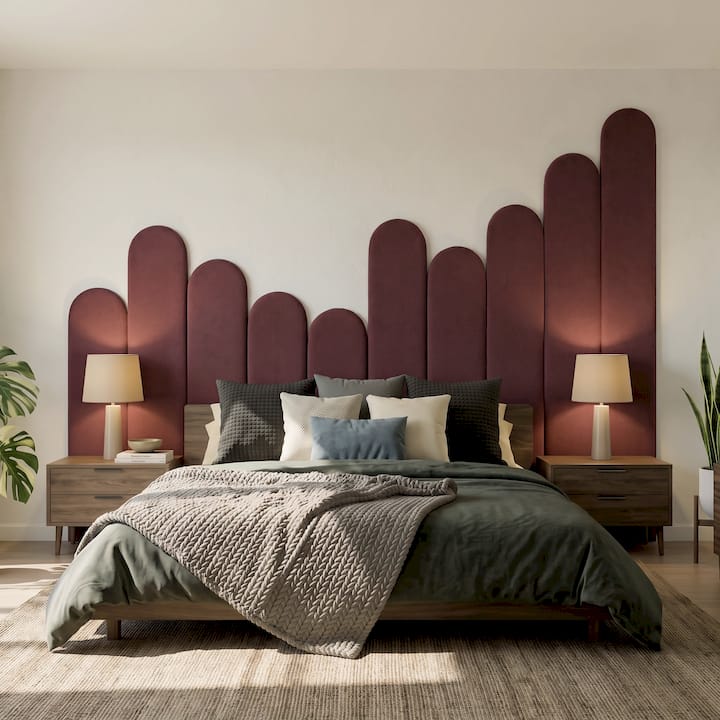
What felt can and cannot do for a room
Felt changes how a room looks first. A wall of sculptural panels adds hierarchy: it gives the eye somewhere to land, which makes a room feel considered rather than merely furnished. It also adds texture, and texture reads as warmth.
There is a second, softer effect. Many people find that a wall dressed in felt feels quieter. Soft, textured surfaces can change how a room feels to be in. We are careful here, though. DwellForms™ kits are decorative wall design, not soundproofing and not a commercial acoustic treatment, and we do not make claims about measured sound performance. If echo is your main concern, treat any felt feature wall as one small contribution among rugs, curtains and upholstered furniture, and seek specialist acoustic advice for a serious problem.
For a deeper look at how decorative pieces sit in the wider category, our homeowner’s guide to decorative wall panels compares the main options. If you want a short overview of what felt panels look like in residential rooms, this felt wall panels overview is a reasonable starting point.
Choosing shape, size and colour
This is where most buyers go wrong, usually by choosing from a photograph rather than from the room in front of them.
Start with scale
Room proportions should guide the size of the pattern. As one New Zealand paint specialist notes in its guide to wall panelling, smaller rooms generally suit smaller-scale panelling, while larger-scale effects look best in rooms with taller ceilings. The same logic holds for felt. A boldly scaled geometric pattern can swamp a compact bedroom, while a delicate pattern can disappear on a double-height living wall.
A quick test: stand where you will most often look at the wall, such as the sofa, the desk or the end of the hallway. The pattern should read clearly from there without feeling like it is leaning toward you.
Think about where the wall sits
Not every wall is a good candidate. The strongest feature walls are the ones people naturally face: behind a bed, behind a desk, at the end of a hall, above a sofa. A wall interrupted by doors, switches and radiators gives you less clean space to work with. Measure the usable area, not the whole wall.
If you work from home, the wall behind your video-call position is worth considering. It is the one part of your home that other people see regularly, and a textured, colourful backdrop looks far better on camera than a bare plaster rectangle.
Shape sets the mood
Linear shapes feel calm and architectural. Angular or triangular forms feel energetic. Soft, repeated modules feel domestic and relaxed. Ask yourself what the room needs. A bedroom usually wants a quieter rhythm, which is why we wrote about low-contrast feature walls for small bedrooms. A hallway can take more drama, because nobody lingers there long enough to tire of it.
Colour: the part worth taking your time over
Colour is the reason to choose felt over a plain acoustic board. It is also the decision people fear most, particularly renters who cannot easily undo a mistake. Three habits help.
First, look at the colour in your own light. New Zealand’s bright, clear daylight can make a saturated tone look different at noon than at dusk, and a south-facing room will cool most colours down. Second, relate the panel colour to something already in the room, such as a cushion, a rug or a piece of art, so the wall feels intended. Third, order samples. Holding a real piece of felt against your wall for a few days tells you more than any screen.
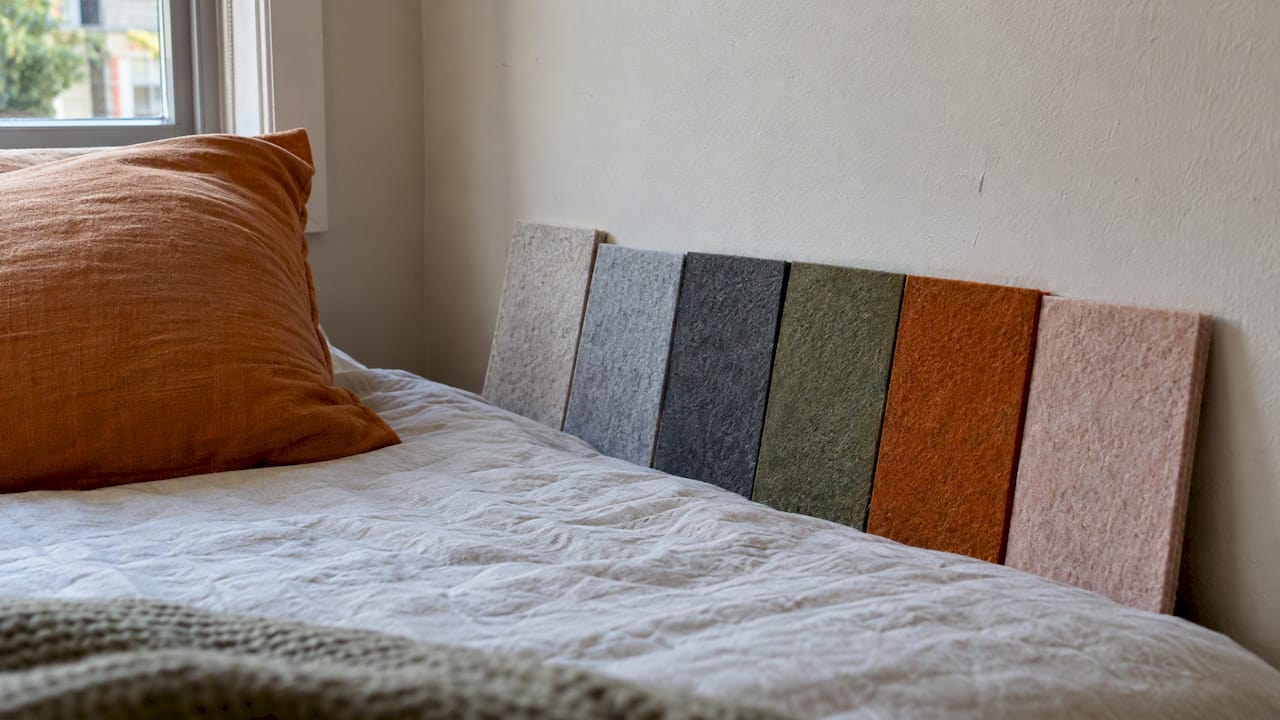
Our colour sample kits exist for exactly this, and sample purchases are credited towards a full kit order. For help combining shades, see our practical guide to mixing colours in interiors and how to use colour to lift a room.
Planning the layout before you fix anything
The best installs look effortless because the work happened on the floor. Lay the panels out on a clean surface or a large sheet of paper and arrange them as they will sit on the wall. Step back, photograph it, then rearrange.
Trade guidance for timber interior panelling makes the same point: consider the supplied lengths and plan the layout before installation, and decide on direction and joins in advance, as set out in this New Zealand interior panelling guide. Felt kits are a different product, but the principle of planning first applies equally.
A sensible sequence looks like this:
- Measure the wall and mark the usable area lightly with a pencil or masking tape.
- Arrange the full pattern on the floor, including any extension pieces.
- Photograph the arrangement so you can copy it exactly.
- Mark a centre line or a level baseline on the wall.
- Work from the centre outwards, or from the baseline upwards, checking level as you go.
If your wall is wider than a standard kit, an extension kit lets you grow the pattern rather than stretching it. For more pattern ideas that suit a weekend project, see our guide to colour-led modular wall panel patterns.
Fixing felt panels without drilling
How a panel attaches matters more than how it looks, because it decides whether the wall survives the tenancy.
Commercial panels are generally fixed with construction adhesive or fasteners. That is the right approach for a permanent office fit-out and the wrong one for a rental. Our kits use adhesive pads instead. We tested several adhesive options and deliberately discounted one popular pull-tab brand, because the nano-adhesive pads we selected performed significantly better in our own testing at minimising damage to walls.
Here is the honest caveat. No adhesive is completely damage-proof, and we do not promise damage-free removal on every wall. Results depend on the paint, the surface and how the pads are removed. Some paints, particularly cheap, chalky or recently applied finishes, can lift with any adhesive. Textured, damp or dusty walls are poor candidates.
For a sensible approach:
- Read your tenancy agreement and, where in doubt, ask your landlord or property manager before you start.
- Clean the surface and let it dry fully before fitting.
- Test a pad on a hidden spot, such as inside a wardrobe or behind a door, and leave it for a while before removing it.
- Remove pads slowly and gently, following the guidance supplied with your kit.
- Avoid bathrooms, steamy kitchens and any wall that sweats or shows mould.
We cover this territory in more detail in our guide to felt wall panel benefits for renters, and in reusable wall panels, which looks at taking a design with you when you move.
Fire safety and building requirements in NZ
This is the part many glossy product pages skip. Under the New Zealand Building Code, internal surface linings have fire performance requirements. The Ministry of Business, Innovation and Employment’s building product specifications explain that materials in certain areas, such as sleeping spaces or exitways, must achieve a specified Material Group Number, determined through standardised testing. Those same specifications state that classifications are assigned on the basis of tests such as ISO 9705 or AS/NZS standards.
In practice this means a few sensible questions for any supplier, whether you are buying a large commercial sheet or a small decorative kit:
- Is there documented fire test information for this product?
- Does it relate to the way the product will be installed in my home?
- Is the product intended for a bedroom, hallway or other area where fire requirements are stricter?
The Building Code’s lining requirements are written chiefly for building work and commercial or multi-unit settings, and a decorative kit for a single home is a different situation from a full wall lining. Still, it is wise to ask rather than assume. If you are a landlord, a body corporate member or someone fitting out a shared building, speak to your building consent authority, a licensed building practitioner or a fire engineer before you proceed. For wider context on how testing and compliance information for interior linings is presented, see this overview of wall lining testing standards.
Caring for felt panels
Felt is forgiving, but it is still a textile. Dust is its main enemy, and a light pass with a soft brush attachment on a vacuum removes most of it. Do it gently and avoid pressing the panels against the wall, particularly if they are held by adhesive pads.
For marks, spot-clean softly with a barely damp cloth and test first on an offcut or hidden corner, as dyes behave differently. Avoid soaking the felt or using harsh chemicals. Keep panels out of constant direct sun where you can, since strong light fades most coloured fabrics over the years. Check the care instructions supplied with your own panels, as they take priority over general advice.
Perspective: why we built DwellForms™ around colour
We started with a simple irritation. The felt panels we kept finding were beautiful in a commercial lobby and joyless at home. They came in neutral greys, in huge sheets, and they expected a drill and a permanent commitment.
Most people do not live like that. They rent, they move, they change their minds, and they want a wall that feels like theirs rather than a showroom’s. So we designed DwellForms™ in New Zealand as a colour-led system: precision-cut shapes in recycled PET felt, arranged into patterns that feel architectural, and fixed with tested adhesive pads so the whole thing can come down, be rearranged and move with you.
We believe in colour that lifts a room out of the safe, polite middle. We also believe in telling you what a product is and is not. Our kits are decorative. They are not a soundproofing solution, they are not a commercial acoustic treatment, and they will not suit every wall. What they can do is give a blank, borrowed wall some courage.
— Michelle
Where our kits fit
If you want the look of a sculptural feature wall without paint, drilling or renovation, a DwellForms™ Core Kit is the place to start. Each kit is a complete pattern that goes up with adhesive pads, can be rearranged, and can be taken to your next home.
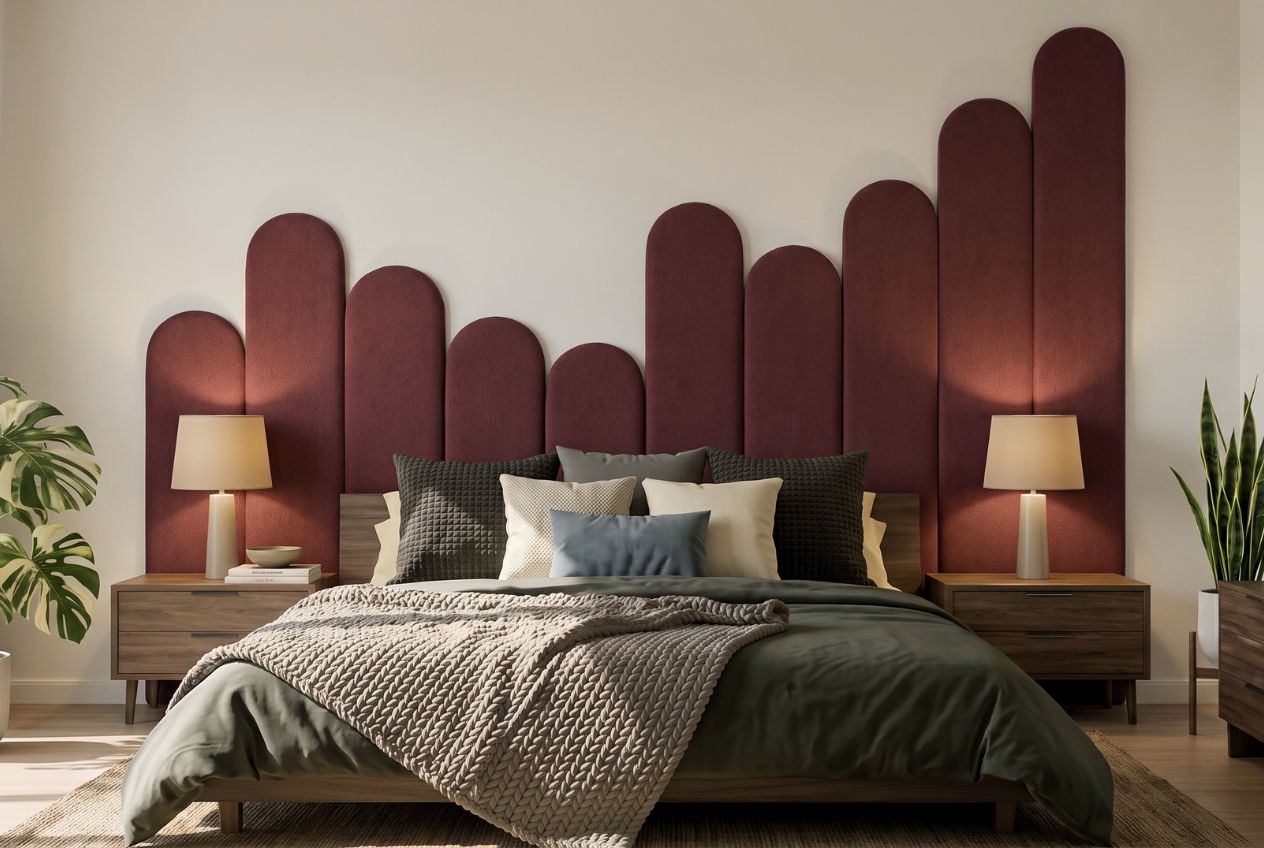
Not sure about colour? Begin with the colour samples, then move to a full kit with your sample purchase credited. Prefer a clean, linear look? Our Linear Feature Kit and Skyline Kit show two very different moods. If you are weighing up other approaches first, our comparison of wall panel kit alternatives lays out the trade-offs by type.
Beyond panels: other ways to dress a blank wall
Felt is not the only answer, and the best rooms mix several. A few that work well for renters:
A curated art display adds personality quickly. Large leaning frames on a shelf or sideboard need no wall fixing at all, and our ideas for colour-led art displays show how to build the arrangement. If you would like a framed piece to anchor it, browse our wall art.
Furniture can act as a feature wall. A tall bookcase, a painted screen or a deep sideboard with a bold piece above it gives you structure without touching the plaster. We gathered some ideas in feature walls that look like furniture.
Rugs, curtains and upholstered pieces add softness alongside any wall treatment, and they come with you when you move. Mirrors reflect light and make a small room feel larger. For apartments in particular, our roundup of modular wall decor for apartments covers a wide range of removable ideas.
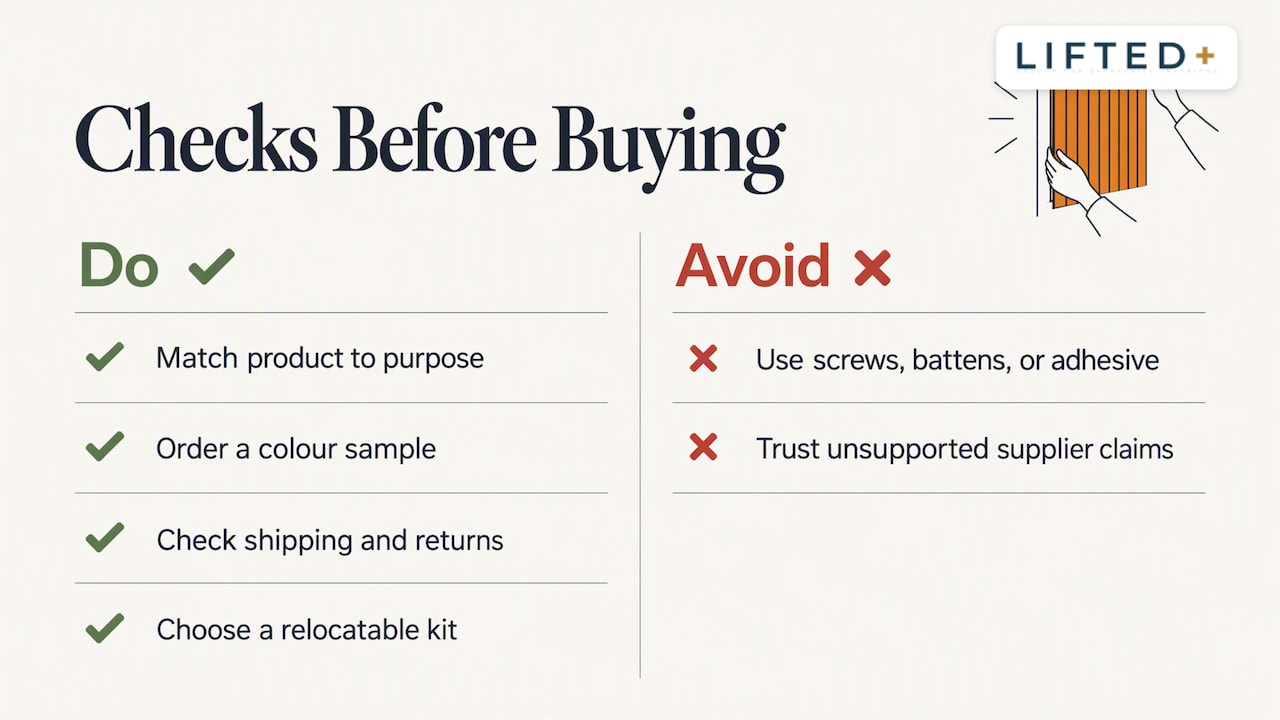
A short checklist before you buy
Before you add anything to your cart, run through these questions. They apply whoever you buy from.
What is it for? A design feature, a technical acoustic job or a pin-board? Match the product to the purpose.
How does it fix? If the answer involves screws, battens or construction adhesive and you rent, keep looking.
Can you see the colour in person? Order a sample, or at the very least a swatch.
What does the supplier claim, and can they back it up? Be wary of broad promises about sound or sustainability with no supporting detail.
Where does it ship from, and how long will it take? Local stock and clear returns policies save a great deal of frustration.
Can you take it with you? A kit you can rearrange and relocate is a better long-term buy than one that becomes landfill when the lease ends.
FAQ
Can I use felt wall panels in a rental in NZ?
Often, yes, if the system fixes with removable adhesive rather than screws. Check your tenancy agreement and ask your landlord when in doubt. Test the adhesive on a hidden spot first, and remember that no adhesive is completely damage-proof on every wall.
Do felt wall panels soundproof a room?
No. Decorative felt panels can make a room feel softer, but they are not soundproofing and our kits are not a commercial acoustic treatment. For a real noise problem, speak to an acoustic specialist and consider rugs, curtains and soft furnishings alongside any panels.
Do felt panels need to meet fire requirements in New Zealand?
The Building Code sets fire performance requirements for internal linings, with stricter expectations in areas such as sleeping spaces and exitways. Ask your supplier for documented test information, and consult a licensed building practitioner if you are lining a wall as part of building work.
How do I clean felt wall panels?
Vacuum gently with a soft brush attachment and spot-clean marks with a barely damp cloth, testing a hidden corner first. Avoid soaking the felt or using harsh chemicals, and follow the care instructions that come with your panels.
How do I choose a colour I will not regret?
Order samples and live with them against your wall for a few days in different light. Tie the colour to something already in the room, such as a rug or artwork, so the wall feels deliberate.
Sources
- Your guide to wall panelling and wainscoting, Habitat by Resene
- Interior Panelling and Sarking Guide, JSC
- Building Product Specifications 1st Edition Amendment 1, MBIE
Recommended
- Landlord Friendly Wall Decor For NZ Renters
- Removable Wall Panel Ideas For NZ Renters In 2026
- Protect Your Bond: 6 Steps For NZ Renters To Use No Drill Panels
- Reuse Wall Panels Without Drilling: NZ Renters Can Take Them Along
This article is for general information and inspiration only. Product performance and results may vary depending on individual circumstances, surfaces and installation.
