

Last Updated: October 29, 2026
Quick Summary
The best sustainable wall panels for home interiors are recycled PET felt, reclaimed wood, bamboo slat, FSC-certified timber and recycled aluminium or steel. Judge each panel on recycled content, responsible sourcing and end of life, not just the eco label on the box.
- Recycled PET felt panels hang, lean or clip on with no drilling, making them the easiest option for renters.
- Ask for a moisture reading on reclaimed boards and let the timber acclimatise for several days before fitting.
- Ask your supplier for the FSC chain-of-custody code and the adhesive or finish specification before ordering.
- Choose low-VOC or formaldehyde-free adhesives and water-based lacquers or natural oils over solvent-based finishes.
- Metal panels reflect sound rather than absorbing it, so a full metal wall can make a room louder.
Table of Contents
- What Makes a Wall Panel Truly Sustainable?
- 1. Recycled PET Felt Panels: The Renter-Friendly All-Rounder
- 2. Reclaimed Wood Paneling: Character With a Past
- 3. Bamboo Slat Walls: Fast-Growing and Hard-Wearing
- 4. FSC-Certified Timber Panels: Responsibly Sourced Oak, Pine, and Walnut
- 5. Recycled Aluminium and Steel Panels: Industrial Looks, Circular Materials
- Renter-Friendly Wall Decor Ideas That Skip the Drill
- Acoustic Wall Panels for Apartments: Cutting Noise Without a Renovation
- Frequently Asked Questions
What Makes a Wall Panel Truly Sustainable?
Sustainable wall panels use recycled or renewable materials, come from a responsibly managed source, and can be reused or recycled at the end of their life. Judge panels on all three counts, not just the label on the box. For a closer look at what recyclable and recycled labels actually mean, see Recyclable Wall Panels: What the Label Really Means in NZ. If you are shopping for 5 sustainable wall panels for home interiors, this is the filter that matters most.
Sustainability in wall panels comes down to three things:
- Recycled content: how much of the panel is made from waste material
- Responsible sourcing: whether timber carries credible certification, such as Forest Stewardship Council certification in New Zealand
- End of life: whether the panel can be recycled, reused, or moved to a new home
Most “eco” claims only cover one of these. A panel made from recycled plastic might still be glued to a backing that ends up in landfill. A beautiful reclaimed board might be treated with a finish you cannot safely sand indoors. Check all three before you buy.
Recycled content, responsible sourcing, and end-of-life
Recycled content is easy to check. Look for a stated percentage and a named material, such as recycled PET or recycled aluminium. Vague terms like “eco-friendly blend” tell you nothing.
Responsible sourcing needs a paper trail. For timber, ask for FSC or equivalent chain-of-custody certification. For metal, ask whether it is post-consumer or post-industrial scrap.
End of life is the part buyers forget. Ask one question: can I take this down and use it again? Panels that clip, hang, or lean are far easier to reuse than panels glued or nailed in place. That single design choice often matters more than the material itself.
1. Recycled PET Felt Panels: The Renter-Friendly All-Rounder
Recycled PET felt panels are made from recovered plastic bottles spun into a dense, soft felt. They are the easiest sustainable option for renters because most designs hang, lean, or clip on with no drilling at all.
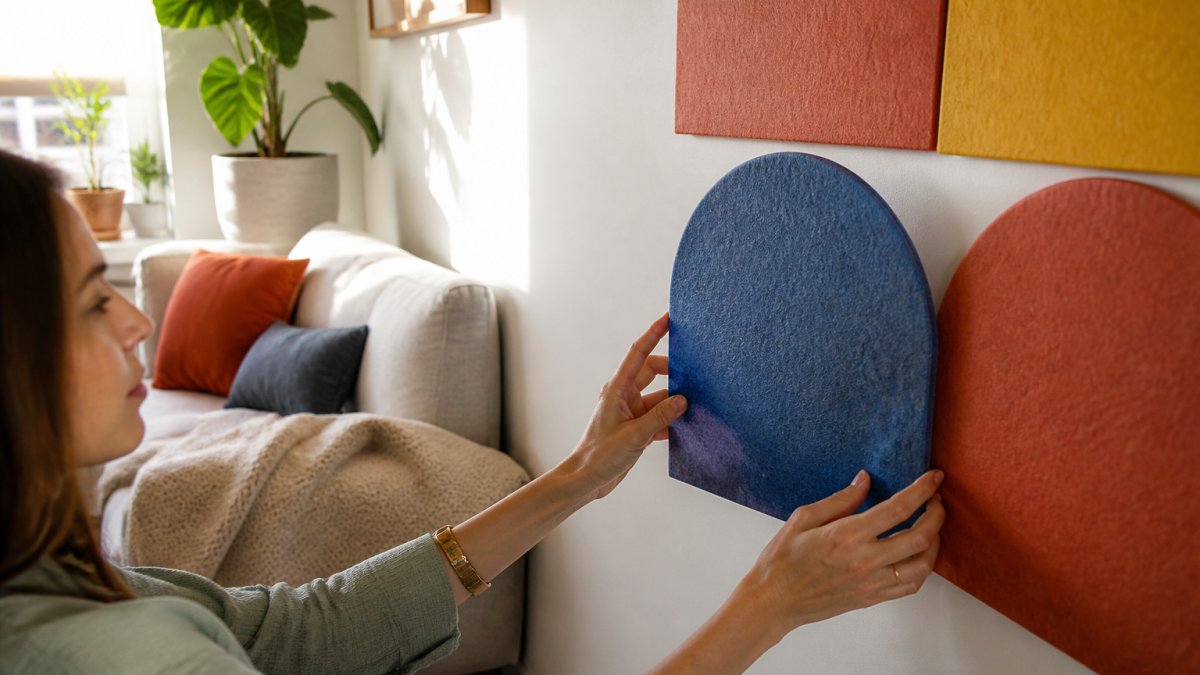
DwellForms™ kits are modular, 100% recycled PET felt, and built to move with you. Before committing, read our Recycled PET Felt Wall Panels Review: What Buyers Should Know. You can rearrange the panels into a new shape when you shift flats.
Dense felt absorbs sound, so a felt feature wall can also help soften noise in a busy apartment.
Best for: renters, frequent movers, and anyone who wants colour and texture without a drill.
Skip if: you want a hard, wipe-clean surface in a wet area.
2. Reclaimed Wood Paneling: Character With a Past
Reclaimed wood paneling gives a room a sense of history. Each board carries grain, knots, and colour variation you cannot fake with new timber.
The catch is condition and provenance. Old timber can be warped, split, or coated in a finish you would not want in a bedroom. Lead-based paints were common before the 1970s, and some reclaimed boards carry residues from industrial use. Ask the supplier where the wood came from and whether it has been tested or stripped.
Moisture content matters more than age. Reclaimed boards that have not been properly dried can shrink and gap after installation, so ask for a moisture reading and let the timber acclimatise in the room for several days before fitting.
Reclaimed timber suits feature walls, headboards, and ceiling panels where the texture does the talking. It is less suited to full rooms, where the variation can feel busy, and it is not a good choice for bathrooms or kitchens where steam and grease will settle into open grain.
Best for: homeowners chasing character in a living room or bedroom, and anyone willing to inspect boards before buying.
Skip if: you rent, you need a fast tool-free install, or you cannot verify the finish and provenance. Matching these wall treatments with complementary sustainable home furniture materials ensures a cohesive aesthetic that honors the integrity of your interior design choices.
If you want to weigh it against other materials, our guide to PET felt wall panel alternatives compares the options side by side.
3. Bamboo Slat Walls: Fast-Growing and Hard-Wearing
Best for: homeowners who want a warm, textured feature wall in a dry room.
Skip if: you rent, or the wall sits in a wet zone.
4. FSC-Certified Timber Panels: Responsibly Sourced Oak, Pine, and Walnut
Species choice changes both look and performance:
- Oak: hard, durable, and happy in high-traffic rooms; takes stains and oils well but is the priciest of the three
- Pine: lighter and softer, best for ceilings and low-traffic walls; dents more easily but is the most affordable
- Walnut: rich and dark, a statement choice for a feature wall; softer than oak but stable when sealed
Ask whether the panel is solid timber or a veneer on a substrate; veneered panels are lighter and cheaper but harder to recycle because the layers are glued together.
Indoor air quality. Adhesives and finishes are where health concerns hide. Look for low-VOC or formaldehyde-free adhesives, and choose water-based lacquers or natural oils over solvent-based finishes. Ask for a safety data sheet if you are sensitive to emissions, and allow newly finished panels to off-gas in a well-ventilated space before installing them in a bedroom.
Installation and maintenance. Timber panels need a little care. They can expand and contract with humidity, so leave a small gap at edges and keep them away from direct heat. Sealed finishes wipe clean; oiled finishes need occasional re-oiling. Repair is usually straightforward: sand back and re-oil a scratched board rather than replacing the whole wall.
Best for: homeowners who want natural grain, a certified supply chain, and a repairable surface.
Skip if: you need a removable, no-drill solution or a fully waterproof wall.
Ask your supplier for the FSC chain-of-custody code and the adhesive or finish specification before you order. Those two details tell you more about a panel’s real sustainability than the word “eco” on the box.
5. Recycled Aluminium and Steel Panels: Industrial Looks, Circular Materials
These panels are tough, fire-resistant, and easy to wipe down, which suits kitchens, commercial spaces, and busy family homes. The trade-off is feel. Metal reflects sound rather than absorbing it, so a full metal wall can make a room louder.
Installation is usually a clip or rail system fixed to the wall, so it is not a renter-friendly option. If you want a similar modern, industrial feature-wall look without drilling, see the DwellForms™ Skyline Modular Wall Panels Kit.
Best for: kitchens, commercial fit-outs, and anyone who wants a hard-wearing, fully recyclable surface.
Skip if: you want softness, warmth, or a no-drill install.
Renter-Friendly Wall Decor Ideas That Skip the Drill
Renter-friendly wall decor ideas work best when they hang, lean, or clip rather than stick or screw, which lets you take the look with you when you move.
Try these:
- Modular felt panels in a grid or sculptural arrangement
- Leaning timber slat screens in a corner or behind a sofa
- Freestanding shelving to break up a blank wall
- Removable hooks for art, kept light and within the weight limit
- Textile hangings for softness and sound control
A common mistake is reaching for cheap peel-and-stick products that lift paint on removal. If your lease is strict, choose decor that touches the wall lightly or not at all.
Acoustic Wall Panels for Apartments: Cutting Noise Without a Renovation
Acoustic wall panels can help reduce echo in apartments without any building work. Soft, dense materials such as recycled PET felt absorb sound, while hard surfaces like metal and glass bounce it around.
Placement matters more than quantity. Put panels on the wall that shares a boundary with a noisy neighbour, or behind the TV and sofa where sound reflects most. A single well-placed panel often beats a scattered set.
Renters should choose panels that hang or lean, so the acoustic fix comes out cleanly at the end of the tenancy. For a renter-friendly acoustic solution, see apartment noise reduction walls for renters in Australia.
| Panel type | Best for | Install | End of life |
|---|---|---|---|
| Recycled PET felt | Renters, acoustics | No drill | Reusable, recyclable |
| Reclaimed wood | Character walls | Screw or glue | Reusable |
| Bamboo slat | Warm feature walls | Screw or glue | Reusable, limited |
| FSC timber | Natural grain | Screw or glue | Reusable, recyclable |
| Recycled metal | Kitchens, commercial | Clip or rail | Highly recyclable |
Frequently Asked Questions
Are recycled PET felt panels durable for home use?
Recycled PET felt panels are designed for indoor use. They are not designed for wet rooms or outdoor use, so keep them in living rooms, bedrooms, hallways, and offices. Because they are modular and designed to be reconfigured, they suit renters and households who move often.
Can I install sustainable wall panels without damaging rental walls?
Yes, if you choose a no-drill modular system. Check your tenancy agreement first, and test the fixing method on a small hidden patch. Avoid panels that need screws, battens, or construction adhesive, since those will mark plaster. Renter-friendly wall decor ideas work best when the panel system is designed to be taken down and reused.
How do acoustic wall panels for apartments improve home acoustics?
Felt and other porous panels absorb sound rather than reflecting it. They are placed best on large blank walls and behind seating or beds, where sound would otherwise bounce. Pair them with rugs and soft furnishings for a more noticeable effect.
Are there non-toxic wall panel options available?
Look for panels with low-emission binders and finishes, and ask for material safety information before you buy. Avoid panels with strong chemical smells when unpacked, and let any new panels air out before installing them in bedrooms or children’s rooms. If you are sensitive to fumes, request the product’s emissions data from the supplier.
The challenge with sustainable wall panels is simple: most options look good on a label but fall short on install, reuse, or end of life. We built DwellForms™ to fix that for renters and movers, with 100% recycled PET felt, no-drill modular kits, and panels made to move and reconfigure in your next place. Explore DwellForms™ and turn a blank wall into an intentional interior you can take with you.

