

The renter-friendly “unique furniture” look you’re after isn’t a chair or a shelving unit. It’s a removable, colour-led feature wall made from modular PET felt panels that mount with tested adhesive pads, delivering sculptural, furniture-scale impact without painting, drilling, or permanent renovation. The single approach worth trying first: DwellForms™ by Lifted+, a no-drill modular wall system precision-cut from 100% recycled PET felt. It installs in an afternoon, removes cleanly, and travels with you when the lease ends.
Key takeaways
Modular PET felt panels mounted with tested adhesive pads are the most practical way to create a sculptural, furniture-scale feature wall in a rental without painting, drilling, or permanent renovation.
| Point | Details |
|---|---|
| Start with a patch test | Test one adhesive pad on your wall surface for 48 hours before installing a full kit. |
| Scale determines impact | Floor-to-ceiling panels read like furniture; headboard-height bands anchor a bedroom without covering the whole wall. |
| Colour before everything | Choose your anchor colour first, then decide panel thickness for the sculptural depth you want. |
| Sample kits reduce risk | Liftedplus credits sample kit purchases toward a full order, letting you test colour on your actual wall first. |
| DwellForms™ is the recommended system | No-drill adhesive pads, 100% recycled PET felt, modular expansion, and renter-friendly removal in one kit. |
Table of Contents
- Ten unique feature-wall examples you can copy right now
- How do modular PET felt panels actually work?
- Where should you place a removable feature wall?
- What does installation actually take, in time and money?
- How do you make this landlord-friendly?
- How do colour and texture make a wall read like furniture?
- How do you care for PET felt panels?
- How do you choose the right removable feature-wall kit?
- A designer’s note on colour and texture in small spaces
- DwellForms™ gives you colour without commitment
- Sources
- FAQ
Ten unique feature-wall examples you can copy right now
These ten ideas read like distinctive furniture pieces because they carry the same visual weight: scale, form, and a deliberate colour story.
-
Geometric relief cluster. A grid of hexagonal or diamond-cut PET felt panels arranged in a radiating pattern. The shadow lines between shapes create depth that reads like a sculptural sideboard from across the room. Achieve it with a modular core kit and precision-cut extension panels pressed to the wall with adhesive pads.
-
Tonal arch panel. A single arched panel silhouette in a warm terracotta or sage, centred above a bed or sofa. The arch shape gives the wall a furniture-like presence, the way a headboard holds a bedroom. Use a full-height arch cut from a single panel run, or layer two half-arch pieces.
-
Linear slat runner. Horizontal slats in a contrasting colour spanning the full width of a wall, spaced with deliberate rhythm. The effect mirrors a low credenza or media console. Adhesive-backed slat kits are among the most renter-friendly options because they minimise fixings and allow clean removal.
-
Colour-block column pair. Two tall vertical panels in complementary hues flanking a window or doorway. They frame the opening the way a pair of floor lamps would, anchoring the wall without touching the architrave.
-
Textured monolith. A single large-format panel in a deep, saturated colour covering roughly two-thirds of a wall. PET felt panels offer a monolithic, consistent-colour surface that reads architecturally rather than as surface-applied decor, especially in thicker cuts.
-
Chevron accent strip. A band of chevron-cut panels running at dado height across a corridor or hallway. The repeating angle creates movement and makes a narrow passage feel considered rather than forgotten.
-
Peel-and-stick mural backdrop. A full-wall photographic or illustrated mural installed as pre-cut panels. Removable murals install in under a few hours and remove without lifting paint. This makes them a strong option when you want maximum drama with minimal commitment.
-
Layered panel mosaic. Small square panels in four or five tonal shades arranged in a loose, irregular grid. The variation in tone gives the wall a woven textile quality, like an oversized tapestry pinned flat.
-
Headboard-height statement band. A horizontal band of panels at exactly headboard height running behind a bed, in a colour that contrasts the rest of the room. No actual headboard needed.
-
Corner wrap. Panels that turn an internal corner, wrapping from one wall to the adjacent one. The continuity of colour and texture makes the corner feel resolved, the way a built-in bookcase would.
Pro Tip: Photograph your wall bare before installing anything. That image is your reference point for the landlord conversation and your guide for removal later.
How do modular PET felt panels actually work?
PET felt is made from recycled plastic bottles, compressed and precision-cut into panels. Manufacturer documentation confirms these panels are made from recycled PET, are recyclable, and can be fire-rated, making them a credible interior material rather than a craft-store product. Panels are commonly available in thicknesses from 9 mm to 24 mm; thicker cuts produce more pronounced shadow lines and a stronger sculptural silhouette.
The installation principle for renter-friendly systems is straightforward:
- Panels are precision-cut to shape before they arrive, so there is no on-site cutting or mess.
- Tested adhesive pads bond the panel to the wall surface without drilling, nailing, or screwing.
- Modular kits mean you start with a core arrangement and add extension packs to grow the installation over time.
- Panels can be removed by working slowly from one edge, then the wall surface cleaned of any adhesive residue.
One honest limitation: adhesive mounting works best on smooth, sealed paint surfaces. Textured render, bare brick, or surfaces with flaking paint are not suitable without additional preparation. Always run a small patch test in an inconspicuous spot before committing to a full installation. The recycled PET felt guide from Liftedplus covers surface preparation and adhesive guidance in detail.
Where should you place a removable feature wall?
Scale is what separates a feature wall that holds a room from one that disappears into it. Think of the panel arrangement the way you would a large piece of furniture for a small apartment: it needs to be proportional to the wall and intentional in its placement.
- Half-wall height works well in dining areas and home offices, where the lower portion of the wall is the visual field from a seated position.
- Headboard height (roughly 900 mm to 1,200 mm above the mattress) anchors a bedroom without covering the entire wall.
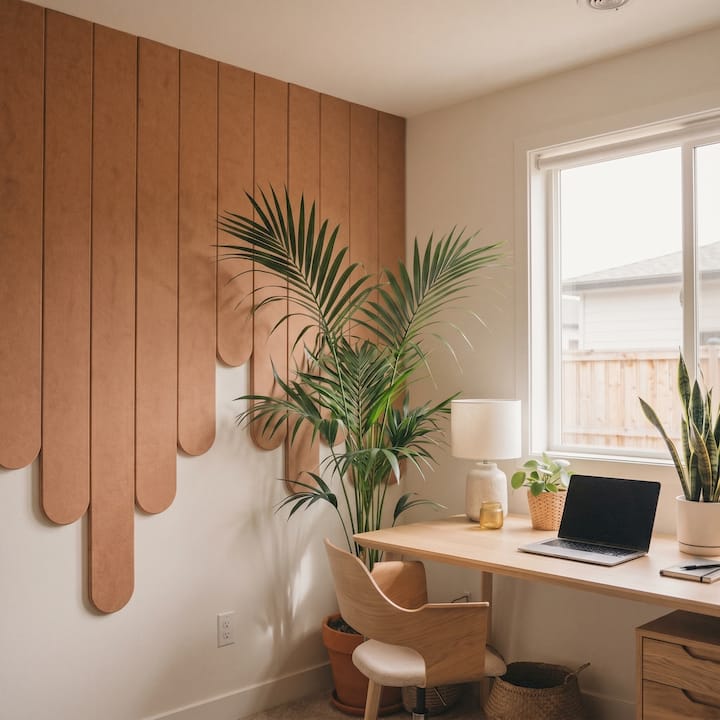
- Floor-to-ceiling creates the strongest furniture-like presence and suits living rooms or entry halls with generous ceiling heights.
- Corridor runner (a horizontal band at dado or picture-rail height) adds rhythm to a narrow passage without making it feel smaller.
Pair the feature wall with a physical object to reinforce the furniture reading: a bench seat pushed against a floor-to-ceiling panel arrangement, a plant stand beside a colour-block column, or a media console below a linear slat runner. The wall and the object form a composition, not just a backdrop.
What does installation actually take, in time and money?
A single panel cluster covering roughly half a wall takes most people one to two hours from unboxing to finished. A full accent wall across a standard 3 m run typically takes an afternoon, including time for layout planning and adhesive setting. A floor-to-ceiling installation with extension packs may take a full day if you are working carefully and allowing adhesive to cure between rows.
Budget bands for renter-friendly panel approaches vary by system type. Modular PET felt kits like DwellForms™ sit within the mid-range, with the advantage of expandability: you buy a core kit and add extension packs as your confidence and budget grow.
The lowest-risk entry point is a sample kit, which lets you test colour, texture, and adhesion on your actual wall before ordering a full installation. Liftedplus credits the sample kit purchase toward a full kit order, so the cost is not lost.
Pro Tip: Order two colourways in your sample kit. Colours read differently under artificial light than in product photography, and the contrast between two options on your actual wall is far more useful than any screen comparison.
How do you make this landlord-friendly?
A careful approach before and during installation protects both your bond and your relationship with the landlord.
- Run a patch test with one adhesive pad in a hidden corner and leave it for 48 hours. Remove it slowly and check for paint lift before proceeding.
- Photograph the wall in full before any panels go up. Date-stamp the images.
- Check your lease for clauses about wall fixings or surface alterations. Most no-drill adhesive systems fall outside standard “no nails or screws” clauses, but confirm with your property manager in writing.
- When in doubt, a simple message works: “I’m planning to use adhesive-mounted, removable wall panels — no drilling, no paint, no permanent changes. Happy to share the product specs if that helps.”
- At removal, work slowly from one corner, pulling the panel back at a low angle rather than straight off the wall. Follow the adhesive manufacturer’s removal guidance precisely.
- If any adhesive residue remains, use the recommended solvent or warm water as specified — never a blade or abrasive pad.
Pro Tip: If your walls have a low-sheen or flat paint finish, the adhesive patch test is non-negotiable. Flat paints are more prone to lifting than semi-gloss or satin finishes, and a test patch costs you nothing.
How do colour and texture make a wall read like furniture?
Colour is not decoration. It is atmosphere, spatial definition, and emotional register all at once. A wall treated with a considered colour and a textured surface stops being background and starts holding the room the way a large piece of furniture would.
- Contrast anchors. A deep, saturated panel colour against a light wall creates a visual boundary that defines the zone around it, the way a dark sofa defines a seating area on a pale floor.
- Tonal layering. Using two or three shades from the same colour family across panel rows adds depth without visual noise. The eye reads it as texture rather than pattern.
- Bold vs calm. Bold palettes (ochre, forest green, burnt sienna) work best on a single feature wall where they can be the room’s focal point. Calm palettes (dusty rose, warm grey, sage) suit installations that wrap a corner or run the full width of a room.
Panel shape and thickness contribute as much as colour. A 24 mm panel with a bevelled or stepped edge casts a shadow line that changes through the day as light moves. That shadow is what gives the wall its sculptural quality. Colour-led interior design treats these shadow lines as part of the composition, not a side effect.
For lighting: a directional spotlight or wall-grazing track light aimed at a 15–30 degree angle to the panel surface will amplify every shadow line and make the texture read three-dimensionally. A dimmable fixture gives you control over how much drama the wall carries at different times of day.
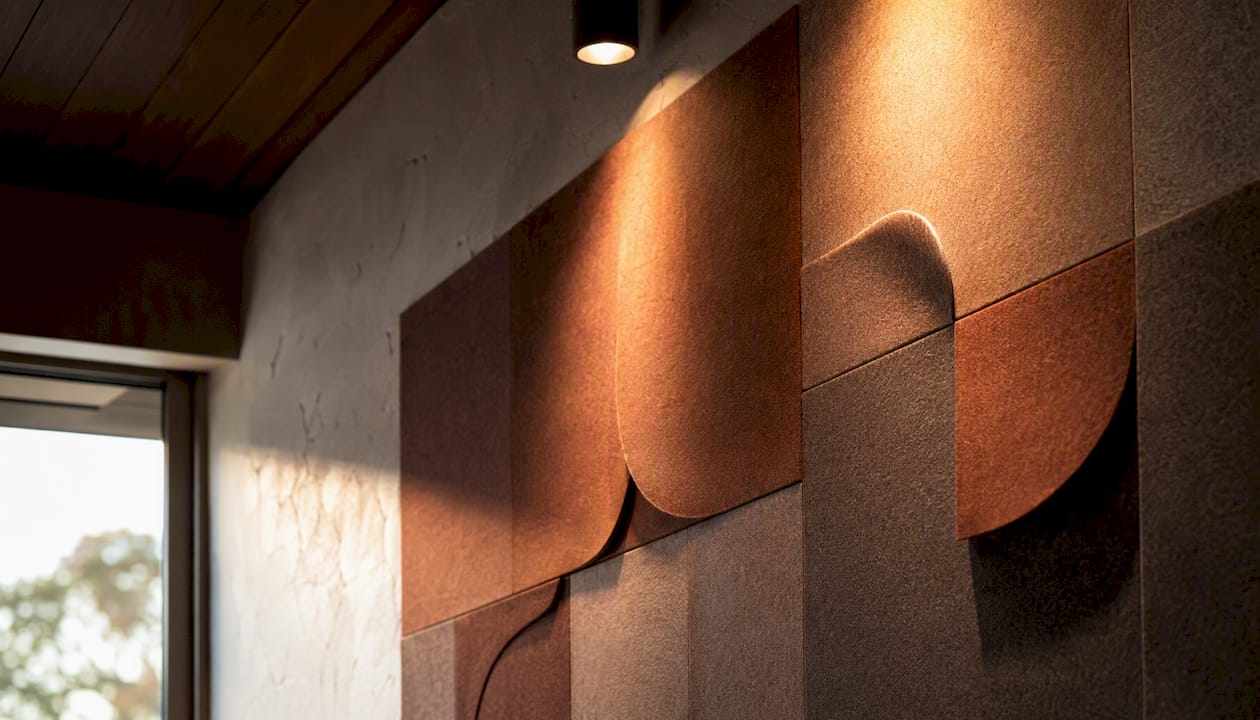
Pro Tip: Fix your lighting position before finalising your panel layout. The angle of the light source determines which edges cast shadows and which disappear, so the two decisions are inseparable.
How do you care for PET felt panels?
PET felt is durable and low-maintenance, but a few habits extend its appearance significantly.
- Light vacuuming with a soft brush attachment every few weeks prevents dust from settling into the felt surface and dulling the colour.
- Spot clean with a damp cloth and mild detergent, working gently in the direction of the felt grain. Avoid saturating the panel.
- Keep panels away from direct steam sources (kettles, humidifiers) and prolonged direct sunlight, which can cause colour shift over time.
- If you are moving home, remove panels carefully, stack them flat with a sheet of paper between each one, and store in a dry, cool space. The adhesive pads can be replaced for reinstallation in the new property.
Lifespan depends on surface conditions, adhesive re-use, and UV exposure. Panels stored correctly between moves retain their colour and form well.
How do you choose the right removable feature-wall kit?
Run through these questions before you order:
- What is your wall surface? Smooth, sealed paint is ideal. Textured or porous surfaces need a patch test first.
- How long is your lease? A short lease favours a smaller, easily removable cluster. A longer lease justifies a full-wall installation.
- What scale do you want? A headboard-height band, a half-wall, or floor-to-ceiling each creates a different visual weight.
- Is acoustic softening a bonus or a priority? PET felt panels add some acoustic absorption as a secondary benefit, but this guide focuses on their design impact.
- What is your budget? Start with a sample or core kit and expand with extension packs rather than committing to a full wall immediately.
Match panel thickness to the sculptural depth you want: 9 mm for a subtle, graphic effect; 18–24 mm for pronounced shadow lines and a furniture-like silhouette. Choose your anchor colour first, then decide whether the installation is the room’s focal point (bold) or its backdrop (tonal).
Why trust this guide?
This guide draws on Liftedplus’s interior design practice, DwellForms™ product documentation, and published renter-focused installation guidance. DwellForms™ panels are made from 100% recycled PET, mount with tested adhesive pads, and are designed specifically for no-drill, removable feature-wall installations. The advice here covers typical residential scenarios; for unusual wall surfaces, heritage properties, or commercial spaces, consult the DwellForms™ product pages or contact Liftedplus customer support directly. Nothing in this guide substitutes for professional trades advice where structural or electrical work is involved.
A designer’s note on colour and texture in small spaces
The safest choice in a rental is always a neutral wall. And that safety is exactly what makes so many rented homes feel like waiting rooms rather than lived-in spaces. Colour creates perceived spatial definition: a deep-toned feature wall behind a bed makes the room feel more resolved, not smaller. Texture adds warmth that no amount of cushions or rugs can fully replicate on its own.
The practical move is to start with one panel cluster, live with it for a week, and notice what it does to the room’s atmosphere at different times of day. That single step builds more colour confidence than any mood board. DwellForms™ is designed precisely for this kind of iterative approach: a core kit that you can extend, rearrange, or take with you, rather than a commitment you have to paint over when you leave.
DwellForms™ gives you colour without commitment
Plain rental walls don’t have to stay plain. DwellForms™ by Lifted+ is a modular, no-drill wall system made from 100% recycled PET felt, designed to create sculptural, colour-led feature walls that install with adhesive pads and remove cleanly when you move. Core kits start small and expand with extension packs as your space and confidence grow.
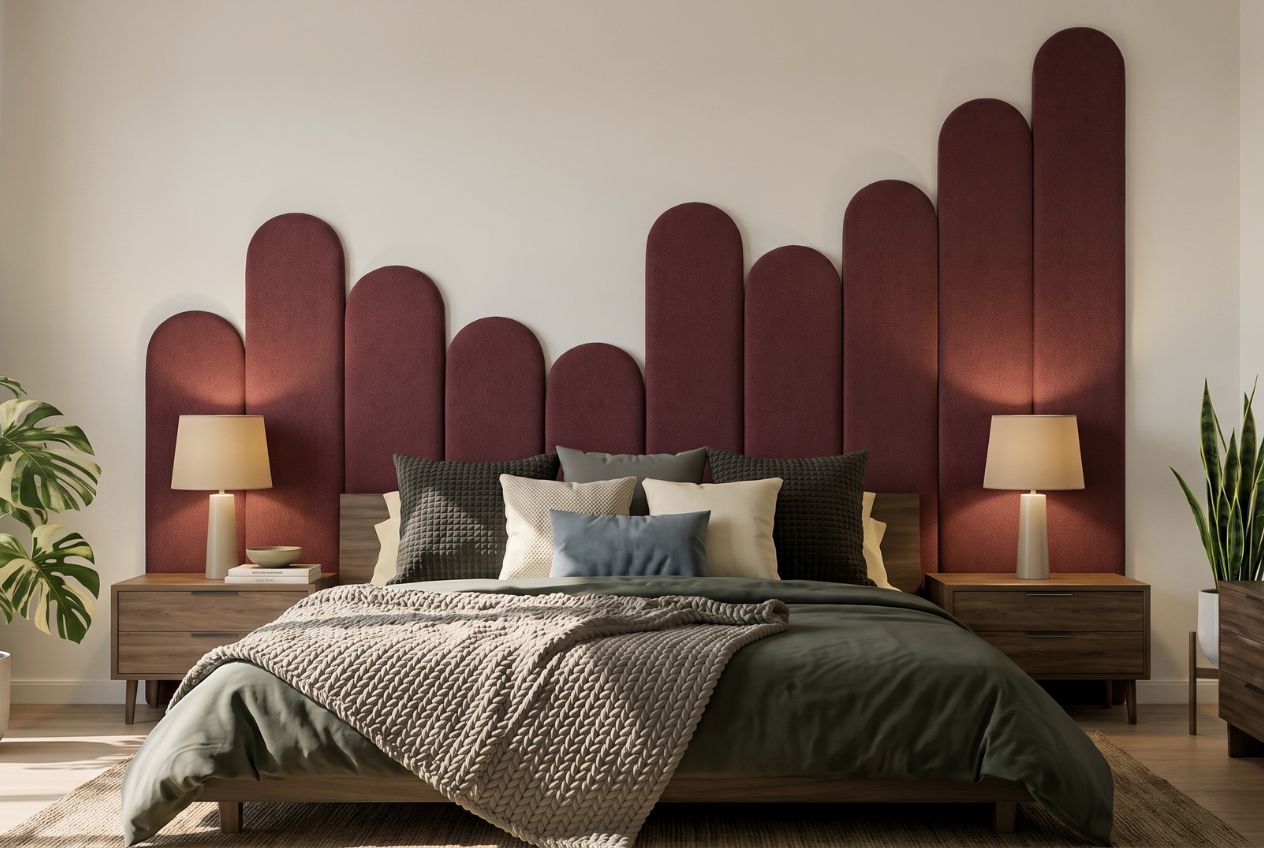
Not sure which colour or kit size suits your wall? Order a sample kit first. Liftedplus credits the sample purchase toward your full kit order, so you test the colour on your actual wall before committing. Browse the DwellForms™ core kits and find the arrangement that fits your space.
Sources
Sources for this guide include material supplier documentation, renter-focused installation guides, and Liftedplus product pages. The links below cover buying, materials, sustainability credentials, and practical installation guidance.
- No-Drill Wall Decor Ideas for Renters (2026)
- Wall Panels for Rental Apartments: Making a Small Space Feel Like Home
FAQ
What makes a feature wall look like furniture?
Scale, form, and a deliberate colour story. A panel arrangement that runs floor-to-ceiling or spans the full width of a wall carries the same visual weight as a large piece of furniture, anchoring the room rather than decorating it.
Are PET felt panels safe for rental walls?
PET felt panels mounted with tested adhesive pads are designed for renter-friendly installation. Always run a patch test on your specific wall surface first, as results can vary with flat or textured paint finishes.
How long does a modular feature wall take to install?
A single panel cluster takes one to two hours. A full accent wall across a 3 m run typically takes an afternoon, including layout planning and adhesive setting time.
Can I take DwellForms™ panels to my next rental?
Yes. Panels can be removed carefully, stored flat with paper between each one, and reinstalled in a new property using fresh adhesive pads, making them a genuinely portable design investment.
What is the most renter-friendly panel system available?
DwellForms™ by Lifted+ is designed specifically for renters: no-drill adhesive mounting, modular expansion, 100% recycled PET felt, and clean removal without permanent wall changes.