
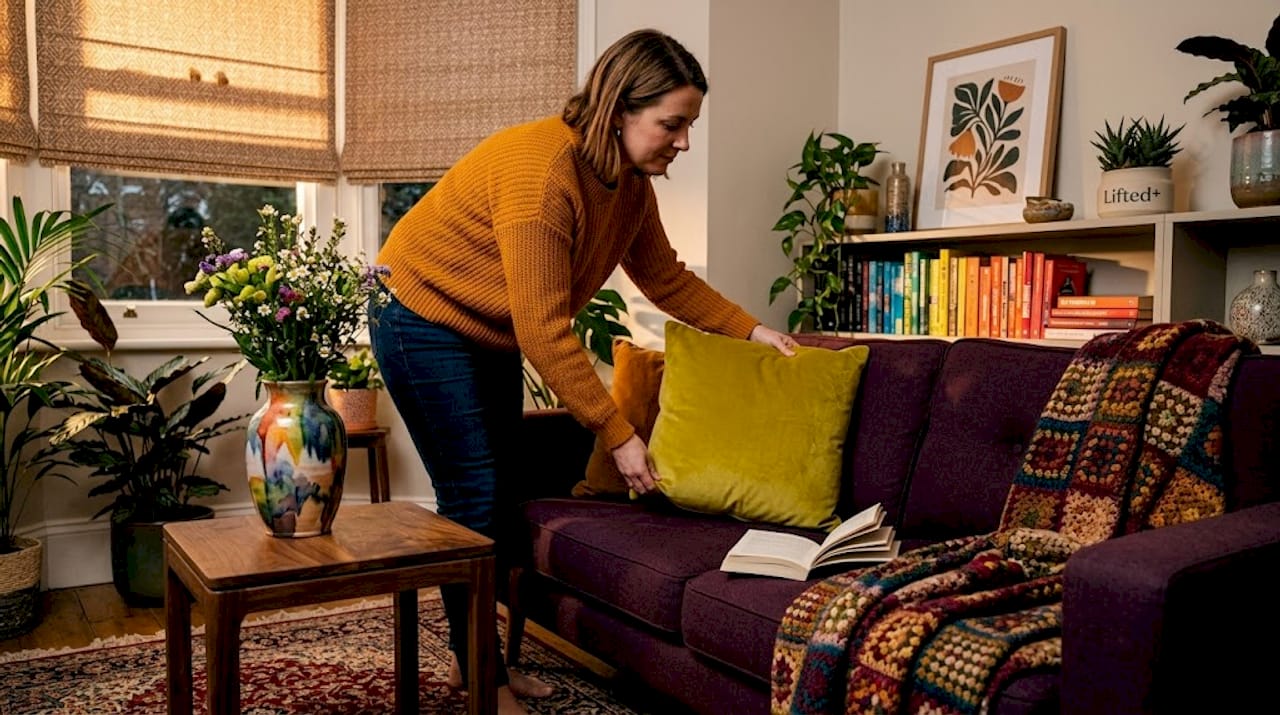
TL;DR:
- Quality in home décor reveals itself through durability, repairability, cleanability, and functional design over time.
- Investing in key pieces like sofas and tables ensures long-term stability, while trend accents can be rotated easily.
- In New Zealand, handcrafted details and robust materials suit the climate, enhancing both aesthetic and function.
There is a particular frustration familiar to many homeowners: you style a room with care, fill it with pieces that look sharp at the time of purchase, and then twelve months later the whole thing feels tired, a little hollow, somehow less than what you imagined. The cushions have pilled. The joinery has loosened. The finish has lifted at the edges. It is not that your taste has changed. It is that the décor itself has quietly given up. Understanding what genuine quality means in home décor is the single most powerful shift you can make, and this guide will show you exactly how to see it, seek it out, and use it to build interiors that hold their presence long after the first impression fades.
Table of Contents
- What does quality mean in home décor?
- Spotting quality: what to look for when shopping
- The investment mindset: splurge, save, or mix?
- How quality shapes modern interiors in New Zealand
- The uncomfortable truth about quality in home décor
- Elevate your home with quality statement pieces
- Frequently asked questions
Key Takeaways
| Point | Details |
|---|---|
| Quality goes beyond style | Durability and craftsmanship are just as important as looks for lasting décor. |
| Invest in anchor pieces | Focus your budget on foundational items like sofas and beds for the best long-term value. |
| Mix, don’t splurge everywhere | Balance premium investments by pairing with trend-led or affordable accents. |
| Spot details before you buy | Check seams, joints, and materials to verify real quality in any décor item. |
| Curate over time | Build your interior’s style gradually, allowing flexibility and personal expression. |
What does quality mean in home décor?
Quality is one of those words that gets used so freely it starts to lose shape. In the context of home décor, it tends to get conflated with expense, or with a certain kind of aesthetic polish that photographs well. But those things are not the same as quality. Not even close.
Real quality in a décor piece reveals itself over time. As durability and construction details shape what stays looking good after years of daily life, the visual surface becomes the least reliable measure of value. A beautifully upholstered chair that loses its structure after two years of use is not a quality piece. A sculptural ceramic lamp with an unglazed base that chips at the first knock is not quality. Quality is what remains when the novelty has worn off.
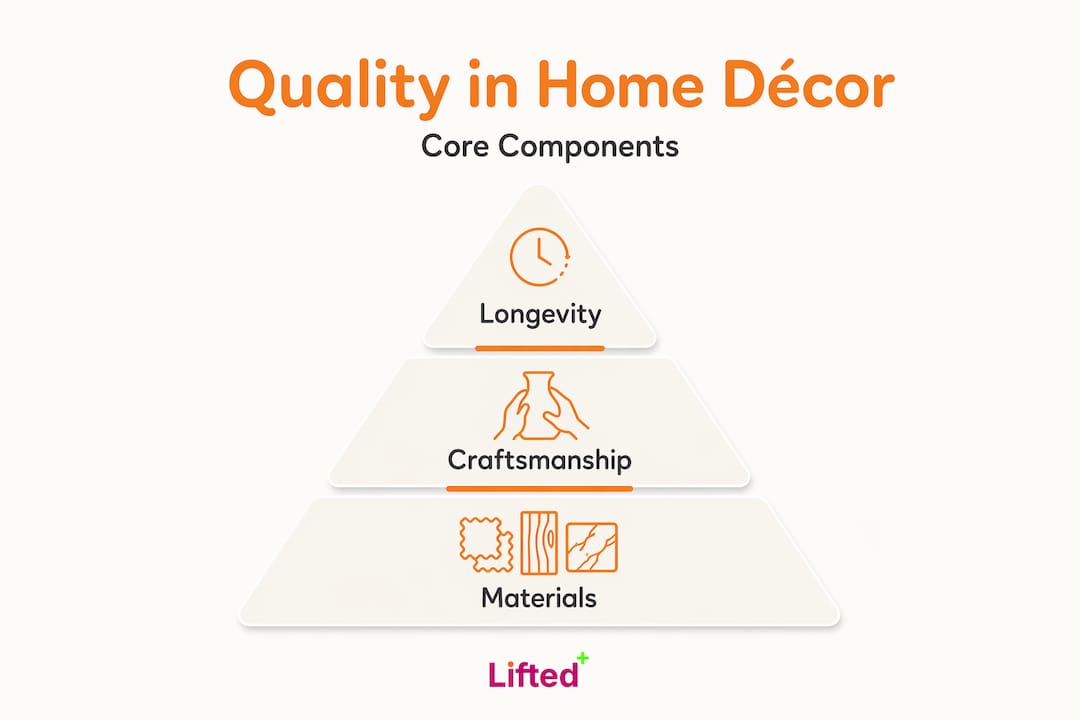
When we talk about quality in practical terms, we are really talking about four interconnected characteristics. Durability means the piece resists wear, environmental changes, and stress without deteriorating quickly. Repairability means that if something does go wrong, it can be fixed rather than binned. Cleanability means the materials and finishes stand up to real life, including spills, dust, and UV exposure. And functional design means the piece works as well as it looks, with joinery that holds, hardware that operates smoothly, and forms that serve their purpose without compromise.
“Quality often shows in what stays strong after years, not just at the moment of purchase.” When you start looking at décor through this lens, your entire approach to personalising your space shifts from reactive to intentional.
Craftsmanship details are where quality becomes visible to a trained eye. Look at how a fabric is stitched at its seams. Check whether the legs of a side table are joined with mortise and tenon construction or simply glued. Run your hand across the surface of a glazed vessel and feel whether the finish is even and dense. The furniture comfort and style of any piece starts with how well it is made, and that is always visible in the finer details, if you know where to look.
Now that you know quality is not just a buzzword, let us break down its core components in practical shopping terms.
Spotting quality: what to look for when shopping
Whether you are standing in a showroom or scrolling through a curated online catalogue, the checklist for evaluating quality remains consistent. The difference is that in person you can touch and test, while online you need to read more carefully and ask more questions.
Here is a methodical approach to evaluating any significant décor piece before committing:
- Inspect the seams and joints. On upholstered furniture, look for even stitching with no puckering or thread pulls. On timber pieces, check that joints are flush, without gaps or wobble.
- Test stability. Sit in chairs, press gently on the surface of a console. Any rocking or flex in the frame signals weak construction.
- Examine the hardware. Drawer handles, hinges, and legs should feel solid, not hollow. Press-fit hardware loosens over time; properly attached hardware does not.
- Check the material finish. Run a finger along painted or lacquered surfaces. Bubbling, unevenness, or a gritty texture beneath the topcoat suggests rushed finishing.
- Ask about after-sales support. Brands that stand behind their construction will offer warranties or repair guidance. Brands that do not, often know exactly why.
Manufacturing quality control is treated as a systematic process across every stage of production, not just a final visual check, and that rigour is what separates pieces that endure from those that merely impress at first glance.
Pro Tip: When shopping online, search for reviews specifically mentioning durability or use after six months or more. First impressions are easy to fake in photography. Long-term satisfaction is much harder to manufacture.
For upholstered pieces, the choice of fabric matters as much as the frame. Learning how to choose upholstery fabrics is genuinely useful knowledge. Look for tight weave counts, double-rub ratings above 25,000 for high-traffic use, and fabric treated for stain resistance without compromising texture.
| Feature | Lower quality | Higher quality |
|---|---|---|
| Joints | Glued or stapled | Mortise and tenon or dovetail |
| Upholstery seams | Uneven, machine overlock only | Even, reinforced, hand-finished |
| Hardware | Hollow, press-fit | Solid, screwed, or recessed |
| Surface finish | Uneven, gritty, or thin | Dense, even, and consistent |
| After-sales support | No warranty or unclear policy | Clear warranty and repair guidance |
Those crafting bold interiors will know that quality and visual daring are not in tension. In fact, the most confident interiors rely on well-made pieces to carry their statement without apology, and this aligns with broader styling trends in NZ that increasingly favour form with longevity.
The investment mindset: splurge, save, or mix?
Knowing how to judge quality is only half the story. Here is how to make smart choices about where to invest and where to be savvy.
The 80/20 principle applies directly here. Investing in anchor pieces with quality construction, rather than spreading budget thinly across every item in a room, prevents the whole space from feeling unsettled or short-lived. Your sofa, your dining table, your bed frame. These are the structural elements of your interior narrative. They need to hold the room, quietly and confidently, year after year.
Trend-driven accents are where your flexibility lives. Cushions, decorative bowls, vases, and prints can rotate with the seasons without the sky falling. A beautifully made sofa in a grounded, classic silhouette will absorb a changing cushion palette effortlessly. A cheap sofa with a tired frame will resist every attempt to dress it up.
Consider cost-per-year rather than upfront price. A $2,000 sofa that lasts fifteen years costs roughly $133 per year. A $700 sofa that degrades in four years costs $175 per year and likely delivers a worse experience throughout. Spending more on frequently used pieces like sofas, because cheaper options tend to be less comfortable and less durable, is consistently the advice that holds up across real-world use.
| Piece type | Recommended approach | Reason |
|---|---|---|
| Sofa or lounge chair | Splurge | Daily use, structural centrepiece |
| Dining table | Splurge | High impact, multi-functional |
| Bed frame | Splurge | Long-term comfort and visual anchor |
| Cushions and throws | Save | Easy to rotate, trend-driven |
| Decorative accents | Save | Low structural demand, changeable |
| Art and wall pieces | Mix | Style impact high, no wear factor |
Understanding the essential types of home furniture helps clarify which categories carry the most weight structurally and aesthetically, and therefore where quality investment pays dividends most reliably.
Avoid the trap of upgrading everything at once. Rooms that feel authentically curated rarely happened in a single shopping session. They were built deliberately, piece by piece, each addition considered against what was already there. Explore top décor styles and use them as a direction, not a prescription. A practical guide for vibrant NZ homes can help you layer quality thoughtfully rather than all at once.
How quality shapes modern interiors in New Zealand
Let us ground these ideas in what works right here in New Zealand homes and interiors.
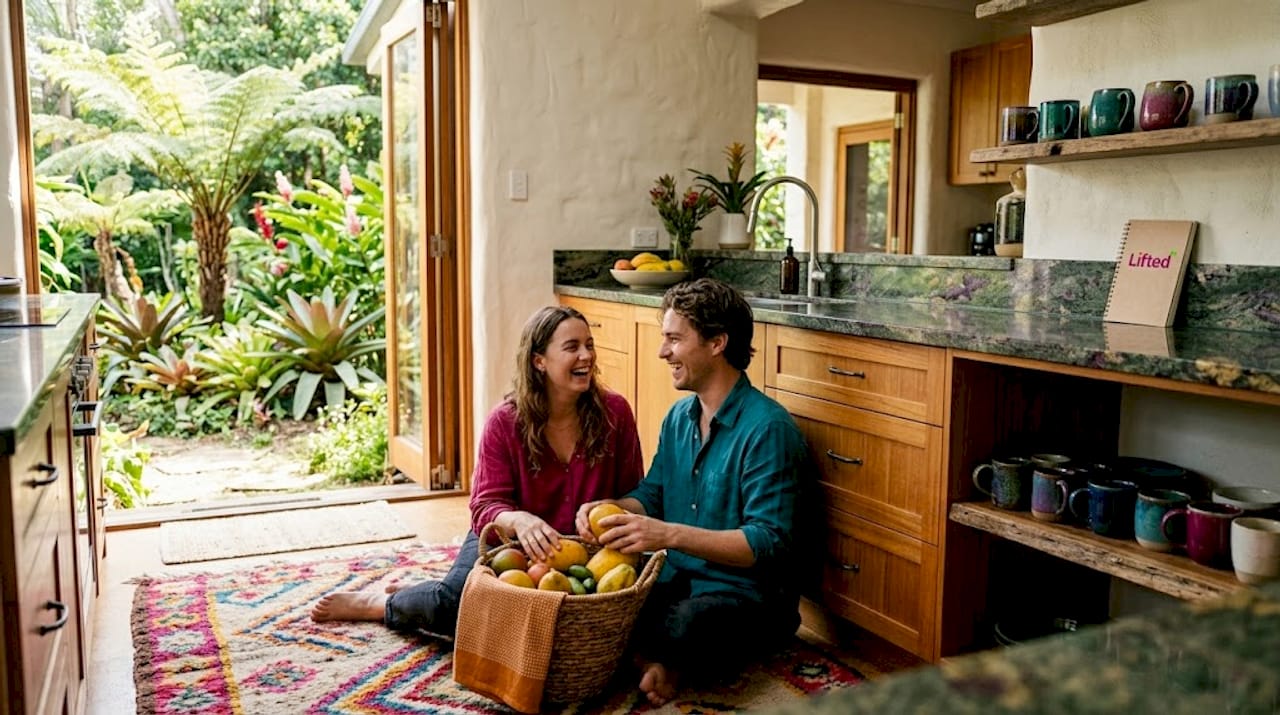
Kiwi interiors have developed a particular sensibility over the past decade. There is a preference for honest materials, forms with presence, and colour used with intention rather than as decoration for its own sake. This is a design culture that rewards quality, because it tends to resist clutter and overstatement. A room with fewer, better pieces carries more weight than one filled with items competing for attention.
High-quality key pieces anchor a room in a way that gives everything else permission to breathe. A sculptural timber credenza with clean joinery sets a standard that lifts the objects placed around it. A well-cast ceramic lamp with a considered silhouette brings shape to a corner without effort. These are not accidents. Craftsmanship details like hardware, stable joints, and reinforced stitching determine whether a piece stays structurally and visually right after years of living with it, not just what it looks like on the day it arrives.
When looking for quality in locally available décor, pay attention to these craftsmanship cues:
- Even surface finishing on ceramics, with consistent glaze depth and no hairline firing cracks
- Timber furniture with tight grain, properly sealed edges, and joints that do not flex
- Textiles with tight weave counts and colourways that remain true after washing
- Metal elements with brushed or powder-coated finishes that resist humidity and coastal air
- Weight as a proxy for density; quality materials tend to have substance you can feel
New Zealand’s climate adds practical dimensions to the quality conversation. Coastal humidity, strong UV exposure, and temperature variation between seasons all demand materials that hold up rather than warp, fade, or crumble. Quality is not just an aesthetic choice here. It is a functional one.
Pro Tip: Investing in one or two quality anchor pieces now gives you a stable foundation to evolve your look over time with seasonal accents, without the disruption of replacing structural items every few years. Explore fresh modern décor ideas to see how well-made pieces carry a changing palette. For a deeper perspective on building interiors that endure, the guide to timeless vibrant interiors is worth your time.
Personal style and quality are not separate conversations. The most individual interiors we encounter are built on a foundation of pieces that have been genuinely cared for and thoughtfully chosen.
The uncomfortable truth about quality in home décor
Here is a perspective that does not always make it into the standard buying guides.
The quality mindset, taken too far, becomes its own kind of trap. There is a version of quality obsession that leads homeowners to hold back from personalising their space at all, waiting until they can afford the perfect piece, or buying everything premium at once and then discovering the room feels stiff, museum-like, and oddly impersonal. A home where nothing is allowed to be ordinary can end up feeling like it belongs to no one in particular.
Quality as a budget trap is real when you try to upgrade everything at once. The better approach is to prioritise key pieces and allow genuine flexibility in trend-led accents. This is not a compromise. It is a design strategy.
Rooms feel alive when they show evidence of a life being lived. An inherited side table that is slightly worn at the edges. A printed textile brought back from somewhere meaningful. A lamp chosen impulsively because the colour was exactly right. These things have presence precisely because they were chosen with feeling, not because they met a specification. Quality anchor pieces hold the room together, but it is the less precious, more personal accents that give it warmth.
The Kiwi approach to interiors at its best is not maximalist or rigidly curated. It tends toward authenticity. Build on quality where it matters, stay flexible where it does not, and revisit bold colour trends as a source of seasonal energy rather than a reason to overhaul. Gradual, confident layering is how rooms become genuinely yours, and that process takes time.
Elevate your home with quality statement pieces
If this guide has shifted how you think about quality in home décor, the next step is finding pieces that actually embody these principles: well-constructed, visually considered, and built to hold their presence over time.

At Lifted+, every piece in our curated collections is chosen with exactly these criteria in mind. From sculptural modern wall art that anchors a room without effort, to colourful furniture built with genuine craft behind the colour, we bring together form and longevity in equal measure. If you are ready to start building or refining your space with pieces that will still feel right in five years, shop our modern home décor collection and let quality lead the way.
Frequently asked questions
How can I recognise real quality when buying décor online?
Check for multiple high-resolution images, zoom features showing seams and joints, reviews that mention durability over time, and clear brand transparency about materials and construction. Durability and construction details are the most reliable indicators of long-term quality and are worth seeking out before purchasing.
Is spending more always better for home décor quality?
Spending more often buys better materials and durability, but smart mixing of high and low-cost items gives you flexibility and ongoing value. Spending more on frequently used pieces makes the most practical sense, while trend-driven accents can be sourced at lower price points without compromising the overall quality of the room.
What is the most important room to prioritise for quality?
Invest most in high-use areas like the living room and main bedroom, where anchor pieces affect daily comfort and long-term visual presence. Investing in foundational anchor pieces over trend-driven accents prevents rooms from feeling dated or unsettled as time passes.
Does the Kiwi climate affect what quality means in home décor?
Yes. Moisture, UV exposure, and temperature variation in New Zealand make durability, cleanable surfaces, and robust materials especially important when selecting décor. Pieces that suit the local climate hold their form and finish far longer than those chosen purely for visual appeal.
How often should I update my home décor if I invest in quality items?
Quality anchor pieces can last many years, so refresh your look with seasonal, trend-driven accents rather than frequent large-scale updates. As quality-focused buying guides consistently note, allowing flexibility in accent pieces while keeping core items stable is the most sustainable and stylistically satisfying approach.