
TL;DR:
- Limited edition pieces enhance interior spaces by providing exclusive, handcrafted objects that create a genuine sense of presence and reflection of personality. Scarcity, craftsmanship, and authenticity increase their long-term value and deepen emotional connection, especially within minimalist designs. Careful planning, verification, and restraint are essential for integrating these unique works effectively into your home environment.
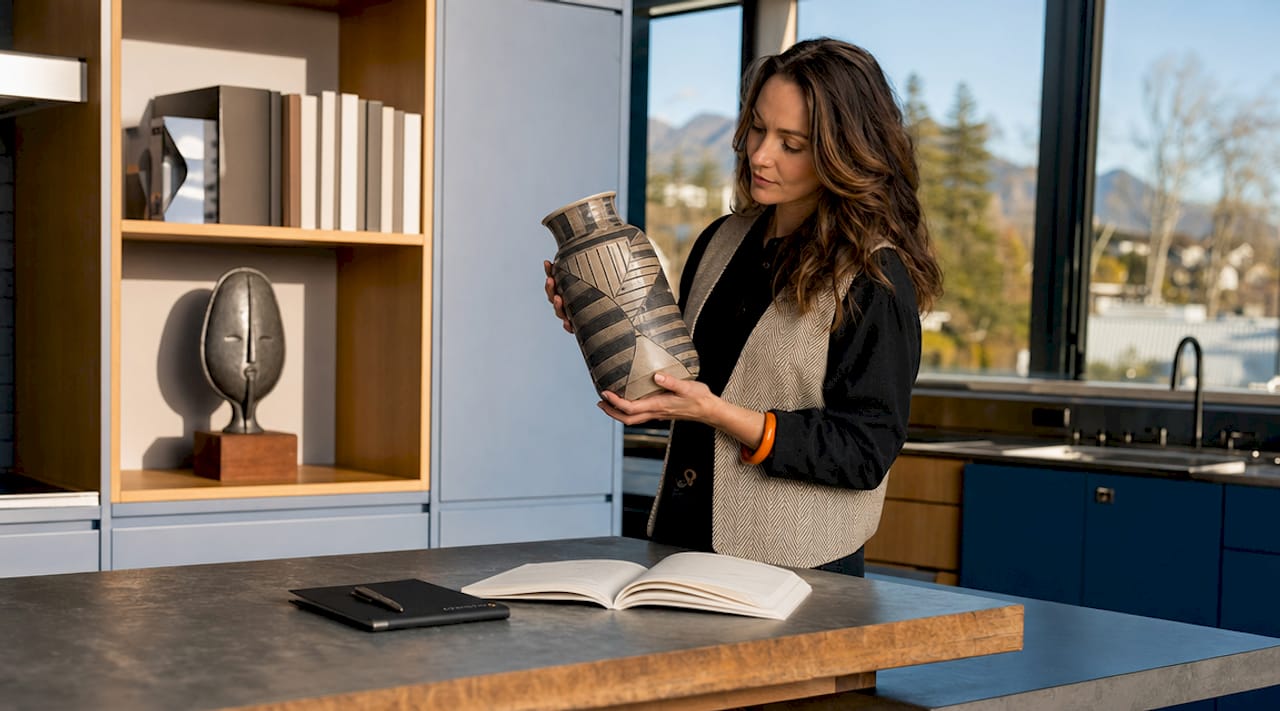
Limited edition pieces are defined as works produced in a deliberately restricted quantity, and their role in interiors is to introduce a quality of presence that mass-produced objects simply cannot replicate. Where a catalogue item fills a room, a limited edition holds it. The distinction matters because the role of limited editions in interiors extends well beyond aesthetics: it shapes atmosphere, signals intention, and creates a living environment that reflects genuine personality. For homeowners who want their spaces to say something true about who they are, understanding this role is the starting point.
How scarcity and craftsmanship define limited edition pieces
Scarcity is not a marketing device in the context of limited edition interior decor. It is a structural quality that changes how an object is made, perceived, and valued. Smaller edition sizes amplify exclusivity and collector demand in ways that larger runs simply cannot, because the relationship between maker and object remains intimate throughout production. When a studio produces 50 pendant lights rather than 5,000, every decision about material, finish, and proportion carries more weight.

Provenance and certification are the formal expression of that intimacy. A signed edition with documented provenance is not just a piece of paper. It is the chain of evidence that validates the object’s story and, by extension, its value in your home. The Louis Poulsen PH 1/1 Chandelier Centenary Edition is a precise example: a single, signed piece produced to mark a century of design history, where documentation is as much a part of the object as the brass and glass.
Handcrafting techniques further separate limited editions from their mass-produced counterparts. Collectible design integrates authenticity and lasting beauty into interior projects in ways that mass consumerism cannot offer, because the fingerprints of the maker are literally present in the work. Material imperfections, slight tonal variations, and the evidence of human process are not flaws. They are the proof of authorship.
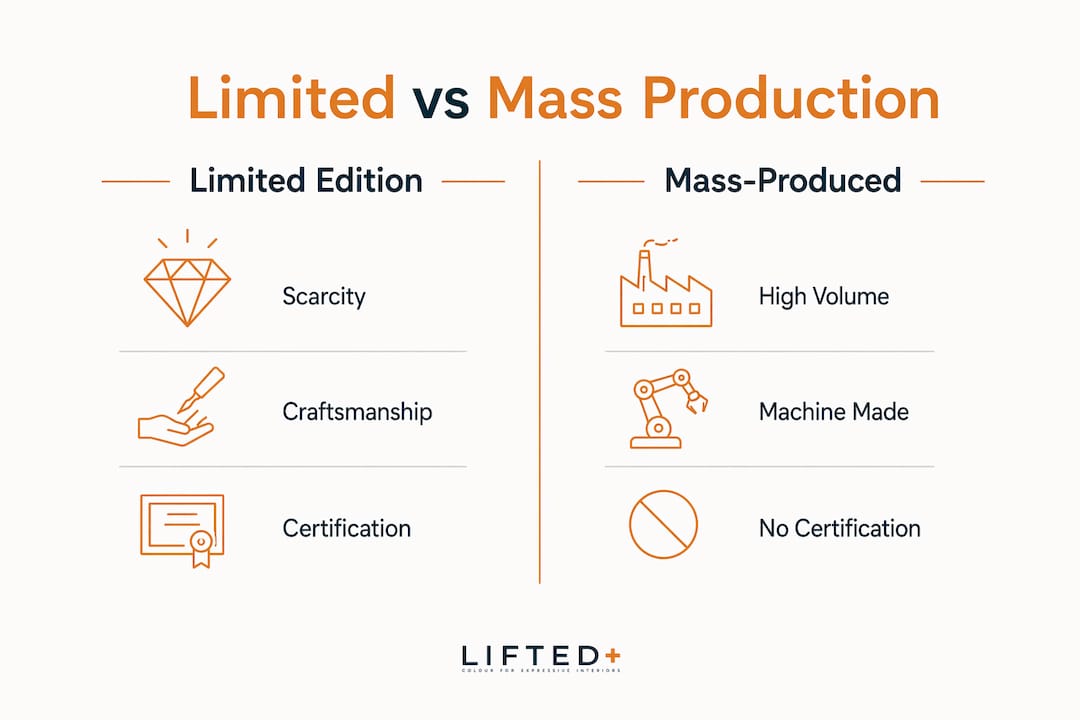
| Quality | Limited edition | Mass-produced |
|---|---|---|
| Production volume | Restricted, often under 500 | Unlimited or very high |
| Craftsmanship | Handmade or studio-finished | Factory standardised |
| Provenance | Signed, certified, documented | No individual documentation |
| Interior impact | Singular presence, holds the room | Fills space without anchoring it |
| Long-term value | Appreciates with artist reputation | Depreciates with trend cycles |
Pro Tip: When purchasing a limited edition piece, always request the certificate of authenticity and edition number before committing. An edition numbered 3/50 carries a different weight in a room than one numbered 48/50, and that distinction matters to future value as much as it does to your own sense of ownership.
Why limited editions suit modern and minimalist interiors
Modern interiors are built on restraint. The design philosophy that shapes contemporary New Zealand homes favours fewer, better-chosen objects over accumulation, and this is precisely where limited edition pieces find their most natural home. Limited editions support mood, balance, calm, and permanence, reflecting the same principles that guide minimalist spatial thinking. One considered piece does more for a room than a shelf of decorative objects that cancel each other out.
The relationship between a limited edition work and natural light is worth understanding specifically. A sculptural ceramic in a matte, grounded colour will shift through the day as light moves across it, creating a quiet animation that a printed reproduction cannot offer. This interplay between form and light is one of the reasons limited edition pieces feel alive in a space rather than merely present.
What makes a limited edition work well in a restrained interior?
- Quiet authority. The piece does not compete for attention. It earns it through form, material, and the knowledge that it exists in very few other rooms in the world.
- Material honesty. Stone, hand-thrown ceramic, cast bronze, and hand-pulled print all carry the evidence of their making. This aligns with the contemporary preference for surfaces that tell the truth about what they are.
- Spatial balance. A single limited edition work on a bare wall creates a focal point without crowding the sightline. It pulls a space out of the safe, polite middle.
- Permanence over trend. Limited editions are not seasonal. They are chosen for their lasting presence, which means they age with a room rather than dating it.
For homeowners working with limited edition wall art in a minimalist context, the guiding principle is simple: one piece that genuinely moves you will always outperform three pieces chosen to fill space.
Limited editions versus open editions: value and emotional impact
The comparison between limited and open editions is not simply about price. It is about the relationship between scarcity, authorial intent, and the emotional weight an object carries in a room over time. Collectors prioritise artistic relevance, scarcity, and authenticity over mere rarity, which means the value of a limited edition is built from multiple converging factors rather than a single number on a certificate.
Open editions have their place. A well-designed open edition print can be beautiful and affordable, and there is no shame in that. But the honest difference is this: an open edition can always be replaced, reprinted, or restocked. A limited edition, once sold out, is gone. That finality changes how you relate to the object. You chose it knowing others could not, and that choice becomes part of the room’s story.
| Factor | Limited edition | Open edition |
|---|---|---|
| Scarcity | Fixed, finite run | Unlimited reprinting possible |
| Emotional connection | Deepened by exclusivity and authorship | Present but less anchored |
| Market value over time | Grows with artist reputation | Typically static or declining |
| Interior presence | Singular, holds its position | Interchangeable with similar works |
The rise of collectible design reflects a broader cultural shift away from mass consumption toward authorial, craft-focused pieces with lasting aesthetic and cultural value. This shift is visible in how homeowners now approach interior styling: with more patience, more intention, and a willingness to wait for the right piece rather than filling a wall quickly. Limited editions drive demand through meaningful, shareable experiences tied to scarcity and unique stories, and those same properties translate directly into the emotional life of a home.
Pro Tip: Before comparing prices between a limited and open edition, ask yourself which one you would still want in the room in fifteen years. The answer usually clarifies the decision immediately.
Practical steps for integrating limited editions into your home
Bringing a limited edition piece into your home requires more planning than a standard purchase, and that planning is part of what makes the result feel considered rather than accidental.
-
Manage lead times from the outset. Many limited editions are made-to-order with handcrafting in studios, which means delivery timelines can extend to several months. Build this into your project schedule rather than treating it as a surprise.
-
Verify authenticity before purchase. Request the edition number, artist signature, and certificate of authenticity as standard. For higher-value pieces, cross-reference with the gallery or studio directly. A reputable guide on buying limited edition prints will always emphasise documentation as the first line of due diligence.
-
Plan installation with the same care as the purchase. Proper mounting hardware and lighting are necessary for presenting bespoke limited edition pieces correctly, and professional installation protects both the object and the wall. A sculptural pendant or a large-format framed print deserves the same attention to fixing and positioning as the piece itself received in its making.
-
Consider the existing colour palette and spatial hierarchy. A limited edition piece works best when it anchors a room rather than competing with it. Identify the wall or surface that already draws the eye, and place the piece there. Grounded, autumnal colour palettes tend to hold their presence across seasons without clashing with changing furnishings.
-
Curate rather than accumulate. The impact of limited edition interior decor is diluted when too many pieces compete in the same space. One or two genuinely significant works will always read more powerfully than a gallery wall of lesser pieces. Restraint is not a compromise. It is the point.
For homeowners exploring collector art drops as a starting point, the advice is consistent: begin with one piece you cannot stop thinking about, and let the room grow around it.
Key takeaways
The role of limited editions in interiors is defined by scarcity, craftsmanship, and authorial intent working together to create objects that hold genuine presence and lasting value in a space.
| Point | Details |
|---|---|
| Scarcity creates real value | Smaller edition sizes and signed provenance directly increase both aesthetic and market value. |
| Craftsmanship distinguishes the object | Handmade production leaves material evidence of authorship that mass-produced pieces cannot replicate. |
| Minimalist spaces benefit most | Restrained interiors are amplified by one considered limited edition piece rather than multiple open editions. |
| Emotional connection deepens over time | The finality of a limited run changes how you relate to a piece, making it part of the room’s story. |
| Planning protects your investment | Lead times, authentication, and professional installation are non-negotiable steps for limited edition purchases. |
What I have learned from living with limited editions
By Michelle
I have watched homeowners make the same mistake repeatedly: they find a limited edition piece they love, hesitate because of the price, and then spend twice as much filling the gap with open edition alternatives that never quite satisfy. The limited edition was not the expensive choice. It was the efficient one.
What surprises people most about living with a limited edition piece is how the relationship with it changes. In the first weeks, you notice it consciously. After a year, it becomes part of how the room feels, part of the atmosphere you return to. That is not something you can manufacture with a mass-produced object, no matter how well designed it is.
The human interaction with a space that collectible design offers moves beyond production to emphasise craftsmanship, story, and authentic presence. I think that is the most honest description of what a limited edition does to a room. It gives the space a memory.
The challenge, of course, is patience. Waiting months for a made-to-order piece tests your commitment. But that waiting period is also useful. If you still want the piece as much at delivery as you did at purchase, you made the right call. If the feeling has faded, the waiting saved you from a decision you would have regretted.
My honest advice: treat one limited edition piece as a commitment to your space rather than a decoration for it. The difference in how the room feels will tell you everything.
— Michelle
Bring your space to life with Liftedplus
Liftedplus curates vibrant, colour-led limited edition decor designed specifically for modern New Zealand interiors. From sculptural lighting to hand-selected wall art, every piece in the collection is chosen for its form, presence, and ability to hold a room with quiet authority. If you are ready to move beyond filling space and start shaping it, explore how exclusive decor personalises your home for mood and lasting style. For art lovers seeking something genuinely singular, the vibrant decor ideas for NZ homes guide is the place to start.
FAQ
What is the role of limited editions in interiors?
The role of limited editions in interiors is to introduce exclusive, craft-focused pieces that shape atmosphere, anchor spatial hierarchy, and reflect the homeowner’s individual taste in ways that mass-produced decor cannot achieve.
How do limited editions affect the long-term value of a home interior?
Limited editions connected to recognised artists and produced in small runs tend to hold or grow in value over time, while open editions typically remain static or decline as trends shift.
How do I verify the authenticity of a limited edition piece?
Request the edition number, artist signature, and certificate of authenticity directly from the gallery or studio. Cross-referencing with the original maker is the most reliable method of confirming provenance.
Are limited editions suitable for minimalist interiors?
Limited editions are particularly well suited to minimalist interiors because their quiet authority and material honesty complement restrained spaces without overcrowding them. One considered piece creates a focal point that multiple open editions rarely achieve.
How should I plan for the lead times of made-to-order limited editions?
Many limited edition pieces are handcrafted in studios and made to order, so lead times of several months are common. Build this timeline into your interior project schedule from the outset to avoid delays.
Recommended
- How To Decorate With Limited Edition Art – Lifted+ | More Colour. More Mood. More Life.
- Limited Edition Art Drops For Home Collectors – Lifted+ | More Colour. More Mood. More Life.
- How To Buy Limited Edition Art Prints NZ – Lifted+ | More Colour. More Mood. More Life.
- Collector Art Drops Vs Open Editions – Lifted+ | More Colour. More Mood. More Life.