
TL;DR:
- Curated decor involves intentionally selecting and arranging meaningful objects to create a personal, balanced living space. It emphasizes layering, contrast, and patience, focusing on storytelling rather than trend-chasing, with lighting and negative space shaping the environment. Building a curated home is a gradual process that requires regular editing and deliberate choices to reflect authentic personality.
Curated decor is defined as the purposeful selection and thoughtful arrangement of home pieces to create a balanced, personal, and meaningful living environment. Unlike random decoration or trend-chasing, curated home decor prioritises intention over impulse. Every object earns its place by contributing to a larger narrative, whether that is a sculptural ceramic on a shelf, a vintage lamp beside a modern sofa, or a single piece of wall art that holds the entire room together. The result is a space that feels genuinely yours rather than assembled from a showroom catalogue.
What is curated decor and how does it differ from styled spaces?
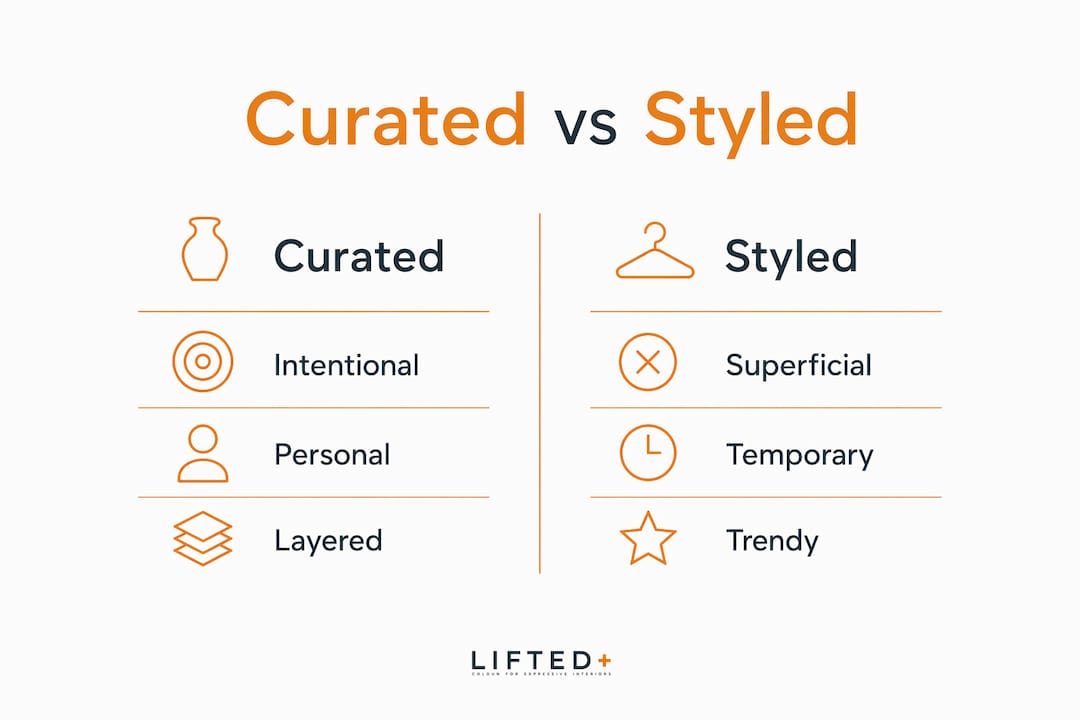
Curated decor and styled decor are not the same thing, and understanding the distinction changes how you approach your home entirely. Styling is often trend-driven, assembled for visual effect in a moment. Curation is slower, more deliberate, and deeply personal. A styled room might photograph beautifully but feel hollow to live in. A curated room carries weight because every piece has been chosen with reason.
Intentional storytelling through layering textures, colours, and personally meaningful objects is what transforms a decorated room into a curated space. This means a curated home is not defined by a particular aesthetic or price point. It is defined by selectivity and narrative. A mid-century sideboard paired with a handmade ceramic bowl and a framed print from a market you visited in Hobart tells a story. A room filled with matching pieces from a single furniture retailer does not.
The table below captures the core contrasts between these three approaches:
| Approach | Defining quality | Common pitfall |
|---|---|---|
| Curated | Intentional, personal, layered | Takes time and patience |
| Styled | Trend-led, visually cohesive | Can feel impersonal or staged |
| Decorated | Filled with items, often eclectic | Risks clutter and visual noise |
Curation focuses on having better, more meaningful items rather than simply accumulating more. This is the principle that separates a curated home from a decorated one. You do not need antiques or expensive art. You need selectivity and a willingness to edit.
Practically, this means resisting the urge to fill every surface. It means choosing one statement piece over three mediocre ones. It means mixing vintage and modern items to create visual contrast and depth, rather than locking a room into a single era or style. The magic lies in that tension between old and new, rough and refined, bold and quiet.
How do lighting and negative space shape a curated room?
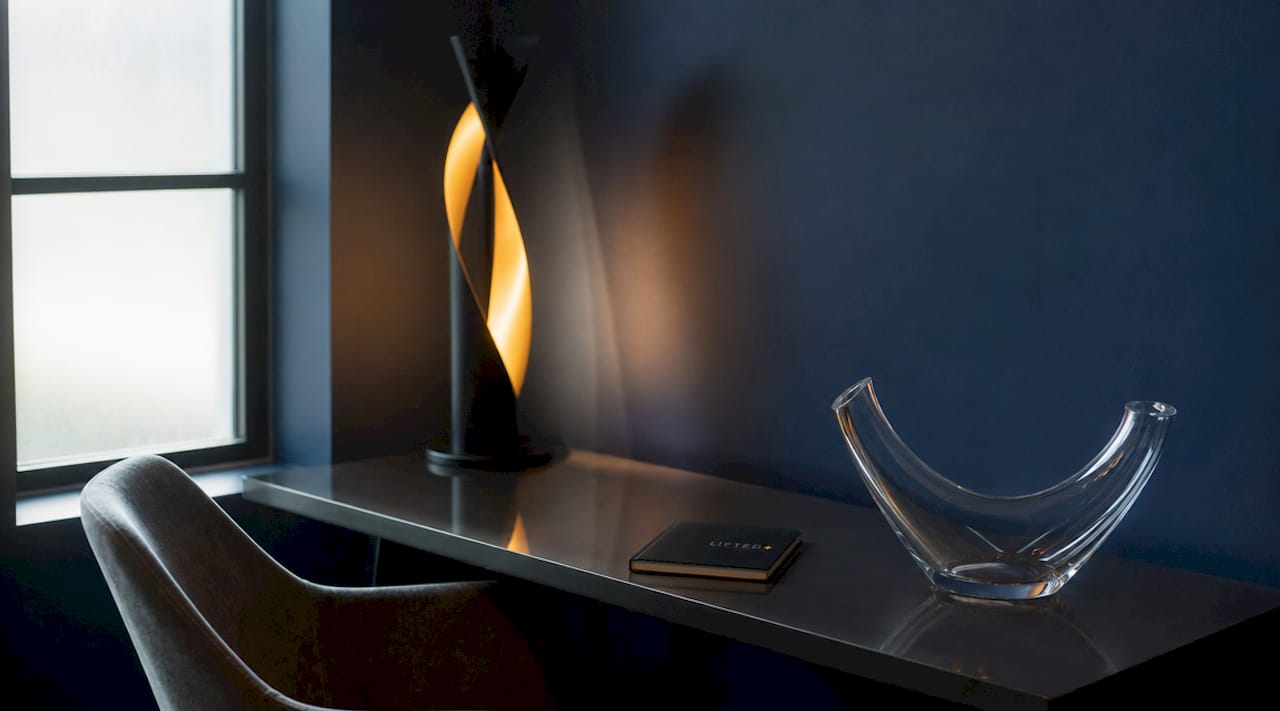
Lighting is not a finishing touch in curated decor. It is a structural element, as important as the furniture itself. Accent lighting highlights textures and key objects within a vignette, acting as the punctuation mark of a home’s design identity. Without it, even the most thoughtfully chosen pieces can lose their presence.
Negative space works alongside lighting to give a room its sense of calm and intention. When every surface is filled, the eye has nowhere to rest. Negative space is the pause between notes in a piece of music. It gives your statement pieces room to breathe and be seen. A single sculptural object on an otherwise clear shelf communicates confidence. The same shelf crowded with ten objects communicates anxiety.
Layering multiple light sources creates both ambience and focus. Consider combining:
- A pendant or ceiling fixture for general illumination
- A floor lamp or table lamp for warm, localised glow
- Directional spotlights or picture lights to draw attention to art or objects
- Candles or low-wattage accent lights for texture and mood at ground level
For practical guidance on using sculptural lighting as a design tool, Liftedplus offers detailed styling advice tailored to modern New Zealand interiors.
Pro Tip: When placing accent lighting, position it at a 30-degree angle to the object you want to highlight. This creates shadow and dimension, making the piece feel three-dimensional rather than flat.
What practical strategies help you build a curated home over time?
The most important thing to understand about curated home styling is that it is a process, not a project. A truly curated home evolves over months or years, allowing personal taste to grow alongside the space. Rushing to complete a room in one go produces a static, showroom feel that no amount of styling can fix.
Here is a practical framework for building your curated home with intention:
-
Start with one anchor piece. Choose a single item you love unconditionally, whether it is a painting, a chair, or a lamp. Let everything else respond to it rather than competing with it.
-
Assign meaning before you buy. Before purchasing any piece, ask yourself where it will live, what it will sit beside, and what story it adds. If you cannot answer those questions, wait.
-
Mix eras and materials deliberately. A brass candleholder beside a concrete bowl beside a linen cushion creates layered texture. Matching sets flatten a room. Contrast brings it to life.
-
Edit as often as you acquire. Deciding what leaves the room is as important as deciding what enters it. A curated space is not a storage solution. Remove pieces that no longer serve the narrative.
-
Balance statement with subtle. Large statement pieces should align with personal style, while smaller playful items add unexpected character. Neither should dominate entirely.
Pro Tip: Photograph your room before and after each edit. Over time, these images reveal your evolving taste more clearly than memory does, and they help you identify which pieces consistently earn their place.
Learning how to layer decor objects like a professional stylist accelerates this process considerably, particularly when you are working with shelves, surfaces, and vignettes.
What are some curated decor ideas for different spaces?
Curated decor ideas work differently depending on the room, but the underlying principles remain consistent: select with intention, balance scale, and leave room to breathe.
Living areas and shelves
A curated vignette is one of the most powerful tools in a home stylist’s repertoire. On a shelf or side table, group objects in odd numbers, vary their heights, and mix materials. A tall ceramic vase, a low stack of art books, and a small sculptural object create a scene with hierarchy and movement. For shelf styling that avoids clutter, Liftedplus has a dedicated guide on styling shelves without clutter that walks through the process step by step.
Entryways and hallways
The entry of your home sets the tone for everything that follows. A single piece of art, a considered console table, and one textural object, perhaps a handwoven basket or a ceramic dish for keys, communicates curation immediately. Resist the impulse to fill the space. Let the entry breathe.
Communal spaces and kitchens
In kitchens and dining areas, curated decor means choosing functional objects that are also beautiful. A hand-thrown ceramic serving bowl, a linen table runner in an earthy tone, and a small vase of dried botanicals create warmth without clutter. For kitchen lighting that enhances decor, layering pendant lights over a bench with under-cabinet lighting creates both function and atmosphere.
Outdoor spaces
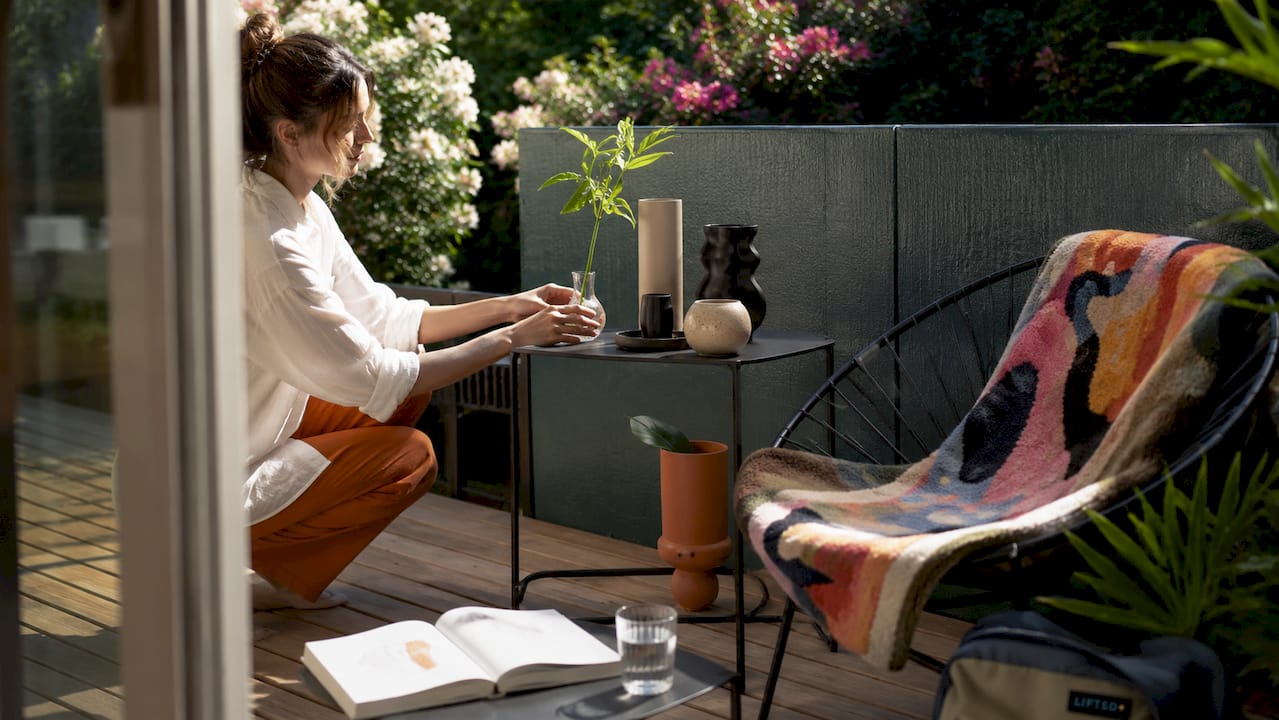
Curated outdoor styling extends the interior narrative beyond the walls. A pair of considered chairs, a weather-resistant lantern, and a single potted plant with strong silhouette create an outdoor vignette that feels intentional rather than incidental.
| Space | Key curation principle | One statement piece to consider |
|---|---|---|
| Living room | Balance scale and texture | Oversized wall art or sculptural floor lamp |
| Entryway | Edit ruthlessly, one focal point | Console table with single art piece above |
| Kitchen | Functional beauty | Hand-thrown ceramic or pendant lighting |
| Bedroom | Calm and personal meaning | Textile with story, bedside lamp with form |
| Outdoor | Extend the interior narrative | Lantern or single architectural plant |
What common mistakes undermine a curated look?
Even with the best intentions, certain habits consistently pull a space away from feeling curated. Overcrowding and ignoring focal points reduce authenticity and disrupt room flow. Recognising these patterns early saves both time and money.
The most common mistakes include:
- Overcrowding surfaces. More is not more in curated decor. When every surface is filled, nothing stands out and the room reads as cluttered rather than collected.
- Finishing a room too quickly. Buying everything at once produces a staged, impersonal result. Curated spaces take time to develop their character.
- Committing to a single era or style. A room decorated entirely in one aesthetic, whether Scandinavian minimalism or coastal rattan, becomes one-dimensional. Contrast is what creates depth.
- Neglecting personal connection. Decor chosen purely for aesthetics without personal meaning tends to feel hollow. The most curated spaces contain objects with stories attached to them.
- Ignoring the edit. Accumulation without subtraction is just collecting. Regular editing keeps a space feeling alive and intentional rather than static.
For a structured approach to building a cohesive edit, Liftedplus offers a practical guide that covers both selection and the discipline of letting go.
Key takeaways
Curated decor succeeds when intentional selection, meaningful layering, and regular editing work together to create a space that reflects who you are rather than what was available.
| Point | Details |
|---|---|
| Curation is about selectivity | Choose fewer, more meaningful pieces rather than filling every surface. |
| Lighting shapes the narrative | Use accent lighting and negative space to give key pieces presence and breathing room. |
| Mix eras and materials | Contrast between vintage and modern, rough and refined, creates depth and prevents stagnation. |
| Evolve gradually | A curated home develops over time. Rushing produces a staged, impersonal result. |
| Edit as often as you acquire | Removing pieces that no longer serve the space is as important as adding new ones. |
Why curation is the most honest form of decorating
I have spent years thinking about what separates a room that holds you from one you simply pass through. The answer is almost never budget or square footage. It is almost always intention.
What I find most freeing about the curated approach is the permission it gives you to slow down. You are not obligated to finish a room. You are not obligated to follow a trend. You are only obligated to choose things that mean something to you and to place them with care. That is a remarkably low bar, and yet most rooms never reach it because we are conditioned to fill rather than to select.
The pieces I return to again and again in my own home are never the most expensive ones. They are the ones with a story. A small painting bought at a market in Dunedin. A ceramic bowl made by a friend. A lamp with a silhouette so particular it pulls the room into focus every time the light comes on. These objects do not match. They converse.
Lighting and negative space remain the most underestimated tools in this process. A room can have beautiful objects and still feel flat if the light is wrong or the surfaces are overcrowded. Give your pieces room to be seen. Let the light find them. That is where the real curation happens.
— Michelle
Bring your curated vision to life with Liftedplus
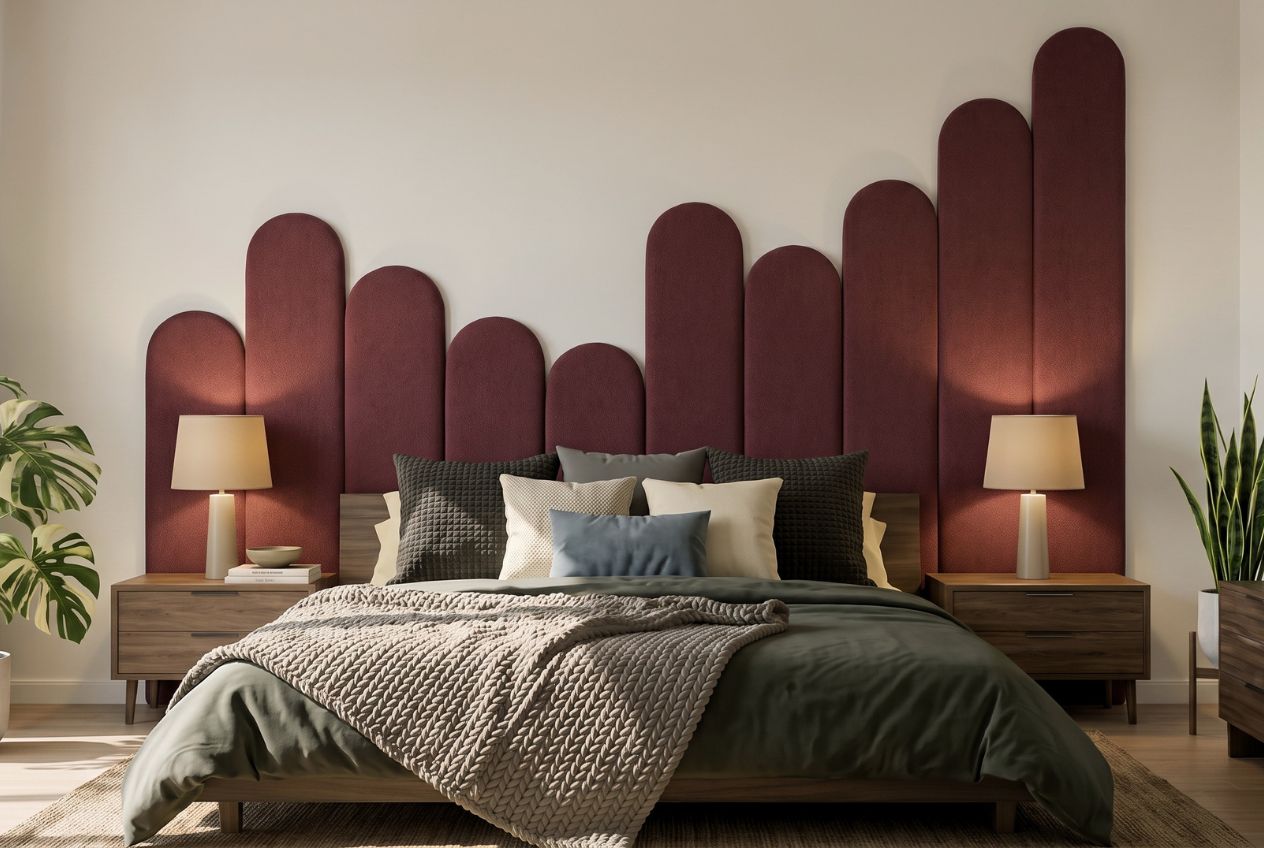
Liftedplus is built around the same principles this article explores: selectivity, form, and the belief that the right piece in the right place changes how a room feels entirely. The Liftedplus collection includes sculptural lighting, colour-led wall art, and considered homewares designed to anchor a curated space rather than crowd it. Whether you are starting from scratch or refining an existing edit, explore how decor personalises your space for mood and style, or begin with the practical curated homewares edit guide to build your collection with confidence.
FAQ
What does curated mean in home decor?
Curated home decor means selecting and arranging objects with deliberate intention, where every piece contributes to a personal narrative rather than simply filling space. It prioritises meaning, balance, and selectivity over quantity or trend.
How is curated decor different from decorated?
A decorated room is filled with items that may or may not relate to each other. A curated room is edited, layered with intention, and reflects the personality and story of the person who lives there.
Do you need expensive pieces to have a curated home?
No. Curation is not about wealth or quantity. It is about selectivity and building a meaningful narrative over time. A handmade ceramic or a market find can carry as much presence as a designer object.
How long does it take to create a curated home?
A curated home is never truly finished. It evolves over months or years as your taste develops and your collection matures. This gradual process is what gives curated spaces their authenticity.
What is a curated vignette?
A curated vignette is a small, intentional grouping of objects on a shelf or surface that tells a visual story. A well-composed vignette uses varied heights, mixed materials, and breathing room to create a scene with hierarchy and personality.