
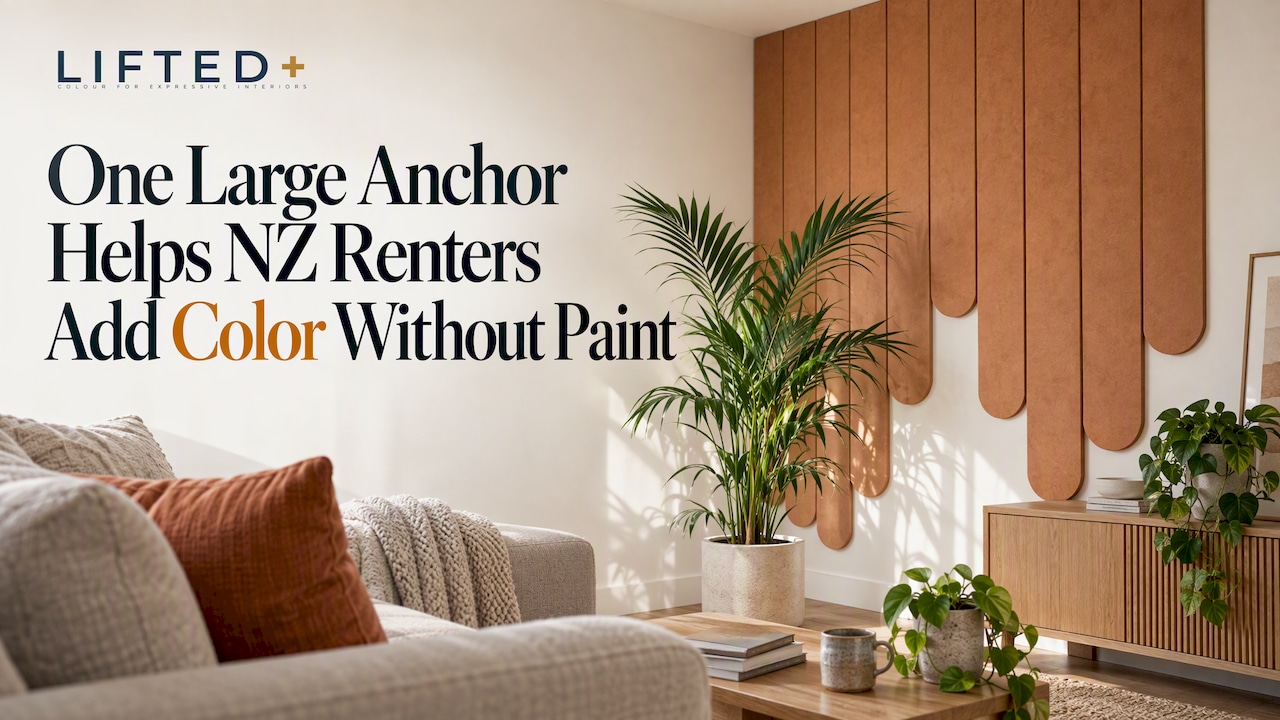
The fastest way to add colour without paint is one large anchor, such as an oversized rug, a big textile or a removable wall panel kit, then echoing its palette in cushions, throws and small accents. Choose removable, low-damage options. If you rent in New Zealand, check your tenancy consent steps before fixing anything to a wall. The sections below explain how to pick, place and protect each piece.
Key Takeaways
Using large, removable anchors like rugs or textile art creates impactful color without paint, ideal for renters needing non-permanent decor solutions.
| Point | Details |
|---|---|
| Start with a large anchor | Choose a big item like a rug or wall panel to set the color theme and keep it impactful. |
| Repeat color in accessories | Echo the anchor’s colors in cushions, throws, and small items for a cohesive look. |
| Use textiles for flexibility | Textiles like curtains or cushions allow easy color changes and layering without commitment. |
| Opt for modular wall panels | Removable panels from Lifted+ offer color and texture without damage or renovation. |
| Seek landlord approval for wall changes | Write requests and document the process to ensure compliance with tenancy regulations and easy removal. |
Table of Contents
- Which paint-free colour fixes should you try first?
- Why one large anchor reads like a painted wall
- How do textiles build a palette you can change easily?
- Can removable wall treatments replace paint?
- What should renters do before changing a wall?
- How do you choose and arrange a colour palette?
- What are the cheapest quick wins?
- Why colour that lifts matters at home
- Ready to try no-drill colour on your own wall?
- FAQ
- Sources
Which paint-free colour fixes should you try first?
Start with the biggest visual footprint you can manage, then work down to the small swaps. Here is the shortlist, ordered from most impact to least effort:
- Oversized rug: high footprint, medium commitment.
- Oversized art or tapestry: high visual impact, low to medium commitment.
- Peel-and-stick wallpaper: high visual impact, medium commitment.
- Removable modular wall panels: high impact, variable commitment, no drilling.
- Colourful curtains and blinds: medium footprint, low to medium commitment.
- Bedding, cushions and throws: low footprint, very easy to swap.
- Accent furniture and lamps: medium footprint, medium commitment.
- Plants, ceramics and books: small, instant colour pops.
Pick one item from the top half to set the colour story. Let the bottom half do the repeating.
Why one large anchor reads like a painted wall
The eye forgives a lot when a single big field of colour does the talking. Designers consistently suggest solving scale first: one large rug, tapestry or bold artwork establishes the colour story, and smaller pieces repeat selected tones. A rug has a large visual footprint, so it introduces colour without committing your walls to anything.
On the wall itself, graphic colour blocks work best. Large, bold colour fields tend to read from across the room much like a painted wall, while intricate, finely detailed imagery fades into the background. Textile art adds weave and weight on top of colour, and it sits well beside framed art and tactile ceramics.
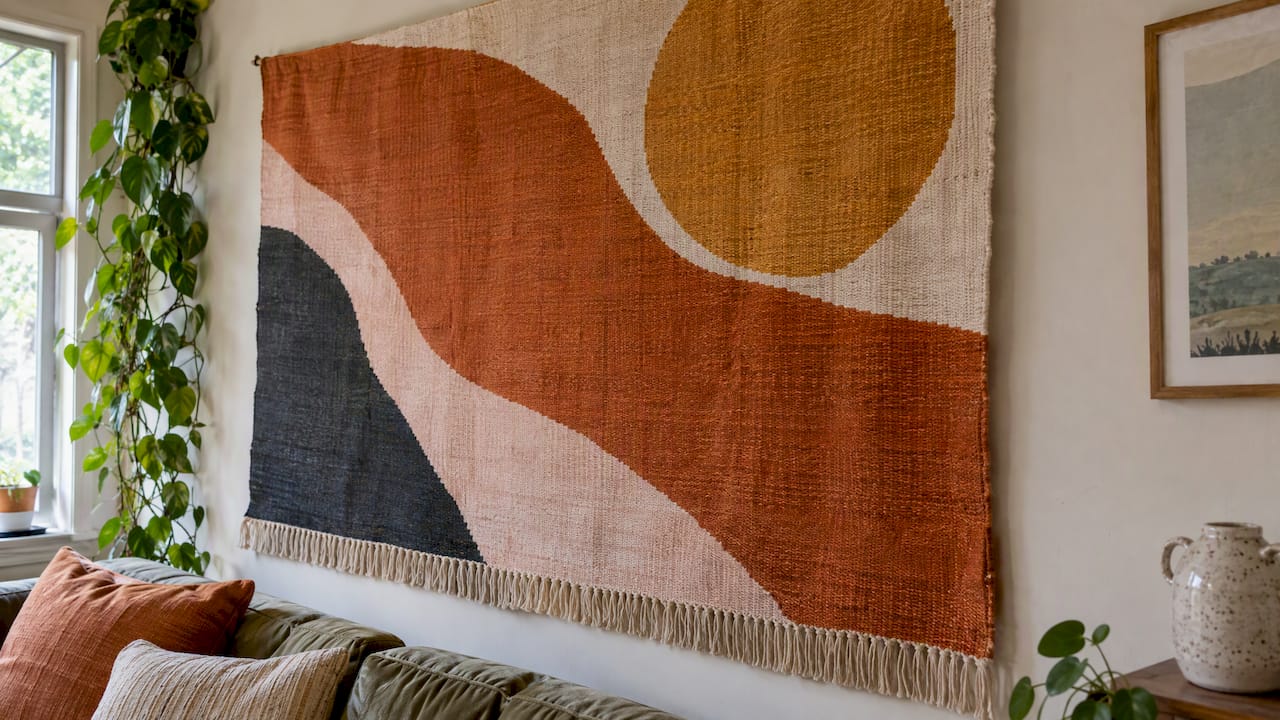
Weight matters when you hang things. Lighter flatweaves are easier to handle and sit more naturally against a wall, whereas heavy-pile rugs may need more substantial fixing. For floor rugs, rug size and colour guidance is a useful starting point, since a rug that is too small shrinks the whole effect.
Pro Tip: Choose a lighter flatweave or a textile made for wall hanging, so you need fewer and gentler fixings.
How do textiles build a palette you can change easily?
Textiles let you commit to colour in stages. Begin with one object you already love, then pull two or three of its colours and repeat them through smaller pieces. The same logic applies when you treat colour like accessorising an outfit: a neutral foundation first, then layers of pillows, throws, books and an accent chair.
Where each textile earns its place:
- Curtains: the largest textile surface in most rooms, so they carry the most colour.
- Cushions and throws: the quickest to swap and the cheapest to experiment with.
- Bedding: sets the tone of a bedroom in a single move.
- Lampshades: a small change that lifts a corner at eye level.
Texture does the work that extra colours would otherwise do. Linen, velvet, bouclé and smooth ceramics give contrast and depth while keeping the palette tight. Store off-season pieces flat in a box, and a seasonal refresh can feel simple rather than like a project.
Can removable wall treatments replace paint?
They can, and the look is closer than many renters expect. Peel-and-stick wallpaper gives pattern and colour in one go, though it asks more commitment at removal. A hung textile asks almost none, but it covers less wall.
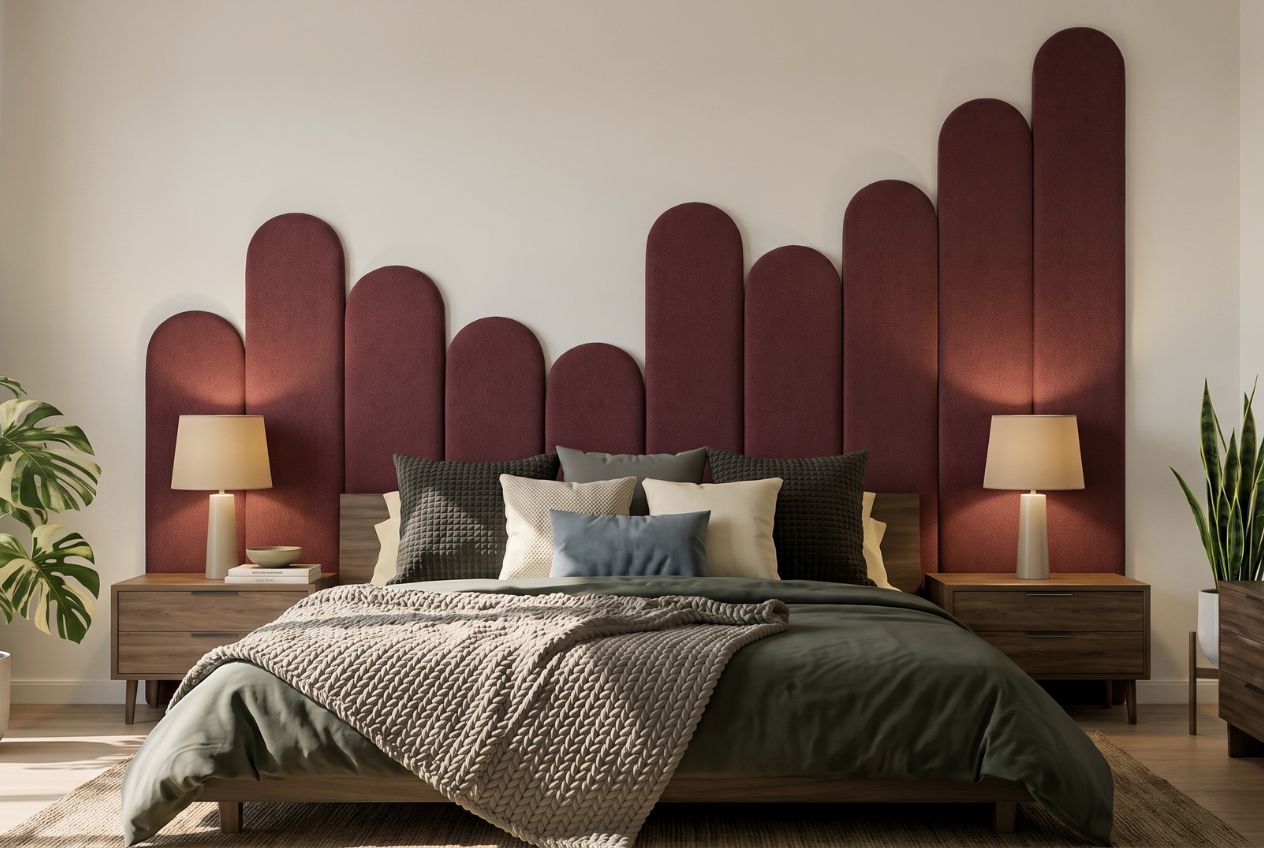
Modular removable panels sit between the two. Our DwellForms™ kits are colourful, sculptural wall kits made from precision-cut recycled PET felt. They use tested adhesive pads, so you get feature-wall impact with no painting and no drilling. Because the panels are modular, you can rearrange them or take them to your next home. That is colour without commitment, and texture without renovation. We make no promise that any adhesive is damage-proof, so the checklist below still applies:
- Test the adhesive on an inconspicuous patch first.
- Follow the manufacturer’s removal instructions exactly.
- Keep the instructions and your receipt for the end of the tenancy.
For a deeper look at the idea, our guide on decorating without painting walls covers more techniques.
What should renters do before changing a wall?
Removable does not mean permission is unnecessary. Tenancy Services says tenants need consent for changes, and for a minor change the request must be in writing. The landlord must respond within 21 days, and you must remove the fitting and return the property substantially to its prior condition at the end of the tenancy. A minor change has to carry low damage risk and be easily reversible.
A practical order of work:
- Write your request, describing exactly what you plan to fix and how it comes off.
- Photograph the wall before you touch it.
- Test the adhesive in an inconspicuous spot.
- Follow the removal instructions, without yanking or twisting.
- Keep receipts, photos and the landlord’s reply together.
Technique matters more than people assume. Consumer NZ’s testing of adhesive products found that removal depends on how you do it: some products leave residue, and putty can mark varnished wood if left for years. For more on protecting your bond, see our move-in wall ideas.
How do you choose and arrange a colour palette?
Keep the method short and repeatable:
- Choose an anchor item: a rug, artwork or wall kit you love.
- Extract three or four colours: a cohesive palette usually carries one hue family across materials.
- Assign roles: one large anchor, two mid-size echoes, several small accents.
- Repeat across the room: the same tones in cushions, a lampshade and a ceramic keep the eye moving.
- Vary texture, not colour: matte against sheen, linen against velvet.
If you want ready-made combinations, our renter-friendly colour palettes give you starting points to adapt.
What are the cheapest quick wins?
Start small, then spend where it counts:
- Swap cushions and throws: low-commitment changes that can refresh a room quickly.
- Thrift and frame art: a large, cheap print in a bold colour beats a small, expensive one.
- Change lampshades: one of the lowest-cost updates there is.
- Add trays, vases and candles: colour you can move around freely.
Spend on a rug or a modular panel kit once you know you want a stable anchor. Prioritise saturation and scale over perfect pattern matching.
Why colour that lifts matters at home
A home feels chosen when colour is deliberate, not borrowed from the listing photos. My advice is to start with one anchor and let it teach you what you like before you buy more. Neutral rentals can feel temporary, and a single confident field of colour changes how you feel walking in. We designed DwellForms™ by Lifted+ in New Zealand as a renter-friendly modular wall system made from recycled PET felt, because expressive interiors should not depend on a landlord’s paint colour. Experiment with low-risk pieces first, and save your documentation for the end of the tenancy.
— Michelle
Ready to try no-drill colour on your own wall?
If a modular wall feels like the right anchor, we offer DwellForms™ Colour Samples so you can test shades in your own light before committing. Our Core Kits give you a full feature wall, and Extension Kits let you grow it later. Run through the tenancy checklist above first, then browse our layouts and inspiration pages and start with the palette that makes your room feel like yours.
FAQ
What are some budget-friendly ways to cover a wall?
Textile hangings, large framed prints and removable wall panels all cover a wall without paint. Thrifted art and a bold tapestry cost far less than a renovation and come down easily when you move.
What is the 3-5-7 rule in decorating?
It is a common styling guide that groups objects in odd numbers for balance. Pair it with the anchor-and-echoes method here: one large piece, a few mid-size echoes and several small accents.
How do I add colour to a room without painting it?
Start with one large item, such as a rug, tapestry or wall panel kit, then repeat its colours in cushions, throws and accessories. Designers recommend this approach because scale carries colour better than small touches do.
Do renters need permission to add wall decor?
In New Zealand, tenants need written consent for a minor change, and the landlord must reply within 21 days. Tenancy Services sets out the process, including removal at the end of the tenancy.
Sources
- How to Add Color to Your Space If You Don’t Want to Paint, Designers Say
- [Tenants making changes to the property »
Tenancy Services](https://www.tenancy.govt.nz/maintenance-and-inspections/regular-maintenance/tenants-making-changes-to-the-property/) - Textile Art Is Having a Moment—Here’s How to Style it Like an Interior Designer | Vogue
- The best quake-safe products: earthquake restraints compared
Recommended
- No Paint Needed: 8 Renter-Friendly Color Palettes For NZ Rentals
- 21 Day Rule: How NZ Renters Add Colour Without Losing Their Bond
- Rental Friendly Decor NZ: 10 Ideas That Work
- Protect Your Bond: 6 Steps For NZ Renters To Use No Drill Panels
This article is for general information and inspiration only. Product performance and results may vary depending on individual circumstances, surfaces and installation.