
TL;DR:
- Decorating without painting involves using removable methods like oversized art, peel-and-stick wallpaper, textile hangings, and leaning mirrors. These options provide visual impact while preserving wall integrity, making them ideal for renters and homeowners seeking flexibility. Lighting and furniture further enhance space perception and color without lasting wall modifications.
Decorating without painting walls is the practice of transforming a room’s colour, texture, and personality using entirely removable, non-invasive methods. Oversized art, peel-and-stick wallpaper, textile hangings, statement mirrors, layered lighting, and sculptural furniture all deliver genuine visual impact without a drop of paint. These methods work for renters protecting their bond and for homeowners who want flexibility without the commitment of a full repaint. Large visual footprint pieces like textiles and rugs bring colour and warmth more effectively than a collection of small decorative items ever could.
What are the most effective ways to add colour and texture to walls without paint?
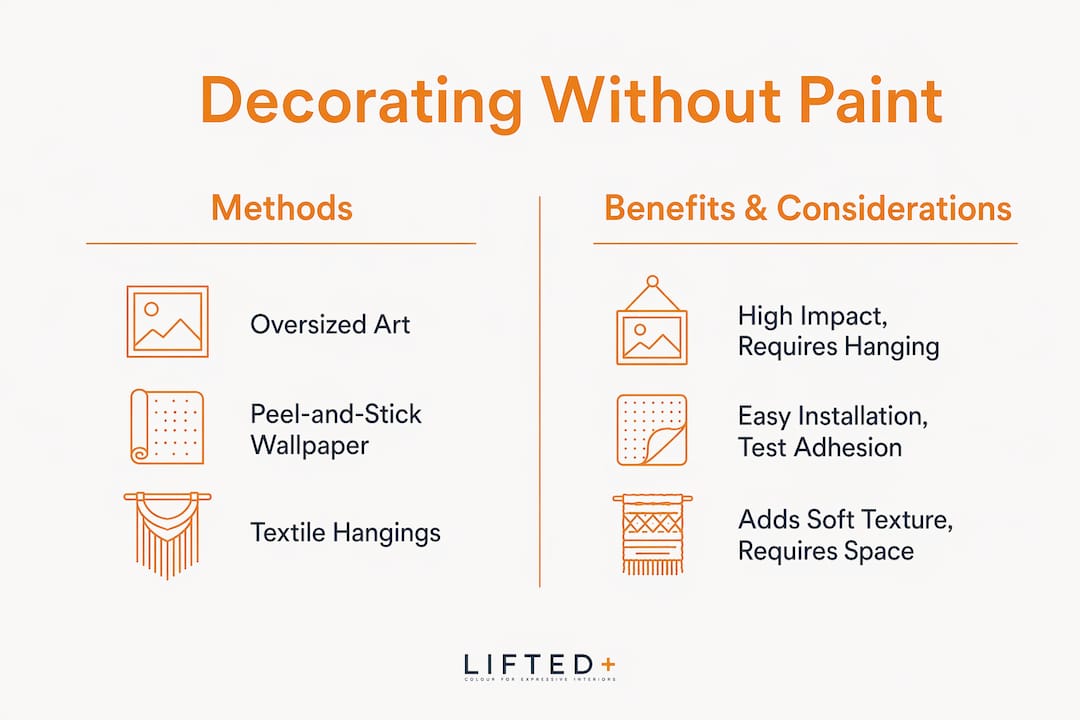
The four methods that consistently deliver the strongest results are oversized art, peel-and-stick wallpaper, textile wall hangings, and leaning floor mirrors. Each one installs quickly, avoids permanent wall damage, and can be reversed without affecting a security deposit. Understanding the strengths and trade-offs of each helps you choose the right approach for your space.
Oversized art
Scale is the single most important factor when choosing wall art. A 40×60 inch or larger piece carries the visual weight of a full wall far better than a cluster of small prints. Small prints on a large wall create visual noise rather than presence. For a sofa wall, the artwork should span at least two-thirds of the sofa’s width to feel intentional and grounded. You can explore how statement wall art reshapes a room’s entire atmosphere before committing to a piece.
Peel-and-stick wallpaper
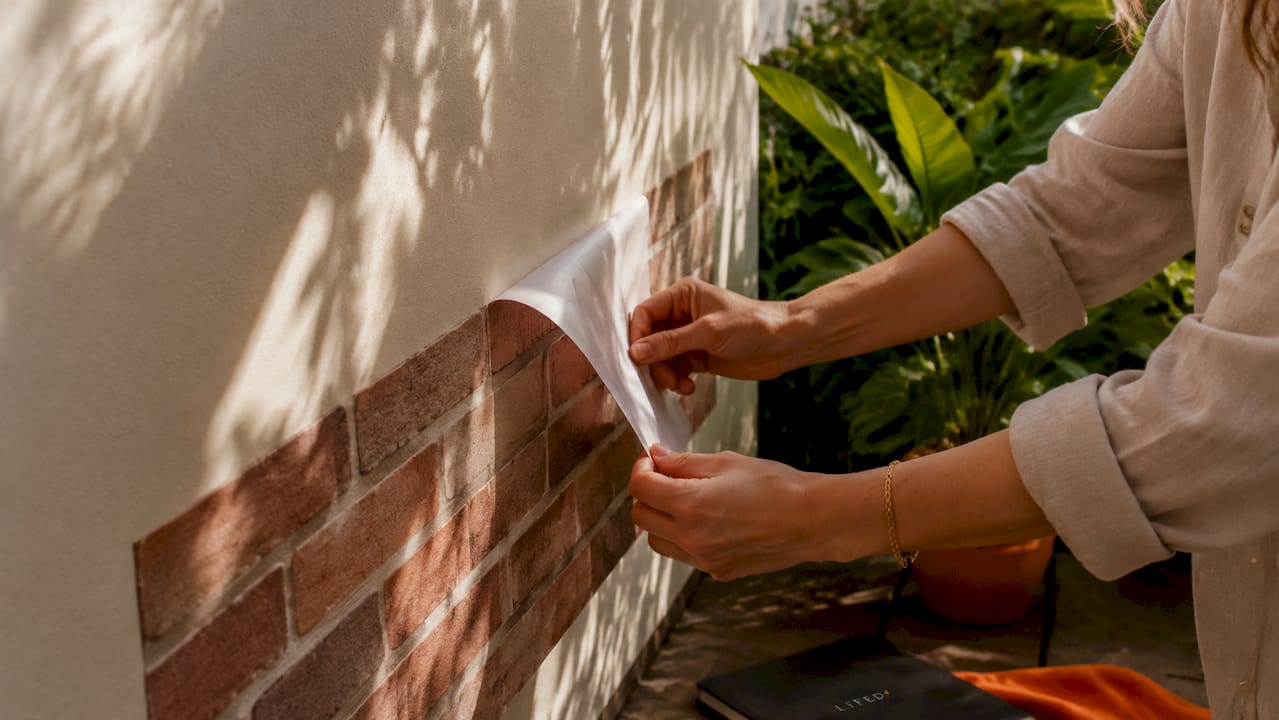
Peel-and-stick removable wallpaper in faux wood, brick, or stone finishes adds architectural depth and warmth that paint alone rarely achieves. Peel-and-stick panels also improve a room’s acoustic quality, which is a benefit most decorators overlook. Installation is typically a weekend DIY project requiring no specialist skills. The key risk is adhesive compatibility with existing wall paint.
Pro Tip: Test peel-and-stick wallpaper on a small section of your wall for 48 hours before full installation. This confirms the adhesive bonds properly and peels off cleanly without lifting paint.
Textile wall hangings
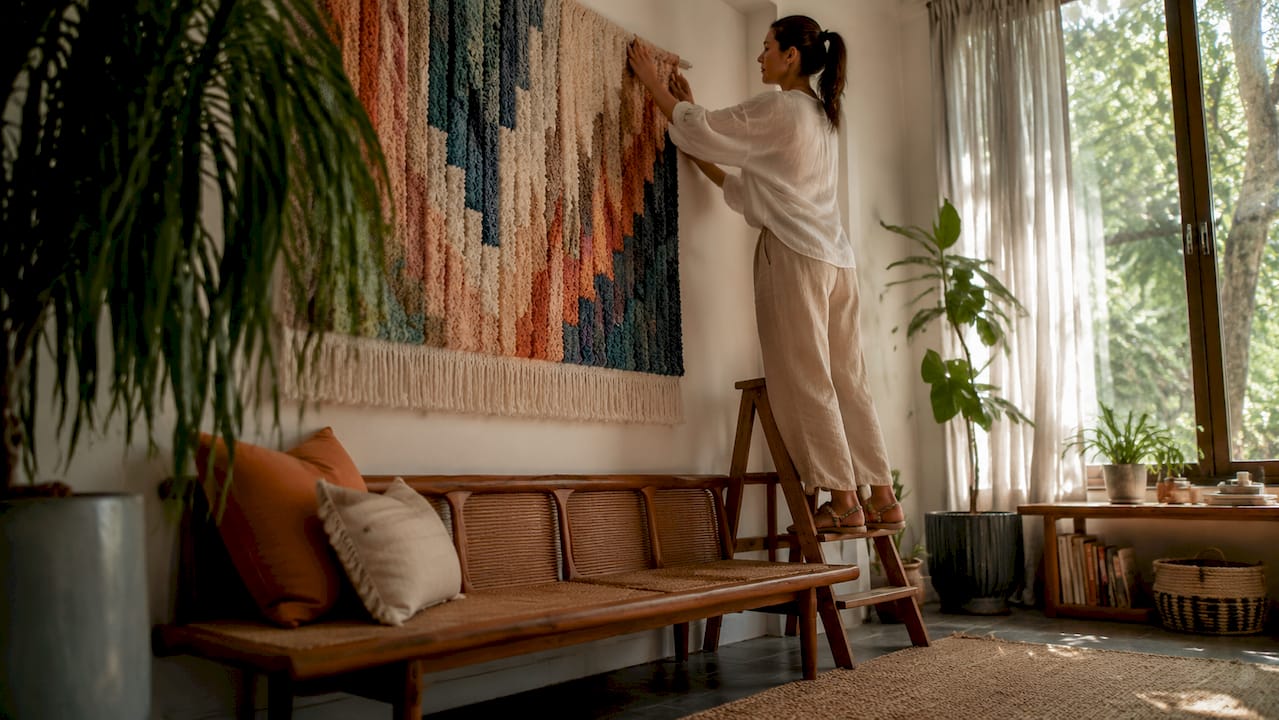
Woven tapestries, macramé panels, and large fabric hangings add softness and texture that no hard surface can replicate. They absorb sound, reduce echo, and bring warmth to rooms with bare, neutral walls. A single large textile piece reads as intentional and considered. Multiple small hangings scattered across a wall tend to fragment the eye rather than anchor it.
Leaning floor mirrors
A full-length mirror leaned against a wall adds depth, reflects light, and creates a focal point without touching the wall at all. Leaning mirrors are one of the most damage-free options available, requiring zero fixings. Mirror design concepts that visually expand spaces without wall alterations are particularly effective in smaller rooms or apartments with limited natural light.
| Method | Pros | Cons |
|---|---|---|
| Oversized art | High impact, wide style range | Requires careful hanging hardware |
| Peel-and-stick wallpaper | Texture and pattern, DIY-friendly | Needs compatibility testing |
| Textile hangings | Softness, acoustic benefit | Can look heavy in small rooms |
| Leaning floor mirrors | Zero wall damage, adds light | Takes up floor space |
How can lighting and furniture contribute to decorating without painting walls?
Lighting changes how a wall looks more dramatically than most people expect. Warm layered lighting alters wall colour perception and transforms the mood of a room without touching a single surface. This is particularly useful in apartments with limited natural light, where cool overhead lighting can make neutral walls feel flat and uninviting.
Layered lighting as a wall treatment
The goal is to move away from a single overhead source and build layers: ambient, task, and accent. Picture lights mounted above or below a large artwork draw the eye directly to the piece and give the wall a gallery-like quality. Floor lamps positioned in corners push warm light upward, softening the entire room. Statement lighting does more than illuminate. It brings shape to the air around it and holds the room in a way that paint never could.
Pro Tip: Match your lighting colour temperature to your wall’s undertone. Warm white bulbs (2700K–3000K) complement cream and beige walls beautifully. Cool white bulbs (4000K+) suit grey and white walls but can make warm-toned walls look washed out.
Colourful and sculptural furniture
Furniture is the most underused tool in paint-free decorating. A single piece of colourful furniture in a terracotta, forest green, or deep ochre injects the colour that paint would normally provide. The furniture becomes the focal point, and the wall behind it simply frames it. Sculptural furniture with an unusual silhouette adds visual interest that pulls a space out of the safe, polite middle. You do not need to change the walls when the furniture is doing the work.
What are renter-friendly decorating tips when you cannot paint?
Renters face a specific constraint: the wall must look exactly as it did on move-in day. The good news is that renter-friendly accent walls are entirely achievable using damage-free methods. The following approach works reliably across most rental properties.
-
Use Command strips or picture hanging strips for lightweight art. 3M Command strips hold frames securely and remove cleanly without leaving marks. Always check the weight rating before hanging.
-
Choose one large piece over many small prints. Small prints on large walls look incomplete and create visual clutter. One 40×60 inch piece reads as deliberate and polished.
-
Apply peel-and-stick wallpaper to a single feature wall only. Limiting application to one wall reduces risk and makes removal faster. Always test adhesion for 48 hours first.
-
Pick one hero wall and leave the rest alone. Focusing on one feature area prevents clutter and gives the room a clear focal point. Trying to decorate every wall at once is the most common mistake renters make.
-
Lean mirrors and textile hangings rather than fixing them. A large mirror leaned against a wall and a textile hung from a tension rod or removable hook cause zero permanent damage.
-
Use furniture placement to frame your hero wall. Position your sofa, bed, or console table against the decorated wall to reinforce the focal point and give the space a sense of intention.
For a deeper look at paint-free options tailored to renters, the renter-friendly home decor guide from Liftedplus covers nine practical ideas that work across different room types and lease conditions.
How do you design a cohesive wall decor scheme without painting?
A cohesive scheme without paint requires intentionality above everything else. Choosing a clear style direction, whether modern minimalism, coastal, or warm boho, gives every piece a reason to be in the room. Without that direction, even beautiful individual pieces can feel disconnected.
Choosing scale and spacing
Scale and spacing are the two variables most people get wrong. Artwork that is too small for its wall makes the room feel unresolved. Spacing that is too tight makes a gallery wall feel cramped. For gallery walls, consistent 2–3 inch spacing between frames and matching mat colours across all pieces creates a high-end, considered look. The moment you mix three different mat colours, the wall starts to read as a collection of individual items rather than a unified composition.
Mixing textures without losing coherence
Mixing a mirror, a textile, and a framed artwork on the same wall works when they share a colour story or a tonal range. A warm-toned textile beside a warm-toned artwork beside a brass-framed mirror reads as deliberate. The same textile beside a cool-toned print beside a chrome mirror reads as accidental. Texture variety adds richness. Colour coherence holds it together.
Pro Tip: Before hanging anything, lay all your pieces on the floor in the arrangement you plan to use. Live with that layout for a day. What feels balanced on the floor usually translates well to the wall.
Common mistakes to avoid
Gallery walls often fail when there is no central theme or consistent framing approach. Mixing too many frame finishes, sizes, and mat colours creates visual noise rather than a curated display. Choosing pieces from a single colour family or a single style direction solves this immediately. The other common error is decorating every wall in a room. One strong feature wall with thoughtfully chosen pieces outperforms four walls of scattered decor every time.
Key takeaways
Decorating without painting walls works best when you commit to one hero wall, choose pieces at the right scale, and let lighting and furniture carry the colour.
| Point | Details |
|---|---|
| Scale determines impact | Choose art at least 40×60 inches or two-thirds of your sofa width for a polished result. |
| Test before committing | Apply peel-and-stick wallpaper to a small area for 48 hours to confirm paint compatibility. |
| One hero wall beats four | Focus all your decorating energy on a single feature wall to avoid clutter and visual noise. |
| Lighting transforms perception | Warm layered lighting changes how walls look and feel without touching a surface. |
| Furniture carries colour | A single piece of colourful or sculptural furniture replaces what paint would otherwise provide. |
Why I stopped thinking about walls and started thinking about presence
The shift that changed how I approach paint-free decorating was simple: I stopped asking “what can I put on this wall?” and started asking “what should hold this room?” Those are very different questions.
Most people fill walls with small things because small things feel safe. A collection of five prints, a few shelves, a couple of hooks. The result is a wall that is busy but not felt. One oversized piece, one strong textile, or one mirror that reflects the room back at you does something that a dozen small items cannot. It gives the space a centre of gravity.
Renters often feel limited, but the constraint is actually clarifying. You cannot paint, so you are forced to think harder about what you bring into the room. That discipline produces better results than an open brief. The best paint-free rooms I have seen belong to renters who chose one thing and committed to it fully.
Modern products make this genuinely easy now. Removable wallpapers from brands like Tempaper and RoomMates have improved dramatically in quality. Command strips hold more weight than they used to. The tools are there. The only thing left is the willingness to think at the right scale and resist the urge to fill every surface.
— Michelle
Discover Liftedplus: colour and form without the paint
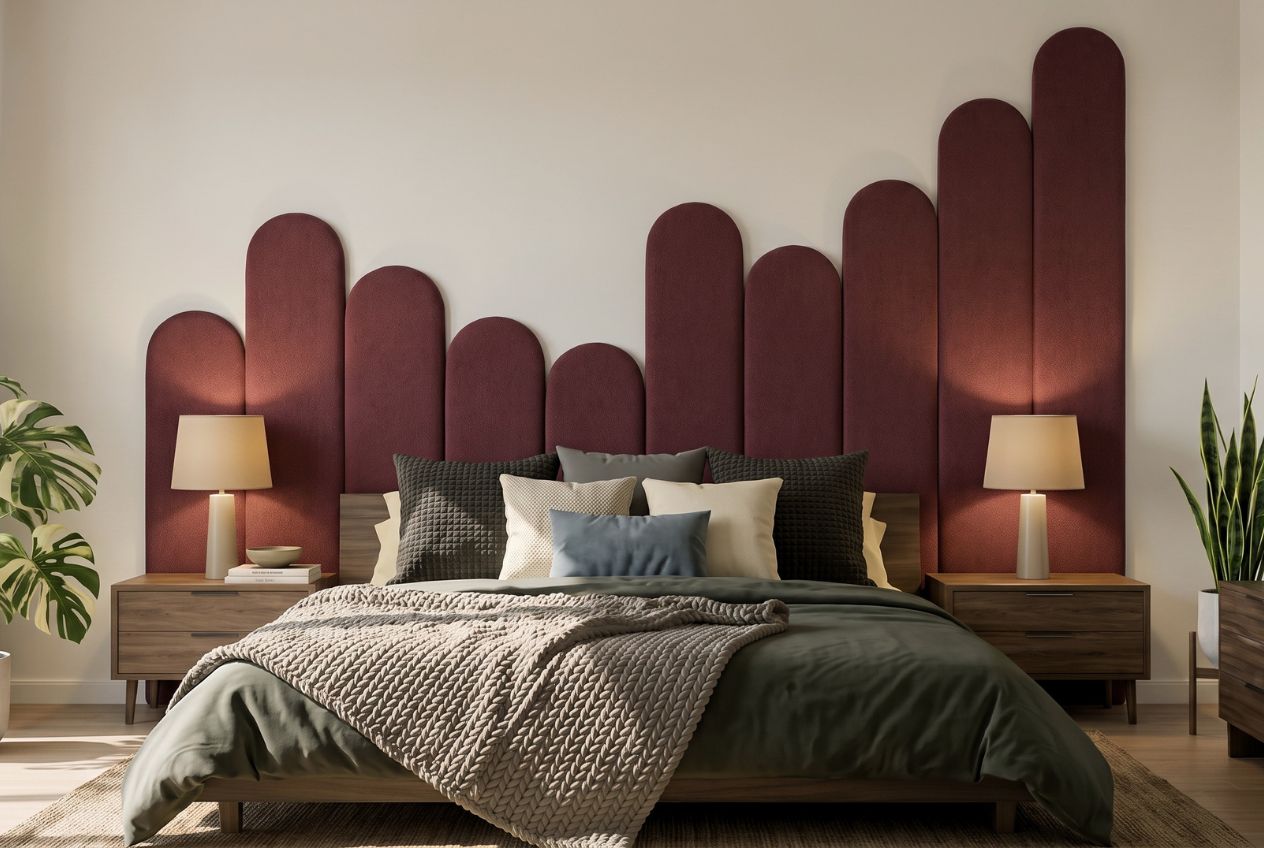
Liftedplus curates wall art, sculptural lighting, and colourful furniture designed specifically to hold a room without permanent changes. If you are looking for pieces that bring genuine presence to your walls, the renter-friendly decor ideas guide is a strong starting point. For those ready to explore statement pieces by mood and style, the Lifted+ Mood Library offers curated visual direction across a range of interior styles. Every piece in the Liftedplus collection is chosen for form, colour, and the kind of impact that does not require a paintbrush.
FAQ
What is the easiest way to decorate walls without painting?
Oversized art hung with Command strips or picture hanging strips is the easiest starting point. One large piece at the right scale transforms a wall immediately with minimal effort and no permanent damage.
Can renters use peel-and-stick wallpaper safely?
Yes, provided you test adhesion first on a small area for 48 hours. Modern peel-and-stick wallpaper peels off cleanly from smooth surfaces without lifting paint when applied and removed correctly.
How big should wall art be for a living room?
A piece measuring at least 40×60 inches, or spanning two-thirds of your sofa’s width, is the recommended minimum for a living room wall. Smaller pieces on large walls create visual noise rather than a focal point.
Does lighting really change how walls look?
Warm layered lighting alters wall colour perception dramatically, particularly in rooms with limited natural light. Switching from a single cool overhead light to layered warm sources can make a neutral wall feel entirely different.
What is the best approach for a cohesive gallery wall?
Use matching mat colours, maintain consistent 2–3 inch spacing between frames, and choose pieces within a single colour family or theme. Gallery walls fail most often when framing styles and mat colours are mixed without a unifying logic.