

TL;DR:
- Decorative wall panels transform ordinary walls into textured features without structural changes, enhancing depth and character.
- Choosing the right material and installation method based on room conditions ensures lasting, visually appealing results.
Decorative wall panels are specialised surface coverings that transform ordinary walls into textured, dimensional features without structural renovation. In interior design, the term covers everything from 3D relief PVC tiles to architectural-grade polyurethane (PU) cladding, timber slat systems, and acoustic PET panels. What unites them is purpose: to give a wall presence, depth, and character that paint simply cannot. Whether you are refreshing a rental or committing to a full feature wall, understanding your options before you buy saves time, money, and regret.
What types of decorative wall panels are available?
The panel market divides cleanly into five material families, each with a distinct look, weight, and installation requirement.
PVC panels are the most accessible entry point. Lightweight, moisture-resistant, and easy to cut, they suit bathrooms, laundries, and budget-conscious feature walls. Entry-level 3D PVC panels/) cost roughly $1.80–$4.00 per square foot, making a full feature wall achievable for well under $300. That price point puts a textured wall within reach for most households.
Polyurethane (PU) panels replicate stone, brick, or timber with convincing realism. PU panels are lightweight compared to natural stone and require only a damp cloth to clean. They install with adhesive or screws and hold their finish for years without sealing or oiling.
Timber slat and veneer panels bring warmth and organic grain to living rooms and bedrooms. They are heavier than PVC or PU, require more careful moisture management, and cost more per square metre. The payoff is a material quality that reads as genuinely premium.
Metal panels, typically aluminium or steel, suit industrial and contemporary interiors. They reflect light, hold sharp geometric lines, and resist moisture well. They are less common in residential settings but striking in media rooms and entry halls.
Acoustic panels sit in a category of their own. Products like the Vicoustic VicShape 3D combine PET HD sound-absorbing material with sculptural relief patterns and natural finish frames in Oak or Walnut. They have won design awards precisely because they do two things at once: they quiet a room and hold it visually.
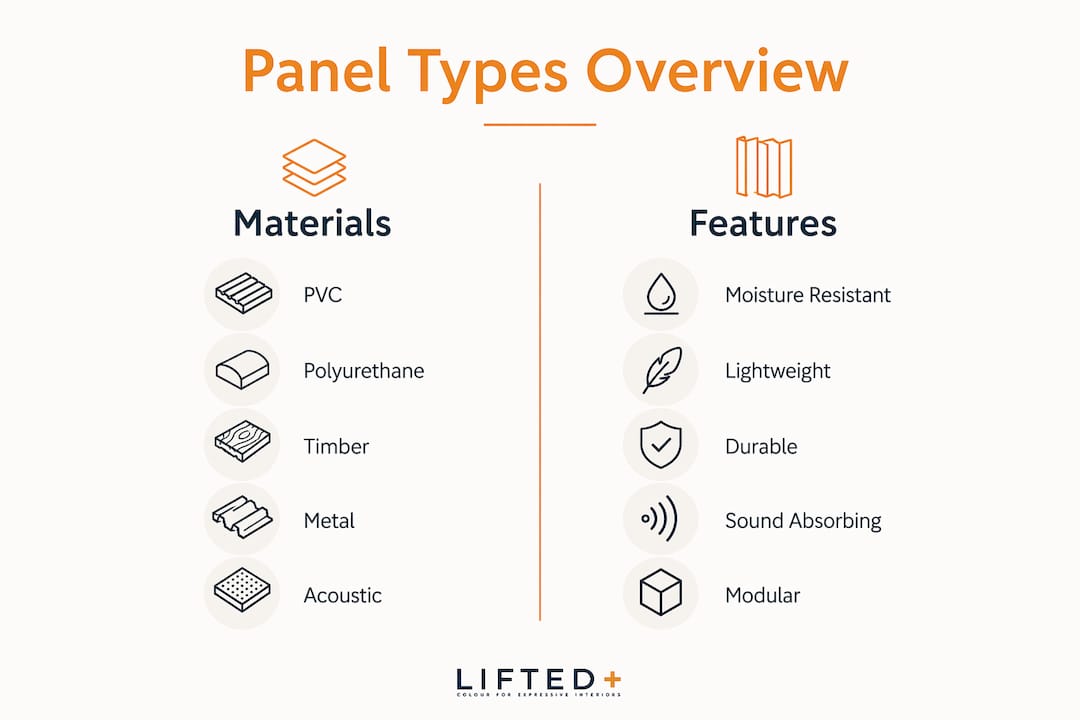
Beyond material, panels divide into fixed and modular systems. Modular wall panels allow homeowners to reconfigure or relocate panels during renovations, offering long-term value that fixed masonry or plasterboard cannot match. For renters, removable modular wall kits are the practical choice: no drilling, no bond disputes, no permanent commitment.
| Panel type | Best use | Key advantage | Main limitation |
|---|---|---|---|
| PVC 3D | Feature walls, bathrooms | Affordable, moisture-resistant | Can look less premium up close |
| Polyurethane (PU) | Living areas, hallways | Realistic texture, low maintenance | Less breathable than timber |
| Timber slat | Bedrooms, living rooms | Warmth, natural grain | Requires moisture management |
| Metal | Media rooms, entry halls | Durable, light-reflective | Higher cost, cold aesthetic |
| Acoustic PET | Home offices, media rooms | Sound absorption plus visual depth | Premium price point |
Pro Tip: Before choosing a material, photograph your wall under natural morning light and again under your evening artificial lighting. The same panel can read completely differently across those two conditions, and depth profiles that look subtle in a showroom can become dramatic at home.
How to choose the right wall panels for your home interior
The right panel is not simply the one that looks best in isolation. It is the one that works with your room’s function, existing palette, and light conditions.
Start with room function and moisture levels. Bathrooms and laundries demand moisture-resistant panels: PVC and PU are the clear choices here. Timber and MDF-based panels absorb moisture over time and will warp or delaminate in high-humidity spaces. Living rooms and bedrooms give you far more material freedom.
Consider acoustic performance if noise is a concern. Open-plan living areas, home offices, and media rooms all benefit from panels that absorb sound rather than reflect it. Pairing a textured acoustic wall panel with soft furnishings creates a noticeably quieter, more composed room. The difference is not subtle once you experience it.
Match panel depth and profile to your lighting. Panels with depth profiles of 1/2" to 4" create shadow play that shifts as light moves through the day. A flat wall painted in a feature colour is static. A relief panel with a 50mm profile is alive. That dynamic quality is what separates a room that holds your attention from one that simply looks tidy.
Think about scale and proportion. A single feature wall in a modest room reads as intentional and confident. Cladding all four walls in a small space can feel oppressive. As a general rule, one or two walls in a room is the right commitment for most residential applications.
Pricing deserves honest attention. Entry-level PVC 3D panels sit at $1.80–$4.00 per square foot. Mid-range PU and timber systems typically run $8–$20 per square metre. Architectural-grade acoustic and modular systems can exceed $50 per square metre installed. Calculate your wall area precisely before budgeting, and add 10–15% for cuts and waste.
Pro Tip: Measure your wall height and width, then sketch a rough panel layout on paper before ordering. Panels cut from the same production batch will have consistent colour and texture. Ordering a second batch later to fill gaps often results in a visible mismatch.
What are common installation methods for decorative panels?
Installation method determines how permanent your commitment is, and how clean the result looks. The two primary approaches are adhesive mounting and mechanical fixing (screws or clips).
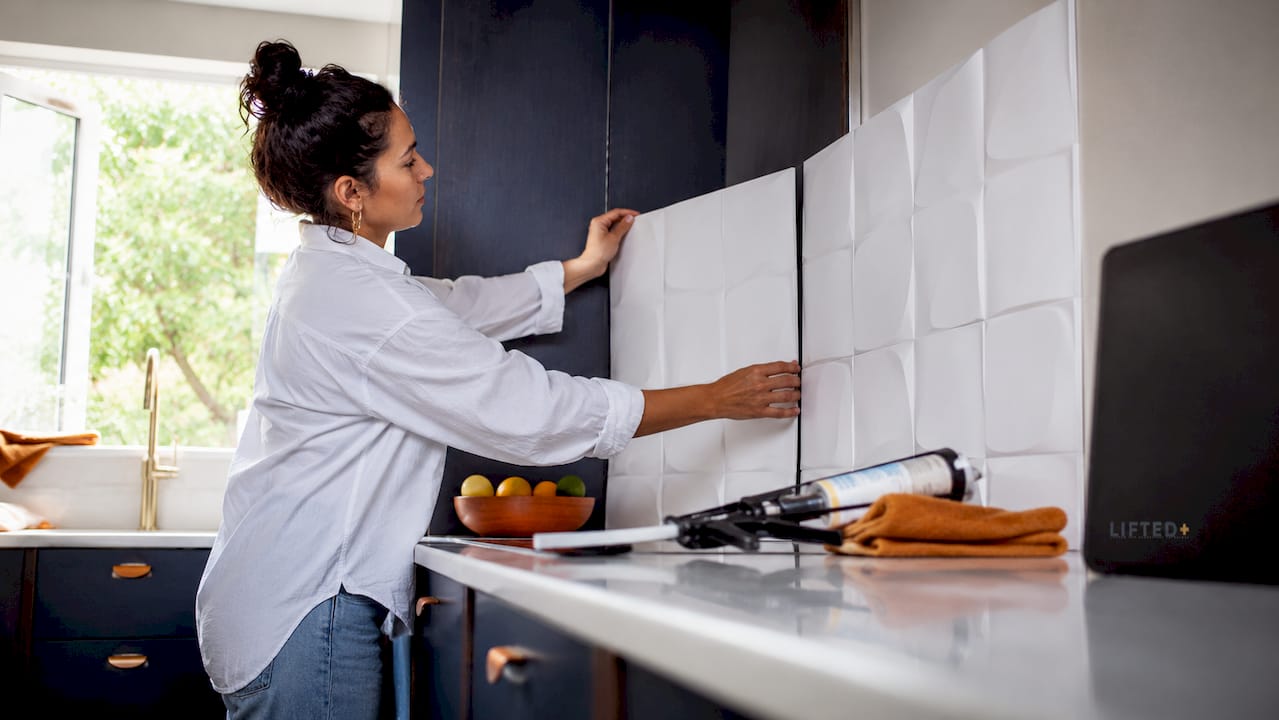
Adhesive installation suits lighter panels like PVC and PU. The wall surface must be perfectly flat, clean, and dust-free. Using a laser level for the first row/) is critical: minor deviations in the starting row compound across the entire wall and produce visible misalignment. This is the most common DIY mistake, and it is entirely avoidable with a $30 laser level from any hardware store.
Mechanical fixing suits heavier timber, metal, and architectural-grade panels. Screws or proprietary clip systems anchor panels to a subframe or directly to the wall stud. This method is more durable and allows individual panels to be removed and replaced without disturbing the rest of the wall.
For architectural-grade systems, dry-joint installation is the professional standard. Thermal expansion causes panels to expand and contract with temperature changes. Dry joints accommodate that movement. Panels installed with continuous adhesive or grout can buckle or pop over time as the material shifts.
Modular panel systems add another layer of practical value: they can integrate cable channels within the wall cavity, concealing wiring for home cinema setups, lighting circuits, and data cables. The result is a clean, uninterrupted surface with no visible conduit.
Moisture management is the most overlooked installation consideration. A whole-system approach that integrates insulation, moisture barriers, and surface finish prevents the moisture trapping and mould growth that can occur when panels are applied directly over unprepared walls. This is particularly relevant in New Zealand’s coastal and high-humidity regions.
Pro Tip: If your wall has any flex or give when you press it firmly, do not proceed with adhesive installation until you have identified and fixed the cause. Panels applied over a soft or damaged substrate will not bond correctly and will eventually fail.
How do wall panels improve home aesthetics and functionality?
A well-chosen panel does more than decorate. It restructures how a room feels.
Relief and shadow effects are the most immediate benefit. Shadow play created by panel depth variations significantly increases a wall’s visual interest and perceived design quality. A wall that shifts in tone and texture as the sun moves across it holds the room in a way that a painted surface simply cannot. This is the quality that separates considered interior design from decoration.
Acoustic panels address a functional gap that most homeowners only notice after the fact. Hard surfaces, including plasterboard, timber floors, and glass, reflect sound and create echo. Panels like the Vicoustic VicShape 3D absorb mid and high-frequency sound while contributing a sculptural, layered surface to the room. You gain both quiet and presence from a single installation.
Modular systems offer something fixed walls never can: adaptability. As your interior style evolves, reusable modular panels can be reconfigured, relocated, or replaced without demolition. For homeowners who treat their interiors as living, evolving spaces rather than permanent decisions, this is a meaningful advantage.
PU and PVC panels also outperform natural materials on maintenance. They do not require sealing, oiling, or periodic refinishing. A damp cloth restores their surface. Timber panels, while beautiful, demand more ongoing attention to stay looking their best.
For inspiration on how panels integrate with broader interior styling, the feature wall ideas guide from Liftedplus explores nine creative approaches that go well beyond paint, including 3D and textured wall treatments that work in real residential spaces.
“A wall panel is not just a surface treatment. At its best, it brings shape to the air in a room, creating depth, movement, and a sense that the space has been genuinely considered.”
What are common challenges in decorative panel projects?
Most panel projects that go wrong share the same root causes: inadequate surface preparation, ignored thermal movement, and moisture that has nowhere to go.
Uneven wall surfaces are the most common starting problem. Plasterboard walls in older homes often have subtle bows, ridges, or patched areas that become visible once a geometric panel system is applied. Fill and sand any imperfections before you begin. For walls with significant variation, a skim coat of render creates a reliably flat substrate.
Thermal movement is underestimated by most DIY installers. Materials expand in summer and contract in winter. Dry-joint systems accommodate this movement by design. Panels installed without expansion allowance can buckle, crack at joints, or pull away from the wall over time.
Moisture trapping is the most serious long-term risk. Panels applied directly over walls without a moisture barrier can trap condensation between the panel and the substrate. Over months, this creates mould and structural damage that is expensive to remediate. Integrating insulation and moisture barriers as part of the installation system prevents this entirely.
Here are the four best practices that separate successful panel projects from costly ones:
- Prepare the substrate thoroughly before any panel goes up. Fill, sand, and prime the wall surface.
- Use a laser level for the first row of any modular or tile-based panel system.
- Allow for thermal expansion in your installation method, particularly for architectural-grade panels.
- Integrate a moisture barrier in bathrooms, laundries, and any wall adjacent to an exterior surface.
Pro Tip: For large-scale installations covering more than 15 square metres, get a quote from a professional installer before committing to DIY. The cost difference is often smaller than expected, and the risk of a visible error on a prominent wall is significant.
Key takeaways
Decorative wall panels deliver the most lasting results when material choice, surface preparation, and installation method are treated as a single, integrated decision rather than three separate steps.
| Point | Details |
|---|---|
| Match material to room conditions | Use PVC or PU in moisture-prone spaces; reserve timber for dry living areas. |
| Prioritise surface preparation | A flat, clean, primed wall is the single biggest factor in a professional-looking result. |
| Use dry-joint methods for large panels | Thermal expansion requires movement allowance to prevent buckling over time. |
| Consider modular systems for flexibility | Reusable modular panels adapt to future renovations without demolition or waste. |
| Layer acoustics with aesthetics | Acoustic PET panels like Vicoustic VicShape 3D reduce noise while adding sculptural depth. |
Why I think most homeowners underestimate what a panel wall can do
I have watched a lot of interior design decisions get made from a position of caution. People choose paint because it feels reversible. They choose cushions because the commitment is low. And then they wonder why a room that ticks every practical box still feels flat.
The wall is the largest surface in any room. It sets the tone before anything else registers. A textured panel wall does not just add visual interest. It changes the quality of light in the space, introduces shadow and movement, and gives the room a sense of weight and intention that no amount of styling can replicate.
What I find most interesting about the 2026 panel market is how far the acoustic and modular categories have come. Products like the Vicoustic VicShape 3D are genuinely beautiful objects that happen to absorb sound. That combination used to require a custom acoustic consultant and a significant budget. Now it is available as a modular, DIY-friendly system.
My honest advice: do not treat a panel wall as a commitment to be feared. Treat it as the most impactful single decision you can make in a room. Choose the material that suits your conditions, prepare the surface properly, and give the wall the depth it deserves. The rooms that stay with you are the ones where someone made a confident choice about the wall.
— Michelle
How Liftedplus can help you style around your new panels
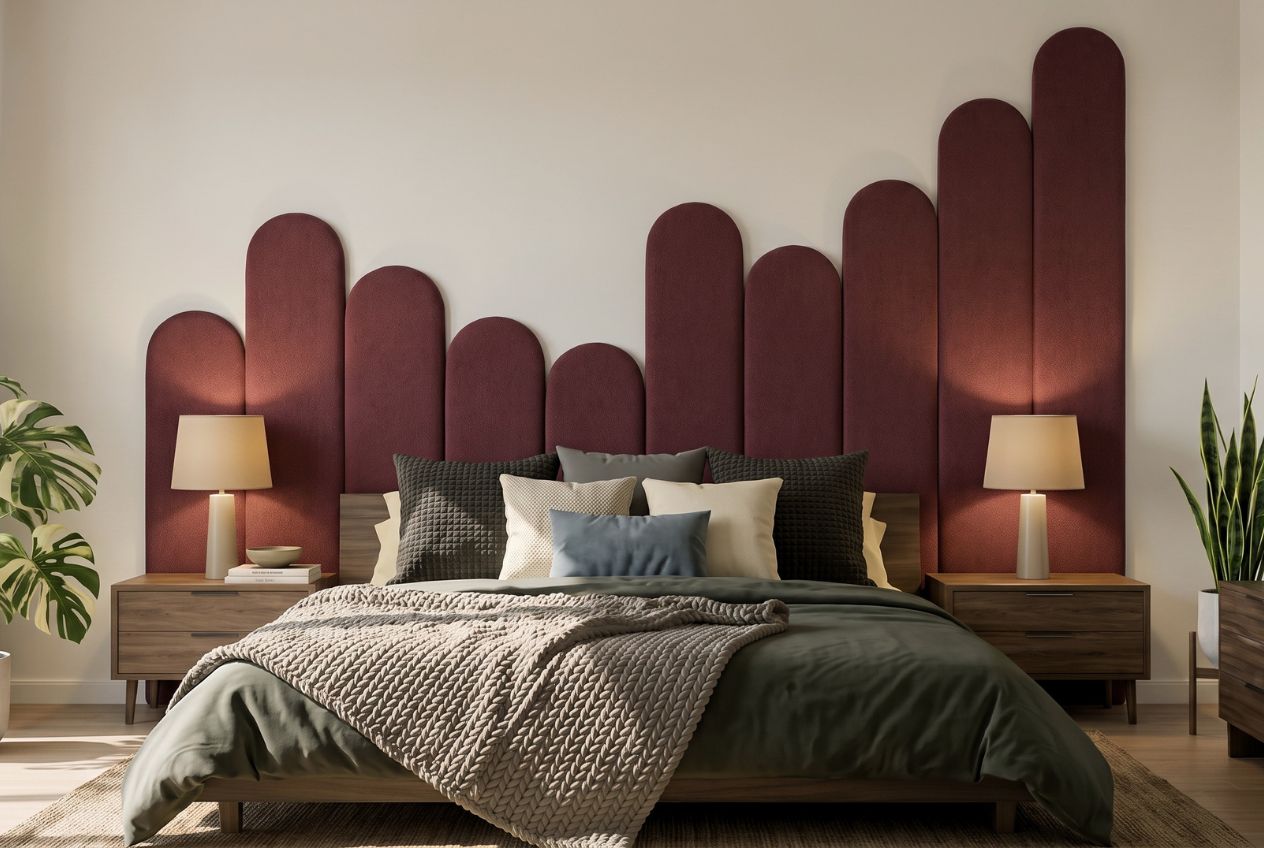
A panel wall creates a strong visual anchor. What you place around it determines whether the room feels considered or crowded. Liftedplus curates wall art and decorative accents that hold their own alongside textured surfaces without competing for attention. The Liftedplus mood library is a practical starting point if you want to see how colour, form, and texture work together before committing to a full room scheme. For homeowners who want to understand how decor shapes the feeling of a space, the Liftedplus guide on how decor personalises your space covers exactly that, with practical examples drawn from real New Zealand interiors.
FAQ
What is the most affordable type of decorative wall panel?
PVC 3D panels are the most affordable option, costing roughly $1.80–$4.00 per square foot. A standard feature wall can be completed for well under $300 in materials.
Can decorative panels be used in rental homes?
Removable modular wall panels and adhesive-backed PVC tiles are well-suited to rental homes. They install without permanent fixing and can be removed cleanly at the end of a tenancy. Liftedplus has a dedicated guide on renter-friendly decor ideas that covers this in detail.
Do decorative wall panels reduce noise?
Acoustic panels made from PET HD material, such as the Vicoustic VicShape 3D, absorb mid and high-frequency sound and measurably reduce echo in a room. Standard PVC or PU panels do not provide meaningful acoustic benefit.
How do I prevent mould behind wall panels?
Integrating a moisture barrier between the wall substrate and the panel is the most reliable prevention method. This is particularly important in bathrooms, laundries, and exterior-facing walls in humid climates.
Are modular wall panels worth the higher cost?
Modular systems cost more upfront but offer long-term value through reusability, adaptability, and the ability to integrate cable channels within the wall. For homeowners who renovate or redecorate regularly, the investment pays back over time.