
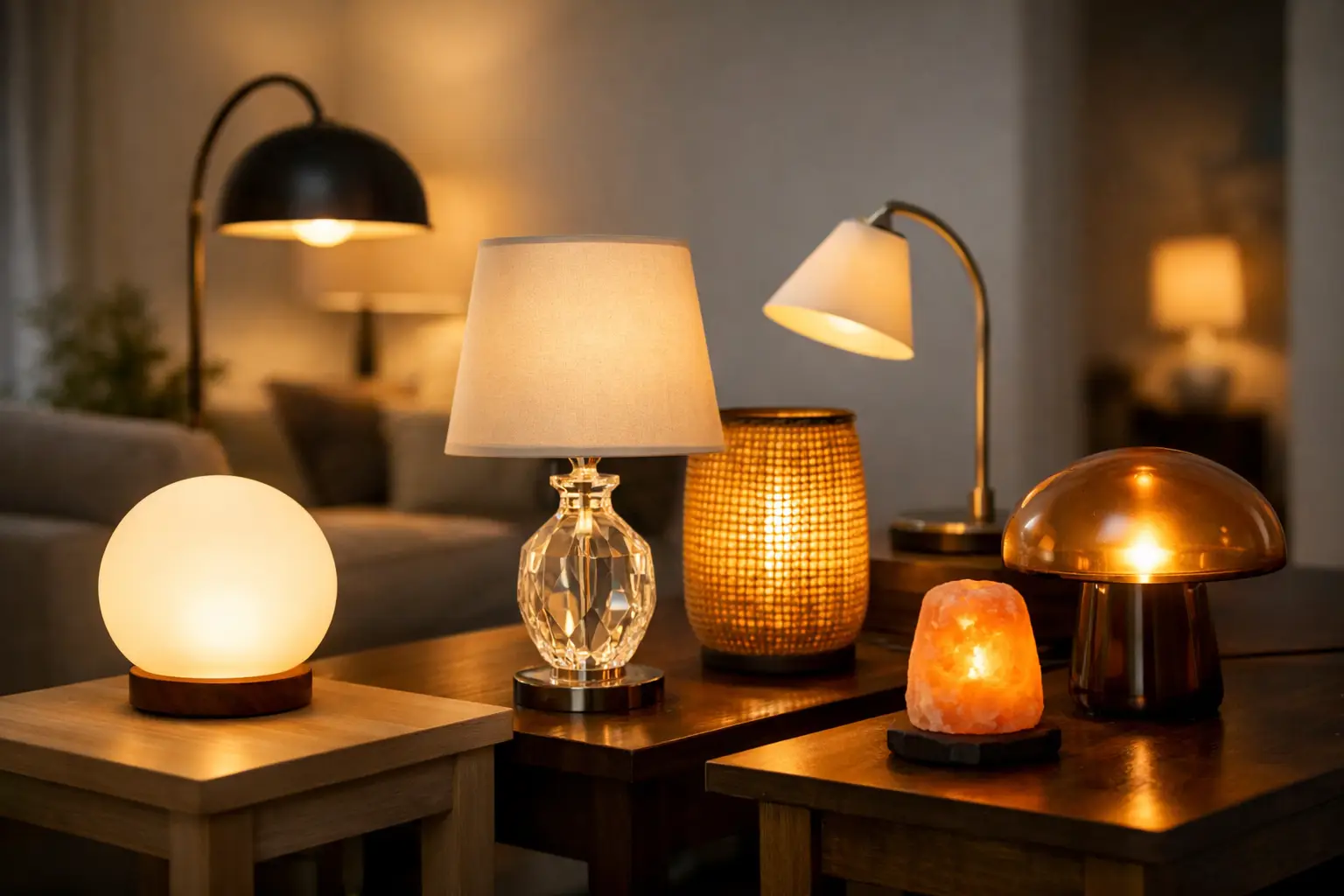
The best table lamps for mood lighting at home do far more than brighten a corner. They set the emotional temperature of a room. A good one can make a living space feel richer, warmer, softer, more architectural. A bad one just throws light around and calls it a day.
If you are building a home with personality, this is where table lamps earn their place. Not as backup lighting. Not as an afterthought on a console. As part of the room’s visual language. The right lamp shifts mood before anyone notices why.
What makes a table lamp good for mood lighting?
Mood lighting is not about maximum brightness. It is about controlled glow, softened edges and light that lands where you want it to. That usually means lower lumen output, warmer bulbs, diffused shades and a form that looks good even when switched off.
This is where many people get it wrong. They choose a lamp the way they might choose a ceiling fitting – by asking how much light it gives. For mood, the better question is how the light behaves. Does it bounce softly through a linen shade? Does it cast a pool of light across a sideboard? Does the base bring shape, colour or contrast into the room during daylight hours?
The best mood lamps work on two levels. They light the space well enough to create atmosphere, and they hold the room visually. That second part matters just as much, especially in interiors that lean on bold art, sculptural furniture and stronger colour choices.
10 best table lamps for mood lighting at home
1. The linen-shade lamp
If you want instant softness, start here. A linen shade diffuses light in a way that feels relaxed and expensive without trying too hard. It takes the edge off the bulb and creates a warm, ambient wash that works beautifully in living rooms and bedrooms.
The trade-off is clarity. Linen is not ideal if you also need task lighting for reading or working. But for evening atmosphere, it is hard to beat.
2. The coloured glass lamp
Coloured glass brings two things at once – glow and presence. When lit, the material can feel luminous. When unlit, it still adds a saturated hit of colour to a shelf, bedside or console.
This style suits homes that are moving away from safe neutral layering. Amber, smoke, olive and deep blue all create different moods. Amber feels warm and intimate. Blue feels cooler and more directional. It depends on the room and what else is happening around it.
3. The ceramic statement base
A sculptural ceramic base gives a lamp weight. Not physical weight alone, but visual weight. It anchors a surface and adds a handcrafted quality that stops a room feeling flat.
For mood lighting, pair ceramic with a soft shade rather than a bare bulb. The base can carry texture, colour or shine while the shade keeps the light calm. This is a strong option for sideboards, entry consoles and wider bedside tables where you want the lamp to read as an object as much as a light source.
4. The mushroom lamp
Still one of the strongest silhouettes for contemporary interiors, the mushroom lamp creates an even, enclosed glow that feels clean and atmospheric. Because the bulb is often hidden within the form, the light is less exposed and more controlled.
Some lean playful, some sleek, some distinctly retro. That flexibility is part of the appeal. Just watch scale. A tiny mushroom lamp can disappear visually, while an oversized one can become the room’s punctuation mark.
5. The pleated shade lamp
Pleated shades have made a convincing return, and not in a quaint way. In the right shape or colour, they bring rhythm and softness to sharper interiors. If your space has hard architectural lines, stone surfaces or minimal joinery, a pleated lamp can stop everything feeling too severe.
This kind of lamp works best when the base is restrained. Too many decorative elements at once and it starts to feel busy. Mood lighting should feel layered, not fussy.
6. The metal dome lamp
For a more focused mood, a metal dome lamp directs light downward and creates a tighter pool. This is useful in corners that need atmosphere with a bit of purpose – beside an armchair, on a desk that doubles as a styling surface, or on a bedside where you actually read.
The result is moodier, sharper and a little more dramatic than fabric-shaded styles. If your home leans gallery-like, this is a strong fit.
7. The rechargeable portable lamp
Portable lamps have moved well beyond convenience. The better ones are now genuinely design-led, and they solve a specific problem: where to place mood lighting when there is no socket exactly where you want it.
That matters in open-plan spaces, awkward shelves, outdoor-adjacent zones and dining areas where a small lamp can change the tone instantly. Battery life and charging time vary, so this is one category where practicality matters as much as looks.
8. The sculptural resin or acrylic lamp
If you want a lamp that feels contemporary and slightly rebellious, resin and acrylic are worth a look. These materials can hold strong colour, unusual shapes and a certain glossy confidence that traditional lamp styles often lack.
They are especially effective in spaces that need energy rather than softness alone. Think media rooms, creative workspaces, or living rooms with bold wall art and fewer decorative extras. The caution here is balance. One sculptural lamp can lift a room. Three can tip it into visual noise.
9. The stone or marble lamp
Stone brings depth in a quieter way. Marble, travertine and similar finishes add solidity and natural variation, which makes them useful in interiors that already have colour but need grounding.
As mood lighting, these lamps are less about playful glow and more about refinement. They work well in pared-back rooms where texture is doing the heavy lifting. If your space already has lots of pattern and colour, stone can provide a useful pause.
10. The small-scale lamp in a bold colour
Not every mood lamp needs to be oversized. A compact lamp in lacquered red, glossy green, cobalt or butter yellow can completely shift a vignette. It draws the eye, adds personality and introduces a layer of light without taking over.
This is often the smartest option in smaller homes or tighter urban spaces where every surface needs to earn its keep. A smaller lamp can still make a strong visual statement if the colour and shape are right.
How to choose the best table lamps for mood lighting at home
Start with placement, not product. A lamp beside the sofa does a different job from one on a bedside table or hallway console. If the goal is soft ambient light across the room, choose a broader shade and a warmer bulb. If the goal is a more intimate pocket of light, look for a directional form with a lower, more focused glow.
Scale matters more than most people expect. A lamp that is too small looks apologetic. One that is too large can dominate the surface and throw the room off balance. As a guide, the lamp should feel proportionate to the furniture beneath it and substantial enough to hold its own next to artwork, books or other objects.
Shade material changes everything. Fabric gives softness. Glass gives atmosphere and colour play. Metal creates drama and control. Opaque shades tend to push light up and down, while translucent ones spread it more evenly. Neither is better. It depends on whether you want the room to feel cocooning or crisp.
Then there is bulb temperature. For mood lighting, warm white usually works best. Anything too cool can flatten the room and strip away the intimacy you are trying to create. If possible, use dimmable bulbs. That single detail gives you far more control over the room’s tone from early evening through to late night.
The styling mistake that kills the mood
Relying on one lamp alone.
Mood lighting works best in layers. A table lamp should not be fighting overhead downlights on its own. It should be part of a composition with wall lighting, floor lamps, candles or low-level architectural light. The point is contrast. Pools of glow, darker edges, moments of focus.
This is also where colour comes into play. In a room filled with beige-on-beige, even a beautiful lamp can struggle to create depth. But place a warm lamp against a saturated wall, beside a sculptural chair, under a bold artwork, and suddenly the light has something to react with. The mood becomes visible.
That is why design-led interiors tend to feel better at night. They are built with atmosphere in mind, not just daylight appearance.
Where table lamps have the biggest impact
Living rooms are the obvious choice, but they are not the only one. A lamp on an entry console can make the whole home feel more considered the moment you walk in. A small portable lamp on a dining table can change dinner from functional to intimate. A bedside lamp with a softer shade can make a bedroom feel calmer without slipping into bland hotel territory.
Even kitchens can benefit, especially in open-plan homes where the kitchen remains visible in the evening. A single table lamp on a shelf or sideboard softens all that hard-working surface area and makes the space feel lived in after dark.
For design-aware homes, the best table lamps are not filler. They are small but high-impact decisions. They add glow, yes, but they also add shape, materiality and intent. Lifted+ approaches lighting this way for a reason. The right piece does not just light a room. It changes how the room feels to be in.
If your home still relies on one harsh overhead fitting to do everything, start with a table lamp that brings warmth, sculpture and a little tension. More mood. More depth. More life after sunset.