

Yes, you can hang things in a New Zealand rental, but how you hang them decides whether you need to ask first. Adhesive hooks and strips used as directed need no formal request. Picture hooks, nails and shelves are a ‘minor change’ that needs your landlord’s written consent, which they cannot unreasonably refuse. Anything that goes into the wall, you are expected to return to substantially the same condition when you leave.
That is the short version. The longer version is about the blank wall you are staring at, the landlord who may or may not reply, and the bond you would very much like to see again. This guide walks through each of those, so you can decorate with confidence rather than crossed fingers.
Key Takeaways
- Under the Residential Tenancies Act, you need your landlord’s prior written consent to affix fixtures, but a minor change such as a picture hook cannot be unreasonably refused.
- Your landlord has 21 days to respond to a written request, and refusing a genuine minor change is an unlawful act.
- Whatever you install, you must remove it and return the wall to substantially the same condition. Careless damage is capped at the lesser of the insurance excess or four weeks’ rent.
- No-drill options, from adhesive hooks to modular panels, sidestep most of the paperwork, though no adhesive is guaranteed damage-free on every wall.
Table of Contents
- The rule behind every nail: section 42
- What counts as a minor change
- How to ask, and how long the landlord has
- Who pays when you take it all down
- Why adhesives deserve a second look
- No-drill ways to make a wall feel like yours
- A quiet word on the hallway, the office and the bedsit
- Bring colour home without the paperwork
- A short checklist before you hang anything
- FAQ
- Sources
The rule behind every nail: section 42
The starting point is section 42 of the Residential Tenancies Act 1986. It says a tenant must not affix a fixture to the premises, or make a renovation, alteration or addition, except as the tenancy agreement allows or with the landlord’s prior written consent.
A nail in the plaster, a bracket for a bookshelf, a screw for a curtain track: all of these are fixtures or alterations in the law’s eyes. Your tenancy agreement will usually repeat the point, and the standard Tenancy Services agreement says the tenant must not alter the premises without the landlord’s written consent.
It sounds restrictive. In practice, the 2020 amendments gave tenants a good deal more room than the old rules did.
What counts as a minor change
Since the Residential Tenancies Amendment Act 2020, a tenant can ask to make a minor change, and the landlord cannot decline it. A change is minor when it carries no more than a low risk of material damage and the property can easily be returned to substantially the same condition. It must also avoid health and safety risks, structural, weathertightness or character problems, and the need for regulatory consent.
Tenancy Services lists examples that include installing picture hooks, shelving, curtains, baby gates and securing a bookshelf against earthquakes. Aratohu gives a similar list and points to sections 42A and 42B of the Act.
The practical sorting looks like this.
| What you want to do | Where it sits | What to do |
|---|---|---|
| Adhesive hooks, strips and removable wall decor, used within their weight limits | Generally no consent step, though the wall surface still matters | Follow the maker’s removal directions and test a hidden patch first |
| Picture hooks or small nails | Minor change | Ask in writing before you start |
| Shelving screwed to the wall, new curtain tracks | Minor change in many cases | Ask in writing, and describe what you will fix and where |
| Painting, or anything structural | More than minor | Written consent needed; the landlord may take longer to reply |
The first row reflects the practical guidance from a Wellington property manager, Property Plus, which also lists painting and screwed-in shelves as needing consent. Whether your particular change is minor ultimately comes down to the definition above, so when in doubt, ask.
How to ask, and how long the landlord has
A request for a minor change should be in writing: an email is fine, and it leaves a record. Say what you want to install, where, and how you will remove it. If you can name the type of hook or fixing, do.
The landlord then has 21 days. Under section 42A(3), they must respond in writing within that time. Tenancy Services explains that the response should say whether they consider the change minor, and that if they think it is more than minor and need longer, they can give written notice extending the period by a reasonable time.
Withholding consent for a genuine minor change is an unlawful act. Landlords may, though, set reasonable conditions, such as asking you to use a particular kind of picture hook.
Here is the part many tenants miss. Aratohu notes that if the landlord says no, you cannot go ahead anyway, even if the change is minor or the refusal looks unreasonable. Your route is the Tenancy Tribunal, where penalties of up to $1,500 can apply against a landlord who has acted unlawfully. So a calm, specific, written request is your best tool, and hammering first is your worst.
A request that tends to get a quick yes
Keep it short and specific. Tell them you would like to hang three framed prints in the living room with standard picture hooks. Mention that you will fill and touch up the holes when you leave. Ask them to confirm in writing within the 21 days. You are not being pushy; you are making it easy to say yes.
Who pays when you take it all down
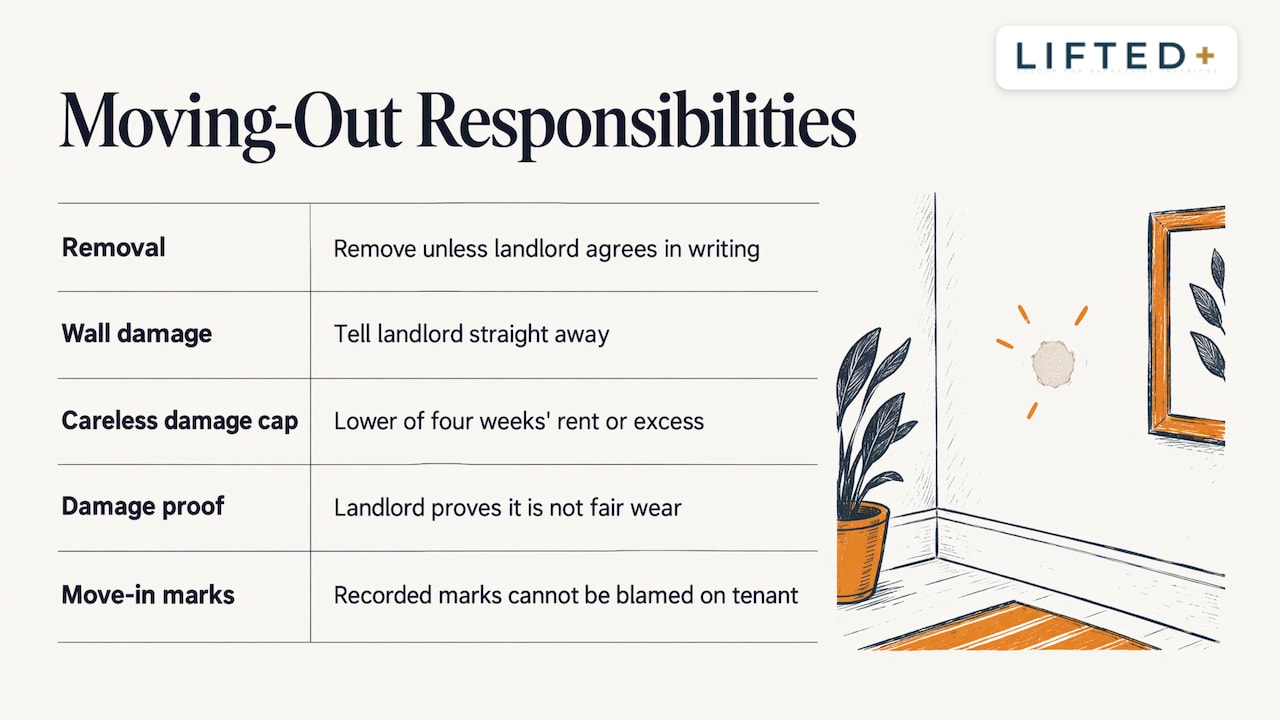
At the end of the tenancy you must remove what you installed, unless the landlord agrees it can stay, and return the property to substantially the same condition. Tenancy Services says this applies to minor changes, and the landlord and tenant can agree otherwise in writing.
If removing something does damage the wall, section 42(6) says you must tell the landlord straight away, and they can choose to repair it or claim reasonable repair costs from you.
There is a ceiling on that. Tenancy Services says that for careless damage, tenants are liable up to four weeks’ rent or the landlord’s insurance excess, whichever is lower. Aratohu adds that the same cap covers careless damage when removing a fixture.
Two more protections matter on moving-out day. The landlord carries the burden of showing that damage is not fair wear and tear, and the initial property inspection report means you cannot be blamed for marks recorded when you moved in. Photograph the walls on day one and you will thank yourself later.
Why adhesives deserve a second look
Sticky hooks seem like the obvious answer, and often they are a good one. But adhesive is not a free pass. Property Plus notes that adhesive products are not universally safe on every surface, especially older enamel or low-VOC paints, and recommends checking weight limits, following removal instructions and testing a discreet area first. It also flags wall damage from hooks, screws and nails as the most common source of bond deductions it sees in Wellington.
The lesson is not to avoid adhesive. It is to choose it as carefully as you would choose a paint colour. Test low and out of sight, give the adhesive time to cure if the instructions say so, and when it is time to leave, warm and slow beats quick and hard. Our guides on renter-safe adhesives and on why Blu Tack can threaten your bond go into the detail.
No-drill ways to make a wall feel like yours
A rental wall is a negotiation between your taste and someone else’s property. Here are the routes that tend to keep both parties happy.
Use what the house already offers
Older villas and bungalows often have picture rails near the cornice. Property Plus points out these let you hang art and mirrors from hooks and cord with no wall contact at all. If your place has them, they are the gentlest option going.
Lean, layer and lift
Large framed pieces leaning on a sideboard or a shelf look deliberate rather than temporary. Layer a mirror in front of art, add a floor lamp, and the wall suddenly has depth without a single hole. Freestanding shelving needs no consent, though securing tall furniture against earthquakes is a recognised minor change worth asking about.
Bring colour in on a panel
Paint is usually the fastest way to make a room feel like yours and the most likely to need consent. A removable wall design gives you colour without commitment. Our rental-friendly decor ideas and landlord-friendly wall decor guide show how far you can go in the way of texture without renovation.
Think seasonally
Small rented spaces also reward a lighter touch around the holidays, when a few well-placed pieces carry more than a wall of ornaments. These renter friendly Christmas decor ideas are a handy example of decorating a compact place without leaving a mark.
A quiet word on the hallway, the office and the bedsit
The law does not care which room you are in, but your decorating problem does. A hallway wants something that works at a glance. A home office wants a backdrop that looks good on camera. A bedsit wants one wall to do the work of a feature wall without eating the floor space.
The common thread is making one wall deliberate. Pick the wall you see most, not the wall that is emptiest. Give it a single idea: a colour, a shape, or a rhythm of repeated forms. A crowd of small things reads as clutter; one confident move pulls a room out of the safe, polite middle.
Our view on decorating a rental
We built DwellForms™ because we kept meeting people who loved colour and were afraid of their landlord. The fear is reasonable. A bare rental wall is a test of nerve, and most of the usual answers, paint, wallpaper, drilled shelves, ask for permission you may wait weeks to receive.
So we designed a different answer: modular, precision-cut PET felt panels made from 100% recycled plastic, arranged into sculptural patterns that give a wall real presence. They go up with adhesive pads, not screws, and they come down to be rearranged or taken to the next home.
We tested several adhesive options before settling on ours. We deliberately set aside one popular brand because our selected nano-adhesive pads performed significantly better in our own testing at minimising damage to walls. We will never call any adhesive completely damage-proof, because wall paint, age and surface all play a part. What we can say is that we chose carefully, and we encourage every renter to test a small patch and follow the instructions.
Used well, a removable wall design lets you have colour without commitment and a home that feels like yours from the first week.
Michelle
Bring colour home without the paperwork
If you would like to see how a sculptural panel arrangement might sit on your wall, start with our DwellForms™ Colour Samples. Holding the felt against your own light and paint is the surest way to choose a colour with confidence, and sample kit purchases are credited towards a full kit order.
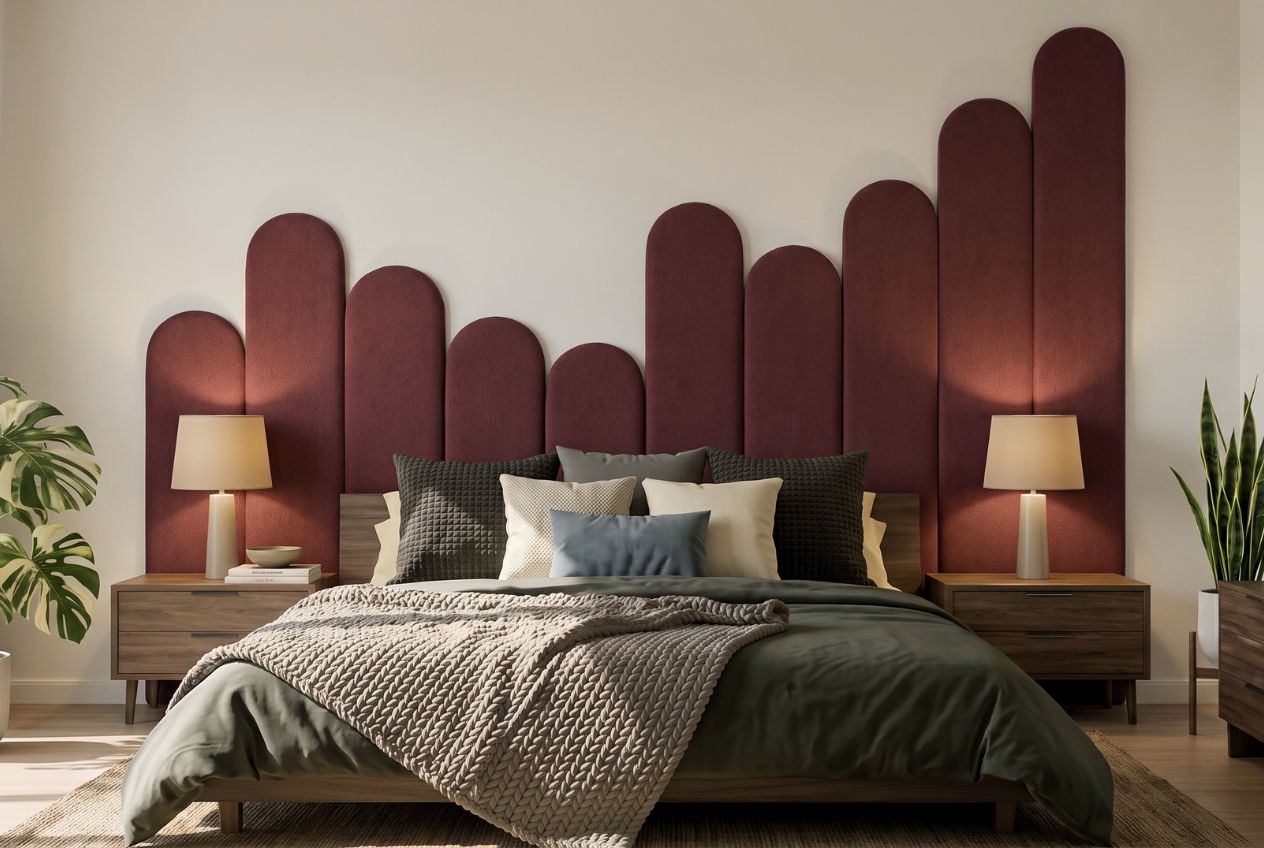
When you are ready, our Core Kits give you a complete feature wall, and Extension Kits let you grow the arrangement later or carry it into a new home. Our guide to protecting your bond with no-drill panels walks through the steps.
A short checklist before you hang anything
Start by reading your tenancy agreement for any clause about alterations. Photograph the walls and check them against your initial inspection report. Decide whether your idea is adhesive, a picture hook or something bigger, and if it goes beyond adhesive, email your landlord or property manager with the details. Note the date, because the 21-day clock starts when they receive it.
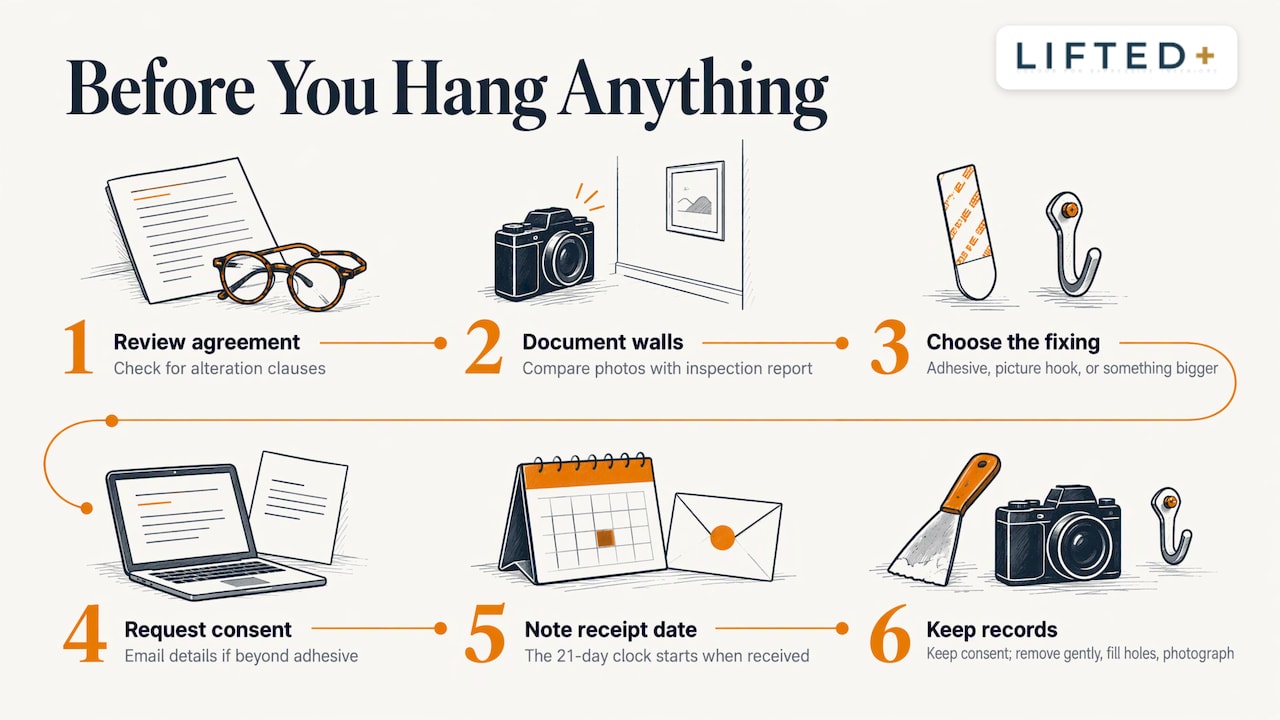
When consent arrives, keep it. When you leave, remove everything gently, fill small holes if you made any, and take photos. If a dispute does arise over repairs, a 14-day notice to remedy and then the Tenancy Tribunal are the formal routes, but a clear paper trail usually means you never need either.
If you want to think about the colour side of it first, our guides to using colour to lift a room and bond-friendly decor are good next reads.
FAQ
Do I need my landlord’s permission to hang a picture in NZ?
If you are putting a nail or picture hook in the wall, yes: ask in writing first. It is a minor change, and the landlord cannot unreasonably refuse it. Adhesive hooks do not involve the same formal request, but you are still responsible for the wall condition when you leave.
How long does a landlord have to reply to a request?
The landlord must respond in writing within 21 days of receiving your request. If they think the change is more than minor, they can extend the time with written notice. If they simply do not reply, keep a copy of your request and contact Tenancy Services for guidance.
What if my landlord says no to a minor change?
Do not go ahead. Refusing a genuine minor change is an unlawful act, but you must still take the matter to the Tenancy Tribunal rather than acting on your own. Ask for the reasons in writing, and consider whether a reasonable condition, such as a specific hook type, would resolve it.
Can I lose my bond over picture hook holes?
You are expected to return the wall to substantially the same condition, so filling and touching up small holes matters. Liability for careless damage is capped at the lesser of the insurance excess or four weeks’ rent, and fair wear and tear is the landlord’s responsibility.
What can I do on a rental wall with no consent at all?
Freestanding furniture, leaning art, picture rails where they exist, and removable adhesive-mounted decor are the usual starting points. Follow the weight limits and removal directions, and test a small hidden area first.
Sources
- Residential Tenancies Act 1986, section 42
- Residential Tenancies Amendment Act 2020
- Tenancy Services: Tenants making changes to the property
- Tenancy Services: Damage and repairs
- Tenancy Services: Initial property inspection
- Aratohu: Modifications to the property
- Aratohu: Careless damage
- Aratohu: Fair wear and tear
- Property Plus: How to personalise a rental
Recommended
- Rental Friendly Decor NZ: 10 Ideas That Work
- Landlord Friendly Wall Decor For NZ Renters
- Bond Friendly Decor: Colour For NZ Rentals Without Risk
- Renter Safe Adhesives: How To Protect Your Bond In NZ
This article is for general information and inspiration only. Product performance and results may vary depending on individual circumstances, surfaces and installation.
