
Last Updated: November 6, 2026
Quick Summary
Architectural wall panels are worth it for living rooms when the room feels flat, cold or rented-neutral, because they add texture, depth and structure to a blank wall without touching the room’s structure. They solve a visual problem rather than a structural one, so they are not a substitute for a full renovation.
- Panelling the wall you face on entry or the one behind main seating gives the strongest effect.
- Run panelling to just above door height to read as full-height without the full material cost.
- Fluted panels hide minor wall imperfections better than flat panelling because the ridges break up the surface.
- Price the full wall area, subtract nothing for openings, and treat the difference as contingency.
- Decorative panels add a small insulating layer but are not insulation and will not meaningfully change warmth.
Table of Contents
- What Architectural Wall Panels Actually Do for a Living Room
- Living Room Wall Panelling Ideas That Work in Real Spaces
- Fluted Wall Panels: The Texture That Changes a Room
- Removable Wall Panels for Renters and Frequent Movers
- Comparing Panel Materials and Finishes Side by Side
- What Wall Panels Cost and How to Budget the Project
- Wall Panel Maintenance, Repair, and Lifespan
- Acoustic and Thermal Performance: What Panels Really Change
- Frequently Asked Questions
What Architectural Wall Panels Actually Do for a Living Room
Architectural wall panels are decorative surface coverings that add texture, depth and structure to an interior wall, turning a flat plane into a design feature.
The effect is mostly psychological. A panelled wall gives the eye something to land on, which makes a large blank space feel intentional rather than unfinished. It also adds a layer of softness or hard geometry that paint alone cannot deliver.
That is the honest case for architectural wall panels in a living room: they solve a visual problem, not a structural one. If your room feels flat, cold or rented-neutral, panelling is the fix. If you want a full renovation, this is not that.
For a closer look at how a no-renovation feature wall comes together, see our guide to living room feature wall without renovation.
Living Room Wall Panelling Ideas That Work in Real Spaces
Real rooms have radiators, awkward corners and furniture that cannot move. The best living room wall panelling ideas work with those constraints rather than pretending they do not exist.
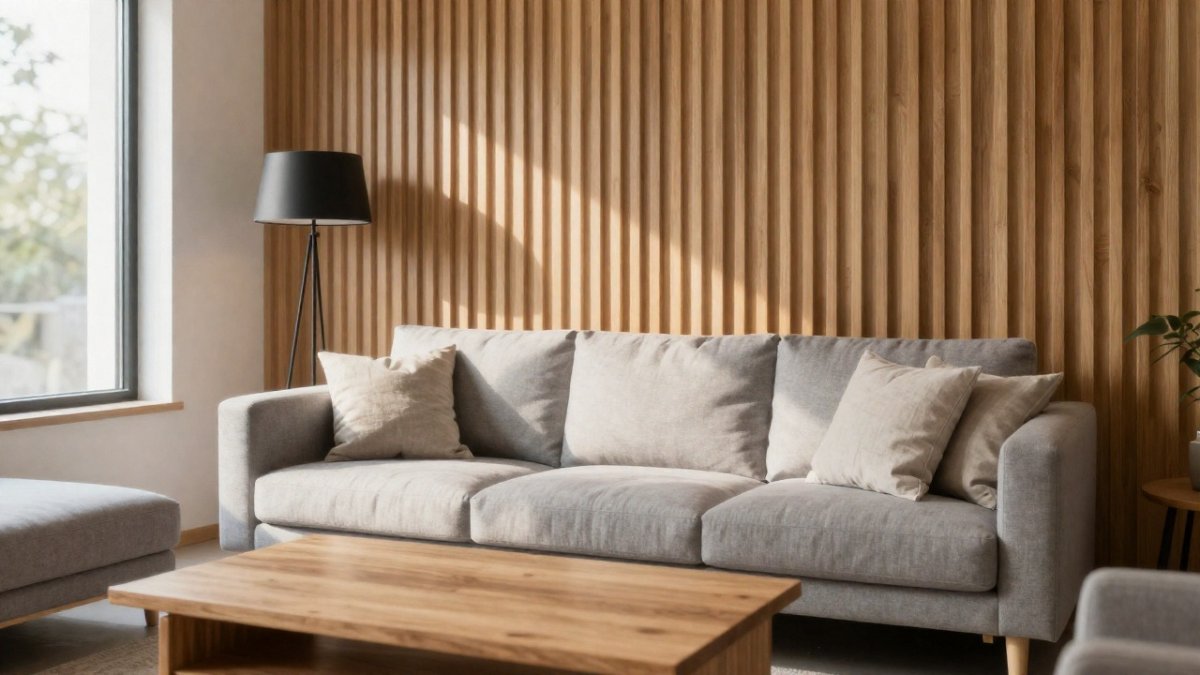
Which wall. The feature wall should be the one you face when you walk in, or the one behind the main seating. Panelling a wall you never look at wastes the effect.
How high. Floor-to-ceiling panelling makes a ceiling feel higher and a room feel more considered, but it costs more and is harder to reverse.
What sits in front of it. A sofa, sideboard or media unit covers the lower section of the wall.
How it will be lit. Raking light from a floor lamp or wall washer exaggerates texture and shadow; flat overhead light flattens it.
We group the options into three families, and each one suits a different kind of space.
Wood and Wood-Look Panels
Wood panels bring warmth and a natural finish that paint cannot copy. Wood-look versions use laminate or veneer to get the same tone at a lower cost and with less movement over time.
They suit living areas with neutral furniture and good light. A common mistake is covering an entire wall in a dark wood finish in a small room, which shrinks the space. Keep dark tones to a single accent feature and use lighter wood-look panels elsewhere. In a small room, run the boards vertically to draw the eye up, and keep the panel tone within a shade or two of the wall colour so the texture reads without the wall dominating.
Shaker, Wainscoting, and Shiplap Styles
Shaker panels use a simple recessed frame, wainscoting covers only the lower section of a wall, and shiplap uses horizontal boards with a small gap between them. All three read as classic rather than contemporary.
Wainscoting is the most renter-friendly of the three because it covers less wall and hides scuffs near chair height. Shiplap suits a relaxed, coastal feel but needs a flat wall behind it to sit straight. If shiplap is the look you want, our shiplap wall panel styling and DIY guide covers materials and installation in detail.
3D and Geometric Panels
Three-dimensional and geometric panels use raised shapes, folds or repeating patterns to create shadow and depth. They are the boldest option and the one most likely to divide opinion.
Use them on one wall only. A geometric accent feature behind a television or a seating area gives the room a focal point without overwhelming it. Keep furniture in front of a geometric panel simple and low-contrast, so the pattern is the feature rather than competing with it. For depth-adding ideas that skip the drill, our roundup of 3D wall decor ideas for renters is a useful next read.
Fluted Wall Panels: The Texture That Changes a Room
Fluted wall panels use repeating vertical ridges to create rhythm and shadow across a wall. The vertical lines draw the eye upward, which makes ceilings feel higher and narrow rooms feel wider.
Fluted panels add textural interest without adding colour, so they work with almost any furniture palette. Because its ridges add depth while softening the look of small wall flaws, fluted millwork can bring the same practical texture to a living room without dictating its colour palette.
The trade-off is cleaning. Dust settles in the grooves, and a quick wipe with a flat cloth will not reach it. A soft brush attachment on a vacuum handles it in under a minute per panel.
Slatted panels are the close cousin here, using wider gaps between timber or composite lengths. Both styles suit a contemporary decor scheme, and both look best when run floor to ceiling rather than stopping halfway.
Removable Wall Panels for Renters and Frequent Movers
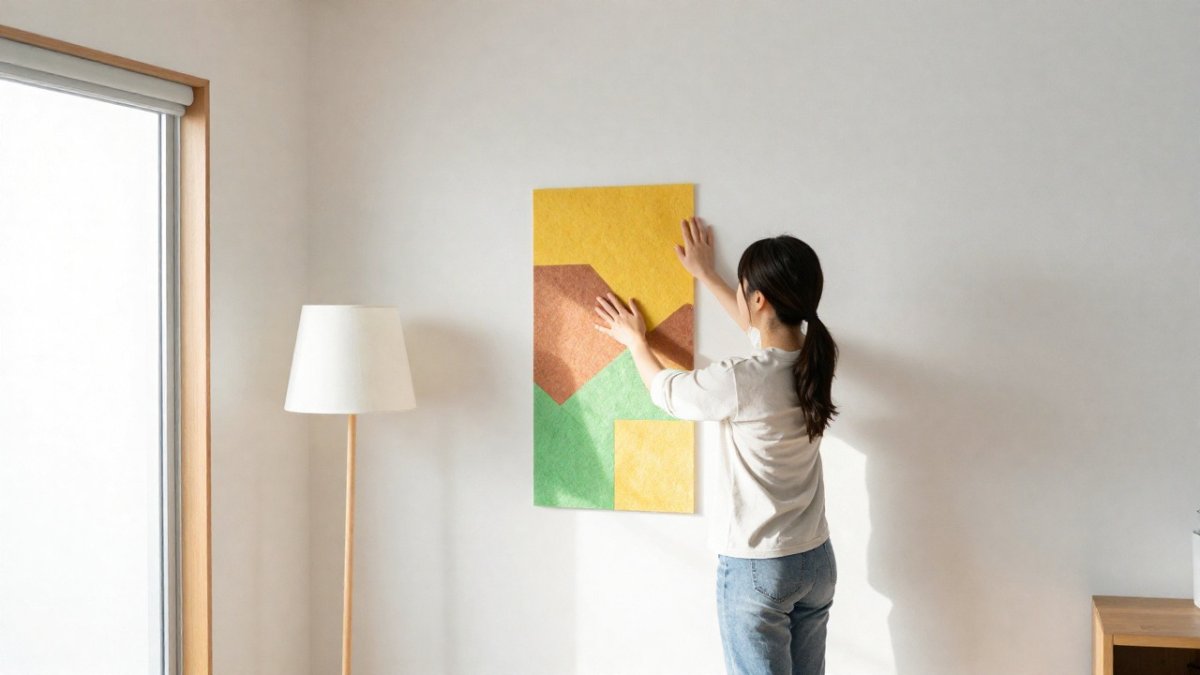
Removable wall panels are modular panels that fix to a wall without drilling or permanent adhesive, so they can be taken down and reused elsewhere. For renters, they are the difference between a room you tolerate and a room you designed.
The practical questions matter more than the look. Will they mark the wall? Will they stay put? Can they move with you?
On marking: any panel that relies on adhesive carries some risk on painted surfaces, particularly on fresh paint or textured walls. Panels that lean, clip or rest against the wall avoid that risk entirely.
On staying put: modular systems that interlock hold their alignment far better than individual tiles. Ask how the panels connect before you buy.
On moving: this is where modular kits earn their place. Our removable wall panel cost and budget guide breaks down the renter-friendly options by material.
Comparing Panel Materials and Finishes Side by Side
Material choice decides cost, weight, durability and how the panel feels to touch. The table below compares the main options on the factors that actually change the decision.
| Material | Look and feel | Weight | Best for | Watch out for |
|---|---|---|---|---|
| MDF or timber | Warm, solid, paint-ready | Heavy | Permanent feature walls | Needs fixing into studs |
| Wood-look laminate | Consistent grain, low movement | Medium | Budget wood effect | Can look flat up close |
| PVC panels | Smooth, moisture-resistant | Light | Easy-clean surfaces | Feels less premium |
| 3D geometric board | Sculptural, shadow-casting | Medium | Single accent walls | Harder to dust |
| PET felt | Soft, matte, colourful | Very light | Rentals, no-drill installs | Less rigid than timber |
| Tile panels | Hard, reflective, durable | Heavy | High-traffic living areas | Cold to the touch |
Finish matters as much as material. Matte finishes hide imperfections and suit soft, modern interiors. Gloss finishes reflect light and make small rooms feel larger, but they show every fingerprint.
Order samples before committing. Grain, tone and texture read very differently under your own lighting than they do on a screen.
What Wall Panels Cost and How to Budget the Project
Total project cost depends on panel type, wall area, finish and whether you install it yourself. Total project cost depends on quantity, the wall, the finish and whether you install it yourself, so check current pricing with Lifted Plus directly or request a quote.
Budget in four parts:
- Panels: priced per square metre or per panel, and the largest line item.
- Fixing and trim: adhesive, clips, edge trim and skirting adapters. Trim is easy to overlook and can add a meaningful percentage to the panel line on a wall with multiple corners, sockets and a doorway.
- Tools: a spirit level, measuring tape, a fine-tooth saw or cutting guide, a stud finder and a caulking gun if you are installing yourself. If you already own these, this line is close to zero.
- Installation: professional fitting if the wall is uneven, the panels are heavy, or the wall contains services you cannot locate with confidence. Labour is usually quoted per square metre or as a day rate, and complex walls take longer.
A useful rule is to price the wall area, then add a margin for offcuts and mistakes. A clean rectangle wastes little.
Watch out: a quote that is dramatically below the others usually excludes trim, adhesive or disposal of packaging, or assumes a perfectly flat wall. Ask what is included before comparing totals.
For current pricing on our modular kits, check the product pages directly rather than relying on a general estimate. Our renter-friendly wall panel budget breakdown compares material costs in more detail.
Wall Panel Maintenance, Repair, and Lifespan
Wall panel maintenance is mostly dusting and the occasional spot clean. How much work it takes depends entirely on the surface finish and how much texture the panel has.
Flat panels wipe clean with a damp cloth. Fluted, slatted and geometric panels need a brush or vacuum attachment to clear the grooves. Felt panels respond well to a light vacuum with a soft head.
Repairs are where materials diverge. A scratched timber or MDF panel can be sanded and repainted. A damaged laminate or PVC panel usually needs replacing as a unit, which is why buying a spare panel or two at the start is worth the small extra cost.
Lifespan follows the same pattern. Heavy timber panels fixed permanently will outlast several redecorations. Lightweight modular panels last well but are designed to be moved, so expect some wear at the connection points over repeated installs.
Acoustic and Thermal Performance: What Panels Really Change
Panels change sound more than they change temperature. A timber or composite panel with a gap behind it can soften echo and reduce high-frequency reflection in a hard room.
If echo is your actual problem, panels are one part of the answer. Rugs, curtains and soft furniture do more per dollar. Our guide to no-drill fixes to reduce living room echo covers the moves that work alongside panelling.
On thermal performance, be sceptical. Decorative panels add a small insulating layer, but they are not insulation. They will not meaningfully change how warm a room stays. Any claim otherwise is marketing, not physics.
The gap between a room you tolerate and a room you designed is usually one wall. If you rent, move often, or simply refuse to pick up a drill, that wall should not cost you your bond or your weekend.
Frequently Asked Questions
What types of wall panels work well in a living room?
Wood and wood-look panels add warmth, fluted and slatted panels bring texture, Shaker and wainscoting styles suit traditional rooms, and 3D or geometric panels create a modern focal point. Tile and PVC panels work in high-moisture or high-traffic spots. For renters, removable modular kits such as recycled PET felt panels offer colour and shape without drilling or permanent fixing, so the room can change with you.
Can architectural wall panels be installed without drilling?
Some can. Modular kits designed for renters are made to avoid drilling. Before choosing, check the panel’s weight, the wall surface, and the fixing and removal instructions for the specific product.
Can wall panels make a small living room look bigger?
Yes, when the panel style and layout are chosen carefully. Full-height vertical panels draw the eye upward and make ceilings feel taller. Light-coloured wood-look or felt panels keep the room bright, while horizontal slats can widen a narrow space. Avoid heavy dark panels on every wall in a small room; use them on one accent wall to add depth without closing the space in.
How do you clean and maintain interior wall panels?
Dust panels every few weeks with a soft microfibre cloth or vacuum brush. For wood and wood-look finishes, use a barely damp cloth and dry immediately; avoid soaking. Felt and fabric panels can be vacuumed gently and spot-cleaned with a mild detergent. Check fixings every few months, especially in humid rooms, and repair loose edges promptly. Most decorative panels last years with this basic routine.
Can wall panels be removed without damaging the wall?
Removable panel systems are designed for this, but the result depends on the wall and the product. Follow the manufacturer’s removal instructions for the specific kit.

