
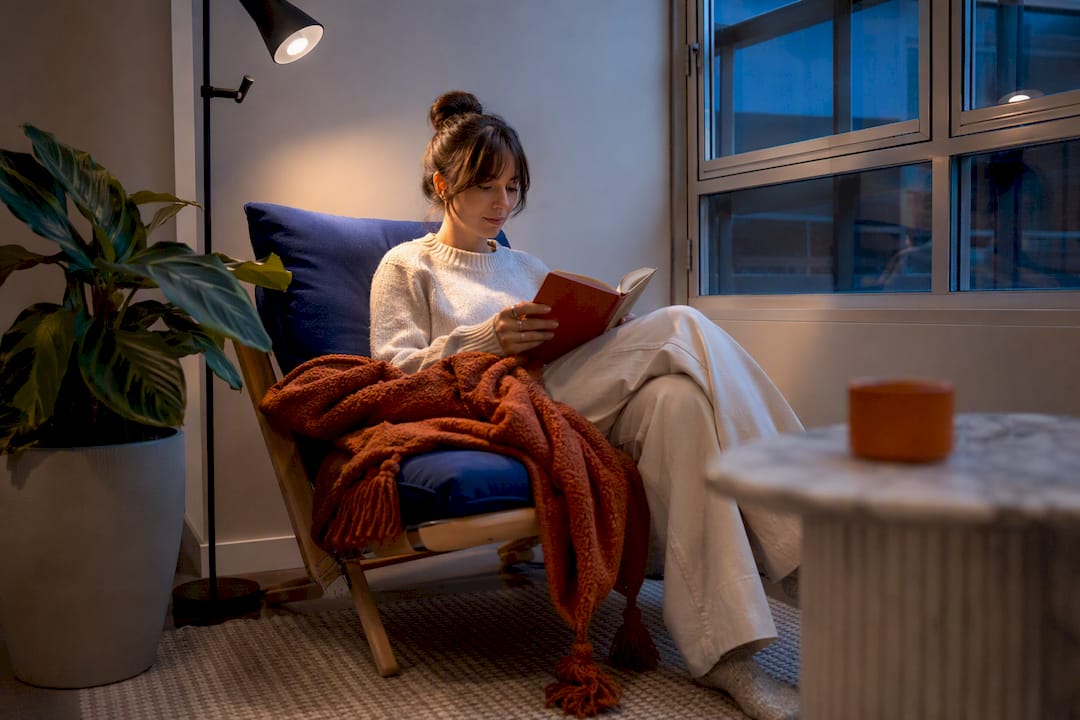
Dopamine decor uses colour, pattern and tactile layers to lift your mood, and the easiest way to try it is with something small and reversible: a scatter of colourful cushions or a removable feature panel you can take down if it doesn’t work. Test one change before you commit to a whole room. If it still makes you smile after a fortnight, build from there.
TL;DR:
- Small, removable decor items like cushions, wall panels, or art are ideal for testing the mood-boosting effect of dopamine decor before committing to larger changes.
- Using layered, warm lighting and textured textiles enhances saturated colours and creates a calmer, more inviting atmosphere in vibrant spaces.
- Renters and leaseholders should focus on adhesive wall panels and samples, avoiding painting or drilling, to personalize their space safely and reversibly.
- Personal color preferences based on individual responses and past experiences are more effective for lasting mood lifts than following current trends blindly.
- Regular maintenance, such as rotating textiles and careful removal of adhesive panels, is essential to preserve the vibrancy and appeal of dopamine-inspired decor over time.
Table of Contents
- What is dopamine decor, really?
- Ten dopamine decor ideas, from easiest to boldest
- No-drill wall decor for renters and apartment dwellers
- How to start without overspending or overwhelming the room
- The psychology behind dopamine decor
- Personalising colour to how you actually respond to it
- Keeping dopamine decor looking good over time
- Why intentional colour beats trend-chasing
- Try colour before you commit to it
- Sources
- FAQ
What is dopamine decor, really?
Dopamine decor is mood-first decorating. Instead of choosing furniture and finishes to match a trend or impress visitors, you choose colour, pattern and texture because they make you feel something good the moment you walk into the room. The term isn’t a clinical claim. Reporting from the BBC notes that psychologists describe vivid colour as capable of triggering brief mood lifts, but “dopamine decor” itself is a design metaphor, not a treatment.
The style has grown up since it first went viral. Early versions leaned on neon and clashing Brits. By 2026, Livingetc reports the trend has matured toward richer, earthier palettes, matte finishes, and colour paired against calmer backdrops rather than colour for colour’s sake. That shift matters for anyone nervous about going too bold. You’re not choosing between beige and chaos. You’re choosing intentional colour, applied with restraint.
Ten dopamine decor ideas, from easiest to boldest
Not every idea here needs a tradesperson, a landlord’s permission, or a weekend of upheaval. Start at the top of this list and work down as your confidence (and your lease terms) allow.
Cushions, throws and small textiles. This is the lowest-risk entry point in the entire style. A few bold cushions and a textured throw change a room’s mood in minutes and cost almost nothing to reverse.
Accent walls and colour drenching. Painting one wall, or drenching a whole room in a single saturated tone, creates real drama, but it works best when tempered by a neutral or natural backdrop elsewhere in the room, a balance Livingetc points to directly. Our guide on how to style a colour drenched lounge covers how to keep depth without losing contrast.
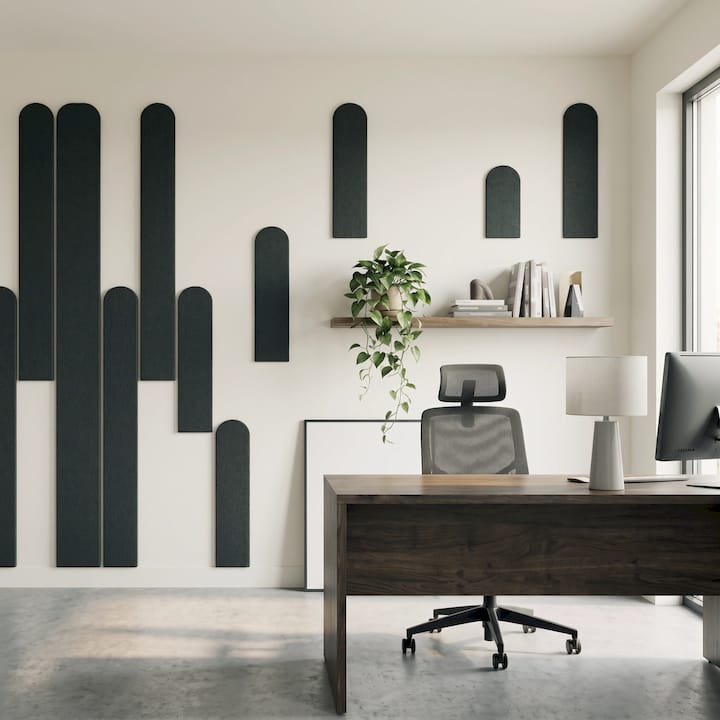
Removable, no-drill wall panels. For anyone who can’t paint or doesn’t want to commit to paint, sculptural wall panels installed with adhesive pads deliver colour and shape without touching the wall’s surface. This is where renters get the most freedom for the least risk.
Layered, warm lighting. Harsh overhead light flattens colour and can make saturated tones feel jarring. The Guardian recommends swapping to layered, dimmable lamps, ideally warm-toned and positioned near seating and task areas so colour reads richer once the sun goes down.
Statement art or a gallery wall. Choose pieces that genuinely spark joy rather than pieces that photograph well. A single oversized print often has more impact than a cluttered gallery.
Tactile textile layering. Bouclé, velvet, chunky knits and rattan add dimension that flat colour alone can’t. Texture is what stops a bold room from feeling like a showroom.
Pattern mixing. Stick to one dominant scale, one medium scale, and one small repeating pattern, and keep at least one element (usually the largest) restrained. Too many competing patterns at the same scale is what makes a room feel busy rather than joyful.
Colourful tiles or splashbacks. Kitchens and bathrooms are ideal testing grounds because they’re contained spaces, so a bold splashback or a run of patterned tile carries impact without dominating the whole home.
Plants as natural anchors. Greenery softens saturated colour and stops a room from feeling too synthetic, and it’s one of the cheapest ways to add life to a corner.
Upcycled and vintage finds. A found lamp, a secondhand armchair reupholstered in a loud print, or a flea-market mirror adds personality that a big-box store simply can’t replicate.
Pro Tip: Before you buy anything, order a fabric swatch or colour sample and hold it against your wall at 7am and again at 7pm. Colour shifts more than most people expect between morning and evening light.
No-drill wall decor for renters and apartment dwellers
Blank rental walls are the single biggest obstacle to dopamine decor, because most leases restrict painting and drilling outright. Peel-and-stick and adhesive-mounted panel systems solve this by treating the wall as a canvas you can dress and undress, not a surface you alter. Removable, sculptural panel kits fall into this category. They’re installed with tested adhesive pads rather than screws or nails, which means colour without commitment and texture without renovation.
A few things make removable panels work well in practice:
- Order a colour sample before buying a full kit, so you can check the tone against your actual wall and light.
- Test the adhesive on a small, inconspicuous patch first, and always follow the product’s own surface guidance.
- Check your lease for any restrictions on wall treatments before installing anything, even removable products.
- Pair panels with colour-blocked cushions or a modular furniture layout so the wall doesn’t stand alone.
No adhesive product can promise damage-free results on every wall surface. Textured plaster, old paint, and freshly painted walls all behave differently, so testing first and reading the manufacturer’s instructions matters more than any marketing claim. Our guide to decorating without painting walls walks through surface checks in more detail.
Pro Tip: If you’re not sure a colour will hold your interest, start in a low-visibility spot like a hallway or laundry. It’s a lower-stakes place to live with a bold choice before it goes anywhere near your living room.
How to start without overspending or overwhelming the room
- Pick one change and live with it for two weeks. Design practitioners call this the two-week rule, and it exists because impulse decorating leads to regret purchases. Brookdale’s advice is simple: introduce one colour or texture change, live with it for at least two weeks, and only add a second once the first still delights you.
- Test colour in real light. View samples in morning and evening light, at full size where possible, not on a paint chip the size of a coin.
- Follow a one-focal-point rule. Choose a single area, wall, or object to carry the boldest colour, and place function ahead of trend, for instance, keeping a bedroom calmer if you need it for rest.
- Shop secondhand first. Op shops, swap meets and local makers often turn up better colour and texture than new furniture at a fraction of the price.
The psychology behind dopamine decor
Dopamine is a neurotransmitter tied to reward and motivation, but neuroscience research doesn’t support a universal, predictable mood response to any specific colour, according to background reviews on dopamine’s role in the brain. What the research does support is something simpler and more useful: environments that reflect your own preferences tend to feel better to live in than environments chosen to impress someone else.
That’s really what the trend is doing right. Psychologists cited in the BBC’s coverage note that vivid colour can produce a brief lift in mood and a heightened sense of wellbeing for some people, but the effect isn’t uniform, and it isn’t a substitute for addressing genuine low mood. Treat “dopamine decor” as a design philosophy borrowing a scientific term for effect, not as a therapeutic claim.
The more durable insight is about intentionality. Choosing a colour because it’s trending produces a different result to choosing a colour because it genuinely lifts you when you see it. The first may fade with the algorithm, while the second tends to stick, because it’s tied to a real personal response rather than a passing aesthetic. That distinction is worth sitting with before you buy anything.
Personalising colour to how you actually respond to it
Colour perception isn’t identical from person to person, and neither is emotional response to it. Some people find saturated warm tones like terracotta or ochre energising; others find the same tones overstimulating and prefer cooler, more muted brights like sage or dusty blue. Design commentary on the intentionality behind dopamine decor makes the case directly: the goal isn’t to copy a trending palette wholesale, it’s to identify which specific colours trigger a genuine lift for you, then build around those.
A practical way to find your own palette is to look backwards before you look forwards. What colours show up in the clothes you actually enjoy wearing, the artwork you’ve kept for years, or the holiday photos you go back to? That pattern is a far more reliable guide than a mood board of other people’s rooms.
It’s also worth accounting for how a room is used. A home office might call for colours that feel stimulating and energising, while a bedroom probably benefits from something quieter, even within a broadly colourful scheme. Our piece on colour palette ideas for optimistic interiors breaks down how to match tone to function rather than just aesthetics. The point isn’t to follow a formula. It’s to notice your own reactions and let them lead the choices, room by room.
Keeping dopamine decor looking good over time
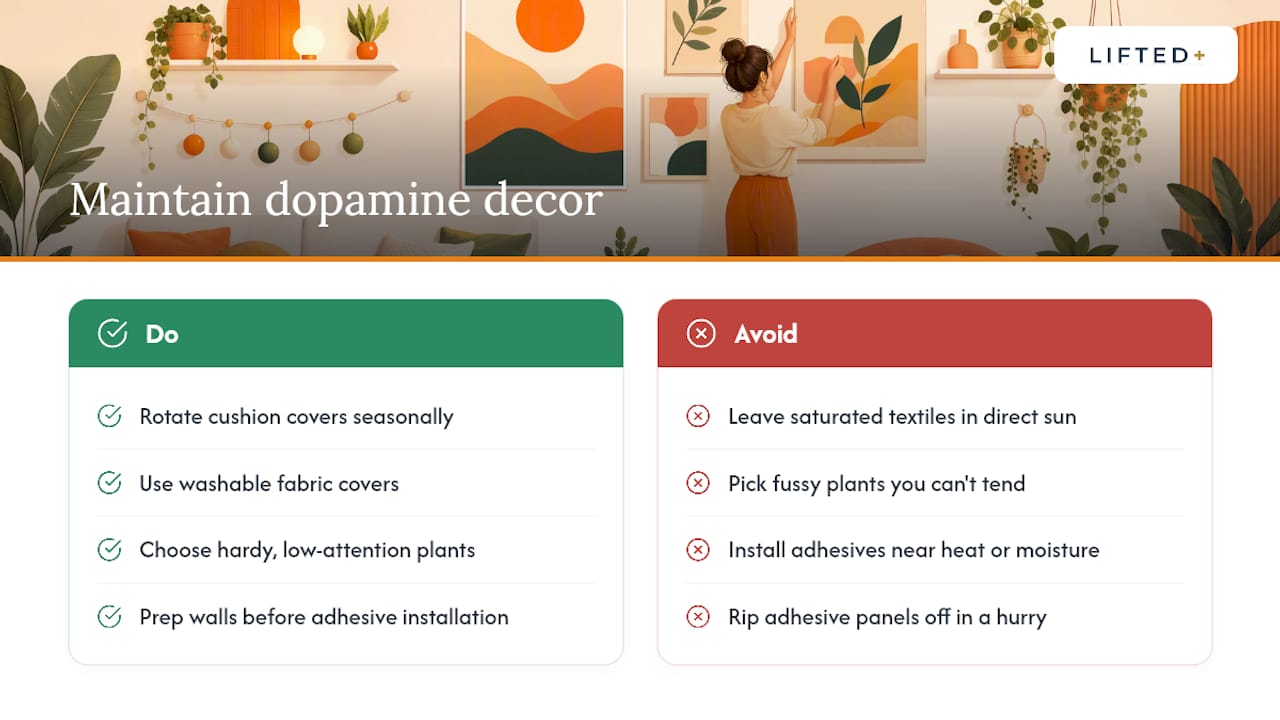
Bold decor only keeps lifting your mood if it still looks good in six months, which means maintenance matters more in a colour-forward home than in a neutral one. Saturated textiles fade fastest in direct sun, so rotate cushion covers and throws seasonally if they sit near a window, and choose washable fabric covers where you can.
Plants need honest assessment of your actual light and attention levels, not aspirational ones. A vivid trailing pothos or a hardy snake plant will forgive missed waterings far more than a fussy fern, and a dead plant undoes the mood-lifting effect faster than almost anything else in the room.
Removable wall treatments and adhesive-mounted panels hold up best when the wall itself is clean, dry and properly prepared before installation, and when they’re removed carefully following the product’s own guidance rather than pulled off in a hurry. Keeping any adhesive product out of direct, sustained heat or moisture (like above a stove or in a steamy bathroom corner) also extends how long it performs well.
Vintage and upcycled pieces need the least fuss but the most occasional care: a wipe-down, a tightened screw, an annual check for wear. None of this is difficult. It’s just the difference between decor that fades into background clutter within a year and decor that still earns a second look.
Why intentional colour beats trend-chasing
The biggest mistake I see in dopamine decor conversations is treating it as a shopping list instead of a filter. Buying whatever’s trending on social feeds isn’t the same as choosing colour that genuinely lifts you, and the two get confused constantly. A palette copied wholesale from someone else’s home rarely holds its appeal past the first few weeks, because it was never really about your own response in the first place.
What works is slower and more deliberate: testing a sample, living with one change, noticing whether it still delights you a fortnight later. Renter-friendly, removable, sustainably made options make that kind of experimentation genuinely low-risk, which is exactly why they’re worth taking seriously rather than dismissing as a compromise. Try one thing. See how it feels. Then decide what’s next.
— Michelle
Try colour before you commit to it
There are plenty of ways to chase colour, from paint to wallpaper to full renovation, but most of them ask you to commit before you know if you’ll love the result. Modular, sculptural wall panels made from precision-cut PET felt, installed with tested adhesive pads rather than paint, drilling or permanent fixings, can add real colour and texture to a rental or family home without the risk that usually comes with it.
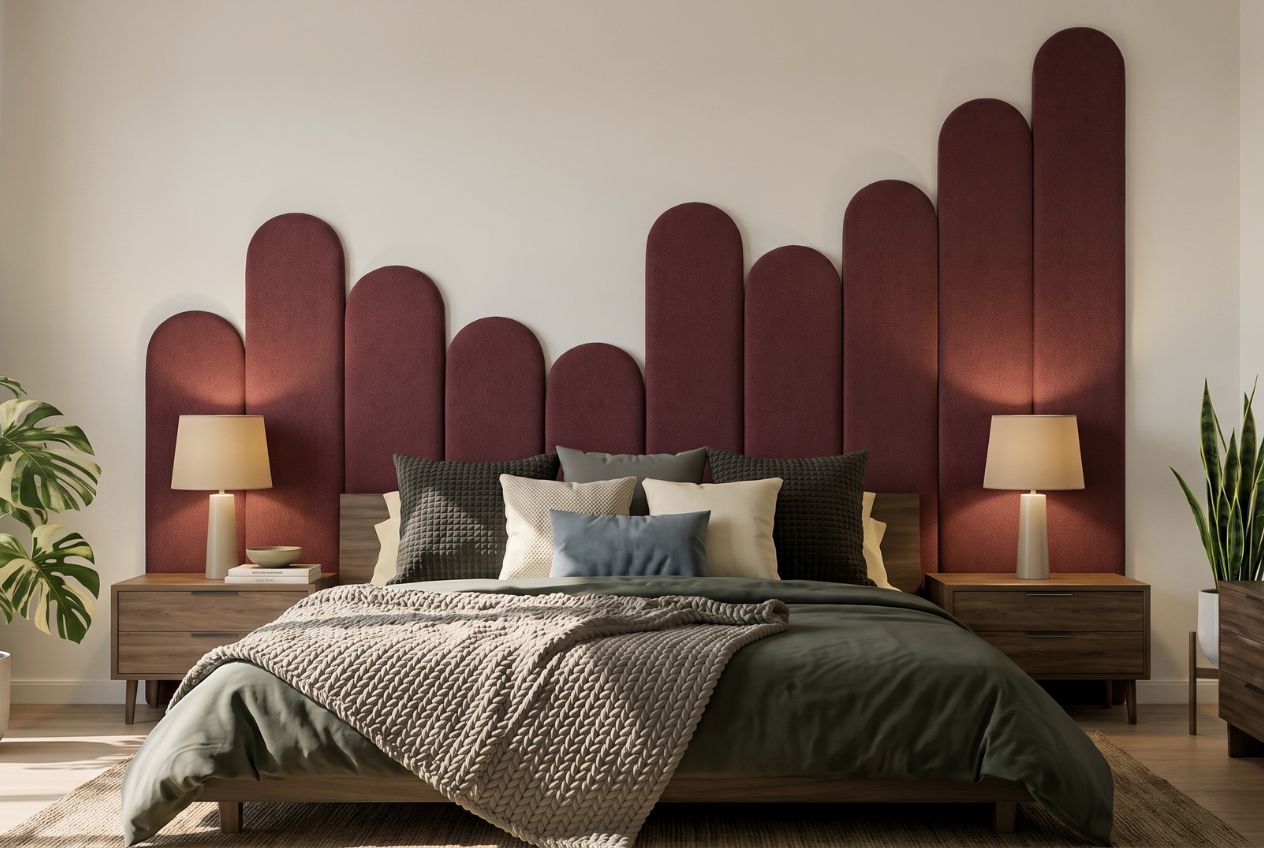
If you’re not ready to commit to a full wall, start with DwellForms™ Colour Samples and hold them against your own wall in your own light, the same way you’d test a paint swatch. When you’re ready to go further, DwellForms™ Core Kits give you a full feature wall, and Extension Kits let you grow the design later without starting over. Because the panels are removable and reconfigurable, you can take the same wall with you to your next home. Order a colour sample today and see how it looks on your own wall before you decide on anything bigger.
Sources
- Dopamine decor: Why people are getting a happiness hit from homes – BBC News
- Dopamine decor — Livingetc
- Why overhead lighting is bad — The Guardian
FAQ
What are dopamine decor examples?
Common examples include colourful cushions and throws, a saturated accent wall or fully colour-drenched room, removable wall panels, layered warm lighting, statement art, patterned tiles, and plants used as natural colour anchors. Most people start with textiles or a removable panel wall before moving to paint or bigger changes.
Is dopamine decor still popular?
Yes. The BBC reported the hashtag had generated more than 70,000 TikTok posts, and Livingetc notes the trend has continued evolving into 2026 toward richer, earthier palettes rather than fading out.
What is the 3-5-7 rule in interior design?
The 3-5-7 rule is a general styling guideline for grouping decorative objects (typically in odd numbers of 3, 5 or 7) so displays feel balanced rather than accidental. It’s a broader styling principle rather than one specific to dopamine decor, and definitions of it vary slightly between designers.
What do dopamine colours symbolise?
There’s no fixed symbolism; the idea behind dopamine decor is that colours which feel personally uplifting to you matter more than any universal meaning attached to a shade. Psychologists cited in the BBC’s coverage note vivid colour can spark a brief mood lift for some people, but the effect is individual, not universal, and “dopamine” is used here as a design metaphor rather than a proven physiological guarantee.