
TL;DR:
- Adding removable, color-drenched feature walls and sculptural accents creates a modern look without renovation.
- For renters, peel-and-stick panels, modular PET felt kits, and layered lighting achieve this impact easily and reversibly.
The fastest way to get a modern look is to add colour-led, removable feature walls and a few sculptural accents that deliver architectural impact without renovation. Here are the top examples of modern home decor you can use right now:
- Colour-drenched feature wall in recycled PET felt (DwellForms™ by Liftedplus)
- Sculptural curved wall panels in modular, removable kits
- Large-scale textured or linen-look removable wallpaper
- Statement wall sconces (plug-in, no hardwiring)
- Layered lighting: ambient, task, and accent in one room
- Wood-slat lookalike removable panels
- Modular art panels in bold, confident colour
- Indoor biophilic accents: trailing plants, woven baskets, raw stone objects
- Peel-and-stick geometric or organic-form panels
- Gallery wall alternatives using sculptural objects and mixed-material ledges
Australian interior design trends in 2026 are moving decisively away from plain white walls toward colour drenching, tactile finishes, and immersive wall treatments. These ten examples hit every one of those cues and, critically, every one of them is removable.
Table of Contents
- What does ‘modern’ actually mean in 2026?
- Renter-friendly ways to get every modern cue
- How to apply modern decor room by room
- How do you choose the right removable wall solution?
- Installing and removing wall panels without damage
- What does a modern feature wall cost and how long does it take?
- Key takeaways
- Why colour-led walls are the right call for renters
- DwellForms™ modular wall kits: colour without commitment
- Useful sources
- FAQ
What does ‘modern’ actually mean in 2026?
Modern is not minimalism. The two get conflated constantly, but modern design in 2026 balances clean lines with warmth, layered lighting, and tactile texture so a room feels inviting rather than clinical. Five design cues define the look right now.
Clean lines and open space. Furniture sits low and uncluttered. Surfaces breathe. The silhouette does the work, not the ornament.
Sculptural curves. Rounded sofas, arched mirrors, and pill-shaped coffee tables soften the geometry. Sculptural forms and statement lighting are among the clearest signals of a current, considered interior.
Tactile texture. Bouclé, linen, raw stone, and unlacquered wood replace glossy synthetics. Texture is where warmth lives in a modern room.
Layered lighting. A single overhead fixture flattens a space. Ambient, task, and accent light working together give a room hierarchy and mood. A well-placed statement wall sconce makes a feature wall read as architectural rather than decorative.
Confident colour. The all-white era is over. Warmer palettes — clay, sage, terracotta, deep forest green — are replacing stark greige. Colour drenching (walls, ceiling, and trim in one saturated tone) has surged in Australian homes, with HomeBeautiful citing a jump in searches for the technique heading into 2026.
For renters, the implication is clear: reach for texture and colour rather than neutral repainting. The cues that make a room feel modern are achievable without touching the lease.
Renter-friendly ways to get every modern cue
You can achieve architectural, modern impact with removable wall kits and sculptural panels. No paint, no drilling, no landlord conversation about bond deductions.
- Colour drenching: modular PET felt wall kits in a single saturated hue, covering one full wall from skirting to near-ceiling
- Refined texture: peel-and-stick linen-look or grasscloth-effect removable wallpaper on a feature wall
- Sculptural curves: adhesive modular panels in organic or curved forms, rearranged as your eye develops
- Layered lighting: plug-in wall sconces, portable LED strips behind shelving, and a floor lamp with a sculptural shade
- Biophilic accents: trailing pothos or monstera in woven baskets, a raw stone object on a shelf, a jute rug underfoot
DwellForms™ by Liftedplus is the standout modular option for renters wanting colour without commitment. The kits are precision-cut from PET felt made from 100% recycled plastic, and installation uses tested adhesive pads — no drilling, no screws, no wall damage risk from fixings. Panels are rearrangeable and move with you to the next home. For anyone staring at a blank rental wall and wanting something that feels genuinely considered, DwellForms™ is where to start.
Pro Tip: Before any install, photograph every wall in good light. Keep the original packaging and any sample swatches. Check your lease for clauses about wall treatments — most standard Australian residential leases permit removable, non-permanent decor, but confirming in writing protects your bond.
How to apply modern decor room by room
Living room
A single colour-led feature wall behind the sofa defines the entire space. Choose a panel kit or removable wallpaper in a warm, saturated tone — terracotta, deep sage, or a dusty clay — and let the sofa silhouette sit against it. Keep the coffee table low and simple. Add one sculptural pendant or arched floor lamp to create the lighting hierarchy that pulls the room together. Test a colour palette with a sample swatch before committing to a full kit.
Bedroom
The bedroom rewards restraint. A textured feature wall behind the bed head — modular felt panels in a muted, warm tone — replaces the need for a fabric headboard and reads as more architectural. Layer tonal bedding in linen or bouclé, add a wool throw, and keep the palette tight. One plug-in sconce on each side of the bed handles both task and accent light without an electrician.
Home office
Clean lines matter most here. A single feature wall in a confident colour — deep blue, forest green — frames the desk and signals focus. Pair it with a low, uncluttered shelf styled with a few curated objects rather than a crowded display. Layered lighting — a task lamp on the desk, a small accent light on the shelf — keeps the space from feeling flat on video calls.
Hallway
Scale down but don’t disappear. A narrow hallway benefits from a single vertical panel arrangement or a strip of linen-look removable wallpaper that draws the eye through the space. An interior door in a contrasting finish — interior doors are increasingly treated as focal points in contemporary styling — adds an architectural moment without renovation.
How do you choose the right removable wall solution?
Choose by wall condition, removal risk, scale, and the design cue you want to achieve: colour, texture, sculptural form, or a combination.
| Solution | Permanence | Renter-friendly | Colour impact | Install skill | Maintenance |
|---|---|---|---|---|---|
| Modular PET felt kits | Low | High | High | Low | Dust, spot-clean |
| Peel-and-stick wallpaper | Low–medium | Medium | Medium–high | Medium | Wipe-clean |
| Magnetic art panels | Low | High | Medium | Low | Dust |
| Large-scale murals | Medium | Low | Very high | Medium–high | Wipe-clean |
Before buying, ask: How old is the wall paint? Is it flaking or freshly applied? Does your lease have specific clauses? Can you order a sample to test adhesion first? Red flags include fresh paint under 30 days old, textured or flaky surfaces, and high-humidity walls such as those in bathrooms. Olive et Oriel’s removable wallpaper guidance recommends a minimum 30-day cure time for fresh paint and a prep-coat routine for optimal clean release. For bathrooms specifically, moisture-resistant options and proper ventilation matter as much as adhesive quality.
Wall adhesion depends more on existing paint quality than on adhesive type. A tape test and a sample-panel test before committing to a full install is the single most reliable predictor of clean removal.
Installing and removing wall panels without damage
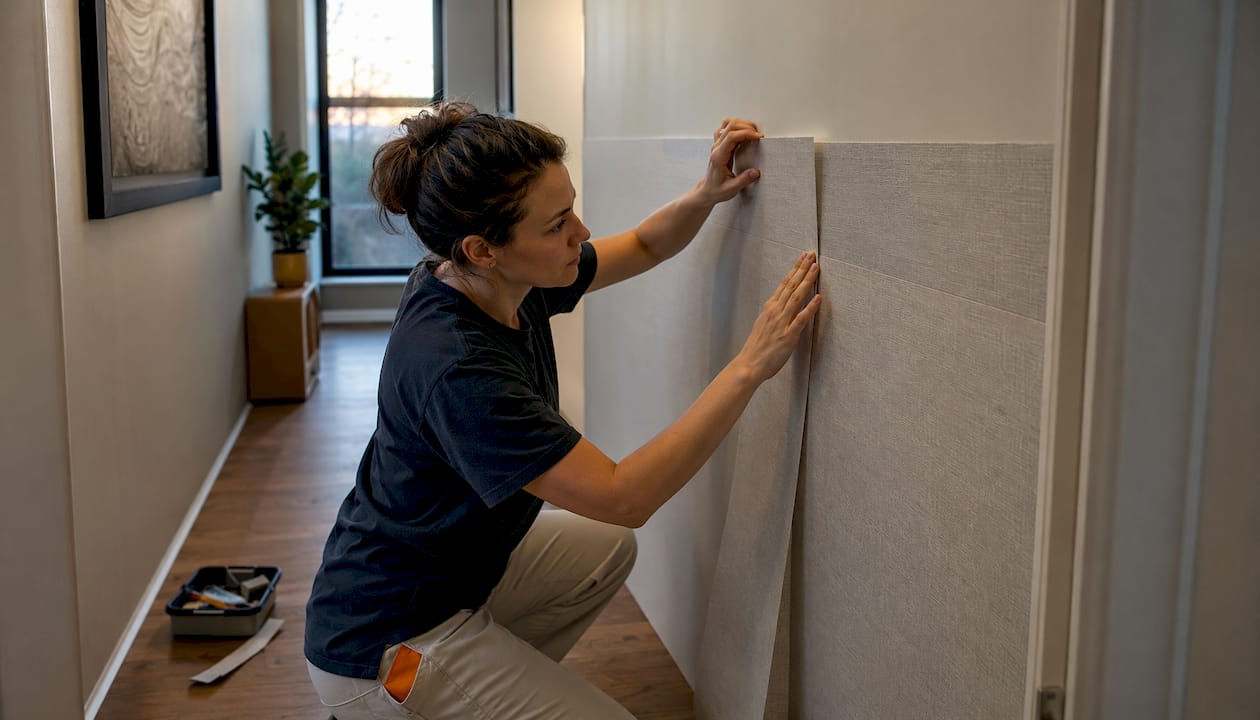
Install slowly, test adhesion first, and remove slowly at roughly 45° with short heat bursts. Removal technique is as much a part of the installation answer as the adhesive itself.
- Prepare the wall. Clean with a slightly damp cloth and allow to dry fully. Run a tape test: press a strip of masking tape firmly, leave for 60 seconds, and peel. If paint lifts, the surface is not ready.
- Dry-layout first. Arrange panels on the floor to confirm the composition before anything touches the wall.
- Mark a centreline. Use a pencil and spirit level to mark the starting point. Symmetry reads as intentional; guesswork shows.
- Apply adhesive pads. Follow the kit’s pad placement guide. Press each panel firmly for the recommended hold time.
- Allow cure time. Most adhesive systems need 24–48 hours to reach full bond strength. Avoid touching or adjusting panels during this window.
- To remove: work slowly, peeling at approximately 45°. Apply gentle heat in short bursts with a hairdryer on a low setting, working in small sections. Never yank.
For ongoing care: dust panels with a soft brush monthly, spot-clean with a barely damp cloth, and re-press any lifting edges promptly.
Pro Tip: If you need to reposition a panel during install, do it within the first few minutes before the adhesive sets. Once cured, removal and repositioning carries more risk — patience at the start saves the wall at the end.
What does a modern feature wall cost and how long does it take?
Removable kits typically cost less than a small paint job plus labour, and substantially less than a built-in feature wall. Key cost drivers include kit size, custom colour options, shipping, and whether you order sample swatches first (which is always worth it).
A realistic sample-to-install timeline looks like this: order a sample swatch and test it on your wall for a week, then order the full kit, allow for delivery, set aside a half-day for install, and give the adhesive 24–48 hours to cure fully. The whole process from first click to finished wall can sit comfortably inside two weeks.
Climate matters in Australian homes. High humidity in coastal or tropical areas can affect peel-and-stick adhesives over time — PET felt kits with pad-based adhesion tend to perform more consistently in variable conditions than paper-backed wallpapers. Near large north-facing windows, UV exposure can affect colour stability in some materials; check the product’s fade-resistance specification before buying. In compact, moisture-prone rooms, prioritise products rated for humidity and keep ventilation consistent.
Key takeaways
Removable, colour-led feature walls are the most direct route to a modern interior in 2026 — without painting, drilling, or risking your bond.
| Point | Details |
|---|---|
| Colour and texture lead | Choose colour-drenched or tactile removable panels over neutral repainting for a genuinely modern result. |
| Wall prep is non-negotiable | Run a tape test and sample-panel test before any full install; paint condition matters more than adhesive type. |
| Remove at 45° with gentle heat | Slow removal in short sections with a low-heat hairdryer reduces paint-lift risk at move-out. |
| Match scale to the room | A full feature wall suits living rooms and bedrooms; a vertical strip or panel arrangement works in hallways. |
| DwellForms™ by Liftedplus | Modular PET felt kits with tested adhesive pads deliver colour without commitment and move with you. |
Why colour-led walls are the right call for renters
The conventional wisdom says renters should keep things neutral and wait until they own before making real design choices. That framing does a disservice to the years people actually spend in rented homes — and it ignores how much the material and emotional quality of a space affects daily life.
Colour is not a risk to be managed. It is atmosphere, identity, and intent. A blank white wall is not a neutral choice; it is a choice to feel temporary. The 2026 shift toward tactile, immersive wall treatments is not a trend for homeowners only — it is a signal that people across all tenure types are done waiting for permission to feel at home.
What renters actually need is not permission but method. The right adhesive, the right surface preparation, the right removal technique. When those three things are in place, a colour-led removable feature wall is not a gamble. It is a considered, reversible design decision that happens to make the room feel extraordinary.
DwellForms™ modular wall kits: colour without commitment
Blank rental walls are not a design constraint. They are a canvas — and DwellForms™ by Liftedplus is built for exactly this moment.
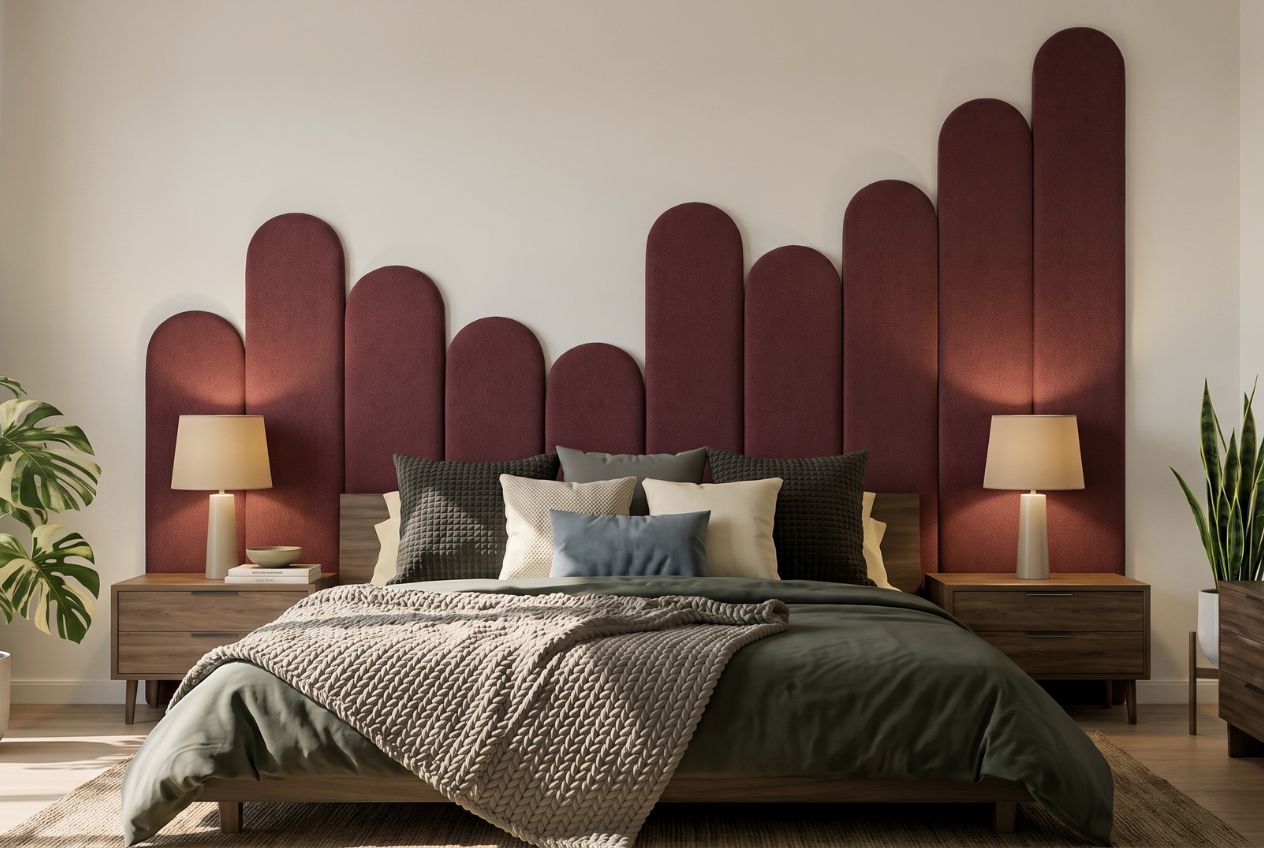
DwellForms™ kits are made from precision-cut PET felt from 100% recycled plastic, installed with tested adhesive pads and no drilling required. The Skyline modular kit and the Linear Feature Kit each deliver a different sculptural character — the Skyline for bold, geometric colour impact, the Linear for long, architectural rhythm across a wall. Extension packs let you grow the installation over time. Every panel is rearrangeable, recyclable, and designed to move with you.
Order a sample swatch first, test it on your wall, and then commit to the full kit with confidence. Browse the full DwellForms™ core kits range to find the scale and colour that fits your space.
Useful sources
- 17 Must-See Modern Interior Design Ideas — The Spruce
- 15 Best Modern Interior Design Ideas of 2026 — Decorilla
- Wallpaper Trends 2026: Why Australian Homes Are Moving Beyond Plain White Walls — Kaleon Wallpaper
- Wallpaper Guide — Tiny Walls
- Removable Wallpaper Guidance — Olive et Oriel
- Renters’ Guide to Peel and Stick Wallpaper in Australia — Olive et Oriel Blog
- Interior Design Trends 2026 — HomeBeautiful
- DwellForms™ by Liftedplus — Brand and Product Hub
FAQ
What are the best examples of modern home decor for renters?
Colour-led removable wall panels, plug-in statement sconces, modular PET felt kits, peel-and-stick linen-look wallpaper, and biophilic accents like trailing plants and woven baskets are the strongest modern decor choices for renters in 2026.
How do I remove adhesive wall panels without damaging the paint?
Peel slowly at approximately 45°, apply gentle heat in short bursts with a hairdryer on a low setting, and work in small sections — this technique significantly reduces the risk of paint lift at move-out.
Are DwellForms™ panels suitable for rental properties?
DwellForms™ by Liftedplus uses tested adhesive pads rather than screws or nails, making them a renter-friendly option. Always run a tape test on your specific wall surface first and check your lease conditions before installing.
How long does fresh paint need to cure before I install removable panels?
Allow at least 30 days for fresh paint to cure fully before applying any adhesive-backed product — this is the minimum recommended by Australian removable wallpaper suppliers to reduce the risk of paint damage on removal.
What is colour drenching and why does it suit modern interiors?
Colour drenching means applying one saturated tone to walls, ceiling, and trim in a single room. It creates an immersive, architectural effect that suits the 2026 modern aesthetic — and it is achievable with removable wall kits without touching the paint.