
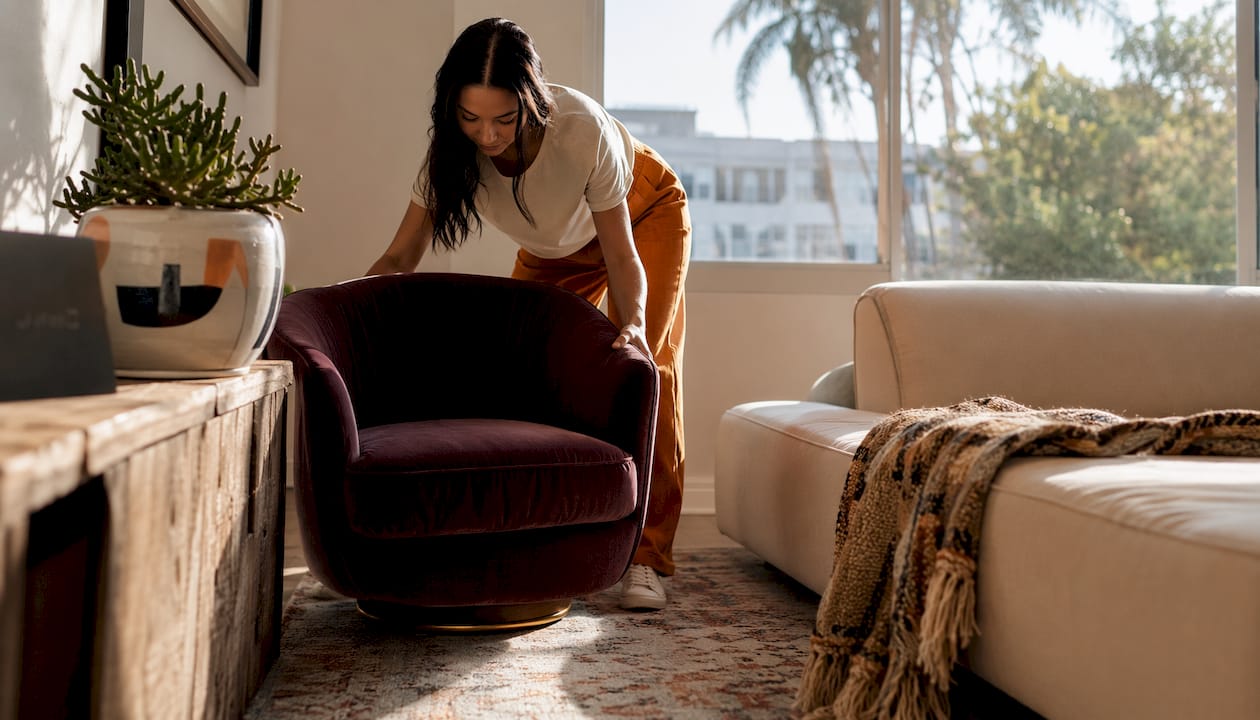
Accent furniture refers to secondary decorative pieces that add colour, personality, and texture to a room without serving as its primary functional furniture. Think of the carved timber bench in an entryway, the boldly upholstered chair tucked into a living room corner, or the slim console sitting behind a sofa. These pieces are not the stars of the room. They are the supporting cast that makes everything feel considered and complete.
Common accent furniture examples include accent chairs, ottomans, console tables, side tables, benches, bar carts, and decorative storage. Soft furnishings like cushions and throws serve the same purpose, layering warmth and character over the structural pieces beneath them.
Accent furniture and occasional furniture are related but distinct. Occasional furniture is brought out when needed, like an extra folding chair for guests. Accent furniture is placed intentionally as part of the room’s permanent design, chosen for visual effect rather than periodic utility.
For renters, accent furniture is one of the most practical tools available. It introduces colour and personality without touching walls, floors, or fixtures. Pair it with removable wall design like Liftedplus’s DwellForms™ modular panels and you have a complete, expressive interior that moves with you.
Table of Contents
- How accent furniture adds colour, texture, and personality
- How to choose accent furniture that works with your existing decor
- Removable wall design and materials that suit rental living
- Key takeaways
- FAQ
How accent furniture adds colour, texture, and personality
A single well-chosen accent piece can shift the entire mood of a room. A velvet chair in a deep teal pulls a neutral space out of its polite middle. A rattan ottoman introduces organic texture where everything else is smooth. These are low-risk experiments with bold style because accent pieces are smaller, less expensive, and far easier to swap than a sofa or dining table.
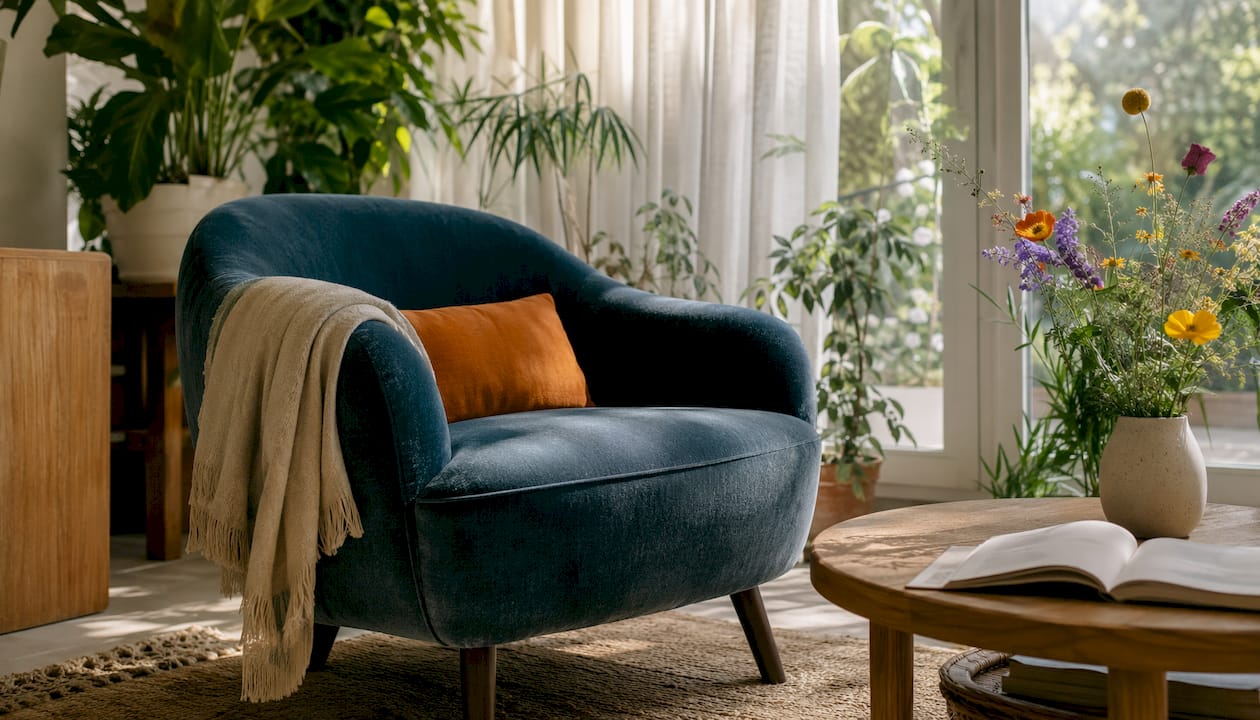
For renters, the wall is often the hardest surface to work with. Landlord restrictions rule out paint and wallpaper, leaving blank surfaces that flatten even the most considered furniture arrangement. DwellForms™ by Liftedplus addresses this directly. The modular PET felt panels fix to walls using tested adhesive pads, creating sculptural, colourful feature walls without drilling, renovation, or permanent commitment. They come down cleanly and travel to the next home.
Maintenance matters too. For renter-friendly pieces, choose stain-resistant fabrics, sealed timber, and powder-coated metals. DwellForms™ panels wipe clean and resist everyday wear, which matters when bond inspections loom.
Pro Tip: Edit before you add. Remove one existing piece from the room before placing any new accent furniture. The space it creates is often exactly where the new piece belongs.
How to choose accent furniture that works with your existing decor
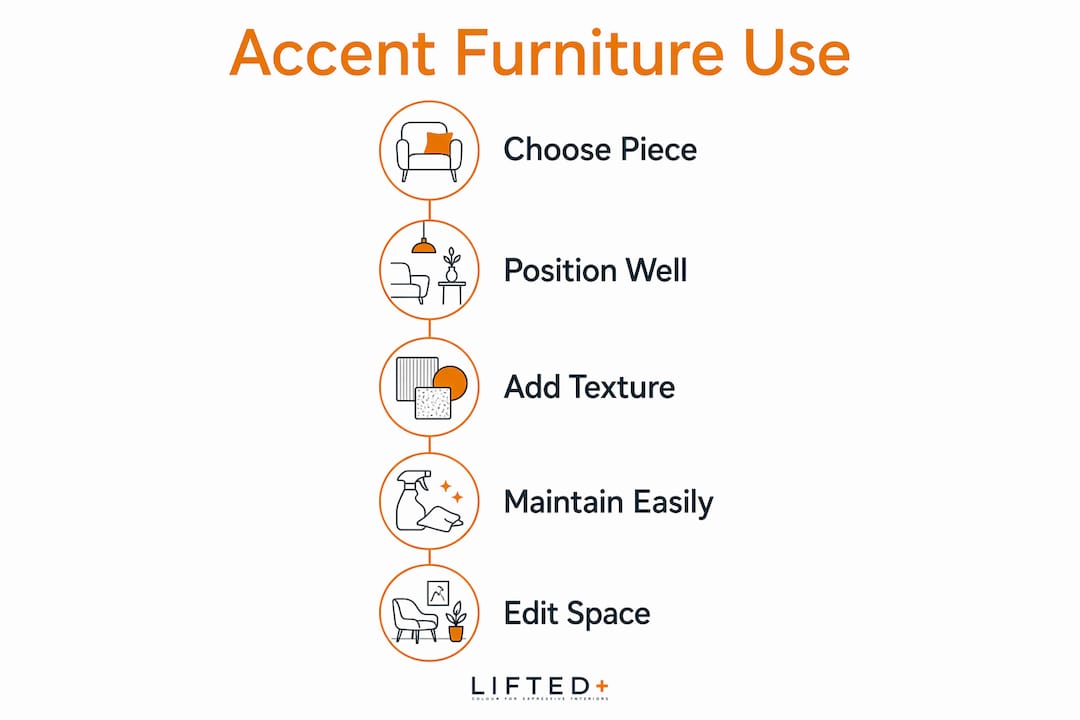
Selecting accent furniture well comes down to contrast and cohesion. You want pieces that introduce something new without breaking the room’s visual logic.
- Anchor to one colour. Pull a tone from your existing textiles or artwork and use it as the accent furniture’s dominant colour. This creates connection without matching.
- Mix one material. If your main furniture is timber and linen, introduce metal or woven rattan as an accent. One new material is enough.
- Solve a spatial problem. Storage ottomans hide clutter and double as seating. Slim consoles create functional zones in narrow hallways without blocking pathways.
- Scale to the room. In a small apartment, one strong accent chair reads as intentional. Three competing pieces read as crowded.
- Choose multifunctional pieces. A bench at the foot of a bed provides seating, storage, and visual grounding simultaneously.
- Consider interior design trends as a starting point, not a rulebook. Use them to identify shapes and palettes that feel current, then filter through your own space.
- Buy removable first. For renters, prioritise pieces that require no assembly into walls or floors. Freestanding always wins.
Removable wall design and materials that suit rental living
The best renter-friendly interiors combine flexible furniture with walls that do real design work. Removable wall design options include self-adhesive modular panels, peel-and-stick wallpaper, and lightweight framed artwork arranged in gallery configurations.
DwellForms™ by Liftedplus sits at the considered end of this spectrum. Made from 100% recycled PET felt, the panels are precision-cut into geometric forms that create genuine architectural rhythm on a wall. The colour palette is deliberate and rich, designed to complement rather than compete with accent furniture below. Installation uses adhesive pads rather than screws or battens, keeping the process landlord-compliant and the wall intact.
Common accent furniture materials each bring different qualities. Timber adds warmth and grain. Metal introduces edge and structure. Fabric softens and absorbs. PET felt, as used in DwellForms™, offers sustainable texture and colour depth with minimal maintenance. For renters, the ideal material is durable, easy to clean, and free of any installation that requires landlord approval.
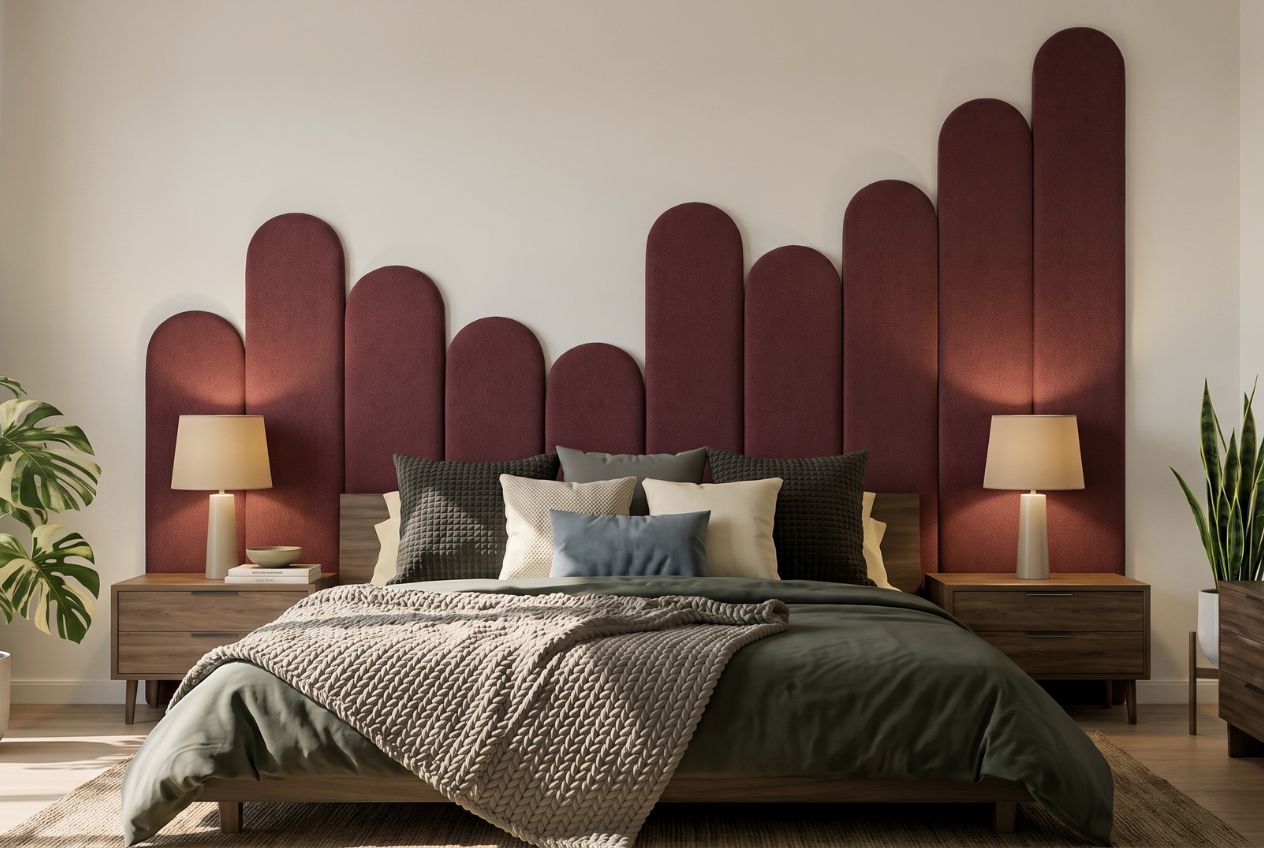
Liftedplus’s DwellForms™ Skyline kit is designed precisely for this: colour without commitment, texture without renovation, and a feature wall that genuinely lifts the room. Explore the full range at liftedplus.com.
Key takeaways
Accent furniture is the most flexible tool a renter has for building an interior that feels personal, layered, and alive.
| Point | Details |
|---|---|
| Accent furniture definition | Secondary decorative pieces that add colour, texture, and personality without being primary functional furniture. |
| Accent vs occasional furniture | Accent furniture is permanently placed for visual effect; occasional furniture is brought out periodically for extra utility. |
| Renter advantage | Accent pieces are easy to swap, require no permanent installation, and move with you between homes. |
| Wall design pairing | Removable modular panels like DwellForms™ extend colour and texture to walls without drilling or renovation. |
| Material choice | Timber, metal, fabric, and recycled PET felt each offer distinct texture and durability suited to rental living. |
FAQ
What is accent furniture in simple terms?
Accent furniture refers to smaller, decorative pieces that add colour, texture, and personality to a room without serving as its main functional furniture. Examples include accent chairs, ottomans, console tables, and benches.
How does accent furniture differ from occasional furniture?
Accent furniture is placed permanently as part of a room’s design for visual effect. Occasional furniture is brought out only when needed, such as extra seating for guests.
What accent furniture works best in a small rental?
Storage ottomans, slim console tables, and a single statement accent chair work well in small spaces. They solve spatial problems while adding style without overwhelming the room.
Can renters use wall panels alongside accent furniture?
Yes. Removable modular panels like DwellForms™ by Liftedplus use adhesive pads rather than screws, creating colourful feature walls that complement accent furniture without breaching landlord restrictions.
What materials are best for renter-friendly accent furniture?
Timber, powder-coated metal, stain-resistant fabric, and recycled PET felt are all practical choices. They offer durability, easy maintenance, and no permanent installation requirements.