
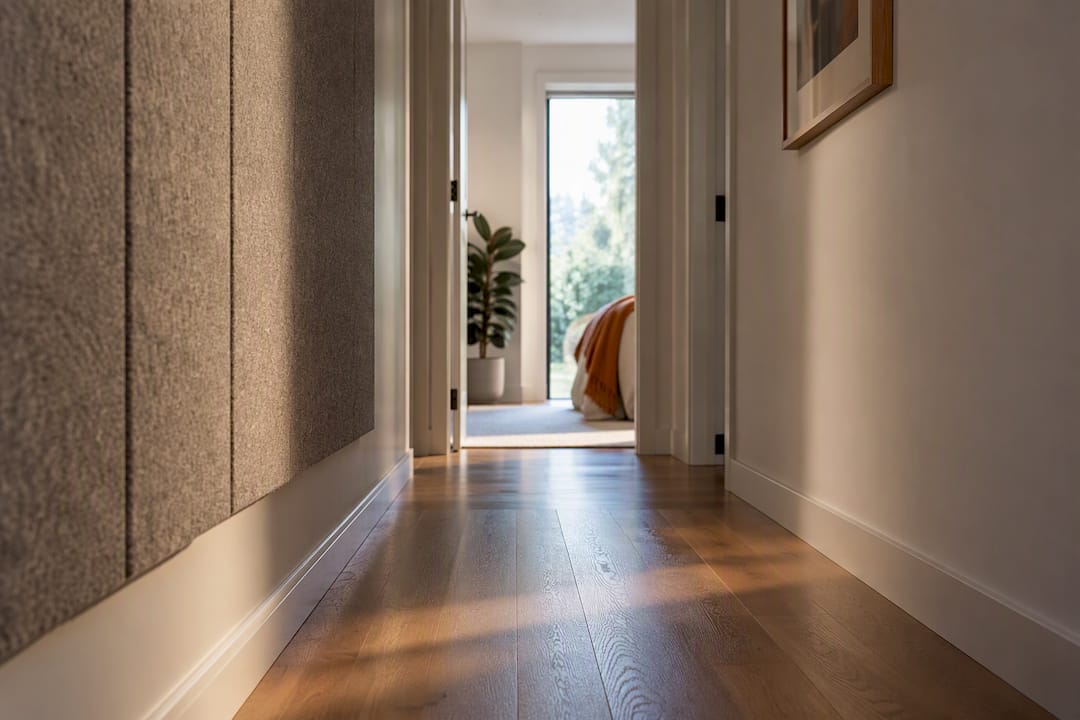
The easiest way to fix a bare, echoing hallway is not with paint or a drill: it is with removable, no‑drill panel systems or peel‑and‑stick finishes that you test on a small patch before committing to the whole wall. These solutions bring colour, texture and shape to a narrow corridor while staying fully reversible. DwellForms™ by Lifted+ is one practical example, a modular felt panel system built for exactly this kind of change.
TL;DR:
- Peel‑and‑stick wallpaper or fabric panels are suitable for smooth drywall, while textured or plaster walls require lighter, tension-mounted options for better adhesion.
- Testing a small patch on your wall for 24 hours before fully installing ensures the adhesive won’t damage the paint or surface finish.
- Removable felt panel kits like DwellForms™ are reusable and designed to be easily taken down and reinstalled in new homes, making them ideal for renters.
- Using textured or layered decor like felt panels or fabric hangings can significantly soften hallway noise and reduce echo in narrow, hard-surfaced corridors.
- Writing a formal request to the landlord before installing reversible decor protects your bond and clarifies conditions, as landlords must respond within 21 days.
Table of Contents
- Renter‑friendly, no‑drill options for a hallway feature wall
- Tenancy rules and landlord consent: what renters need to know
- How to choose the right no‑drill solution for your wall
- Step by step: prepping and fitting without damaging the wall
- Design ideas and layout patterns for narrow hallways
- Keeping panels looking good and removing them cleanly
- Why hallways echo, and what actually softens the sound
- Why colour without commitment matters more than people admit
- Where to start with DwellForms™
- Sources
- FAQ
Renter‑friendly, no‑drill options for a hallway feature wall
A hallway is often the smallest, most overlooked space in a rental, yet it sets the tone for everything behind it. The good news is that you have several genuinely reversible ways to give it presence.
- Modular PET‑felt panel kits click or press into shape with adhesive pads, offering colour, sculptural texture and the ability to rearrange or take the whole design with you when you move.
- Peel‑and‑stick wallpaper and adhesive film suit smooth, painted drywall and deliver pattern or scale changes with minimal fuss, though NZ renter guides note results depend on correct removal.
- Lightweight foam or PVC panels with picture‑strip mounts give a budget‑friendly, low‑commitment option for a first attempt at texture.
- Fabric or tapestry hung from a tension rod works well over textured or plastered walls where adhesives struggle to grip evenly.
- Freestanding art or movable screens avoid the wall altogether, which suits heritage villas or surfaces you are not confident about testing.
The right choice depends less on taste and more on what your wall is actually made of, and how much of the hallway you want to transform.
Tenancy rules and landlord consent: what renters need to know
Before you stick anything to a rental wall, it pays to understand where you stand. Tenancy Services guidance confirms tenants can request minor changes, but the request must be in writing, and landlords have 21 days to respond and may attach reasonable conditions.
- Put your request in writing, describing the product, where it will go and how it attaches.
- Ask the landlord to confirm any conditions, such as removing panels before the tenancy ends.
- Keep the written response on file, alongside dated photos of the wall before you start.
- Return the wall to substantially the same condition when you leave, unless you have agreed otherwise, a point the official response template sets out clearly.
Removable products are generally treated as reversible changes, but “removable” is a description of the product, not a guarantee for every wall. Documentation is what protects your bond, not the adhesive alone.
How to choose the right no‑drill solution for your wall
Every hallway wall behaves a little differently, so the smartest first step is reading the surface rather than the trend. Older enamel or low‑VOC paint can have a weaker bond to the wallboard beneath it than a strong adhesive pad has to the paint, which is exactly the mismatch that causes lifting.
- Run your hand over the wall: smooth, cool and even usually means painted drywall, a good candidate for peel‑and‑stick film or felt panels.
- Textured, powdery or slightly rippled surfaces suggest plaster or an older finish, better suited to fabric, tension rods or lighter foam pieces.
- Order a colour sample or small test swatch before committing to a full kit, so you can check both the shade and the adhesive’s grip in real conditions.
- Factor in reconfigurability: felt panel kits can be rearranged, while full‑sheet wallpaper generally cannot.
If you are genuinely unsure whether you are dealing with plaster or drywall, a few simple checks, like tapping for hollow versus solid sound, are laid out in this guide to identifying wall type.
Pro Tip: Press a small test patch of your chosen product onto an inconspicuous section of wall, leave it for 24 hours, then remove it slowly to check the paint holds before you commit to the full design.
Step by step: prepping and fitting without damaging the wall
Good preparation matters more than the product itself. A rushed install on a dirty or oily wall is the single most common reason removable decor fails.
- Gather isopropyl alcohol, a lint‑free cloth, a level, painter’s tape and a spare test strip of your panel or film.
- Clean the wall thoroughly and let it dry fully, since oils and dust weaken adhesive grip.
- Apply a test patch, wait as instructed, then peel it back slowly to confirm the paint stays intact.
- Dry‑lay your full design on the floor first, measure the hallway, and mark light guide points with painter’s tape.
- Mount pieces from the centre outward, pressing firmly and evenly rather than in one spot, following the product’s own application guidance.
- Photograph each stage, both for your own records and as evidence for the landlord if a change request is ever queried.
Manufacturer guidance for removable adhesive films recommends pulling at an angle of 120 to 180 degrees during removal, a technique that reduces the chance of adhesive residue or paint lift. No film or pad is universally guaranteed against damage, which is exactly why the test patch step is not optional.
Design ideas and layout patterns for narrow hallways
A hallway rewards confident, considered proportion far more than it rewards clutter. Because you are working with a tight, often low‑lit space, scale and colour placement do more work than pattern density.
- Vertical stripes or a repeating column of modules draws the eye upward, making a low hallway feel taller.
- Slim horizontal bands can visually widen a narrow corridor without overwhelming it.
- A single bold colour framed by neutral wall either side reads as a considered accent rather than a full commitment.
- Tonal palettes, several shades of one hue, add depth without competing with art or mirrors further along the wall.
- Order colour samples first: a swatch under hallway lighting often reads differently than it does online.
Layering adds dimension once the base colour is settled. A felt panel arrangement paired with a small adhesive‑mounted mirror or a narrow floating shelf can lift a hallway from flat to genuinely sculptural, provided the mirror is rated for the wall and adhesive you are using. In a dim corridor, a warm accent light angled across a textured panel surface will do more for the sense of depth than any additional colour.
Keeping panels looking good and removing them cleanly
Removable decor still needs a little upkeep, particularly in a hallway exposed to foot traffic, bag straps and the occasional bump. Check edges every few months and press any lifting corners back down while the adhesive is still within its useful life.
- Avoid installing in very humid or damp hallways, since moisture weakens most adhesive pads over time.
- When it is time to remove a panel, use the manufacturer’s release tab where one exists and pull at the recommended angle rather than tearing straight off the wall.
- Photograph the wall again once panels are down, alongside any receipts, so you have a clear record if the condition is ever questioned.
- Store panels flat or in their original packaging so they stay reusable in your next home.
If you are unsure about safe removal on your specific wall, this step by step removal guide walks through the process in more detail. Offering to touch up a small mark yourself, rather than waiting for a dispute, tends to go a long way with landlords.
Why hallways echo, and what actually softens the sound
Hallways are natural echo chambers. They are narrow, they usually have two hard parallel walls facing each other, and most are finished in smooth paint, tile or timber flooring with almost nothing soft to interrupt sound waves. That combination lets noise bounce back and forth rather than dissipate, which is why footsteps, voices and closing doors often sound sharper in a hallway than in a living room of the same size.
The materials on the walls make a real difference to how that sound behaves. Hard, flat, non‑porous surfaces like gloss paint or bare plaster reflect sound almost entirely, while anything with texture or depth, thicker fabric, felt or foam, absorbs a portion of it instead of bouncing it straight back. This is part of why a fully bare rental hallway can feel harsher and noisier than one dressed with panels, fabric hangings or layered decor, even before you consider the visual difference.
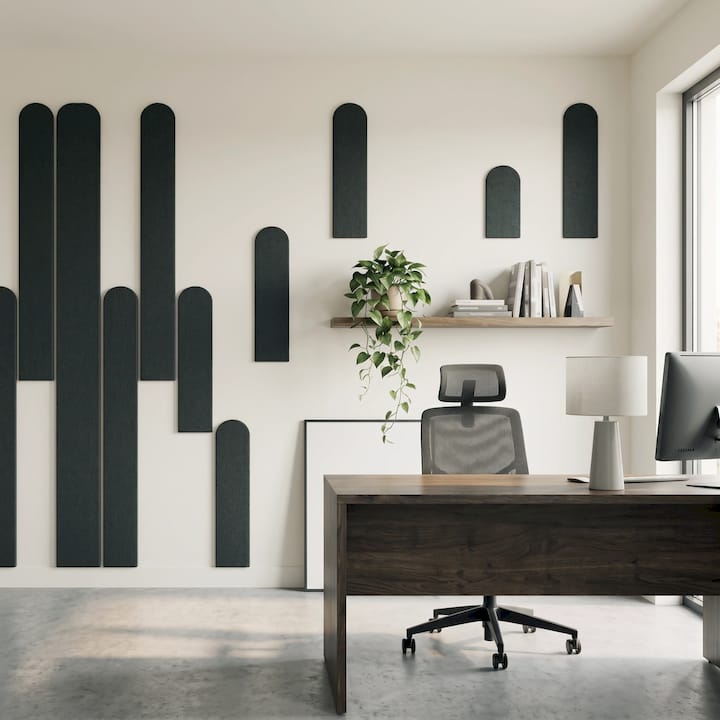
You do not need a commercial acoustic fit-out to notice this effect. Simply adding texture and coverage, such as a felt panel feature wall, fabric tapestry or a cluster of framed art, breaks up some of those hard, parallel reflective surfaces. The change will not turn a corridor into a recording studio, but it softens the harshest slap-back you notice when a door closes, while doing the more visible job of making a plain hallway feel considered rather than forgotten.
Why colour without commitment matters more than people admit
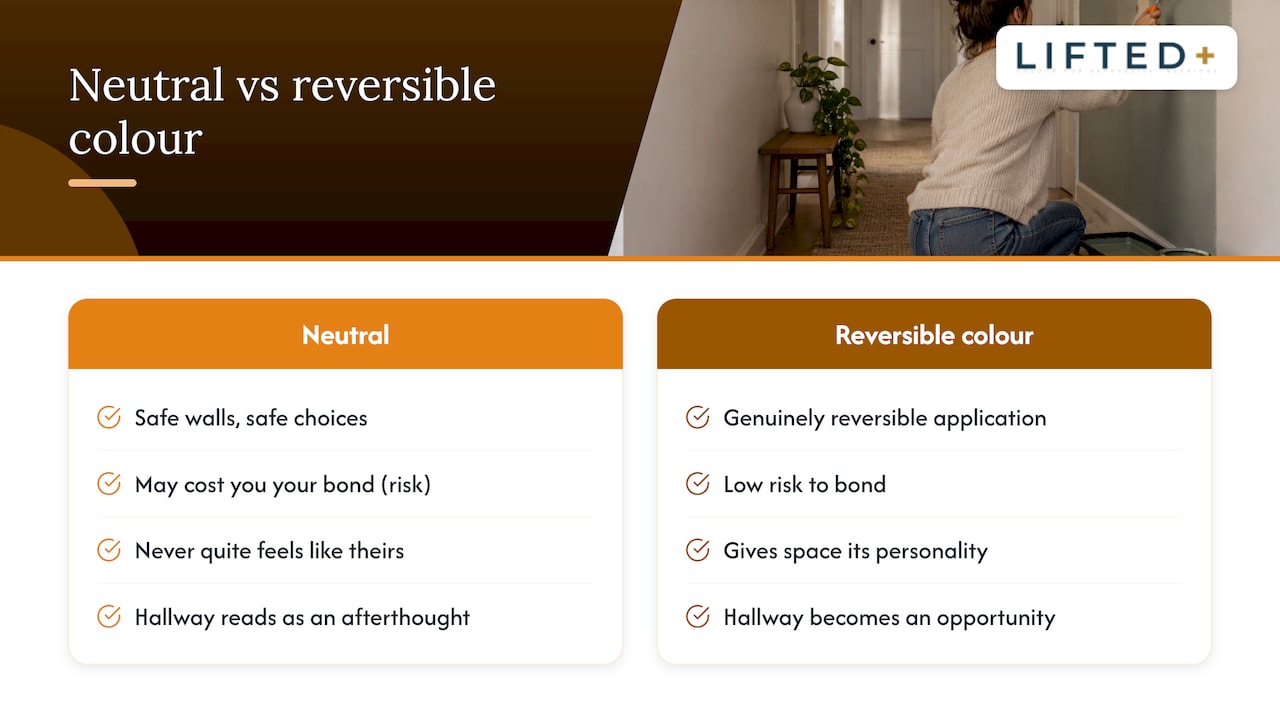
Renters are told, gently but constantly, to keep things neutral: safe walls, safe choices, nothing that might cost you your bond. That advice is sensible as far as it goes, but it also quietly asks people to live in a home that never quite feels like theirs. A hallway is usually the first thing you see every day, and a blank one says very little about who lives there.
Colour and texture, applied in a genuinely reversible way, give that space back its personality without the risk. DwellForms™ approaches this from a felt‑panel design background, which is why we think about hallways as an opportunity rather than an afterthought, a place where colour without commitment can do real emotional work.
— Michelle
Where to start with DwellForms™
If you like the idea of a felt panel feature wall but are not sure where to begin, start small. Order a DwellForms™ Colour Samples kit first to check the shade against your hallway’s light and confirm the adhesive pads suit your wall.
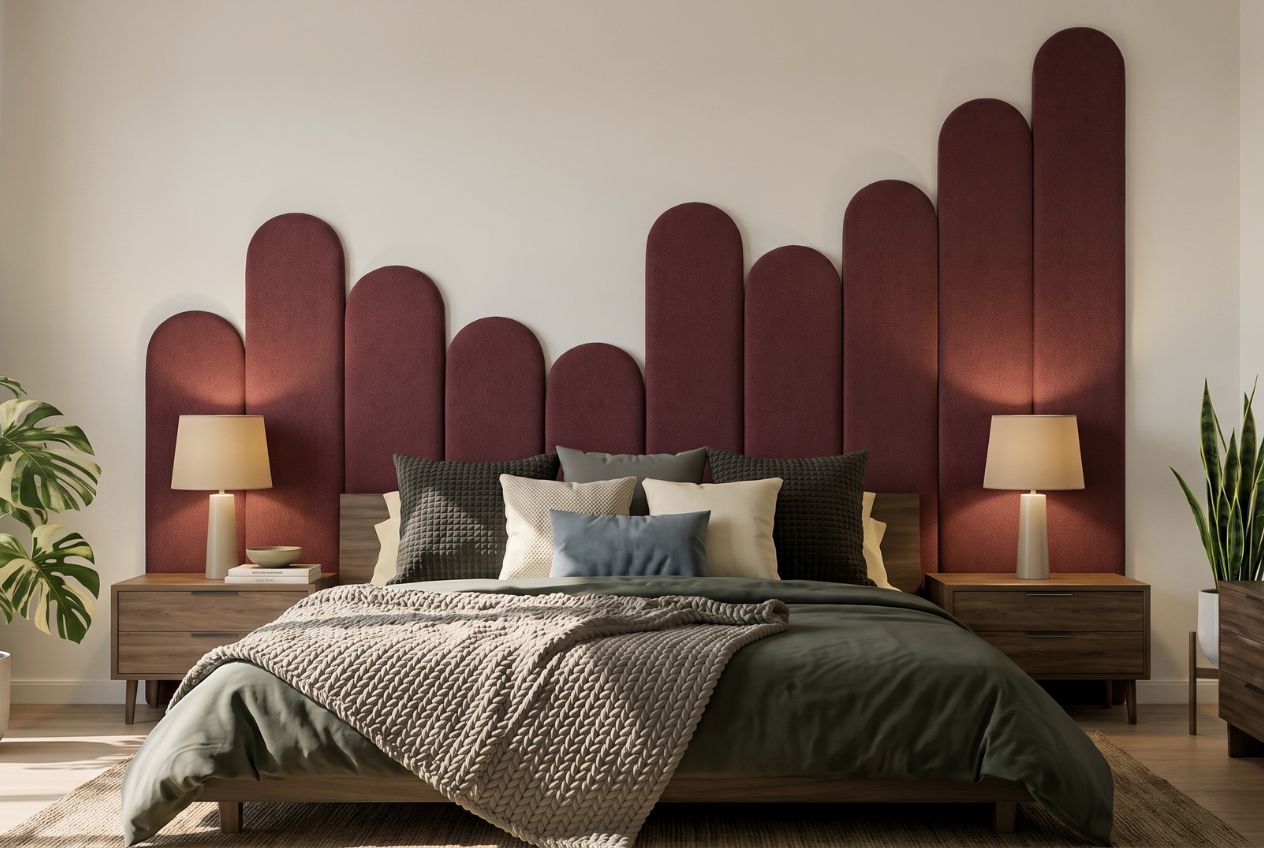
- Test your chosen colours and adhesive compatibility with a sample kit before buying a full run.
- Move up to a DwellForms™ Core Kits set once you know your palette and layout.
- For longer hallways, add a DwellForms™ Extension Kits pack rather than buying a second full kit.
Sample purchases can sometimes be credited towards a full kit order, making testing a colour a lower-risk step rather than a sunk cost. Peel‑and‑stick wallpaper and fabric hangings both have a place in a rental hallway, but if you want a sculptural, take‑it‑with‑you feature wall, ordering a sample is the sensible place to begin.
Sources
- Tenants making changes to the property » Tenancy Services
- Drytac wall graphic installation & removal instructions
- How to personalise a rental NZ: Tenant guide & legal rights — Property Plus
FAQ
Will removable wall panels damage my hallway paint?
Most removable panels are designed to come away cleanly when the surface is clean and tested first, but no product is universally guaranteed against damage on every paint type. A small test patch, left for 24 hours before removal, is the safest way to check before covering the whole wall.
Do I need my landlord’s permission for a no‑drill feature wall?
Minor, reversible changes generally do not need extensive approval, but Tenancy Services still recommends putting the request in writing so the landlord can respond within their 21‑day window. Keeping that written record protects your bond if the condition of the wall is ever questioned.
What is the best hallway width for a felt panel feature wall?
There is no strict minimum width, since modular panels can be arranged in a single vertical column or a slim horizontal band to suit a tight corridor. Ordering a colour sample first lets you judge how a design will sit in your specific hallway before committing to a full layout.
Can I take my wall panels with me when I move?
Yes, modular felt panel kits such as DwellForms™ are designed to be removed, packed and reinstalled in a new home rather than discarded. This reusability is part of why they suit renters who move between properties more often than homeowners do.
Do textured or plastered hallway walls work with peel‑and‑stick products?
Textured and plastered surfaces are harder for adhesive film to grip evenly, so fabric hangings, tension rods or lighter foam panels tend to perform better. A quick check of your wall type, such as this plaster versus drywall test, helps you choose the right method before you buy anything.