
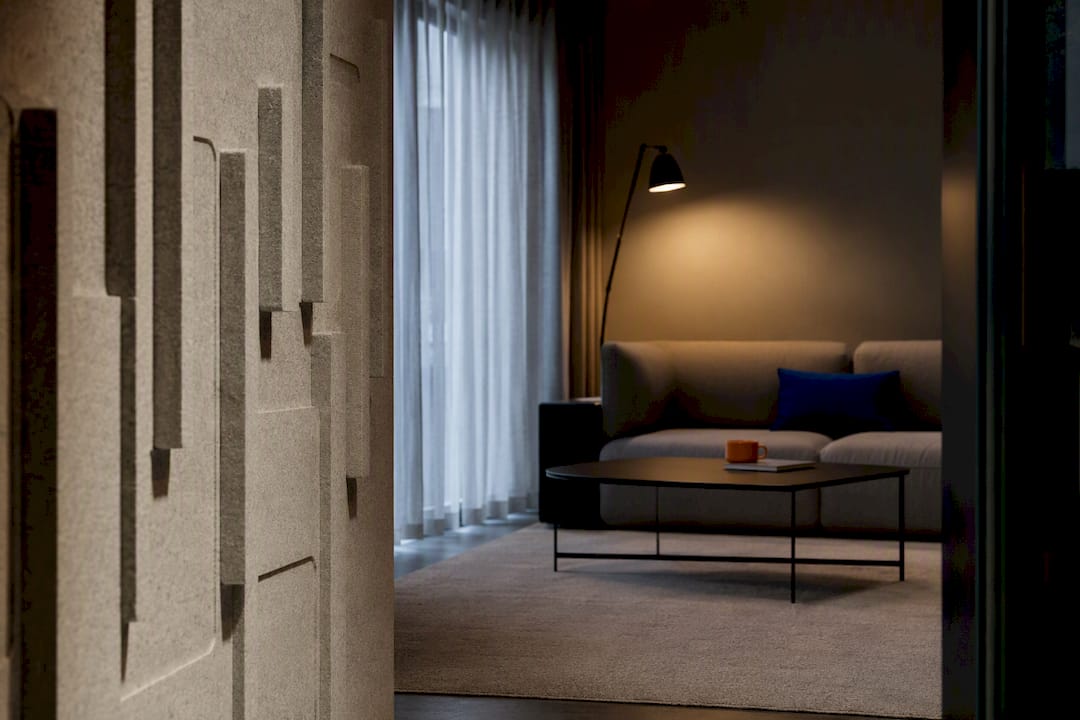
If you’re choosing a removable PET felt feature wall for colour and texture, NRC is the figure worth your attention, not STC. NRC tells you how much sound a surface absorbs, which shapes how lively or hushed a room feels. STC measures how well a wall blocks sound between rooms, a job no decorative panel does. Check the mounting method, then trial your kit for 24 to 48 hours before you judge it.
TL;DR:
- NRC values indicate how much sound a surface absorbs, with higher numbers (above 0.85) providing noticeable echo reduction in living rooms.
- Mounting method and panel texture significantly influence real-world acoustic performance more than material alone, especially when creating air gaps behind panels.
- Coverage and placement matter more than size; treating reflection points with larger, textured, or sculptural panels yields better results than small patches.
- Testing at home by installing panels and recording sound before and after offers a more accurate assessment than relying solely on spec sheet ratings.
- The panels are designed for aesthetic enhancement and modest echo improvement, not for soundproofing or blocking sound transmission between rooms.
Table of Contents
- What NRC and STC actually mean for a feature wall
- Which factors actually change how quiet a room feels
- How to test a kit at home before you commit
- A practical buying checklist for renters and homeowners
- A maker’s take on realistic results and renter-friendly practice
- DwellForms™: colour without commitment, with a quieter room as a bonus
- Key test reports and studies to verify the claims
- Sources
- FAQ
What NRC and STC actually mean for a feature wall
NRC, or Noise Reduction Coefficient, describes how much sound energy a surface absorbs rather than reflects back into the room. It’s an average across several frequencies, expressed as a number between 0 and 1: closer to 1 means more sound is being soaked up rather than bounced around. For a decorative wall panel, this is the number that hints at whether a room will feel calmer or stay as echoey as before.
STC, or Sound Transmission Class, measures something else entirely: how much a wall assembly blocks sound from moving through it into the next room. It’s a metric built for partitions, doors and structural walls, tested as a full assembly under laboratory conditions. A removable decorative panel sitting on a wall’s surface doesn’t change the wall’s mass or airtightness, so it has no meaningful effect on STC. If you see STC mentioned near a decorative panel product, treat it as noise, not signal.
A few things worth holding in mind as you read NRC figures:
- NRC values come from lab tests on a specific specimen, tested at a specific thickness and mounting condition.
- The same panel material can post very different NRC results depending on whether it’s mounted flush or with an air gap behind it.
- A number on a spec sheet only means what it says when your installation resembles the test setup.
That last point matters more than most shoppers realise, and it’s where a lot of marketing claims quietly fall apart.
Which factors actually change how quiet a room feels
Panel thickness, texture and how the piece is mounted do more to shape real-world results than the raw material alone. Peer-reviewed research into acoustic panel textiles found that panel structure, texture and porosity change sound absorption meaningfully across frequencies, which means a sculptural, relief-textured panel and a flat tile of the same material won’t behave the same way in a room.
A few variables carry more weight than shoppers expect:
- Thickness and porosity: thicker, more open panels generally absorb more mid and high frequency sound than thin, dense ones.
- Mounting and air gap: spacing a panel off the wall with a cavity behind it can lift its effective absorption, since the trapped air itself becomes part of the acoustic system.
- Coverage and placement: a single small feature wall does far less than treating the primary reflection points in a room, and multiple walls or a ceiling treatment scale the effect further.
- Frequency range: thin decorative panels absorb high and mid frequencies reasonably well but do very little against low-frequency bass, which needs mass and depth to control.
Pro Tip: Place your feature wall opposite the spot where most conversation or TV sound bounces first, not just wherever it looks best, and you’ll get more benefit from the same panel.
Set your expectations around texture and shape, not raw square metreage. A sculptural, folded surface gives you more effective surface area for absorption than a flat panel of the same footprint, which is one reason the more dimensional DwellForms™ designs tend to feel like they’re doing more work in a room than a smooth equivalent.
How to test a kit at home before you commit
The most honest way to judge a removable panel’s acoustic effect is to install it and listen, not to trust the spec sheet alone. Use the kit’s own adhesive pads exactly as directed. They’re built to hold securely without damaging paint or plaster, and swapping in a stronger construction adhesive defeats the point of a renter-friendly system.
Once it’s up, run a simple before-and-after check:
- Clap once in the middle of the room before installing, and again after, listening for how quickly the sound dies away.
- Watch or listen to the same piece of dialogue-heavy TV or podcast content in both states and note whether voices sound clearer.
- Record a short voice memo on your phone before and after installing, then compare the two: the difference is often more obvious played back than heard live.
Consumer testing on acoustic panel products suggests that panels rated below roughly 0.7 NRC show only a minor improvement in echo, while those at 0.85 or above tend to make a noticeable difference in typical living rooms. That gap is worth knowing before you decide a kit “isn’t working”: a modest NRC was never going to deliver a dramatic change.
Before you fall in love with a placement, test removal on a small, hidden patch first, following the manufacturer’s removal guidance so you know exactly how the wall behaves when the panel comes off.
A practical buying checklist for renters and homeowners
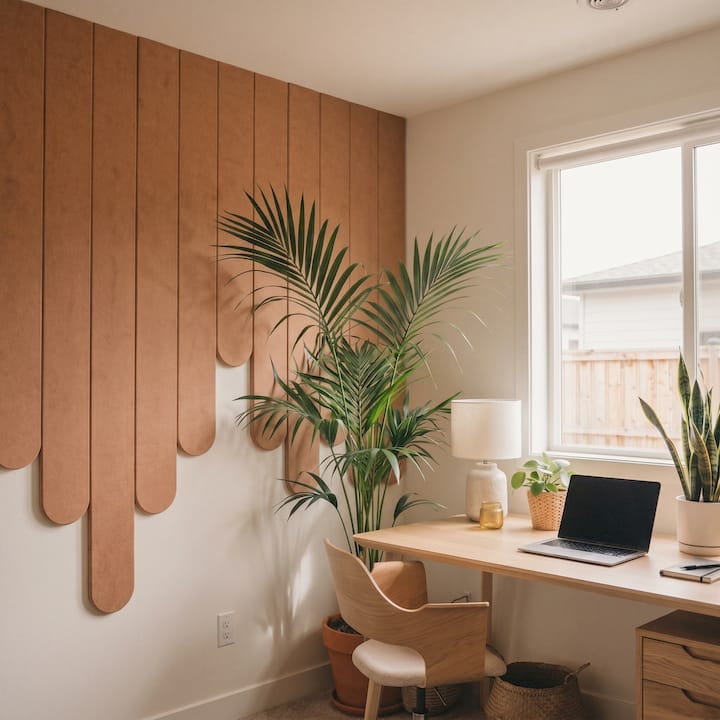
Buying for colour first and acoustic benefit second is a reasonable approach, provided you know what modest actually means. Laboratory reverberation-room testing on PET felt shows NRC ranging from around 0.30 for thin, directly mounted samples up to 0.90 or higher for thicker panels mounted with a cavity behind them, which is a wide spread for what looks like a similar product on a shelf.
A few checks before you order a full kit:
- Ask whether the NRC figure quoted was tested with an air gap or direct mounting, since that single detail changes the number substantially.
- Order a colour sample pack alongside a small extension kit so you can test both the look and the feel of the room at once.
- Aim your panels at the walls carrying the most reflected sound (the TV wall, the wall opposite a window) rather than a decorative patch in a low-traffic corner.
- Balance panel thickness against visual scale: a deeper, more sculptural profile often reads better on a large blank wall than a thin flat tile.
| NRC range | What to expect in a typical living room |
|---|---|
| Below 0.7 NRC | Minor change to echo, mostly cosmetic benefit (source) |
| Between 0.7 and 0.85 NRC | Noticeable softening of hard reflections in the treated area |
| 0.85 and above | Meaningful reduction in flutter echo for typical residential rooms (source) |
Coverage and placement still decide most of the outcome. A single feature wall, however well chosen, won’t replicate a lab result taken across a fully treated room, and that’s worth knowing before you set your expectations.
A maker’s take on realistic results and renter-friendly practice
Some designers build removable wall panels around colour first: a wall that feels considered and personal, in a home you might not own or might move out of within the year. Acoustic softening is a genuine, welcome side effect of a felt surface, not the reason most people buy one.
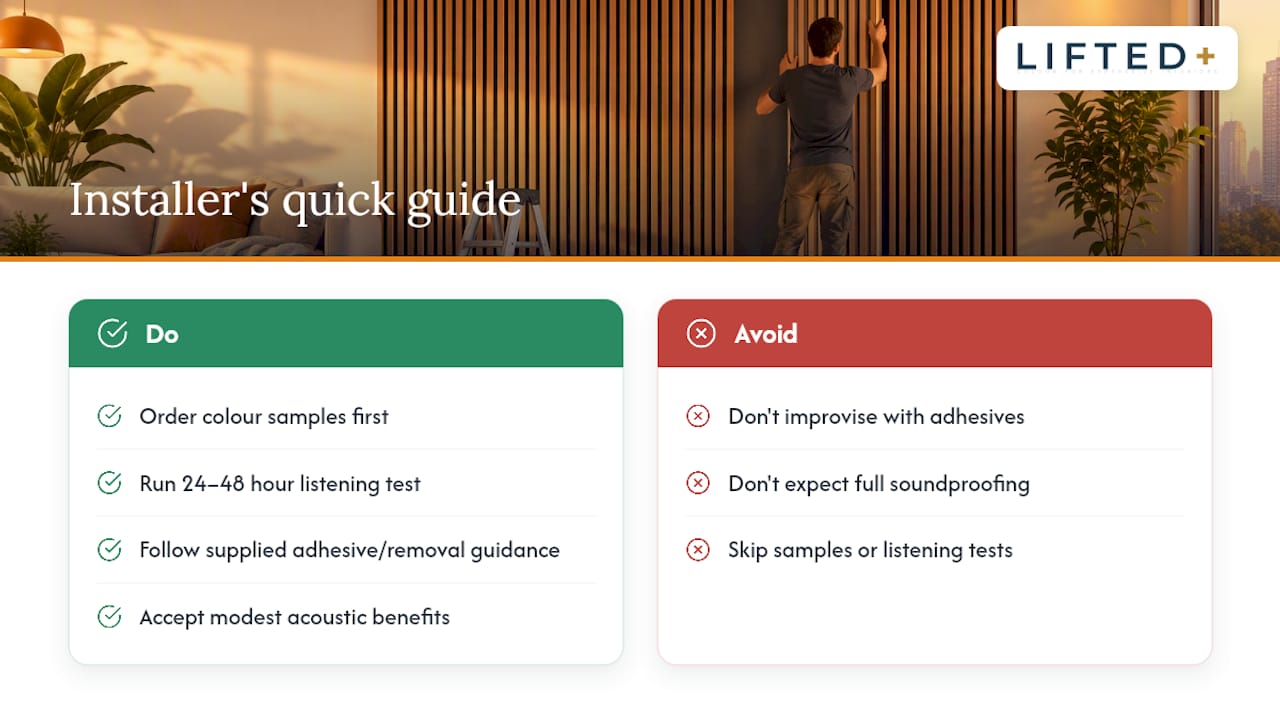
My advice stays consistent: order colour samples before a full kit, run the 24 to 48 hour listening test once it’s installed, and follow the adhesive and removal guidance we provide rather than improvising. DwellForms™ is built for aesthetic impact with a modest acoustic bonus. It was never designed to compete with soundproofing, and I’d rather you know that going in than feel let down later.
— Michelle
DwellForms™: colour without commitment, with a quieter room as a bonus
Some modular wall panel kits offer renter-friendly feature walls you can install with tested adhesive pads and take with you when you move, no drilling, no paint, no landlord conversation required. Extension Kits let you widen coverage once you know a layout works, which matters if your first test showed the biggest reflection points sit beyond your original patch.
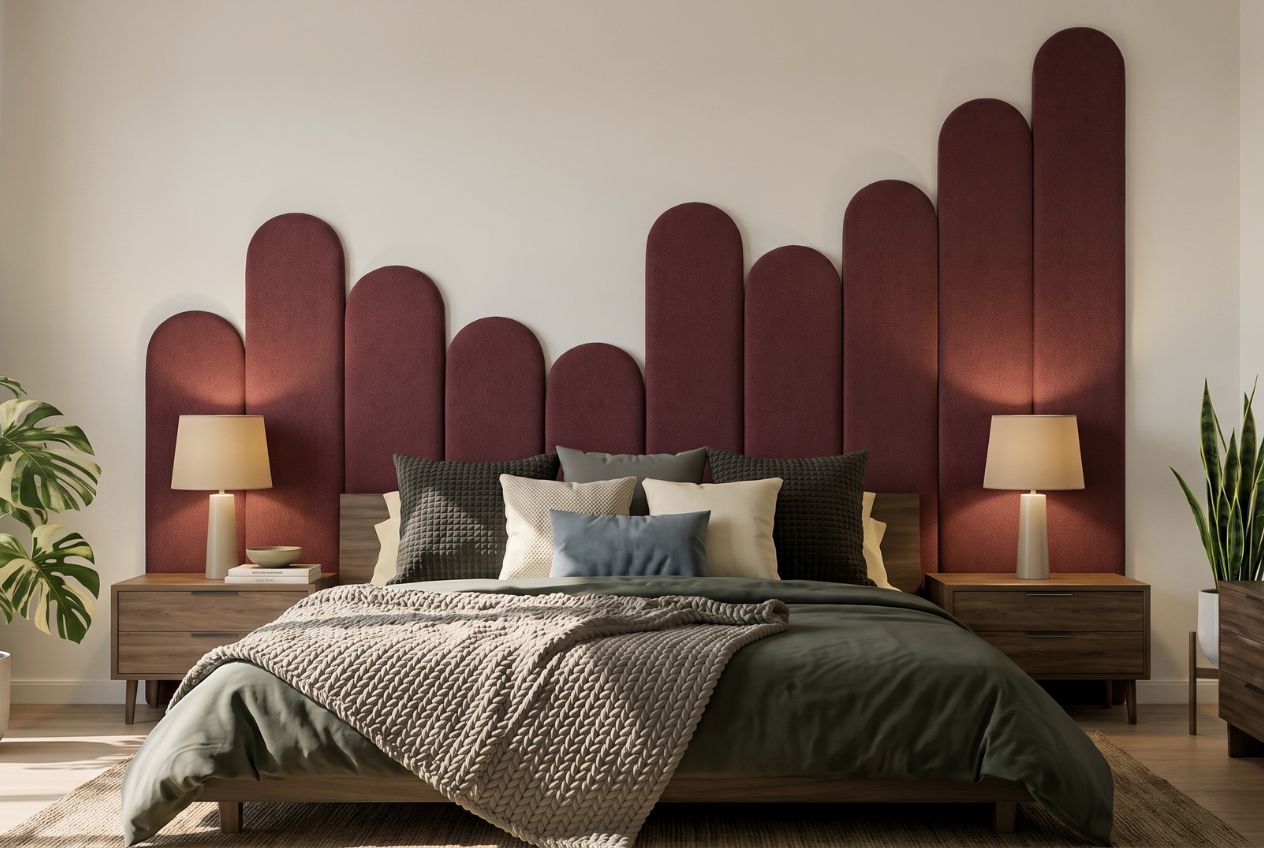
If you’re weighing colour and texture against a modest echo benefit, start small:
- Order a Colour Samples pack to test shade and texture against your actual wall and light.
- Run your 24 to 48 hour clap-and-listen test once a sample section is up.
- Move to a full Core Kits order once you’re confident in both the look and the feel of the room.
This is texture without renovation, and a feature wall that feels like yours from the day it goes up.
Key test reports and studies to verify the claims
For the technical detail behind this article, the textile absorption study, the PET felt cavity mounting report and the mounting configuration notes cover the laboratory side, alongside our own NRC rating explainer.
Sources
FAQ
Is NRC or STC more relevant to a decorative wall panel?
NRC is the relevant figure, since it describes how much sound a surface absorbs within a room. STC measures sound blocked between rooms through a wall assembly, which a surface-mounted decorative panel does not change.
Will a PET felt feature wall soundproof my apartment?
No, a removable feature wall softens echo and reflected sound within the room rather than blocking sound from travelling between spaces. For that, you’d need structural changes to the wall itself, which sits outside what a decorative panel is designed to do.
How long should I trial a panel before judging its effect?
A 24 to 48 hour trial is a practical window: install the panel, then compare clap tests, dialogue clarity and short voice recordings from before and after. This gives your ear time to adjust, rather than judging on the first hour alone.
Does panel thickness affect how much echo it reduces?
Yes, thicker and more porous panels generally absorb more mid and high frequency sound than thin, flat ones. Research into acoustic panel textiles found structure and texture change absorption meaningfully, which is why sculptural, relief-textured designs often outperform flat equivalents of similar material.
Can I mount panels with an air gap to improve absorption?
Spacing a panel off the wall can lift its effective absorption, since the trapped air behind it contributes to the acoustic result. For a renter-friendly setup, stick with the adhesive method the manufacturer recommends rather than improvising a cavity mount that risks wall damage.