
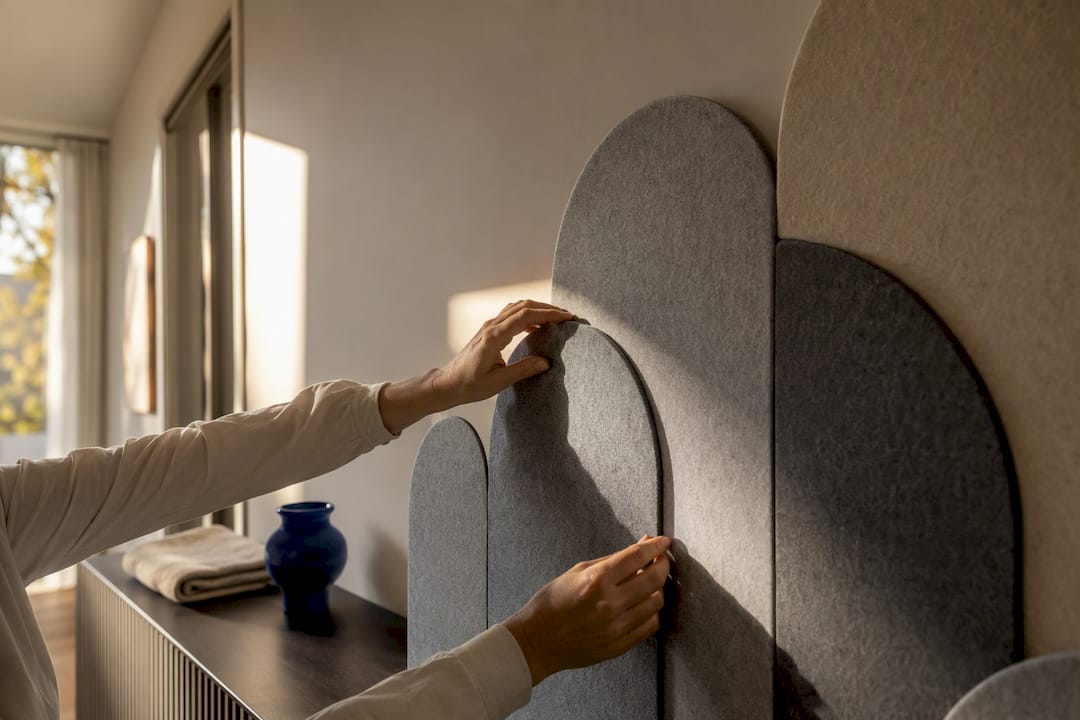
For the quickest high-impact result, choose one arched focal treatment, a tall arched mirror or a peel-and-stick mural set inside a painted arch outline, and make it fully reversible with adhesive strips or no-drill panel systems. Renter-friendly, no-drill options are the safest default for anyone who doesn’t own their walls. The ideas and execution notes below cover more than ten ways to bring that shape into a room without a single hole.
TL;DR:
- Removable, renter-friendly options like peel-and-stick murals or modular felt panels are ideal for creating arch shapes without damaging walls or needing landlord approval.
- Tall, narrow arches are more visually effective, while wide or squat arches can appear as an afterthought; they work best when proportioned to furniture and room scale.
- Curved architectural details like arches and scalloped accents are trending in design, with searches for arched features rising significantly and favoring softer, tactile shapes.
- Using textured, matte, or timber finishes enhances the soft edge of curves and makes them more harmonious within the room’s aesthetic.
- Proper prep—such as photographing walls and checking adhesive weight limits—is essential for maintaining a damage-free, temporary decor and easy removal.
Table of Contents
- Top arch wall decor ideas to try this year
- Choosing the right method for your wall and your lease
- Styling and placement: making the arch your room’s focal point
- Why arches and curves are having a moment
- How DwellForms™ panels build arch-like drama without drilling
- A renter’s honest pick for the easiest arch
- Where to start with DwellForms™
- Sources
- FAQ
Top arch wall decor ideas to try this year
An arch does something a rectangle never can: it softens a room’s edges and gives the eye somewhere gentle to land. These concepts work across living rooms, bedrooms and hallways, and every one of them can be achieved without drilling or damaging a rental wall.
- Painted arch outline. A hand-painted or stencilled arch behind a bed or sofa creates instant architecture using nothing but paint and patience, and it can be painted over at lease end.
- Arched mirror as anchor. A tall, narrow arched mirror leaning against a wall or hung on a picture rail brings light and shape without any fixing into plaster.
- Peel-and-stick mural inside a drawn arch. Apply a textured or botanical peel-and-stick paper only within a pencilled arch shape for a bold, temporary “niche” effect.
- Scalloped tile decal backsplash. In kitchens or bathrooms, scalloped decal tiles echo the curve trend at a fraction of the cost and effort of retiling.
- Arched wallpaper panel. Some peel-and-stick ranges are pre-cut into arch shapes, giving a clean edge without any trimming skill required.
- Fluted panel insert. A small run of fluted-look panelling inside an arch recess adds shadow and texture that shifts with the light.
- Layered textiles. A curved wall hanging or macrame piece softens a hallway arch and adds warmth without any fixings beyond a removable hook.
- Plant-filled niche. A recessed arch styled with trailing plants on a floating shelf turns dead space into a living focal point.
- Gallery arrangement echoing the curve. Round and arch-topped frames grouped in a fan shape repeat the arch’s line elsewhere in the room.
- Modular panel composition. Removable felt panels arranged in a graduated arc, discussed further below, build a sculptural arch-like silhouette with zero wall damage.
- Arched shelving. A single curved floating shelf under a window or in a hallway nook mirrors an existing arch without adding visual clutter.
- Colour-blocked arch. Painter’s tape and a bold paint colour inside an arch outline is the lowest-cost option on this list and among the easiest to remove or repaint.
Pro Tip: Keep the arch tall and narrow rather than wide and squat. A slender arch reads as architecture, while a wide one can look like an afterthought.
Choosing the right method for your wall and your lease
Before committing to a look, run through a short checklist. The right medium depends on your surface, your tenancy terms and how permanent you’re willing to go.
- Surface type: smooth painted plaster takes peel-and-stick and adhesive pads well, while textured or heritage plaster often does not.
- Landlord consent: removable decor that comes off without damage generally sits outside consent requirements under tenancy guidance for personalising a rental, though it’s worth checking your own lease first.
- Scale and budget: a mirror or panel kit suits a single focal wall, while paint suits anyone testing the idea cheaply first.
- Weight limits: most quality adhesive strips and pads hold lightweight items such as mirrors, panels and framed art, but always check the manufacturer’s stated limit before hanging anything heavy.
- When to call a professional: hire help for anything structural, like reshaping an existing archway or dealing with damaged plaster; everything else on this list is a confident DIY job.
Photographing the wall before you start and following removal instructions closely are the two habits that protect your bond most reliably, according to tenant tips for personalising a rental.
Styling and placement: making the arch your room’s focal point
An arch works best when it has room to breathe. One curved feature per sight line is the rule that keeps a space looking considered rather than busy, and it pairs naturally with straight-lined furniture rather than competing with other curves.
- Keep the arch tall and narrow: proportion it to the furniture beneath it, not to the whole wall.
- In a living room, centre the arch behind the sofa and let a low, straight-edged console balance the curve.
- In a bedroom, an arched mirror or painted outline above the bed head works better than one squeezed beside a wardrobe.
- In a hallway, a slim arch draws the eye down the length of the space and feels architectural even in a narrow footprint.
- Warm timber tones, boucle textiles and matte paint finishes tend to flatter an arch’s soft edge better than glossy or sharp-edged materials, echoing the guidance in this accent wall placement guide.
Why arches and curves are having a moment
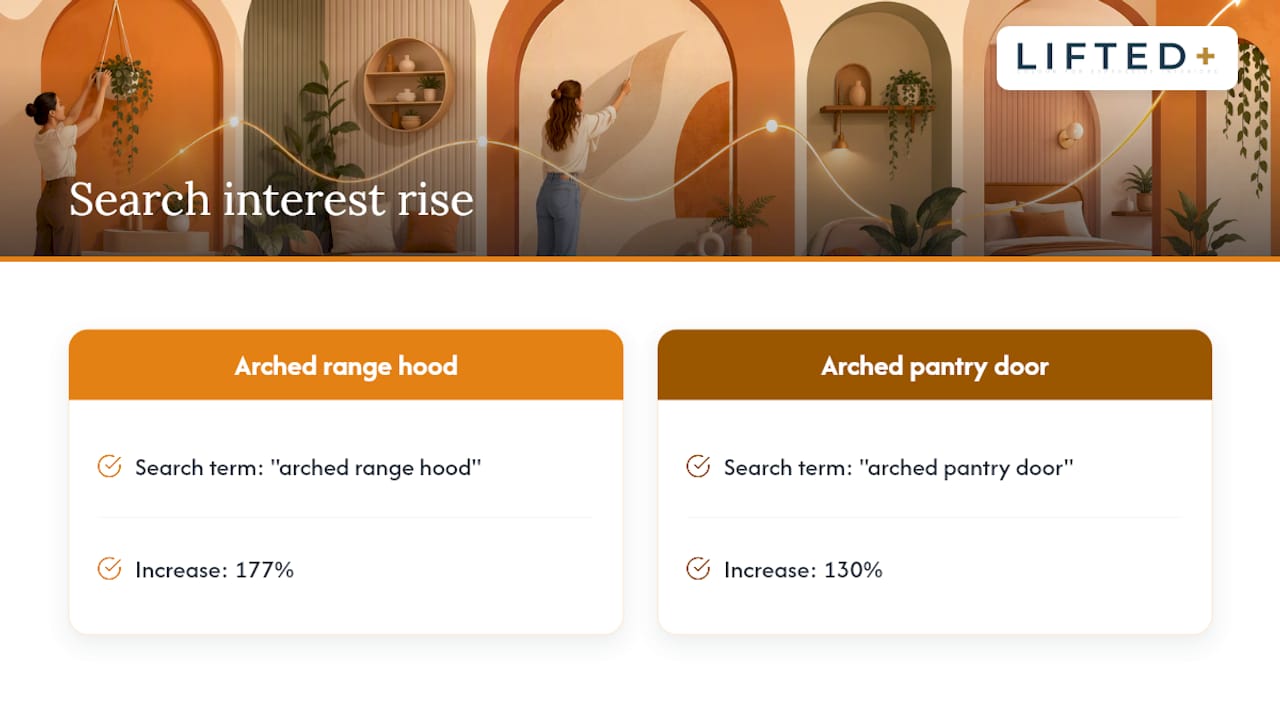
Curved architectural details have moved from niche to mainstream fast. Searches for “arched range hood” climbed 177% and “arched pantry door” searches rose 130%, a jump that signals more than a passing fad. Designers point to the same instinct behind it: curves offer a quieter, more tactile contrast to the boxy, rectilinear rooms most of us live in. The takeaway for your own space is to use every curve with purpose, as multiple competing curves can start to feel busy rather than calm.
How DwellForms™ panels build arch-like drama without drilling
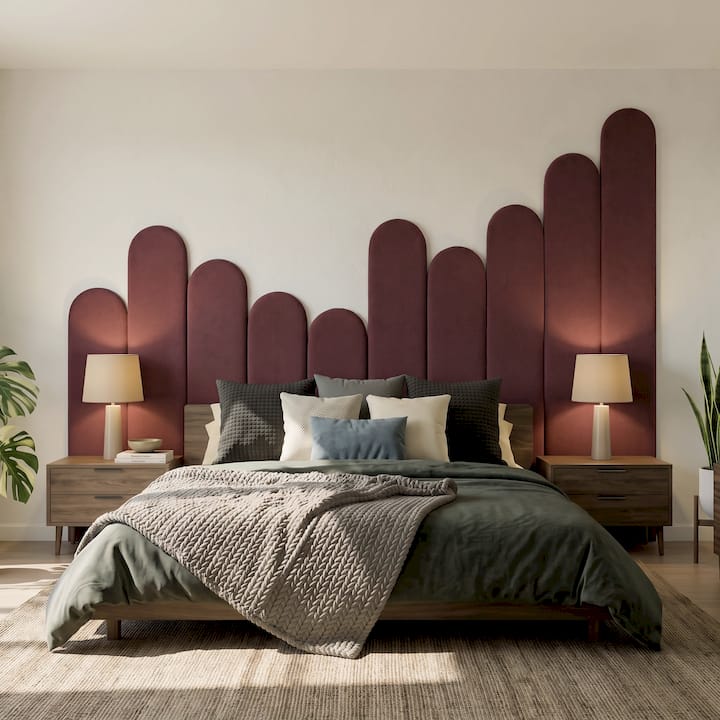
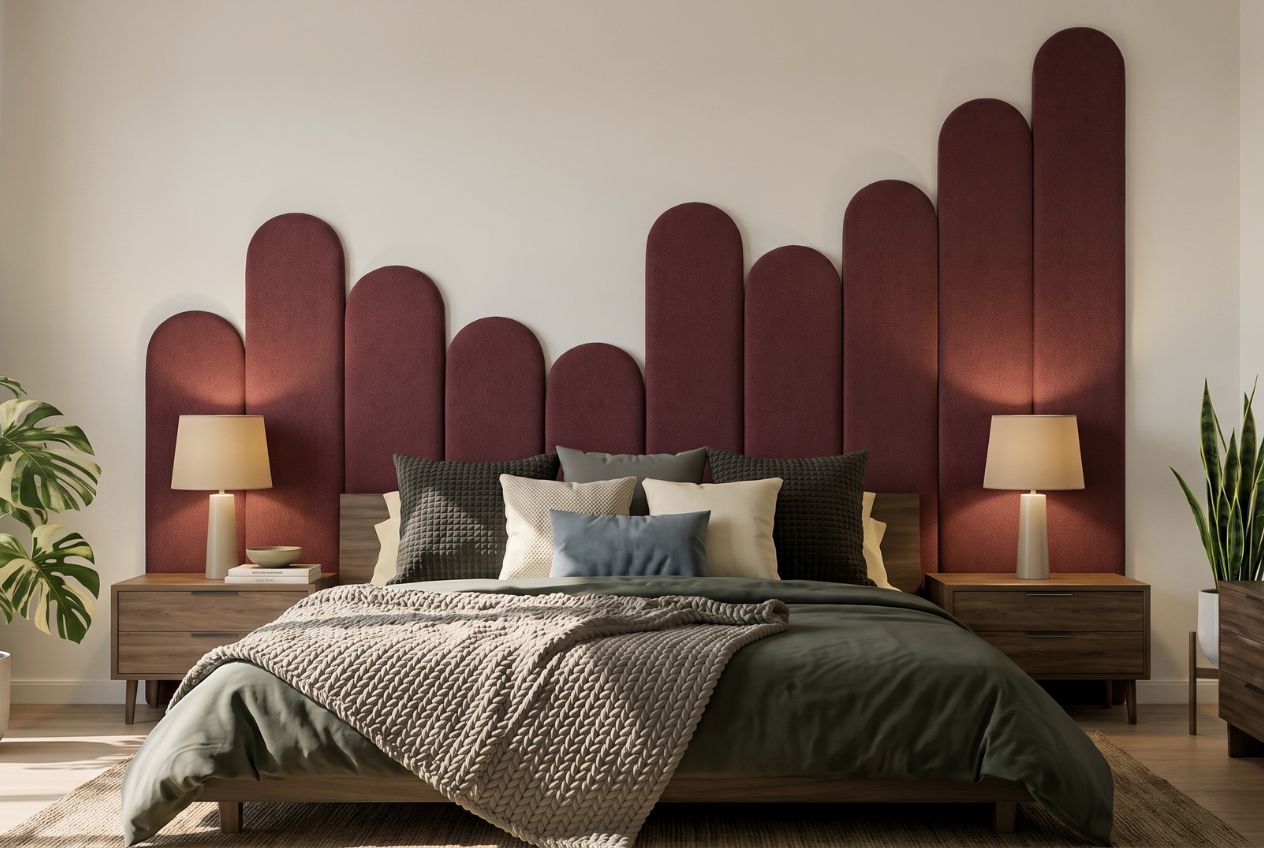
DwellForms™ panels are modular, removable PET felt kits made from recycled plastic, and they can be arranged to read as an arch without a single fixing into your wall. Overlapping pieces at graduated heights, with colour intensity building toward the centre, casts small shadows that mimic the depth of a real curved recess. Each kit uses adhesive pads designed to allow the whole composition to lift away cleanly if you move or simply want a change. Colour samples let you test a palette before committing to a full layout, and pieces rearrange easily as your taste shifts.
A renter’s honest pick for the easiest arch
If I had to choose one approach, it would be an arched mirror over a peel-and-stick backdrop. It’s fully reversible, forgiving of an imperfect wall, and delivers the strongest visual payoff for the least effort.
— Michelle
Where to start with DwellForms™
A renter-friendly feature wall doesn’t need paint, drilling or a landlord’s blessing, it needs a kit that comes off as easily as it goes on. DwellForms™ Colour Samples let you test a palette against your own light before you commit, and the Core Kits give you enough panels to build a graduated, arch-like composition on a single feature wall.
| Starting point | What it’s for |
|---|---|
| DwellForms™ Colour Samples | Testing colour and texture before a full order |
| DwellForms™ Core Kits | Building a full arch-like feature wall |
| DwellForms™ Extension Kits | Growing an existing layout over time |
Browse the DwellForms™ Core Kits to see current colours and shapes, or order a Colour Samples pack first if you want to live with the tones before committing.
Sources
Trend figures come from Houzz’s 2026 design trends report and Apartment Therapy’s home decor survey. Tenancy guidance is drawn from Property-plus’s tenant tips, and curve-specific styling detail from The Curve Report. For more renter-friendly ideas, see wall decor ideas for renters and sculptural wall art for renters.
- 8 design trends emerging in 2026 (Houzz)
- Making your rental feel like home — tenant tips (Property-plus)
FAQ
How do you decorate a curved wall?
Work with the curve rather than against it: a peel-and-stick mural, a fan-shaped gallery arrangement or graduated modular panels all echo a curved surface without needing to drill into it. Keep colours or textures continuous across the curve so the eye reads it as one shape.
What are some creative ideas for decorating an archway?
Try a tall arched mirror, a plant-filled niche on a floating shelf, or layered textiles like a curved wall hanging inside the recess. Removable panel arrangements at graduated heights can also mimic an arch’s shadow and depth without altering the wall itself.
What is the latest trend in wall decor?
Curved and arched details are the standout trend, with designer surveys showing 69% now prefer curves to clean-lined furniture. The shift favours softer, tactile shapes over the sharp rectilinear lines that dominated previous years.
What wall art trends should you expect in 2026?
Expect arched mirrors, scalloped tile details and fluted panel textures to keep growing, alongside a continued preference for curved silhouettes over straight-edged pieces. Removable, renter-friendly versions of these looks, such as peel-and-stick murals and modular felt panels, are becoming the practical way most people achieve the trend.
Do you need landlord permission for removable arch decor?
Generally, removable decor that comes off without damage falls outside consent requirements, as outlined in guidance on personalising a rental. It’s still worth checking your specific lease terms and photographing the wall before you start, just to be safe.