
TL;DR:
- Aesthetic presence in a home is about creating a felt quality that resonates emotionally, not just visual appeal. It is achieved through atmospheric layering of sensory elements like light, texture, scent, and spatial rhythm that support genuine mood and connection. Focusing on meaningful objects and intentional design choices fosters a personal, enduring space rather than chasing fleeting trends.
There is a quiet difference between a room that looks good in a photograph and one that makes you pause at the threshold, breathe differently, and feel genuinely at ease. Most of us have experienced both, yet few can name exactly what separates them. The answer is not a bigger budget or a more daring colour choice. It is aesthetic presence, a quality built not from surfaces alone but from the layered interaction of mood, sensation, and intention. This guide will show you precisely how to cultivate that quality throughout your own New Zealand home.
Table of Contents
- Defining aesthetic presence: More than just looks
- How atmospheric layering creates depth and mood
- Key elements for achieving aesthetic presence at home
- Seasonal styling and sustainable presence
- Our perspective: Why presence matters more than matching trends
- Discover pieces that bring presence to your space
- Frequently asked questions
Key Takeaways
| Point | Details |
|---|---|
| More than visual | Aesthetic presence relies on layering emotional and sensory cues, not just looks. |
| Atmospheric layering | Combining light, texture, scent, and sound creates mood and depth. |
| Statement elements matter | Hero pieces and curated arrangements anchor the atmosphere of your home. |
| Seasonal and sustainable | Update presence with the seasons and prioritise lasting styles for timeless appeal. |
| Personal touch | Injecting meaning and emotion is key to memorable, vibrant interiors. |
Defining aesthetic presence: More than just looks
Now that we’ve set the stage, let’s uncover exactly what makes a space resonate.
Aesthetic presence is not a style. It is not a palette, a furniture era, or a trending Instagram aesthetic. It is the felt quality of a room, the way a space holds you rather than simply surrounds you. You can learn to create presence in interior design without spending more, but you do need to think differently about what interior design is actually doing.
The most common misconception is that a beautiful home is one where every surface is intentional and every object matches. Matching is the easy part. Resonance is the real work. A room with perfectly coordinated cushions and a thoughtfully chosen throw can still feel flat, as though it has been assembled rather than inhabited.
“Atmospheric layering is the art of orchestrating multiple sensory dimensions for an immersive environment, shaping mood and experience through light, texture, sound, scent, and spatial rhythm. It is the direct contrast to purely visual styling.”
What this means in practice is that the pursuit of real aesthetic impact requires you to consider your home the way a theatre designer considers a stage. Every decision carries an emotional charge. The warmth of a lamp, the resistance of a heavy linen curtain, the faint scent of timber and greenery — these details do not merely add up. They multiply.
Consider how aesthetic considerations in window design demonstrate that even the most functional elements of a room carry a visual and sensory language. Nothing is neutral. Everything either supports the atmosphere you are building or quietly undermines it.
Here is where the common approach to decorating falls short:
- It focuses on what looks cohesive in isolation rather than how objects interact with each other and with people.
- It treats scent, sound, and touch as afterthoughts rather than core design tools.
- It confuses visual consistency with emotional depth, producing rooms that feel curated but not alive.
Aesthetic presence asks you to ask a different question. Not “does this look good?” but “does this feel true?”
How atmospheric layering creates depth and mood
Understanding the theory is one thing. Now let’s see how atmospheric layering gives your home dynamic presence.
Curated combinations of sensory and spatial factors create depth and mood that surface styling alone simply cannot achieve. The concept of atmospheric layering is built around the understanding that each sensory dimension you introduce adds a new register of feeling to a space.
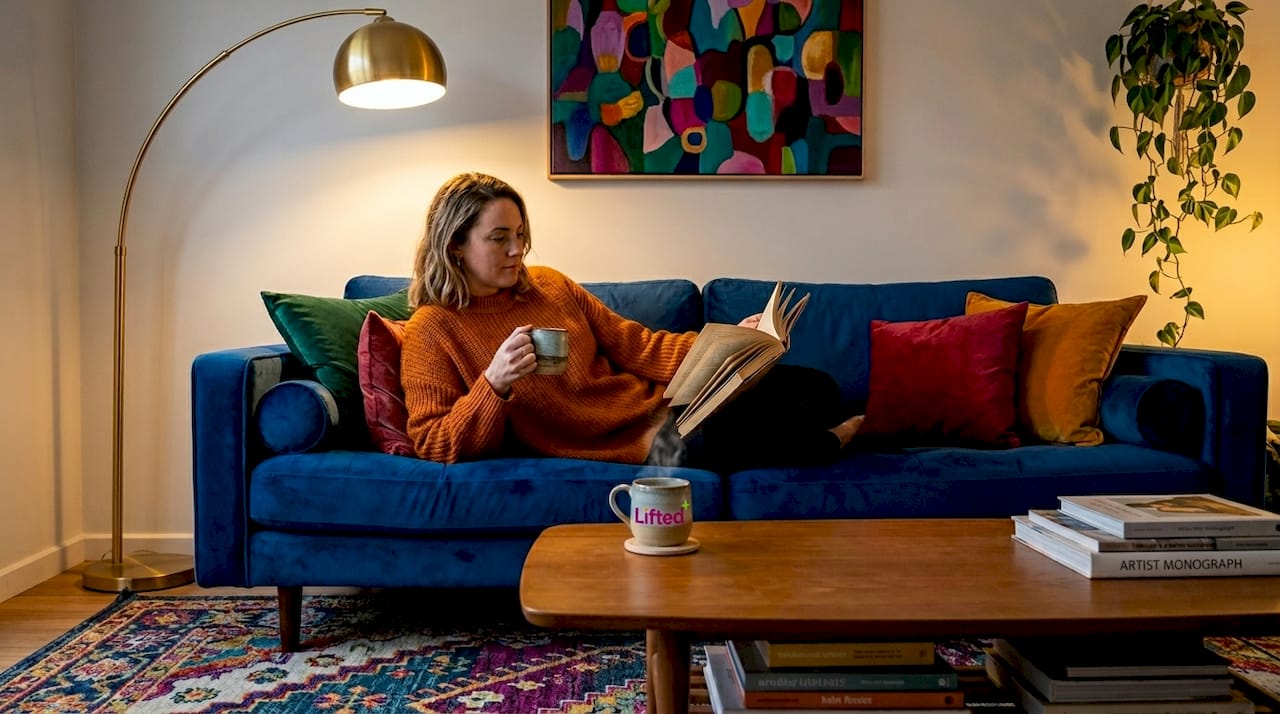
Think of a well-loved living room at dusk. The ceiling light is off. A floor lamp throws a warm amber pool across the wall. A woven throw drapes loosely over the sofa. There is soft music in the background, low enough to feel rather than focus on. A candle burns somewhere nearby. You have not changed a single piece of furniture, but the room has transformed entirely. That is atmospheric layering at work.
| Dimension | Single-layer approach | Layered atmospheric approach | Emotional impact |
|---|---|---|---|
| Lighting | One overhead fixture | Layered ambient, task, and accent lighting | Intimacy, warmth, sense of scale |
| Texture | Smooth, uniform surfaces | Mixed weaves, timber, ceramic, linen | Sensory richness, groundedness |
| Scent | No intentional scent | Candles, plants, natural materials | Calm, memory, comfort |
| Sound | Background noise | Considered music or quiet | Focus, relaxation, mood |
| Spatial rhythm | Furniture in straight lines | Varied heights, clusters, breathing space | Energy, flow, intrigue |
When you learn to layer home decor objects thoughtfully, you stop making isolated decisions and start composing a whole atmosphere. A sculptural vase beside a stack of books and a trailing plant is not clutter. It is a visual conversation, a cluster that holds the eye and gives the room a focal point with genuine weight.
The way furniture shapes home ambiance and mood is equally critical. A deep, low sofa signals repose and invitation. A high-backed chair with a strong silhouette declares something entirely different. It is not just where you sit; it is what the form says before you sit down.
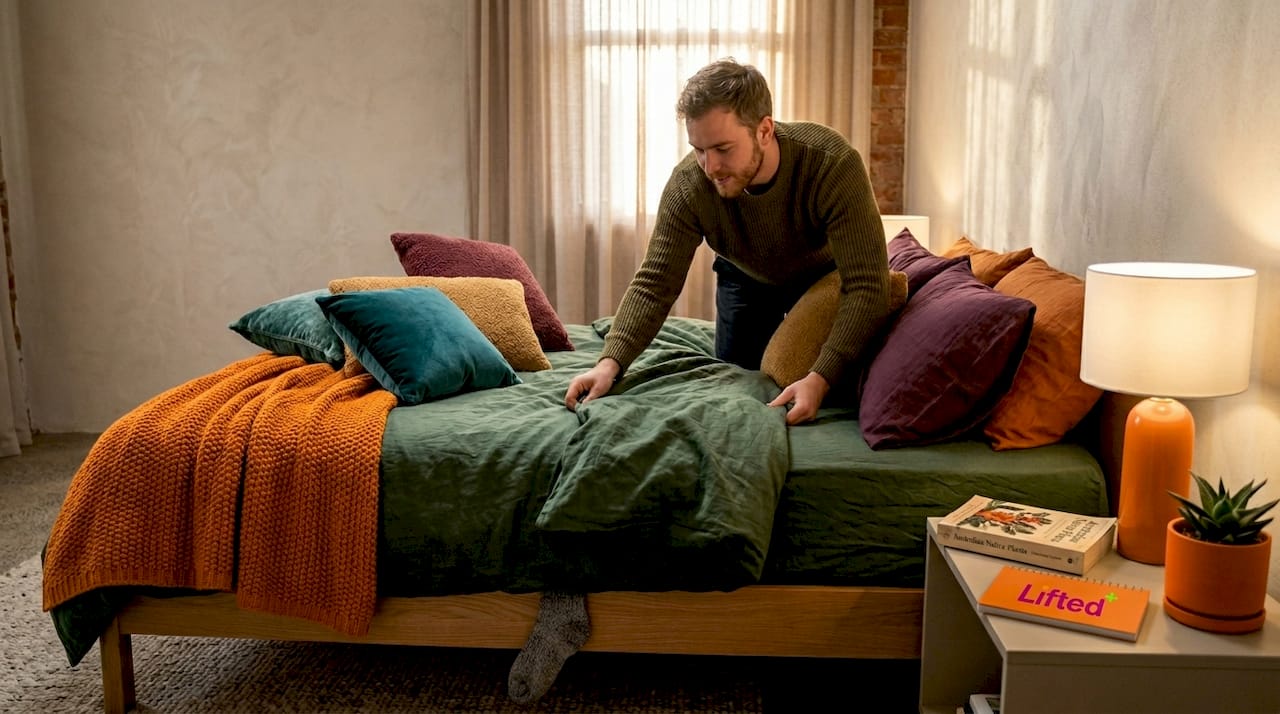
Consider too how bedding layering for style applies the same logic in a bedroom, combining weight, weave, and colour to build a sleeping environment that feels both generous and personal.
Pro Tip: When introducing atmospheric layering for the first time, work on one sensory dimension at a time. Spend a week focusing only on lighting, adjusting bulbs, adding a lamp, removing a harsh overhead fixture. Once that layer feels resolved, move to texture. Building slowly means you notice the effect of each change rather than getting overwhelmed by a complete overhaul.
Key elements for achieving aesthetic presence at home
With a grasp of atmospheric layering, here is how to select and arrange statement pieces to achieve a genuinely captivating look.
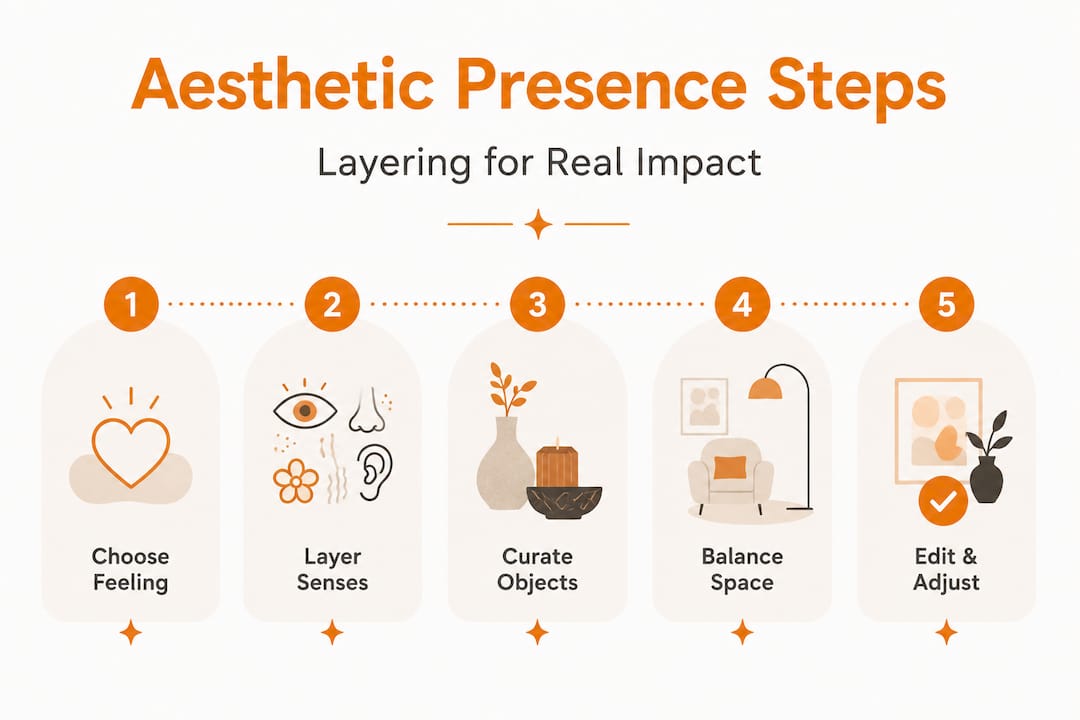
Curated combinations of sensory and spatial factors work best when anchored by a considered hierarchy of objects. Every room needs a reason to enter it and a reason to stay. Here are five essential elements that reliably build aesthetic presence in New Zealand homes:
-
A statement furniture piece. Not necessarily the largest piece in the room, but the one with the strongest form. A velvet armchair in a deep terracotta, a timber sideboard with striking grain, a curved sofa that pulls the room into a gentle arc. One piece with genuine character does more work than a dozen safe choices.
-
Bold, grounded colour. Colour is not decoration; it is emotion made visible. Warm ochres, earthy sienna, and deep olive work particularly well in New Zealand light, where the quality of daylight shifts from the cool clarity of morning to the golden warmth of late afternoon. Colour anchors the mood before a single object is placed.
-
Statement art. A large-scale artwork is the closest thing decor has to a voice. It sets tone, introduces narrative, and gives the eye a destination. Art does not need to be expensive, but it must be chosen with intention, not filled in as an afterthought.
-
Sculptural lighting. Light shapes space as surely as walls do. A sculptural pendant brings shape to the air above a dining table. A floor lamp with an architectural silhouette holds a corner in place. Lighting is the one element that changes the mood of everything around it simply by being switched on.
-
Considered spatial flow. How you move through a room, where you pause, what you see first, matters enormously. Furniture arranged to allow natural circulation, objects placed at varied heights to guide the eye upward and downward, breathing space between clusters — all of this creates rhythm that you feel without naming.
| Feature | Off-the-shelf look | Curated presence |
|---|---|---|
| Visual coherence | High | Intentional, with strategic contrast |
| Emotional depth | Low | Rich and layered |
| Longevity | Trends quickly | Remains relevant |
| Visitor response | “It looks nice” | “This feels special” |
Learning to curate a cohesive home edit is less about buying the right things and more about editing with discipline. Most rooms benefit from removal as much as addition. And when you build a curated homewares edit, the goal is not abundance — it is a small number of objects that each carry genuine weight.
Pro Tip: Identify one hero piece per room and let every other decision serve it. If your hero is a rust-coloured armchair, choose a rug that grounds its tone, a lamp that flatters its silhouette, and a wall treatment that makes it stand forward. This hierarchy prevents the visual noise that flattens a room’s presence.
Seasonal styling and sustainable presence
Beyond initial choices, ongoing presence means responding to the rhythms of season and sustainability.
Shaping mood and experience through light, texture, sound, scent, and spatial rhythm is not a one-time act. It is a practice, one that deepens when you allow your home to shift with the seasons rather than holding rigidly to one fixed look.
Autumn in New Zealand brings shorter days, a particular quality of amber afternoon light, and a natural pull toward warmth and enclosure. This is the season for richer textures, deeper hues, and lighting that pools rather than floods. Summer, by contrast, calls for lighter textiles, cooler tones, and an openness that mirrors the long evenings outside. Your home does not need a complete reinvention for each season. It needs small, considered swaps that acknowledge the emotional truth of the time of year.
Ways to adapt your home’s ambiance with the seasons:
- Swap lighter cotton throws for heavier wool or bouclé as the temperature drops.
- Shift artwork to pieces with warmer tones or more introspective subjects in autumn and winter.
- Adjust your lighting strategy, moving from bright, airy light in summer to layered, low amber light in the cooler months.
- Introduce seasonal scents through candles or diffusers, warm spice in winter, fresh botanicals in spring.
- Bring in natural elements like dried grasses, terracotta vessels, or foliage that echo what is happening outside.
Research consistently shows that consumers who invest in versatile, timeless pieces rather than fast-fashion decor see significantly less waste and greater long-term satisfaction with their interiors. The environmental cost of constant replacement is considerable; choosing pieces with enduring form means your home remains beautiful without the cycle of discard and repurchase.
Ideas for brightening rooms do not always require new objects. Sometimes the simplest seasonal shift is moving a lamp, changing a shade, or hanging a lighter artwork in a previously dark corner. Equally, mood lighting for New Zealand homes is one of the most impactful and sustainable investments you can make, because the right fixture works across every season without alteration.
For bedroom styling ideas that carry through the seasons with intention, the approach to bedroom design transformation through considered layering offers clear and practical guidance.
Our perspective: Why presence matters more than matching trends
Having covered the practical aspects, let us reconsider what truly makes a home memorable.
The interior design world moves quickly. Trends arrive with confident naming conventions and then dissolve within two years, leaving behind rooms that feel strangely dated despite having been carefully assembled. We have watched this cycle long enough to say, with conviction, that the pursuit of trends is the single biggest obstacle to a home with genuine presence.
Trends ask you to look outward, to calibrate your space against what other people are doing and feeling. Presence asks you to look inward, to decide what your space should make you feel and then build toward that feeling deliberately. These are fundamentally different acts, and they produce fundamentally different results.
What we believe, and what the homes we most admire consistently demonstrate, is that the most powerful interiors carry personal history. They hold objects that were chosen for reasons that have nothing to do with what was fashionable at the time of purchase. A painting acquired on a trip, a lamp inherited from a grandparent, a chair that was simply too right to leave behind — these pieces bring shape to a story. And story is what makes visitors linger and owners fall in love with a space rather than simply tolerate it.
You can absolutely personalise your space with decor without sacrificing visual coherence. The key is to choose pieces that you feel strongly about and then build context around them, rather than assembling a context and searching for objects to fill it.
The uncomfortable truth about trends is that they are designed for the collective, not for you specifically. Presence is individual. It is the quality that makes your home unmistakably yours, before anyone has read a single magazine this season.
Discover pieces that bring presence to your space
If this guide has shifted how you think about your home, the next step is finding pieces that carry genuine weight — objects chosen for their form, their colour, and the atmosphere they introduce rather than for their trendiness.

At Lifted+, we curate bold wall art that commands attention, gives rooms a voice, and holds the wall with real intention. Our colourful furniture range is designed to anchor rooms with character, drawing on grounded palettes and sculptural forms that age beautifully. And our modern lighting collection brings the most transformative of all sensory layers directly into your New Zealand home. Every piece is selected for presence, not trend. That is the Lifted+ difference.
Frequently asked questions
What does aesthetic presence really mean in home decor?
Aesthetic presence means a room feels emotionally engaging and immersive rather than simply visually attractive. As atmospheric layering demonstrates, it is achieved through the orchestration of multiple sensory dimensions, including light, texture, scent, and spatial rhythm.
How is aesthetic presence different to simply matching colours and styles?
Matching colours creates visual consistency, but sensory and spatial depth is what produces actual mood and emotional resonance in a room. Presence is felt, not just seen.
Can small changes in decor create aesthetic presence?
Yes, absolutely. Introducing layered lighting, a textured throw, or a standout artwork can shift a room’s entire mood, because adapting light, texture, and scent over time creates continual freshness without requiring a full redesign.
Why should I consider sustainability when curating decor for presence?
Versatile, well-chosen pieces ensure your home stays meaningful and fresh through changing seasons and shifting trends. Adapting sensory layers over time reduces the need to replace and repurchase, making your decor both more sustainable and more personal.