

Last Updated: November 14, 2026
Quick Summary
Styling empty apartment walls starts with a plan: measure the wall and scale decor to roughly two-thirds of the furniture’s width below it. Set a budget tier before buying, then choose one oversized piece or a grouped arrangement as a focal point. For strict leases, use damage-free methods like adhesive strips, tension rods and leaning mirrors.
- A 1.8-metre sofa suits a composition around 1.2 metres wide, not a single small print.
- Hang or lean a statement piece so its centre sits around 1.5 metres from the floor.
- Lay the arrangement on the floor or use paper templates before committing to hooks.
- Keep gallery wall gaps consistent and anchor the group to furniture below it.
- Clean the wall with isopropyl alcohol before applying adhesive strips and stay under the rated weight.
Table of Contents
- Start With a Plan for Your Empty Apartment Walls
- Large Blank Wall Ideas That Fill the Space With Confidence
- How to Arrange Wall Art Without Guessing
- No-Drill Wall Decor Ideas for Strict Leases
- Wall Decor Ideas for Small Apartments and Awkward Walls
- Add Colour and Texture Without Touching a Paintbrush
- Common Mistakes That Make Empty Walls Look Worse
- Explore DwellForms Wall Kits for Your Blank Walls
- Frequently Asked Questions
Start With a Plan for Your Empty Apartment Walls
Most renters attack a bare wall the moment they move in, buy three prints in a panic, and end up with a cluster of small frames floating in the middle of nothing. Learning how to style empty apartment walls properly starts before you buy a single thing. The walls that look intentional are usually planned around the room’s proportions, not assembled from impulse purchases.
Measure the wall and scale your furniture
Measure the full width and height of the wall, then note where your sofa, bed or console sits. Art and panels should relate to furniture below them, not float alone. As a working rule, decor should span roughly two-thirds of the furniture’s width. A 1.8-metre sofa wants a composition around 1.2 metres wide, not a single A4-sized print.
Set a budget tier before you buy
Decide your tier first, then shop inside it. A simple three-tier approach keeps spending honest:
| Tier | What it covers | Best for |
|---|---|---|
| Low | Prints, adhesive hooks, secondhand frames | First flat, tight budget |
| Mid | Modular panels, quality mirrors, shelving | Long-term renters |
| High | Oversized art, custom kits, layered schemes | Homeowners, statement rooms |
Pricing depends on quantity, dates and delivery, so check Lifted Plus’s website for current prices or a quote.
Large Blank Wall Ideas That Fill the Space With Confidence
Big walls fail when decor is too small. The fix is scale: one oversized piece or a grouped arrangement reads as deliberate, while scattered small items read as clutter. Designers treat a large wall as a blank canvas with one focal point, then build outward from it.
Statement art and oversized mirrors
A single large-scale artwork or a floor mirror leaning against the wall can carry an entire room. Mirrors bounce light and make narrow apartments feel wider, which matters in compact layouts. Hang or lean the piece so its centre sits roughly at eye level, around 1.5 metres from the floor.
Shelving and wall-mounted collections
Open shelving turns a flat wall into a display with depth. Mix books, ceramics and framed photos across three shelf levels, and leave breathing room between objects. Wall-mounted collections, from records to hats, work when grouped by colour or type rather than spread randomly.
If you want to browse real statement pieces rather than imagine them, explore wall art and mirrors designed to transform blank walls into confident interiors.
How to Arrange Wall Art Without Guessing
Arrangement is where most apartment walls succeed or fail, and the difference is measurement rather than taste. The reliable method is to lay the arrangement on the floor first, or cut paper templates and tape them up. This lets you judge spacing before committing to hooks, and it costs nothing but an evening.
Size art to the furniture, not the wall
Start with the furniture the art will sit above. As a general design guideline, a composition can span roughly two-thirds of the furniture’s width, so a 1.8-metre sofa suits a group around 1.2 metres wide.
Set hanging height from the furniture
Eye level is a useful default, and furniture-relative height often works well in apartments. The principle is that the art and the furniture should read as one composition, not two objects in the same room.
Gallery wall spacing that holds up
For gallery walls, keep the gaps between frames consistent and anchor the group to the furniture below. Treat the whole group as one rectangle: its outer edges should align with the two-thirds rule, and its centre should sit at the same height as a single piece would. A few rules that hold up in practice:
- Pick one alignment: centred above furniture, or a bottom-aligned row
- Mix two sizes at most, with one clearly dominant piece
- Keep the group’s centre at eye level, not the top frame
What most guides miss is that gallery walls need an anchor. Without a sofa, console table or shelf beneath them, frames look stranded. In a rental, a low console or a pair of stacked storage boxes can create that anchor without fixing anything to the wall.
Plan for the wall you actually have
Awkward walls need their own logic. On a narrow wall between a door and a corner, a single vertical column of frames or a slim mirror reads better than a horizontal group that crowds the edges.
Watch out: paper templates are only useful if they match the frame size exactly. Trace the actual frame, not the artwork, and mark the hanging point on the template so you drill or place hooks in the right spot the first time.
No-Drill Wall Decor Ideas for Strict Leases
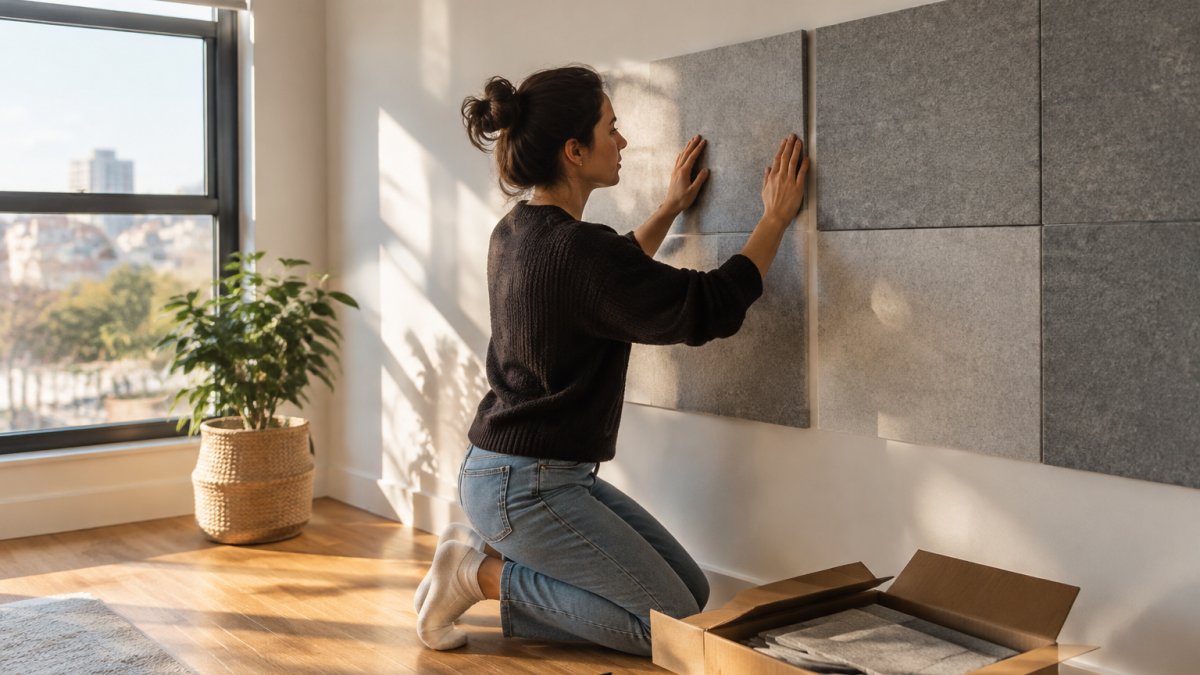
Damage-free installation is where most renter guides get vague, and it is the single most useful section for anyone in a lease. The honest answer: adhesive strips, tension rods, leaning mirrors, removable wallpaper and modular felt panels all work, but each has weight limits and surface requirements. Textured or angled walls need products rated for them, and heavy items should lean or hang from tension systems rather than adhesive alone.
Match the method to the wall and the weight
The starting point is the surface. Smooth painted plasterboard, glossy tile, timber, glass and textured or low-VOC paints all behave differently. Adhesive strips and hooks rely on a clean, flat, non-porous surface; on textured paint or fresh low-sheen finishes they can fail within weeks and take paint with them. A common pattern is that the rated weight on the packet assumes an ideal surface, so treat it as a ceiling rather than a target and stay well under it for anything breakable.
- Adhesive strips and hooks: best for lightweight frames, canvases and small mirrors. Clean the wall with isopropyl alcohol, press firmly for the full recommended time, and remove slowly by stretching the tab parallel to the wall rather than pulling outward.
- Tension rods: useful between two walls or inside a window reveal for lightweight curtains, hanging plants or a small rail. They rely on friction, so they suit narrow spans and smooth surfaces, not wide or textured openings.
- Leaning displays: the safest option for heavy mirrors and large art. A floor mirror or oversized frame leaned against the wall needs a anti-slip base and, for tall pieces, a safety strap or a discreet wall anchor for tip-over protection.
Know the lease and bond risks
Before hanging anything, check the tenancy agreement for clauses on fixings, picture hooks and alterations. In many tenancies, small picture hooks are treated differently from adhesive products, and some agreements require written permission for anything fixed to the wall.
Check the product’s rated surface and weight before trusting it, and avoid hanging a heavy mirror or a large framed piece from adhesive alone. For a deeper roundup of damage-free methods that protect your bond, read our guide to no drill ways to transform blank walls.
Wall Decor Ideas for Small Apartments and Awkward Walls
Small and awkward walls reward vertical thinking. Narrow hallway walls suit a slim mirror or a single column of frames. Corners work with a tall plant and one leaning print.
For hallways, entries and small rooms, a kit sized to the space beats a full-wall installation. See how a small wall can make a big shift with a scaled-down approach.
Add Colour and Texture Without Touching a Paintbrush
Renters often assume colour means paint. It doesn’t. Textiles do the heavy lifting: curtains, throw pillows, area rugs and wall hangings add warmth and pattern with zero permission required. Layering texture, from felt to woven fabric to smooth frames, gives a room depth that flat paint can’t match.
Modular felt panels can add colour and architectural shape to a bare wall, and they can be reconfigured when you move. If you want to judge colours in your own light first, the DwellForms Colour Library Box lets you see and feel real samples before committing to a palette.
Common Mistakes That Make Empty Walls Look Worse
The costliest errors are predictable. Hanging everything too high is the classic: art should relate to furniture, not float near the ceiling. Buying frames smaller than the wall is next, followed by ignoring lighting, which leaves even good decor looking flat.
Renter-specific mistakes cost money. Our breakdown of renter decorating mistakes covers the errors that cost tenants their bond and the removable fixes that work instead.
Explore DwellForms Wall Kits for Your Blank Walls
Empty apartment walls don’t need paint, drills or a landlord’s permission to look designed. They need a plan, the right scale, and materials that respect your lease.
That’s the challenge: most wall decor forces a trade-off between damage and design. Lifted Plus built DwellForms™ to remove it. Our modular wall kits use 100% recycled PET felt panels that add colour, texture and architectural shape without paint or drilling, and they’re made to move with you and reconfigure in any room.
Frequently Asked Questions
How do you decorate empty walls in an apartment without damaging them?
Stick to methods that leave no holes and no residue. Removable adhesive hooks, tension rods, leaning frames on a console table, and modular felt panels all come off cleanly. Avoid nails, screws, and standard double-sided tape, which can pull paint or leave a sticky film. Before installing anything, check your tenancy agreement and test a small patch in a hidden corner. Photograph the wall before and after so you have proof of its condition at move-out.
What should you put on a large blank wall?
One big piece beats five small ones on a large blank wall. A single oversized framed print, a floor mirror, or a run of modular panels gives the wall a focal point instead of a scattered look. As a general guideline, art can span about two-thirds the width of the furniture below it.
How do you arrange wall art above a sofa?
Hang the art so it connects to the sofa rather than floating near the ceiling. Centre the arrangement on the sofa, not the wall, especially if the sofa sits off-centre. A single wide piece suits a two-seater, while a gallery grid of three to five frames works over a longer couch. Keep gaps between frames consistent, and sketch the layout on paper first.
Are no-drill wall decor ideas strong enough to stay up?
It depends on the product and the wall. Adhesive strips are rated by weight, so match the rating to what you are hanging and add a margin. Clean the wall with a dry cloth first, since dust and kitchen grease are the usual reasons things fall. Textured or uneven walls may need a product designed for them, so test one panel before committing to a full wall.
How do you add colour and texture to apartment walls without painting?
Layer three things: colour from art, panels, or textiles; texture from felt, linen, rattan, or wool; and height from a floor mirror or tall shelf. Curtains hung close to the ceiling add both colour and softness, and a rug or throw carries the palette down into the room. Keep to two or three colours so the room reads as intentional rather than busy.
How do you make a white apartment feel more homely?
White walls reflect light, so they need warmth added in layers. Start with a textile: curtains, a rug, or cushions in a warmer tone. Add one large piece of art or a mirror to break up the expanse, then bring in a plant and a lamp at eye level so the room has light sources beyond the ceiling fixture. Group small objects on a shelf or tray so they read as a collection. The goal is fewer, larger, warmer elements rather than more clutter.

