
Most renter decorating mistakes come down to two opposite instincts: doing too much that can’t be undone, or doing so little that the place never feels like yours. Nails go into walls without a word to the landlord. Then, out of caution, everything stays white, beige and polite. The better path sits between them: colour, texture and shape that you can lift off the wall when the lease ends.
Below are the mistakes we see most often, what each one costs, and what to do instead. Some fixes involve our products. Many don’t, and we’ve said so.
Key Takeaways
- In New Zealand, tenants need consent to change a property, and landlords can’t decline minor changes. Ask in writing before you act.
- Adhesive products are not safe on every surface. Test in a hidden spot and choose the lightest, best-suited method for the job.
- Playing it safe with all-neutral walls is as much a mistake as damaging them. Removable colour and texture give you personality without a repaint bill.
- Scale, lighting and clutter shape how a rental feels more than any single feature piece does.
Table of Contents
- Mistake 1: Decorating first and asking later
- Mistake 2: Mistaking beige for safe
- Mistake 3: Choosing the wrong way to attach things
- Mistake 4: Getting the scale of furniture and rugs wrong
- Mistake 5: Relying on one ceiling light and hanging curtains low
- Mistake 6: Too many walls, too many things
- Mistake 7: Treating a temporary home as a waiting room
- Mistake 8: Buying the whole look before you’ve seen the colour
- Our perspective: colour belongs in rentals too
- Bring colour to the wall without the paint
- FAQ
- Sources
Mistake 1: Decorating first and asking later
The costliest error is also the quietest. A few picture hooks, a coat of paint on one wall, a shelf screwed in “just for now”. None of it feels dramatic until the final inspection.
The rules are clearer than many tenants assume. Tenancy Services explains that tenants must get consent before changing the property. A landlord must not decline a minor change, and may set reasonable conditions. A minor change is one that is low-risk, easily reversible and safe. It must not affect structure, weathertightness or character, and it must not need regulatory consent. When you ask in writing, the landlord has to reply in writing within 21 days.
The legislation behind this, the Residential Tenancies Amendment Act 2020, also says consent for a fixture or alteration can’t be unreasonably withheld. Resene’s guide to renovating as a renter makes the same point: written consent comes first, even for painting or wallpaper, though minor and reversible changes are hard for a landlord to refuse.
The practical fix is simple. Send a short email describing what you plan, how it attaches and how it comes off. Keep the reply. If you want to see how other tenants word it, our guide to the 21 day rule for NZ renters walks through the process.
Mistake 2: Mistaking beige for safe
The opposite error is just as common. Fear of the bond turns into fear of colour, and the home settles into a state we’d call temporary-feeling. Everything is neutral, nothing is wrong, and nothing is memorable.
Resene’s decorating team notes that playing it too safe with beige neutrals can leave a room flat and disappointing. A white-on-white scheme can look chic, but it risks feeling lifeless.
You don’t need a paint roller to fix this. Colour without commitment can come from a rug, curtains, a lamp, a large piece of art, or a removable wall feature. Pick one wall and let it carry the colour, rather than scattering small accents everywhere. A single confident wall holds the room. Ten timid cushions do not.
If you’re unsure which shades suit your light and your existing floors, our guide to renter-friendly colour palettes is a good place to begin.
Mistake 3: Choosing the wrong way to attach things
This is where bonds are won and lost. Property Plus reports that wall damage from picture hooks, screws and nails is the most common source of end-of-tenancy deductions in Wellington. The same article adds that adhesive products are not universally safe for all wall surfaces, and some interact poorly with older enamel or low-VOC paints.
That honesty is worth keeping in mind, because no adhesive is completely damage-proof. What you can do is reduce the risk. Our advice:
Match the method to the weight. Light frames suit removable strips or hooks on clean, dry surfaces, left to set before hanging, as FrameItEasy’s renter guide describes. Heavy mirrors and shelves are a different question, and may need a conversation with your landlord.
Test somewhere hidden. Try a small patch inside a wardrobe or behind a door first. Check how it grips and how it releases.
Skip the improvised fixes. Blu-tack on unsealed paint, double-sided tape from the junk drawer and strong glues are the usual culprits behind marked walls.
When we developed DwellForms™, we tested multiple adhesive options, including a popular pull-tab system, and deliberately discounted that brand. In our own testing, the nano-adhesive pads we selected performed significantly better at minimising damage to walls. That is our testing, not a guarantee. Results depend on your paint, your surface and how you apply and remove the pads. Our page on renter-safe adhesives goes through the application steps in detail.
Mistake 4: Getting the scale of furniture and rugs wrong
A rental often arrives with fixed proportions: a narrow lounge, a low ceiling, one awkward corner. The usual response is to shrink everything and push it to the walls. It rarely works.
Sojo Design observes that shoving furniture against the walls often leaves the centre empty and the layout disconnected. Bringing pieces inwards to form zones feels more intentional and conversational. The same article flags undersized pieces, such as a rug that doesn’t sit under the furniture or a coffee table lost in the middle of the room, as a quick route to a space that feels unfinished.
King Living’s senior designer Alinta Lim makes a counterintuitive point: scaling furniture down is a frequent mistake, and a larger design can help a room feel more balanced. The opposite problem is real too. Resene warns that a huge dining table in a small space makes it feel crowded.
The answer is proportion, not size in either direction. A few habits help:
Measure before you buy. The Warehouse suggests measuring your flat and the furniture, and asking the property manager for a floor plan if possible. A sofa that takes up 80% of the room helps nobody.
Think about the next place. Barfoot & Thompson warns that bulky pieces bought for your first rental may be awkward in the next one, or may not fit through narrow doorways or a lift.
Anchor with the rug. Esteller’s rental guide suggests the rug sits under at least the sofa’s front legs, ideally all four. A rug floating in front reads as an afterthought.
Secure tall pieces. Bookcases and wardrobes should be stable, especially in earthquake country. A mover’s overview of furniture anchoring after many moves is a useful prompt to think about it before you settle in. Since anchoring usually means fixing into a wall, ask your landlord first.
For tighter spaces, our guide to apartment decorating in NZ covers layouts in more detail.
Mistake 5: Relying on one ceiling light and hanging curtains low
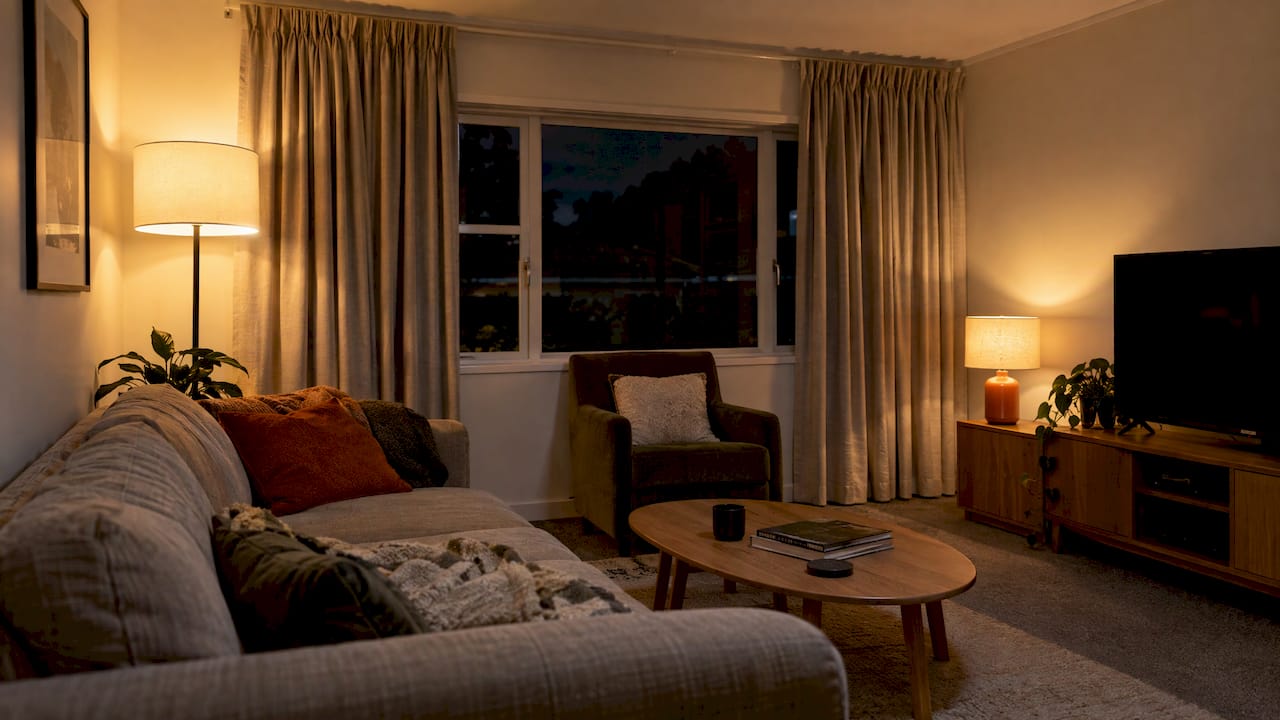
Lighting is the least glamorous mistake and the most transformative fix. A single overhead light flattens a room. Eurotech Lighting says a space lit only from the ceiling can feel flat and clinical once evening arrives, and layered light is what makes a home feel inviting.
The fix needs no landlord and no tools. A New Zealand rental-styling guide from Amstore recommends floor and table lamps with warm-white bulbs in the 2700 to 3000 Kelvin range, and curtains hung close to the ceiling with the rod extending beyond the window. Both tricks make a room feel taller and more generous.
Mirrors help too. Property Plus notes that a large mirror opposite a window can amplify natural light, which matters in overcast Wellington winters.
One caution on blinds. Barfoot & Thompson mentions that inexpensive roller blinds usually need two small screws, and tenants must get permission before making any holes. If you’d rather not ask, heavier curtains on a tension rod or an existing rail do much of the same work.
Mistake 6: Too many walls, too many things
Completely empty walls can make a rental feel unfinished. Too much artwork can make it feel cluttered or overly personal, according to Kiwi Nest Property Management. The same guide says one of the most common styling mistakes is trying to add too much, with crowded shelves and decorations that make a place feel smaller.
Resene’s advice is a good rule of thumb: a room can feel claustrophobic if every wall has something on or against it. Leave some surfaces bare and some walls unadorned.
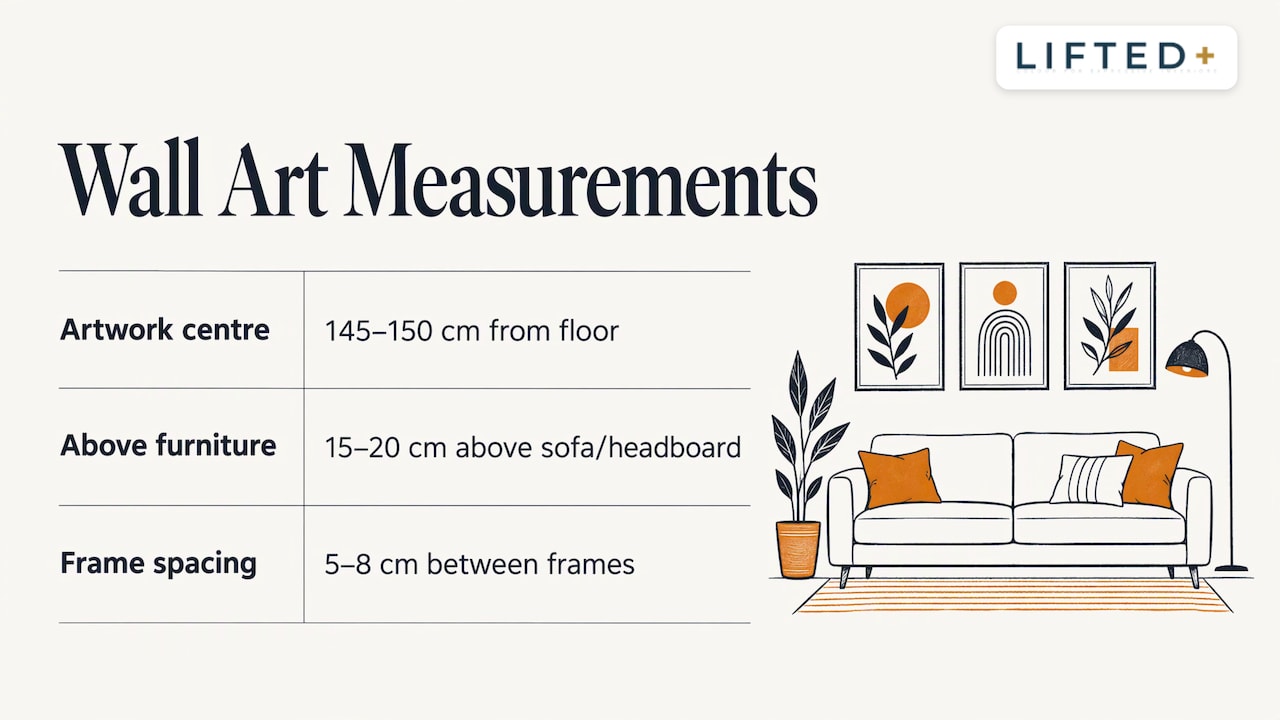
So choose your hero. If one wall carries a large, sculptural feature, let the others rest. If you’re hanging framed art, Print NZ suggests the centre of a piece sits 145 to 150 cm from the floor, with 15 to 20 cm above a sofa or headboard and 5 to 8 cm between frames. Leaning art on a ledge or shelf is a no-hole alternative.
And mind the cords. Kiwi Nest lists visible cables among the small things worth tidying. A basket for slack and removable cord clips along skirting boards do the job without drilling.
Mistake 7: Treating a temporary home as a waiting room
There is a quieter error that sits underneath many of the others. When you think you’ll move soon, it’s tempting to put off making the place yours. Months become years, and you’ve lived in a space that never quite felt like home.
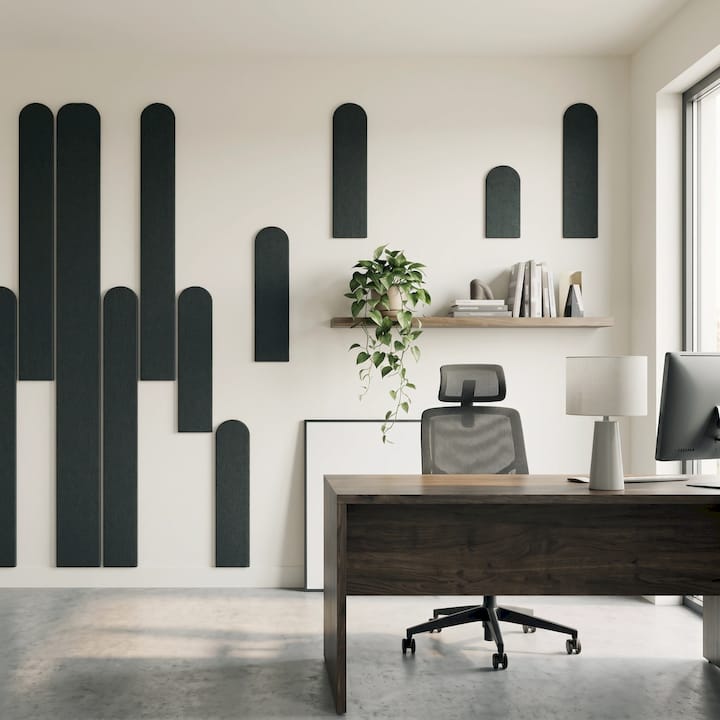
Decorate for the life you’re living. Choose pieces that travel: rugs, lamps, art, and wall features designed to come off and be rearranged. That’s why we designed DwellForms™ as modular panels you can reuse in your next home rather than leaving on a wall you don’t own.
Mistake 8: Buying the whole look before you’ve seen the colour
Colour reads differently on a screen, in morning light and under a warm lamp. Ordering a full wall of anything in a shade you’ve only seen online is a gamble.
Sample first. Look at the colour on your actual wall at breakfast and after dark. With our colour samples, the purchase is credited towards a full kit order, so it costs you nothing extra if you go ahead.
Our perspective: colour belongs in rentals too
We started DwellForms™ with a simple frustration. Rentals are often handed over as blank, neutral boxes, and tenants are told to make them feel like home without touching anything. That is a hard brief.
Our belief, Colour That Lifts, is that a home feels personal when it has shape, texture and colour you chose, not just the safe middle. A rental is no exception. Renters live in their homes every day, and they deserve walls that respond.
So we built modular PET felt panels, made from 100% recycled plastic, that attach with adhesive pads we selected after testing several options. They are designed to come off, be rearranged and move with you. We are careful about what we claim. Every wall, paint and finish behaves differently, so we encourage a test patch and a conversation with your landlord.
The mistake we most want to retire is the idea that temporary means bland. Colour without commitment is entirely possible.
Michelle
Bring colour to the wall without the paint
If your biggest problem is a flat, blank wall, a renter-friendly feature wall is the most direct fix. DwellForms™ Core Kits are modular, precision-cut PET felt panels that attach with adhesive, with no drilling or paint. You can add to them later with Extension Kits.
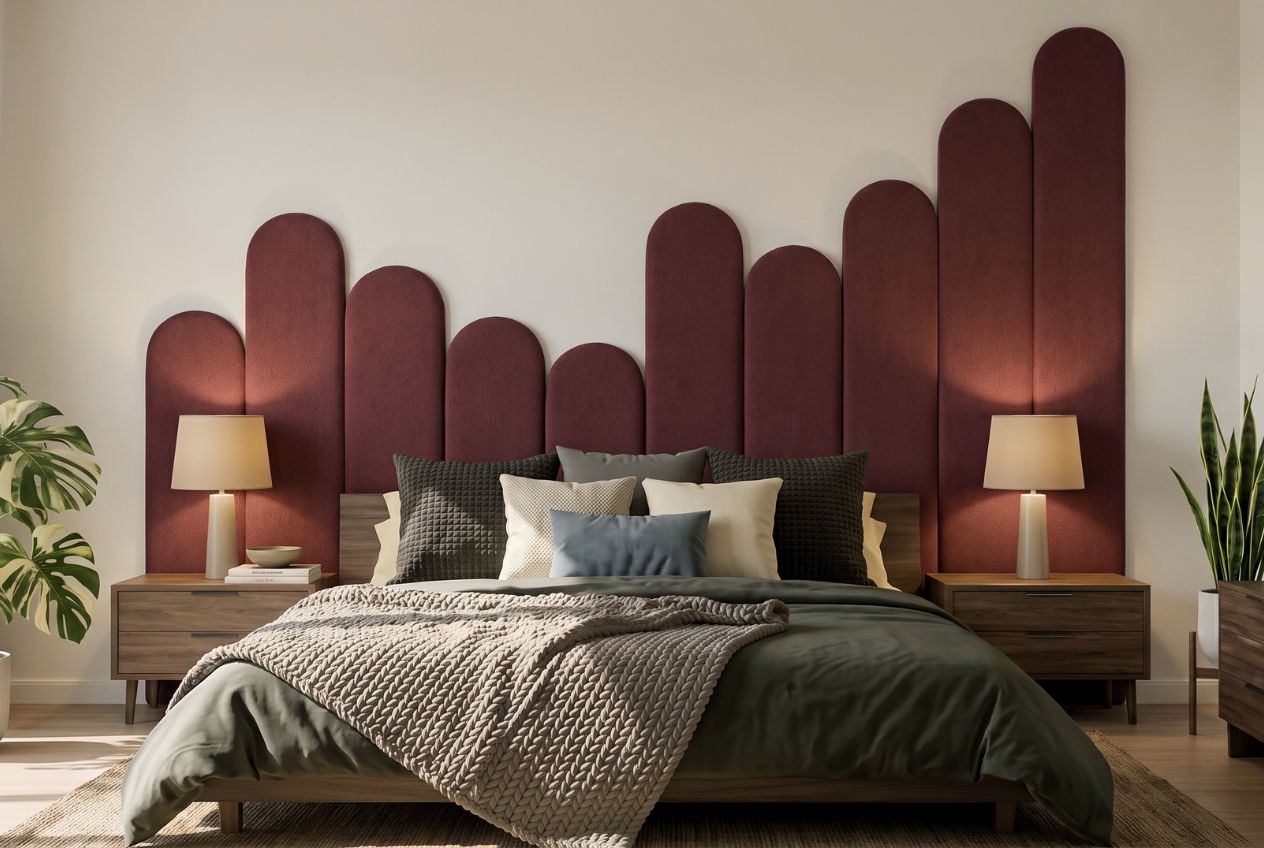
Not sure about the colour? Start with a sample, or browse the full DwellForms™ wall kits range. For a step-by-step approach, our guide to protecting your bond with no-drill panels is a good companion.
FAQ
Can I paint or wallpaper a rental in New Zealand?
Only with your landlord’s consent. Tenancy Services says tenants need consent before changing the property, and landlords must not decline minor changes. Painting is often treated as a bigger alteration, so ask in writing and keep the reply. Removable options usually sit more comfortably within the minor-change category.
How long does a landlord have to respond to a request?
If you ask in writing, the landlord must reply in writing within 21 days, and indicate whether they consider the change minor. They can extend the time if needed but must still respond within a reasonable period. Check the Tenancy Services page for the current wording.
What can I hang on a rental wall without drilling?
Lightweight framed art suits removable strips or hooks on clean, dry surfaces, and you can lean larger pieces on a ledge or shelf. Heavy items such as large mirrors and shelves need more care and probably your landlord’s agreement. No adhesive suits every surface, so test a hidden area first.
How do I make a rental feel bigger?
Layer your lighting with lamps and warm-white bulbs, and hang curtains close to the ceiling. Place a mirror opposite a window, and leave some walls and surfaces bare. Bring furniture in from the walls to form zones around a rug that sits under the front legs of the sofa.
Sources
- Tenants making changes to the property, Tenancy Services
- Residential Tenancies Amendment Act 2020
- How to Renovate Your Rental Without Losing Your Bond, Resene
- How to avoid common home decorating mistakes, Resene
- How to Personalise a Rental NZ, Property Plus
- Renter Decor Guide and Damage Free Hanging Tips, FrameItEasy
- Common Interior Design Mistakes, Sojo Design
- How to Style a Living Room in 10 Steps, King Living
- How to Furnish your First Flat, The Warehouse
- Interior design tips for renters, Barfoot & Thompson
- How to Furnish a Rental Without Permanent Changes, Esteller
- Furniture anchoring after 500 moves, Atlas Kings
- 2026 Interior Design Trends, Eurotech Lighting
- How to Style a Rental Apartment in New Zealand, Amstore
- Airbnb Styling Guide, Kiwi Nest Property Management
- How to Properly Hang and Display Wall Art in NZ Homes, Print NZ
Recommended
- Rental Friendly Decor NZ: 10 Ideas That Work
- 21 Day Rule: How NZ Renters Add Colour Without Losing Their Bond
- No Paint Needed: 8 Renter-Friendly Color Palettes For NZ Rentals
- Bond Friendly Decor: Colour For NZ Rentals Without Risk
This article is for general information and inspiration only. Product performance and results may vary depending on individual circumstances, surfaces and installation.
