

The interior design trends defining New Zealand homes in 2026 share one idea: warmth with personality. Earthy and moody colour, tactile texture and a home that looks collected rather than staged are replacing cool-grey minimalism. The best part is that you don’t need a renovation budget to join in. A wall is the fastest place to start, and with a removable, no-drill wall system such as our DwellForms™ wall kits, colour without commitment is possible even in a rental.
Key Takeaways
- Warm, earthy palettes (mocha, olive, clay, mineral blue) are rising, and homewares are moving toward bolder colour and braver combinations.
- Texture matters more than ever: heavy linen, brushed wool and artisan weaves are replacing bouclé.
- The ‘collected’ home, built slowly from personal pieces, is favoured over the perfectly curated one.
- Treat trends as seasoning, not the main dish: choose a few and build on a flexible base.
- Walls are the quickest way to change a room, and removable, no-drill options make that possible for renters and owners alike.
Table of Contents
- The mood of 2026: warm, tactile and a little less polished
- Colour: from safe neutrals to earth, mood and bravery
- Texture: heavier, softer, more touchable
- Collected, not curated
- Trends as seasoning: a sensible way to choose
- Five ways to try 2026 trends without renovating
- The wall that does the work
- Where the trends meet real rooms
- Our perspective
- FAQ
- Sources
The mood of 2026: warm, tactile and a little less polished
Start with the problem most of us share. You scroll through a hundred beautiful rooms, then look up at your own pale, blank wall and wonder where to begin. The trend reports can feel like a shopping list for people with a builder on retainer.
The useful way to read them is as a change in mood, not a set of purchases. One New Zealand real estate group’s 2026 round-up describes high-end homes weaving residents’ hobbies and wellness into the blueprint, with trends used as seasoning rather than the main dish. Coverage of the Copenhagen Design Festival points the same way, with interiors built around atmosphere, emotion and ritual rather than visual perfection.
For a flat in Wellington, a rental in Christchurch or a family home on the North Shore, that is good news. Atmosphere is something you can create room by room, one decision at a time. If you want a wider look at how local styling is evolving, our guide to interior styling trends in New Zealand goes further.
Colour: from safe neutrals to earth, mood and bravery
The sterile greys of the early 2020s are fading. In their place are earth, chocolate, mocha and coffee-inspired tones, layered with chalky plaster whites, muted olives and mineral blues. The same Sotheby’s piece notes that NZ homewares are shifting toward bolder colours and brave combinations.
There is also a darker current. Build & Renovate reports a move toward darker, moodier interiors, with deep greens, charcoals, navy and rich browns anchoring rooms. Its designers lean on tonal variation, meaning different shades within one colour family, to build depth without clutter.
A Kiwi designer’s view is worth keeping in your back pocket. Rena Smith of Rendesign says earthy, grounded tones are a versatile foundation that works for big renovations and small room-by-room updates alike. That second part is the permission slip: you can adopt the palette in one corner.
Getting the white right
Pantone’s 2026 Colour of the Year, Cloud Dancer, is a soft white, and it is trickier than it looks. Dulux colour specialist Davina Harper suggests cool whites for bright, sunny rooms, neutral whites for open-plan spaces and warm whites for darker rooms, while Resene’s Amy Watkins recommends whites with depth for dark, south-facing bedrooms. Whites are the one colour where orientation decides everything, so look at your sample at morning, noon and evening before you commit.
Inside meets outside
Palettes are also being planned across the whole property, so the lounge, deck and garden feel like one mood. If you are working outdoors too, these outdoor living trends for 2026 pair well with an earthy interior scheme. Pull one hue from the garden, such as olive or a mineral blue, and echo it on an interior wall.
Texture: heavier, softer, more touchable
If colour sets the mood, texture makes people stay in the room. Fabrics for 2026 prize deep tactility, moving away from bouclé toward heavier linens, brushed wools and artisan weaves that invite touch. The same festival coverage lists walnut and smoked oak, coloured marble and craft-led ceramics among prominent materials, with an emphasis on craftsmanship and longevity.
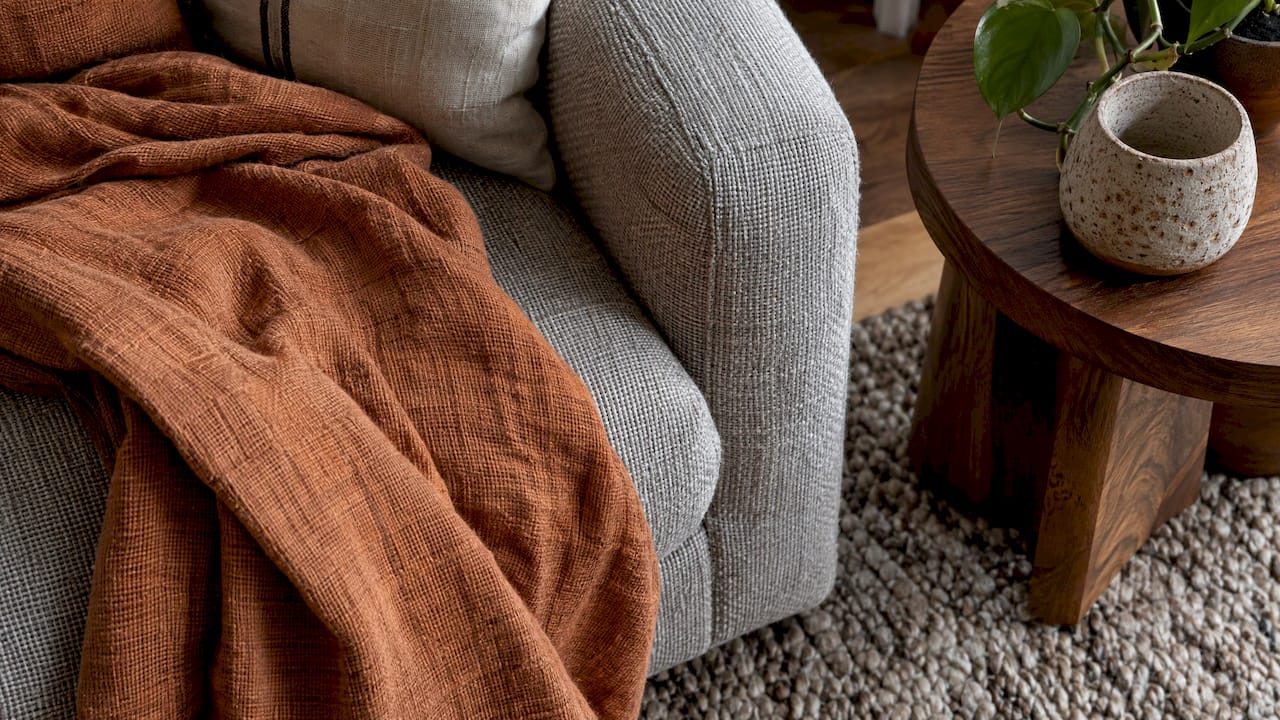
Metal finishes are warming too: bronze and antique brass are edging out cooler silvers. If you are replacing nothing but a lamp base or a set of hooks, that is an easy swap.
The trouble is that most tactile materials live on the floor, the sofa or the bed. Walls tend to stay flat and painted. That gap is where a felt wall feature earns its place: texture at eye level, which is where a room is actually read. Our guide to recycled PET felt panels explains the material in more depth.
Collected, not curated
One of the quieter shifts is a preference for the ‘collected’ home over the ‘curated’ one, with heirlooms, personal art and vintage pieces telling a uniquely lived-in story. Interior designer Natalie Bradburn makes a similar point: homeowners can build personal rooms gradually with joinery, vintage furniture and carefully chosen artwork, adding layers with intention.
This suits anyone whose home is a work in progress, which is most of us. Renters, people between homes and anyone who has ever hesitated over a nail hole are not locked out of the look. You simply build it from things that travel: art, textiles, ceramics, lamps and wall pieces you can lift off and rehang.
There is also a counter-current worth noting. Wallpaper is having a renaissance as a personalisation tool, with textured, artistic and mural-style coverings used to create focal points or define zones. The appetite is clearly for a wall that does something. The question for many households is how to get that effect without glue, scraping or a bond conversation with the landlord. Our colour-led interior inspiration page collects ideas for exactly that.
Trends as seasoning: a sensible way to choose
Architects Eva Nash and Kate Rogan, speaking around NZ Design Week, argue that design should pivot from fleeting trends toward “The Long Middle”, meaning resilient, flexible spaces that support changing lives over decades. Flexible rooms that adapt to changing family dynamics are a recurring theme in that coverage.
Translated into everyday decisions, that gives you a simple filter. Keep the big, expensive things calm and adaptable: the sofa, the floors, the joinery. Let the expressive things be easy to change: colour, texture, art, wall features.
A practical starting method from a Kiwi home magazine is to begin with the rooms that bother you most, be honest about how you live, decide what to keep and think about the whole room rather than only the furniture. We would add one test of our own: ask whether you could move it in an afternoon. If the answer is yes, you can afford to be bold.
Five ways to try 2026 trends without renovating
Here is advice that works whether or not you ever buy anything from us.
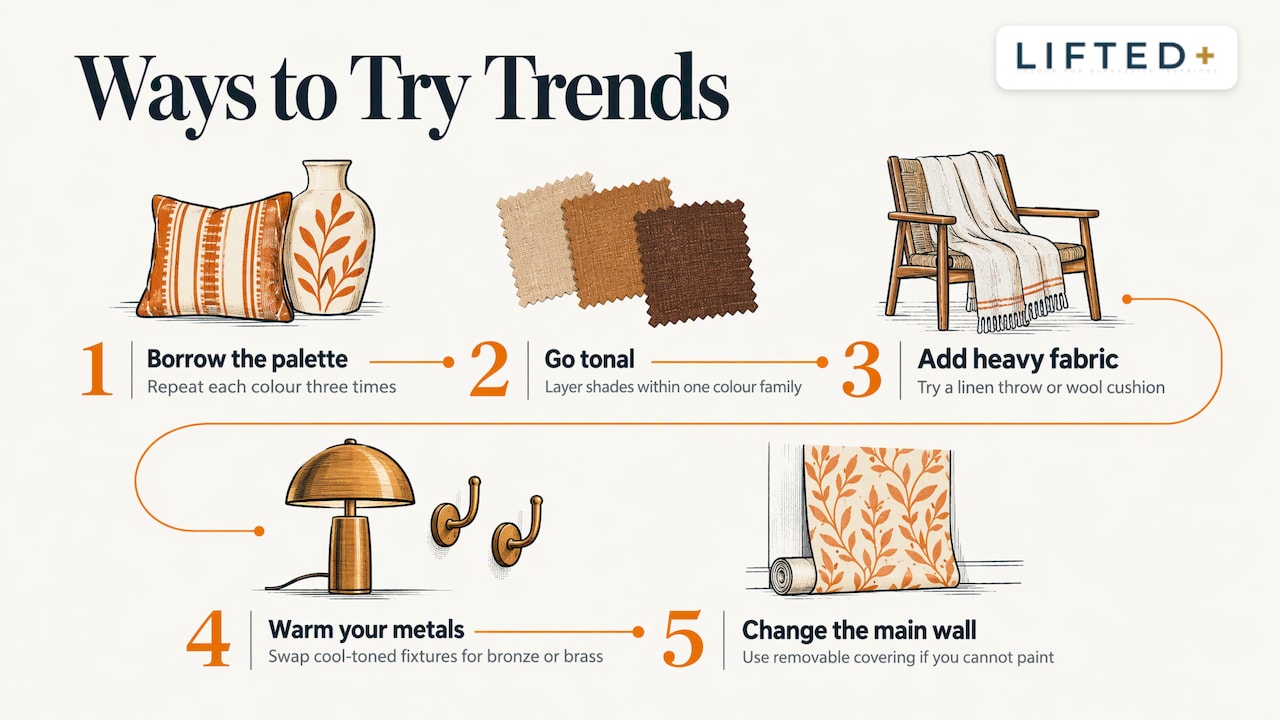
1. Borrow the palette in small doses. Pick one earthy anchor (mocha, olive, clay) and one lighter companion (a plaster white or mineral blue). Repeat each at least three times in a room: a cushion, a vase, a wall feature. Repetition is what reads as intentional.
2. Go tonal. Layer shades within one colour family, the way designers are doing in moodier rooms. Three browns in different textures look richer than three unrelated colours.
3. Add one heavy fabric. A linen throw or wool cushion brings the tactile trend in for very little money.
4. Warm your metals. Swap a cool-toned lamp base, curtain rod or set of hooks for bronze or brass. Small change, noticeable warmth.
5. Change the biggest surface you are allowed to touch. In most rooms that is the main wall. If you cannot paint it, cover it with something you can take down again.
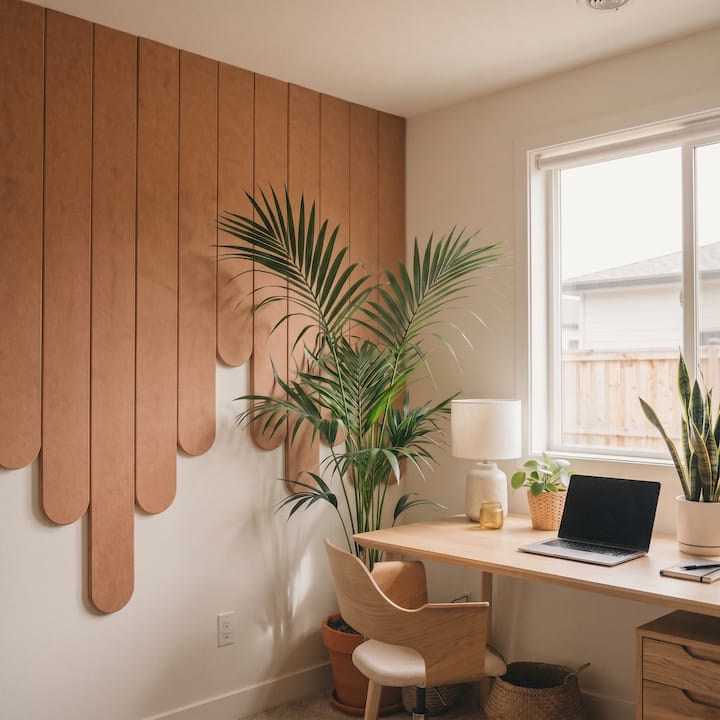
For more layouts and ideas, our interior design inspiration list for NZ homes and modern interior design tips go room by room.
The wall that does the work
A feature wall is the single most efficient way to bring colour, texture and a sculptural shape into a room at once. It is also where most people get stuck: paint needs permission, wallpaper needs commitment and drilling needs a very understanding landlord.
DwellForms™ is our answer. It is a New Zealand-designed wall system made from precision-cut PET felt produced from 100% recycled plastic, sold as modular panel kits that you can install, remove, rearrange and take to your next home. They fix with adhesive pads we selected after testing several options, so there is no drilling, no paint and no permanent renovation. Your wall type and surface condition still matter, so we always suggest checking our installation guidance first, and our renter-friendly installation guide walks through it.
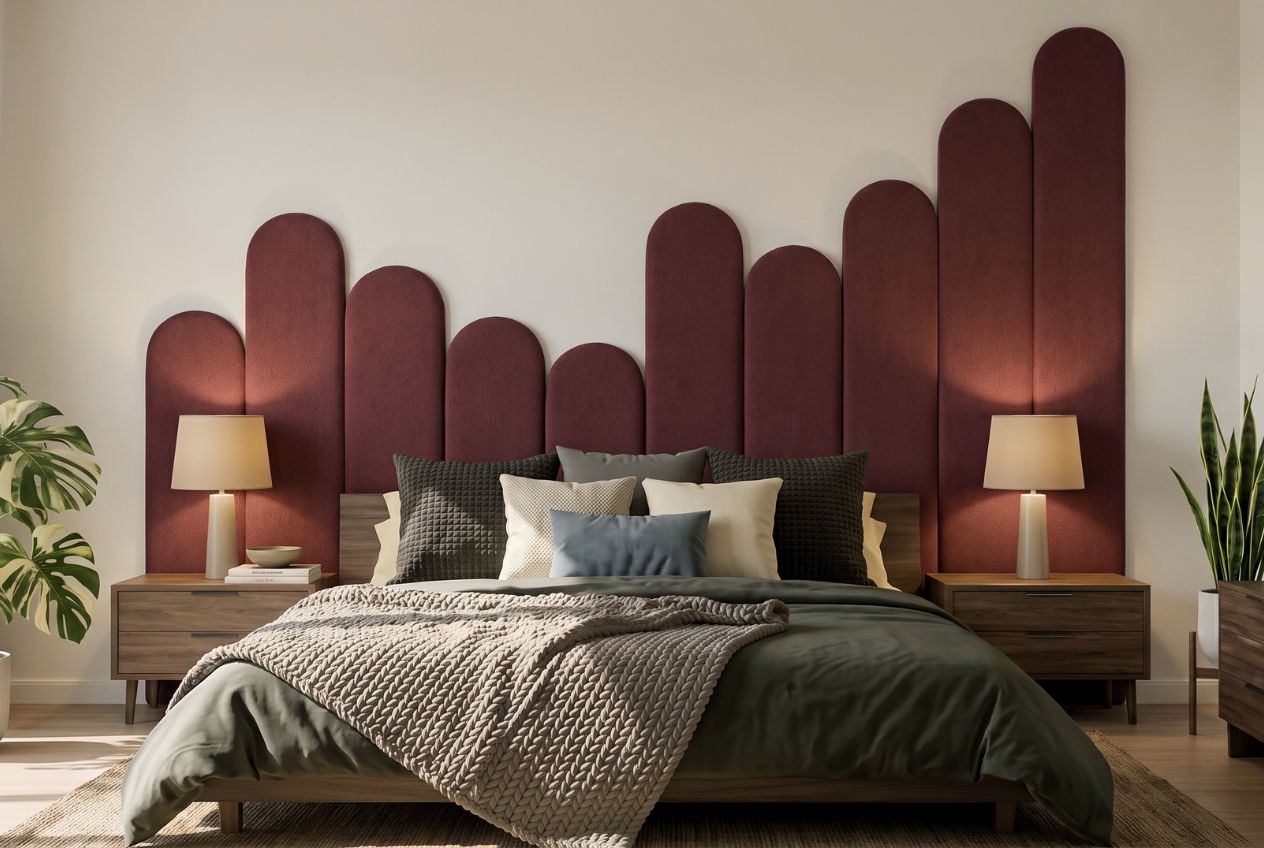
If you are still deciding on colour, the DwellForms™ Colour Samples let you hold the shades against your own light, and sample kit purchases are credited toward a full kit order. When you are ready, browse the DwellForms™ Core Kits, then grow the design later with Extension Kits. If you would like the full renter-focused case, see our page on felt wall panel benefits.
Where the trends meet real rooms
Apartments and small spaces
Small homes suit the 2026 mood best, because one strong move is enough. A single wall in a deep, tonal colour makes a studio feel designed rather than merely furnished. Our apartment living with colour guide and apartment wall art ideas show how it works in practice.
Home offices
The high-end end of the market is building dual-purpose offices into the plan, and the lesson scales down. Choose the wall behind your video-call chair and give it colour and texture. It frames you better than a blank backdrop and makes the corner feel like a place rather than a spare spot. We make no acoustic claims for our panels: this is about look and feel.
Hallways and living rooms
Hallways are the most neglected walls in a house, which makes them the most rewarding. A felt feature wall turns a corridor into an entrance. In living rooms, pair it with art or a mirror from our wall art collection so the wall and the objects talk to each other.
Kitchens and bathrooms
Kitchen trends in 2026 lean to timber, with NKBA designers surveyed by Abode predicting walnut, matt finishes and porcelain benchtops. The same piece puts an average New Zealand kitchen at $30,000 to $50,000 before appliances and trades, with three to four months from design to install. That is a reminder of why many households choose to refresh the rooms around the kitchen instead. A calm wall in the adjoining dining area can pick up the timber tones for a fraction of the effort.
Our perspective
We think the most interesting thing about 2026 is that colour has become personal again. The polite, temporary-feeling neutral interior is losing its grip, and people are asking for rooms that hold them rather than rooms that impress a stranger.
The catch has always been permanence. Many of us live in places we can’t repaint, or places we may leave in two years. That is why we designed DwellForms™ as a wall you can take with you: sculptural, colourful and removable, with panels you can rearrange as your taste or your address changes.
Our advice is to start with one wall and one colour you are slightly nervous about. Trends are seasoning, but a wall that feels like you is the main dish. Pull the room out of the safe, polite middle, and let it be a little brave.
Michelle
FAQ
What are the main interior design trends in NZ for 2026?
The leading themes are warm earthy palettes, moodier tonal colour, tactile fabrics such as heavy linen and brushed wool, and personal, collected styling. Homewares are also moving toward bolder colours and braver combinations. Flexible, long-lasting spaces matter more than chasing every new look.
Which colours are popular in New Zealand homes in 2026?
Expect mocha, chocolate, olive, clay, mineral blue, deep green, navy and chalky plaster whites. Pantone’s Cloud Dancer white is also prominent, and local paint specialists advise matching its undertone to the room’s light. Tonal layering, using several shades of one colour, is a popular way to add depth.
How can renters follow 2026 trends without changing the walls?
Build the look from things that move with you: textiles, lamps, art and removable wall features. Our DwellForms™ kits are designed for exactly this, with no drilling, paint or permanent alteration, though results depend on your wall surface. Check your tenancy agreement for any rules about fixing things to walls.
Is a feature wall still in style in 2026?
Yes, in a more textured and personal form. Wallpaper, murals and sculptural wall coverings are being used to create focal points and define zones. A single feature wall in a deep or earthy tone suits both small apartments and large open-plan homes.
How do I choose trends that won’t date quickly?
Keep large, costly elements neutral and flexible, then express trends through easily changed pieces such as colour, texture and art. Start with the room that bothers you most and be honest about how you live. If you could change it in an afternoon, you can afford to experiment.
Sources
- The 2026 Interior Edit, NZ Sotheby’s Realty
- The move towards darker, moodier interiors, Build & Renovate
- Interior Design Trends 2026, Rendesign
- Copenhagen Design Festival 2026: key home interior trends, NZ Herald
- Natalie Bradburn on how to create a bold, beautiful home, NZ Herald
- The 4 biggest interior design trends for 2026 and beyond, NZ Herald
- How to style Cloud Dancer, Your Home and Garden
- Fresh ways to elevate your home, The Look
- Down to earth, Abode Magazine
- Outdoor Living Trends 2026
Recommended
- Interior Design Trends Bold Colour 2026
- Colour-led Interior Inspiration For NZ Homes
- Apartment Living With Colour In NZ
- Transform Your Space: The Role Of Colour In Interior Design
This article is for general information and inspiration only. Product performance and results may vary depending on individual circumstances, surfaces and installation.
