

Last Updated: November 12, 2026
Quick Summary
Modern wall panels let renters add colour, texture and shape without paint or drilling, so nothing needs repainting or patching at the end of the lease. Choose lightweight, modular, removable wall panels and check the fixing weight limit and your wall surface before buying.
- Felt panels are a common rental choice because they are lightweight.
- Adhesive strips suit light felt and foam panels on smooth, sealed paint.
- Avoid adhesive methods in bathrooms and kitchens, where moisture weakens the bond.
- Measure wall height at top, middle and bottom, then use the smallest measurement.
- Peel adhesive strips back along the wall, not away from it, to reduce paint lift.
Table of Contents
- Why Modern Wall Panels Suit Rental Homes
- Renter-Friendly Wall Panels: Styles That Work
- Wall Panels Without Drilling: Attachment Methods Compared
- Rental-Friendly Wall Decor Ideas for Every Room
- Removable Wall Panels: What to Check Before You Buy
- Wall Surfaces, Panel Weight and Getting Landlord Approval
- Measuring, Installing and Removing Panels Without Deposit Drama
- Explore DwellForms™ for Your Rental Makeover
- Frequently Asked Questions
Why Modern Wall Panels Suit Rental Homes
Modern wall panels for rental homes solve a problem renters know well: you want a space that feels like yours, but the lease says no paint and no holes. Panels give you colour, texture and shape without either.
DwellForms™ kits are built for exactly this situation. Modular panels, no drilling, and they move with you.
The appeal is simple. You get a feature wall in an afternoon, not a weekend. And when you leave, the wall goes back to how you found it.
Three things make panels work in a rental:
- No paint, so nothing to repaint at the end
- No drilling, so no patching and no filler
- Modular design, so the same panels fit a different room later
The catch is that not every panel type suits every wall. That’s where most guides stay vague, so let’s get specific.
Renter-Friendly Wall Panels: Styles That Work
The best renter-friendly wall panels are lightweight, removable and easy to cut. Weight matters more than looks here. A heavy panel needs strong fixings, and strong fixings leave marks.
Here’s what works in practice:
- Felt panels – lightweight, soft texture, good for colour blocking
- Acoustic panels – cut noise and add vertical or grid patterns
- Shiplap-style boards – classic look, but check the weight
- Decorative panels – scalloped or fluted shapes for texture
Felt is a common choice for rentals because it is lightweight.
Wood Slat and Acoustic Panels
Wood slat panels are the look most renters ask for. Vertical slats, warm timber tones, and a strong shadow line.
Real timber slats are heavy, and a full wall of solid wood usually needs battens and screws, which can rule it out for many leases.
Acoustic panels are another option for a lighter slat-style look.
Our advice: if you want the slat effect, choose a lightweight core and check the fixing weight limit before you buy. A panel that falls off at 2am is not a design win.
Felt, Shiplap and Decorative Panels
Felt panels add texture and colour.
Shiplap gives a horizontal, coastal feel. The trade-off is weight and cutting. Horizontal boards need clean edges, and mistakes show.
Decorative panels cover everything else: fluted, ribbed, geometric. These are where a rental makeover gets its personality.
One warning: avoid anything that needs a full adhesive bed and a permanent fixing. If removal involves a scraper and repair compound, it’s not renter-friendly.
Wall Panels Without Drilling: Attachment Methods Compared
Wall panels without drilling rely on adhesive strips, tension poles, lean-and-lock frames or freestanding systems. Each has a different removal risk, and that risk is what decides your deposit. The table below compares the main methods on the factors that matter most in a rental: what they stick to, how much weight they hold, and what happens when you take them down.
| Method | Best for | Wall compatibility | Removal risk | Weight guide |
|---|---|---|---|---|
| Adhesive strips | Light felt and foam panels | Smooth, sealed paint; avoid fresh paint under four weeks and glossy finishes | Low on sound paint; can lift paint or leave residue on poor surfaces | Light only, check the strip’s stated limit and stay well under it |
| Tension poles | Floor-to-ceiling panels | No wall contact, so works on most surfaces | Very low; no adhesive or fixings | Light to medium, depending on pole rating |
| Lean-and-lock frames | Freestanding layouts | No wall contact; needs floor space and a level floor | Very low | Medium |
| Construction adhesive | Permanent installs | Most surfaces, but effectively permanent | High, damages paint and plaster, often needs repair | Heavy |
A common mistake is assuming all adhesive strips are equal. They aren’t. Strip quality, wall prep and panel weight decide whether they hold. A strip’s stated limit should be treated with caution, so leave a clear margin below it.
Surface compatibility is the other half of the decision. Glossy paint resists bonding. Fresh paint under about four weeks old can pull away with the strip. Textured plaster needs more adhesive contact area, so light panels are safer. Brick and masonry are uneven and porous; adhesive strips rarely hold well, and tension poles or freestanding frames are usually the better choice. In bathrooms and kitchens, moisture weakens adhesive over time, so avoid adhesive methods in wet areas unless the product is specifically rated for them.
Watch out: pressing panels onto dusty or damp walls is the most common cause of early failure. Clean and dry the wall fully before applying any fixing, and test a strip in an inconspicuous corner first if you are unsure about the paint. Proper surface preparation ensures that your chosen panels stay secure while you Apply Your Vibe to the rest of your space with other reversible decor solutions.
If you’re weighing up Command strips specifically, our guide on Command strips and wall panels covers what holds, what doesn’t, and how weight limits actually work.
Rental-Friendly Wall Decor Ideas for Every Room
Rental-friendly wall decor ideas work best when they follow the room’s job. A bedroom wants calm. A living room wants impact.
Try these:
- Living room – a full-height felt feature wall behind the sofa
- Bedroom – a headboard panel in a warm tone behind the bed
- Home office – acoustic panels to soften video call echo
- Hallway – a narrow vertical strip to add depth
- Dining corner – a scalloped panel set above a bench
Scale is the thing most people get wrong. One bold wall beats five small decorations scattered around.
Keep the palette tight too. Two or three colours, repeated, looks designed. Six colours looks like a sample sale.
Removable Wall Panels: What to Check Before You Buy
Removable wall panels are only removable if the wall survives. Check these five things before you spend anything:
- Panel weight per square metre
- Fixing type and stated weight limit
- Whether the fixing suits your wall surface
- Removal instructions from the seller
- Whether panels can be reused after removal
Ask for the removal method in writing. A seller who can’t explain it clearly probably hasn’t tested it.
Also check the panel edges. Sharp or unfinished edges chip paint on removal. Soft edges are kinder to walls.
And confirm the panels are modular. If you can’t add to the layout later, you’ll rebuy everything at your next place.
Wall Surfaces, Panel Weight and Getting Landlord Approval
Wall surfaces decide everything. Glossy paint, fresh paint and textured plaster all behave differently with adhesive.
Glossy surfaces can resist bonding, and fresh paint can pull away with an adhesive strip, so check the surface before installing.
Getting landlord approval is easier than most renters expect. Ask in writing, and be specific:
- Name the product and material
- State that it needs no drilling and no paint
- Explain the removal method
- Offer to show photos at inspection
Landlords say yes more often to a clear, low-risk plan. Our guide to landlord friendly wall decor for renters walks through the tenancy rules and what to put in your request.
Measuring, Installing and Removing Panels Without Deposit Drama
Measure the wall width and height first, then subtract for skirting and any switches. Sketch the layout on paper before you order. For a full-height feature wall, measure at three points, top, middle and bottom, because walls are rarely perfectly square, and use the smallest measurement.
Installation is straightforward:
- Clean the wall and let it dry fully
- Mark your layout in light pencil
- Apply fixings to the back of each panel
- Press firmly and hold for the stated time
- Work from the centre outwards
Watch out: pressing panels onto dusty or damp walls is the most common cause of early failure. Clean and dry, every time.
Removal matters just as much, and this is where most guides stop short. A practical exit plan looks like this:
- Clear the area and lay a drop sheet to catch residue.
- Ease each panel off slowly, starting at a corner, keeping the panel flat so it stays reusable.
- Peel adhesive strips back along the wall, not away from it, to reduce paint lift.
- Remove residue with a warm, damp cloth and a small amount of mild detergent; avoid solvents that dull paint.
- If paint lifts, fill minor marks with a fine-surface filler, sand smooth and touch up with matching paint.
- Photograph the wall before and after so you have a record for inspection.
A common pattern is that damage is minor when the wall was sound and the strips were removed slowly, and more significant when paint was fresh or the panels were left up for years. If you are unsure, ask the seller for written removal instructions and keep them with your lease documents.
Our step-by-step guide on how to remove felt wall panels covers the order to work in and how to clean the wall afterwards.
Explore DwellForms™ for Your Rental Makeover
DwellForms™ is our answer to the rental wall problem. Modular panels made from 100% recycled PET felt, designed to go up without drills and come down without marks.
The panels add colour, texture and architectural shape. They’re built to move, so a layout that works in one flat can be reconfigured in the next.
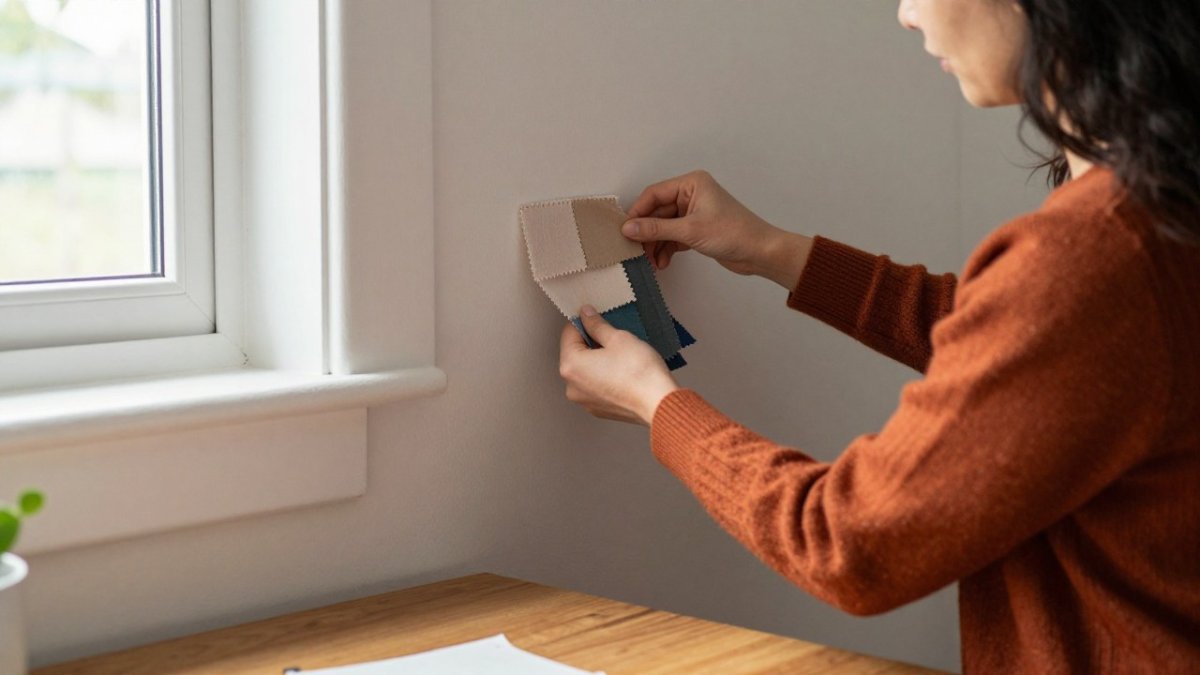
Want to test colours first? The Little Book of Colour is a compact four-colour sample kit, and the cost is credited toward a future core kit order.
Already have a layout and want more scale? Extension kits add matching panels for extra width and impact.
Your walls don’t have to stay blank until you buy a house. Pick a wall, measure it, and choose a fixing that comes off clean.
Get started with Lifted Plus and turn one rental wall into the room’s best feature, with modular felt panels you can take to your next place.
Frequently Asked Questions
Can you put wall panels in a rental home without damaging the walls?
Yes, provided you choose the right attachment method. Damage-free fixing methods are generally preferred, but they still need a clean, sound wall surface and careful removal. Avoid anything that needs screws or nails unless your tenancy agreement allows it. Before installing, check your lease and photograph the wall. On removal, peel slowly and at a low angle rather than pulling straight out, and keep the packaging so you can store panels safely between moves.
What wall panels are best for renters?
Renters do best with lightweight, modular options that come off cleanly and can be reused. Felt panels, thin wood slat kits with adhesive backing, and peel-and-stick decorative panels are the common choices. Weight matters most: the heavier the panel, the stronger the fixing and the greater the risk to the wall. Look for products sold as kits with clear removal instructions, and confirm the panel is rated for the surface you have. Modular systems that clip or stick on are easier to reconfigure than full-wall installations.
Do you need your landlord’s permission to install wall panels?
Check your tenancy agreement first. Many agreements require written consent for any wall fixing, even adhesive ones, and some specify what must be restored at the end of the tenancy. A short email describing the product, the fixing method and how you will remove it usually gets a quick answer. Keep the reply on file. If consent is refused, freestanding screens, leaning panels and removable decor that needs no wall contact are safer alternatives that still change the look of a room.
Can wall panels be reused after moving house?
Modular panels generally can, which is one of their main advantages over paint or wallpaper. Remove them slowly, keep the original backing and packaging, and store them flat rather than stacked under weight. On arrival at the new place, check each panel for bent edges or weakened adhesive before reinstalling. Reconfiguring a layout for a smaller or differently shaped room is usually straightforward with modular kits, though you may need extra panels or fixings. Measure the new wall before you unpack.

