
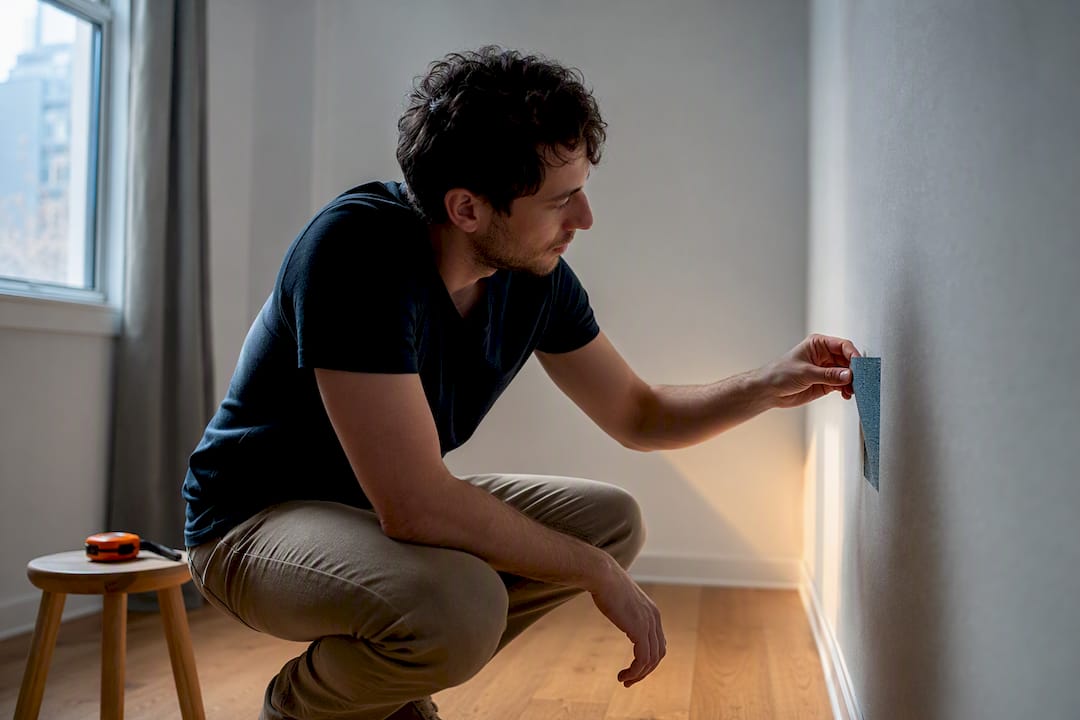
Here, “NRC rating” means a practical suitability score for removable, no-drill wall panels, covering adhesive strength, panel weight, wall compatibility and removability risk, rather than the acoustic metric that name usually points to. Use it to check whether a colour-led feature wall will actually hold on your specific wall before you commit to a full kit, and always run a small sample test first.
TL;DR:
- A surface-area full adhesive system reduces peel risk, especially on larger or heavier panels, compared to corner strips or tape.
- Proper wall checks, such as testing on the exact spot for 24 to 48 hours, are critical before installing a full feature wall.
- Fresh paint under four weeks old and textured or unsealed concrete surfaces significantly impair adhesive bond strength.
- Removing panels carefully at a low angle and with adhesive removers helps prevent damage to paint or wallpaper.
- Ordering a sample kit for testing on the intended wall is strongly recommended to ensure suitability and prevent bond failure.
Table of Contents
- What “NRC rating” means for removable wall panels
- How a suitability rating is actually assessed
- How to check your wall and choose the right panels
- Installation and removal that won’t cost you your bond
- Where adhesive-only mounting hits its limits
- Michelle on choosing colour-led, renter-friendly panels
- Getting started with DwellForms™
- Sources
- FAQ
What “NRC rating” means for removable wall panels
Forget the acoustics textbook. In this guide, we’re using “NRC rating” as shorthand for a suitability score, a way to judge whether a no-drill wall panel will hold, hold well, and come off cleanly when you inspect it against your own wall.
That’s a different question to “how much sound does this absorb,” and it’s the one that actually matters if you’re staring at a blank rental wall wondering whether colour is finally allowed. A genuine suitability rating for renter-friendly panels covers four things:
- Adhesive system: full-surface pads versus small strips or tape, and what that means for grip and clean removal
- Panel weight: heavier or larger panels ask more of the adhesive and the wall surface underneath
- Wall compatibility: plasterboard, textured paint, tile, or something trickier like raw concrete
- Removability risk: whether taking the panel down later is likely to lift paint or wallpaper with it
DwellForms™ was built around this exact checklist. Every kit uses tested adhesive pads is designed for renter-friendly, no-drill installation, which is a deliberate departure from screws, wall anchors or construction adhesive. The goal isn’t just colour that lifts a flat wall; it’s colour that lifts without leaving a mark on your bond.
How a suitability rating is actually assessed
A genuine assessment isn’t a marketing sticker. It’s a handful of physical questions, and once you know them, you can size up almost any no-drill panel system yourself.
- Panel weight versus surface area. A large, heavy panel on a small adhesive footprint is asking for trouble. The ratio between weight and contact area, not the total size alone, decides whether it stays up.
- Cure conditions. Humidity and temperature at install time affect how well an adhesive pad sets, and a rushed install in a damp bathroom won’t behave like one in a dry hallway.
- Time since painting. Fresh paint keeps curing for weeks after it looks dry, and adhesive applied too early bonds to a surface that’s still soft.
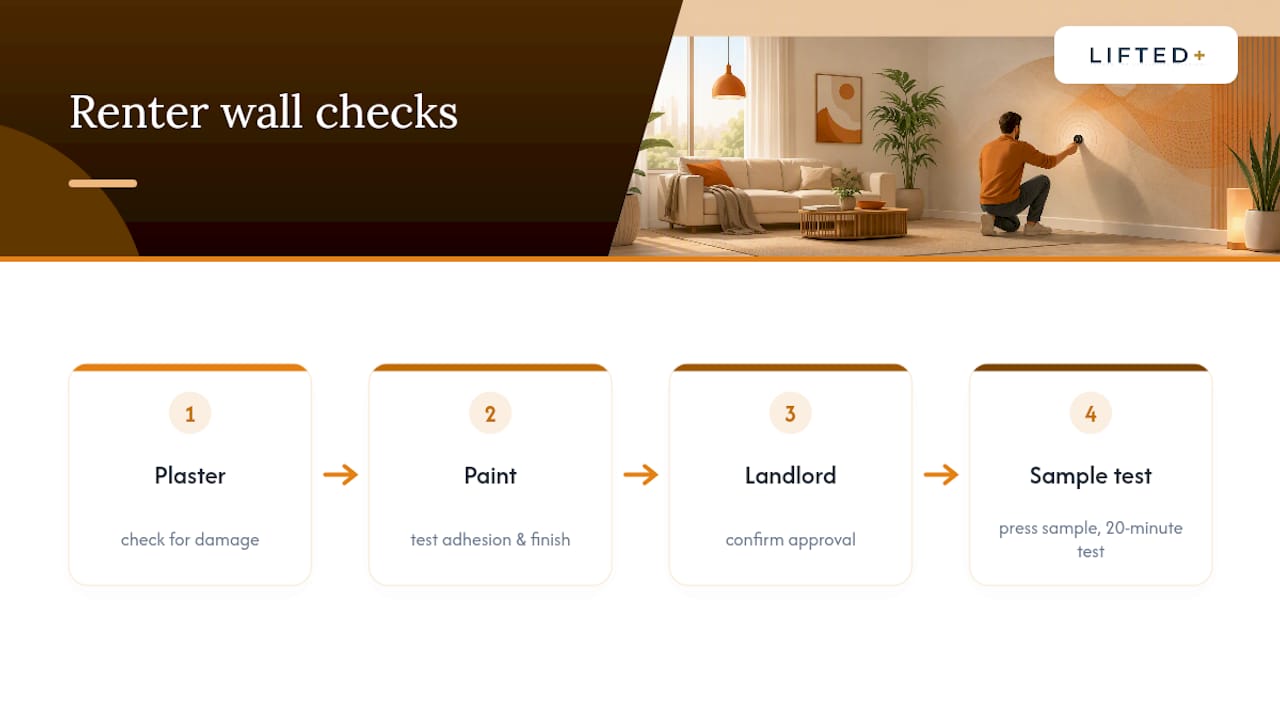
Pro Tip: Press a single sample panel onto your wall and leave it for 24 to 48 hours before judging the hold. A panel that feels secure after five minutes can still pull away once the adhesive has properly settled, so patience beats a quick poke test every time.
How to check your wall and choose the right panels
Five minutes with your hand and a torch will tell you more than any spec sheet. Run through these checks before you order a full kit:
- Feel the paint. Fresh, slightly tacky, or chalky paint is a red flag; fully cured paint feels smooth and firm.
- Press the wallpaper. If it lifts or bubbles under light pressure, adhesive pads won’t hold reliably.
- Look at the substrate. Plasterboard and smooth plaster are the easiest surfaces; raw or unsealed concrete is the hardest.
- Test a single panel first. Use a sample kit or one spare panel on the exact spot you’re planning to cover, not just a convenient patch nearby.
- Match the kit to the wall. A smaller, lighter modular kit is more forgiving on a borderline surface than a large single-panel layout.
- Check your lease. Many rental agreements are silent on adhesive decor, but a quick message to the landlord or property manager, asking specifically about removable, no-drill wall products, avoids any argument later. Get the “yes” in writing if you can.
That last step feels like admin, but it’s the cheapest insurance you’ll buy all year, a two-line email now against a bond dispute in twelve months.
Installation and removal that won’t cost you your bond
Getting a no-drill feature wall to sit flush and come off cleanly later is less about luck and more about sequence. Follow this order:
- Clean the wall. Wipe away dust, grease and cobwebs with a dry or lightly damp cloth, then let it dry completely. Adhesive pads bond to the surface, not to whatever film is sitting on top of it.
- Wait out fresh paint. Give new paint at least four weeks to cure before mounting anything, longer in humid conditions.
- Position before you press. Dry-fit your panel layout with painter’s tape marks first, since colour-led feature walls are unforgiving of a crooked start.
- Apply full, even pressure. Push firmly across the whole panel face, not just the corners, so every part of the adhesive pad makes contact.
- Leave it alone. Resist the urge to test the hold by tugging at it. Give the adhesive its full recommended cure time before hanging anything on or near the panel.
- Remove slowly, at a low angle. When it’s time to take a panel down, peel gradually rather than yanking straight off, and use a proper adhesive remover on any leftover residue rather than scraping at it.
Pro Tip: If you’re planning to take your feature wall with you to a new home, photograph the layout before removal. Renter-friendly panels are modular by design, but recreating a complex arrangement from memory is harder than it looks.
Where adhesive-only mounting hits its limits
No-drill panels are genuinely renter-friendly, but they’re not magic. A handful of situations push adhesive systems past what they’re designed for:
- Paint under four weeks old. It’s still curing, and adhesive applied too soon rarely holds long term.
- Loose or bubbling wallpaper. The panel will only ever be as secure as the surface underneath it.
- Raw or unsealed concrete. Dust and porosity make it one of the hardest surfaces for any adhesive pad.
- Heavily textured or popcorn finishes. Reduced contact area means reduced hold, regardless of panel size.
- Oversized single panels. Beyond a certain size and weight, extra support becomes sensible rather than optional.
Worth saying plainly: DwellForms™ panels are decorative, colour-led feature walls, not commercial acoustic treatment, and PET felt’s acoustic behaviour depends heavily on thickness, spacing, and assembly, so it’s never a single-number guarantee. If you want sound absorption as a serious secondary benefit, treat any softening of echo as a pleasant side effect of the material, not the reason to buy.
Michelle on choosing colour-led, renter-friendly panels
Most people overthink the design decision and underthink the wall. Colour is the easy part. The hard part is being honest about your plaster, your paint job, and whether your landlord actually said yes.
My honest recommendation for renters and small-space layouts: always start with a sample, never a full wall. DwellForms™ was designed around that instinct, modular kits, tested adhesive pads, and a belief that colour should lift a room without asking you to sign up for renovation-level risk. “Colour That Lifts” only means something if the panel is still on the wall in six months, and still comes off cleanly when you move.
If you’re on the fence, order a sample and press it onto the exact spot you’re eyeing. Twenty minutes of testing beats months of wondering.
— Michelle
Getting started with DwellForms™
If your wall passes the checks above, DwellForms™ gives you a genuinely renter-friendly way to act on it. Every kit is built from precision-cut, 100% recycled PET felt and mounts using tested adhesive pads rather than screws or construction adhesive, which is exactly the no-drill, no-damage approach this whole guide has been building toward.
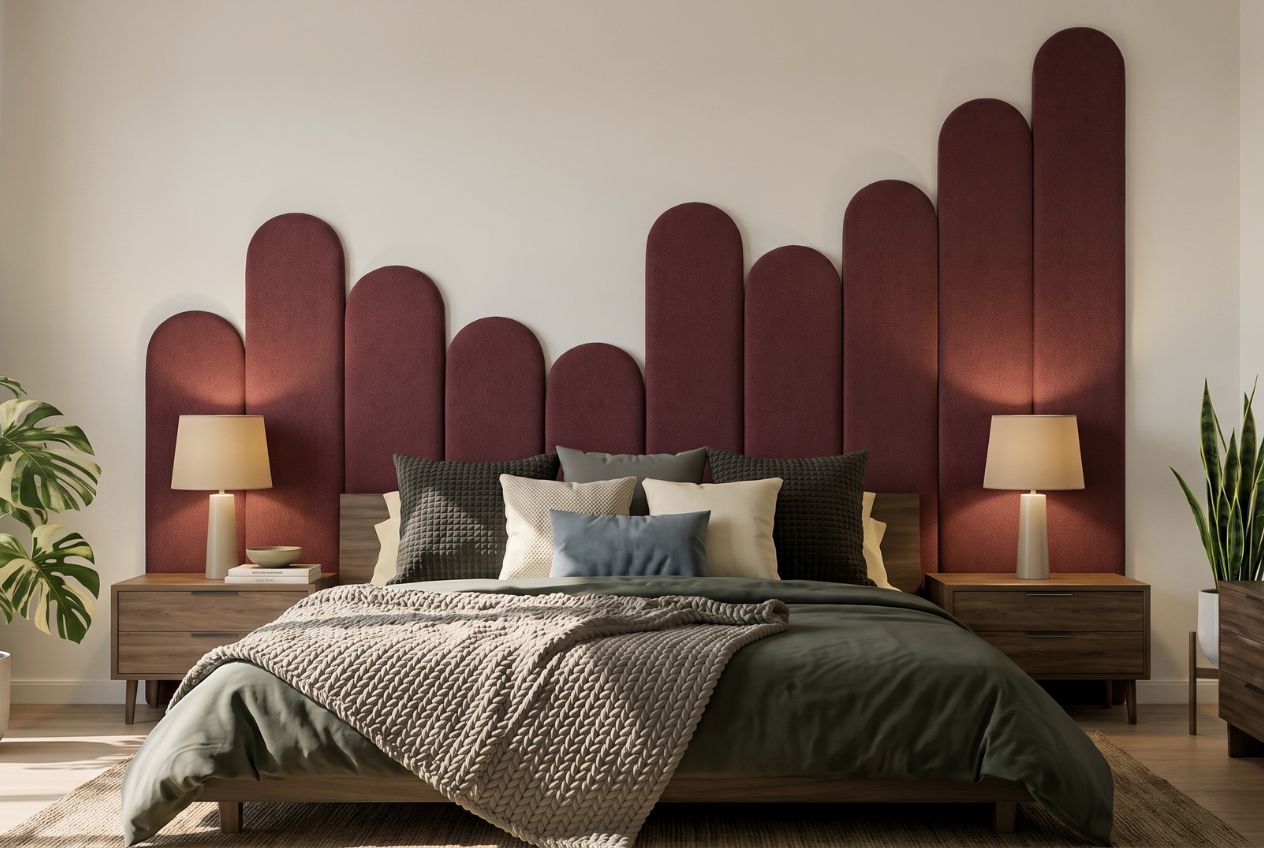
For most first-time feature walls, the Skyline Kit is a sensible starting point: modular, colour-led, and sized to spread adhesive load sensibly across a standard wall. If you’re still unsure how your specific surface will behave, order a sample kit before you buy the full layout, the same low-risk test recommended throughout this article. Prefer a linear, architectural look instead of a sculptural cluster? The Linear Feature Kit is built for that arrangement. Once you’ve tested your wall, check the installation guidance for your chosen layout and place your order.
Sources
For deeper detail on adhesive mounting and wall compatibility, see Silentwood’s guide to no-drill panel mounting. For textured or tricky surfaces, read three ways to fit panels on textured walls. For general echo-reduction context, see reducing living room echo without drilling, and for a soundproofing versus decorative comparison, One Day Doors & Closets breaks down noise reduction versus soundproofing.
- Mount acoustic panels without drilling | Silentwood
FAQ
What does “NRC rating” mean in this guide?
It refers to a practical suitability score for no-drill wall panels, covering adhesive strength, panel weight, wall compatibility and removal risk, not the standard acoustic absorption metric.
Will adhesive pads damage my paint when I remove the panel?
Risk is low on fully cured paint and firmly bonded surfaces if you peel slowly at a low angle and use an adhesive remover, but fresh paint and loose wallpaper carry higher risk.
Can I use no-drill panels on textured or concrete walls?
Textured walls often work with the right technique, but raw or unsealed concrete and heavily textured finishes reduce adhesive contact and hold, so a sample test first is essential.
How do I test whether a panel will hold on my wall?
Press a single sample panel onto the exact spot you’re planning to cover and leave it for 24 to 48 hours before judging the hold, rather than tugging at it straightaway.
Do DwellForms™ panels need landlord permission?
Most leases don’t specifically ban adhesive decor, but it’s worth confirming with your landlord in writing, and DwellForms™ adhesive pads are designed for removable, no-drill installation suitable for renters.