
TL;DR:
- Timeless interior style emphasizes proportion, quality materials, and restraint to create spaces that remain elegant across decades. It differs from traditional and trendy design by blending eras and avoiding fleeting cues, ensuring longevity and adaptability. Achieving this involves focusing on structural decisions first, layering neutral palettes, and personalizing with flexible decorative elements.
Timeless interior style is a design philosophy that prioritises proportion, quality materials, and purposeful restraint over the pursuit of trends. It is not a fixed aesthetic or a single historical period. Rather, it is a decision-making framework that guides every choice in a space toward longevity, clarity, and function. Where trend-driven interiors chase the moment, timeless design builds spaces that remain elegant and liveable across decades. This article explains the core characteristics of timeless interiors, how they differ from traditional or trendy design, and the practical steps you can take to achieve this quality in your own home or professional space.
What is timeless interior style and what defines it?
Timeless interior style is defined as a design approach rooted in enduring fundamentals like proportion, material quality, and restraint, rather than a fixed era or trend. The philosophy holds that a well-designed space should feel as considered in twenty years as it does today. That is a high standard, and it demands deliberate choices at every level of a room.
The characteristics of timeless design are not arbitrary. They reflect what human perception consistently responds to across cultures and generations. Proportion is the most foundational of these. When ceiling height, room dimensions, and furniture scale are in correct relationship to one another, a space feels settled and right without the occupant knowing exactly why. Proportional errors cannot be corrected by finishes or decoration. This is why structure comes first.
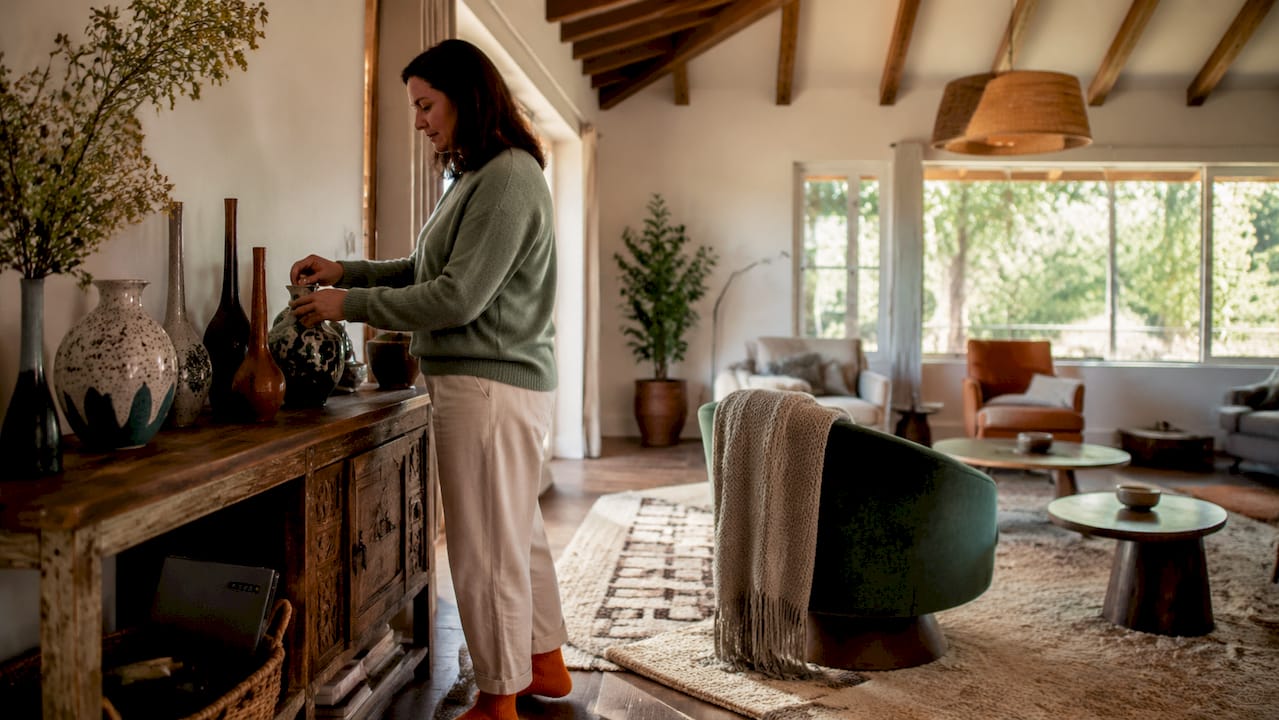
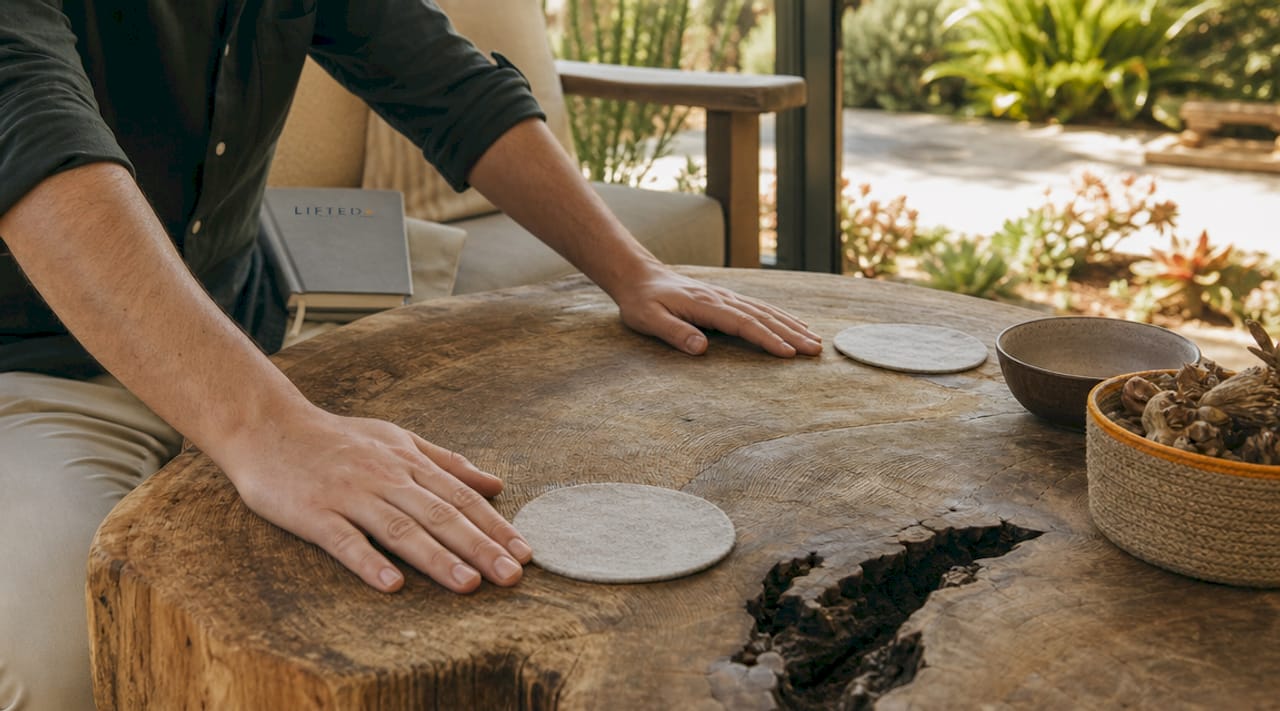
Material selection is equally defining. Natural surfaces such as stone, timber, linen, wool, and leather age with character rather than deteriorating. Small imperfections and wear become part of the story of a space rather than evidence of neglect. Synthetic or trend-specific materials often look dated within a few years precisely because they carry no such depth.
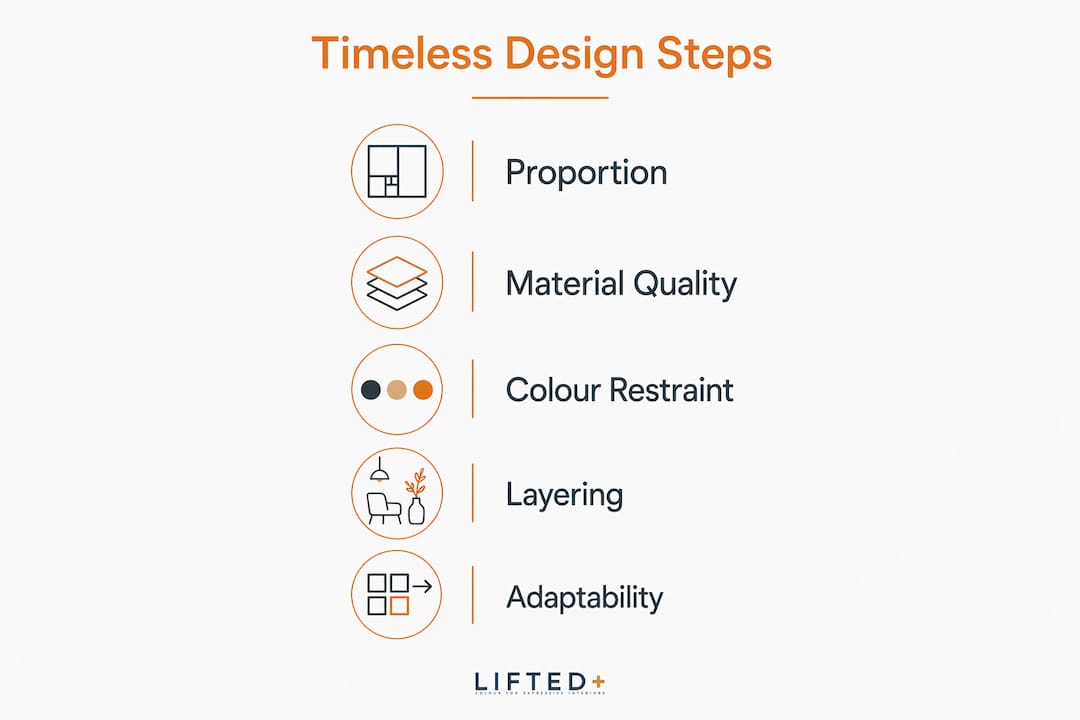
Colour restraint is another hallmark. Warm whites, creams, taupe, beige, and classic neutral palettes create calm cohesion that holds a room together across changing seasons and tastes. Stronger colours work best as accents rather than dominant statements. This does not mean a timeless interior must be muted or dull. It means the palette is built to carry the space, not compete with it.
The final characteristic is layering. Timeless interiors build depth through texture, material contrast, and thoughtfully placed objects rather than heavy decoration. Each element earns its place by contributing to the whole.
Pro Tip: When assessing a room’s timelessness, cover the decorative objects and look only at the bones. If the space still feels composed and proportional, the foundation is sound.
How does timeless style differ from traditional or trendy design?
Timeless interior style is not synonymous with traditional design, and this distinction matters. Traditional interiors are associated with a specific historical vocabulary: ornate mouldings, period furniture, formal symmetry, and rich pattern. They are beautiful, but they are also era-locked. A Georgian drawing room is unmistakably Georgian. A timeless interior, by contrast, blends elements from different eras without committing to any single stylistic label.
Trendy interiors present a different problem. They are designed around visual cues that feel current at a particular moment, and those cues are precisely what causes them to date. The quickest way an interior ages is when it is built around trend signals rather than function. A room designed around a specific finish, colour story, or furniture silhouette that dominated a single season will look like that season for the rest of its life.
The table below captures the essential differences across these three approaches.
| Approach | Defining quality | Risk |
|---|---|---|
| Timeless | Proportion, material, restraint | None if executed well |
| Traditional | Period-specific vocabulary | Era-locked, can feel formal |
| Trendy | Visual trend cues | Dates quickly, costly to refresh |
Timeless design functions as an evolving system rather than a frozen period statement. It can absorb a contemporary light fitting, a piece of modern art, or a mid-century chair without losing coherence. The modern interior design guide from Liftedplus explores exactly this territory: how modern sensibility and timeless principles can occupy the same room without tension.
Pro Tip: If a design choice would look equally at home in a magazine from ten years ago and one published today, it is likely timeless. If it could only appear in one era, reconsider it.
How to achieve timeless style in your space
Achieving timeless interior style is a matter of sequencing decisions correctly and investing in the right things at the right stage. The steps below reflect how design decisions occur twice: first at the structural level, where the consequences are permanent, and second at the decor level, where flexibility is possible.
-
Begin with proportion and spatial layout. Before selecting a single finish, assess the proportional relationships in your space. Ceiling height, door placement, window scale, and furniture sizing must work together. A sofa that is too large for a room cannot be fixed with cushions.
-
Choose materials for longevity, not novelty. Stone benchtops, timber flooring, linen upholstery, and leather seating all develop character over time. Planning for items to last approximately 20 years in both form and function is a useful benchmark for investment decisions.
-
Build a restrained, layered colour palette. Start with a neutral base drawn from warm whites, creams, or soft greys. Introduce texture through materials rather than pattern. Reserve stronger colour for accents that can be changed without structural consequence. The Liftedplus guide to open plan colour palettes offers a practical framework for this approach.
-
Select furniture with clean lines and genuine comfort. Classic silhouettes, those without exaggerated proportions or trend-specific details, remain visually relevant across decades. Comfort is not optional. Rooms built for actual habits last; rooms built for image typically require renovation within a few years.
-
Plan flexible lighting infrastructure. Fixed lighting schemes age quickly. Multiple lighting zones with dimmable circuits and adaptable fittings allow a room to shift mood and function without rewiring.
-
Separate permanent decisions from flexible layers. Architecture, millwork, flooring, and fixed joinery are permanent. Paint colour, art, textiles, and decorative objects are flexible. Treat them differently in both budget and decision-making weight.
-
Personalise through objects, not structure. A sculptural ceramic, a piece of original art, or a carefully chosen textile brings personality to a space without locking it to a moment. These are the elements you can change as your taste evolves.
Pro Tip: The most common mistake in timeless interiors is spending heavily on trend-driven decor while underinvesting in the structural decisions that actually carry the space. Reverse that ratio.
How do timeless interiors evolve without losing their character?
Timeless interiors are not static. They are designed to absorb change gracefully, and this capacity for gentle evolution is one of their defining strengths. The key is understanding which elements carry permanence and which are meant to shift.
The foundation layer includes proportion, architecture, durable finishes, and fixed joinery. These elements are chosen once and carry the space for decades. A well-designed timeless interior separates this foundation clearly from the flexible layers above it, so that updating a room never requires dismantling what makes it work.
The flexible layer includes paint colour, furnishings, art, textiles, and decorative objects. These elements respond to changing taste, lifestyle, and season without disturbing the underlying structure. A room with a strong foundation can absorb a new palette, a different arrangement of furniture, or a fresh collection of objects and still feel coherent.
True timeless interiors have a built-in ability to adapt over time through proportion, light, context, and thoughtful craftsmanship combined with planned flexibility. This is not accidental. It is the result of designing with evolution in mind from the beginning.
Practical examples of this kind of gradual update include repainting walls in a deeper tone of the same neutral family, introducing new textiles in a seasonal palette, rotating art between rooms, or adding a statement light fitting that shifts the mood without altering the structure. Each of these moves refreshes the space without erasing what gives it character. Timeless design embodies a quiet confidence that welcomes personal touches precisely because the foundation is secure enough to hold them.
Key takeaways
Timeless interior style is a design framework built on proportion, material quality, and restrained layering, not a fixed look or historical period.
| Point | Details |
|---|---|
| Proportion is foundational | Correct scale relationships between room, ceiling, and furniture cannot be fixed by decoration. |
| Materials age with character | Natural surfaces like stone, timber, and linen develop depth over time rather than deteriorating. |
| Separate foundation from layers | Permanent elements carry the space; flexible layers like art and textiles absorb change gracefully. |
| Avoid trend-specific cues | Designing around visual fads rather than function is the fastest way an interior dates. |
| Invest structurally first | Budget and decision-making weight should favour proportion and materials over decorative objects. |
Why timeless design is worth the discipline
I have spent years watching clients renovate spaces they loved three years earlier, not because the quality failed but because the choices were too specific to a moment. The pattern is consistent. A room built around a trending finish or a fashionable colour story feels exciting at first and exhausting within a season. The structural investment was sound; the surface decisions were not.
What I have come to believe is that timeless design is not about playing it safe. It is about playing it long. A space with strong proportions and honest materials holds the room in a way that no amount of decorative effort can replicate. The bones carry the weight, and the layers do the living.
The trap I see most often is what I think of as the ‘safe but dull’ outcome: a room that avoids trends so carefully that it avoids personality altogether. Timelessness does not require that sacrifice. A well-chosen piece of art, a sculptural object, or a textile in a considered colour can pull a space out of the polite middle without dating it. The difference is that these choices sit on top of a strong foundation rather than substituting for one.
For professional spaces, this philosophy is even more valuable. An office or hospitality environment that feels composed and considered communicates something about the people who inhabit it. Rooms built for actual habits and real use, rather than for image, last decades. That is not just an aesthetic argument. It is a practical one.
— Michelle
Bring your timeless interior to life with Liftedplus
A timeless foundation gives you the confidence to personalise with intention. The right decorative object, a piece of wall art with genuine presence, or a lighting element with sculptural form can bring warmth and character to a space without compromising its longevity. At Liftedplus, every piece in the collection is chosen for form, presence, and lasting quality rather than seasonal novelty.
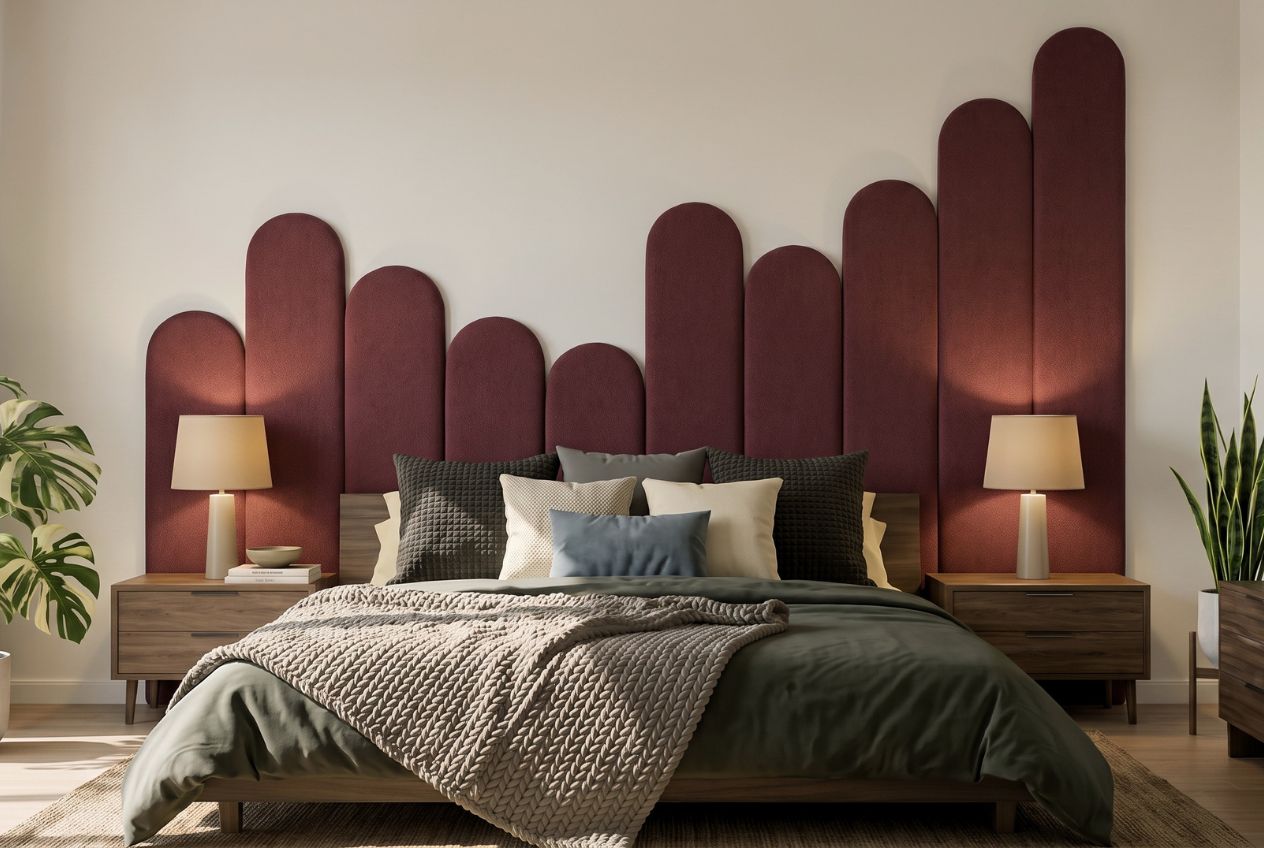
If you are ready to add personality to a considered interior, explore how curated decor shapes mood and style in ways that hold up over time. For further inspiration on balancing boldness with calm, the Liftedplus guide to styling bold interiors shows how statement pieces can sit comfortably within a restrained palette.
FAQ
What is the simplest definition of timeless interior style?
Timeless interior style is a design philosophy that prioritises proportion, quality materials, and restraint over trends, creating spaces that remain elegant and functional for decades rather than seasons.
Does timeless design mean avoiding all colour?
No. Timeless interiors use neutral base palettes for cohesion but welcome stronger colour as accents in textiles, art, and decorative objects that can evolve without structural change.
How is timeless style different from traditional interior design?
Traditional design is tied to a specific historical period and vocabulary, while timeless style blends elements from different eras without committing to any single label, making it more adaptable over time.
How long should a timeless interior last?
A well-executed timeless interior should remain relevant in both form and function for approximately 20 years, with flexible layers updated gradually while the structural foundation remains unchanged.
Can a modern home have a timeless interior?
Yes. Timeless design absorbs contemporary elements, including modern furniture, current art, and updated lighting, provided the underlying proportion, material quality, and restrained palette remain intact.