
TL;DR:
- Thoughtfully curated decor involves intentionally selecting objects that reflect personal meaning and support well-being. It reduces stress by 21% and enhances cognitive focus through organized, meaningful, and psychologically supportive spaces. Personal resonance and ongoing editing create homes that foster emotional balance and deep attachment.
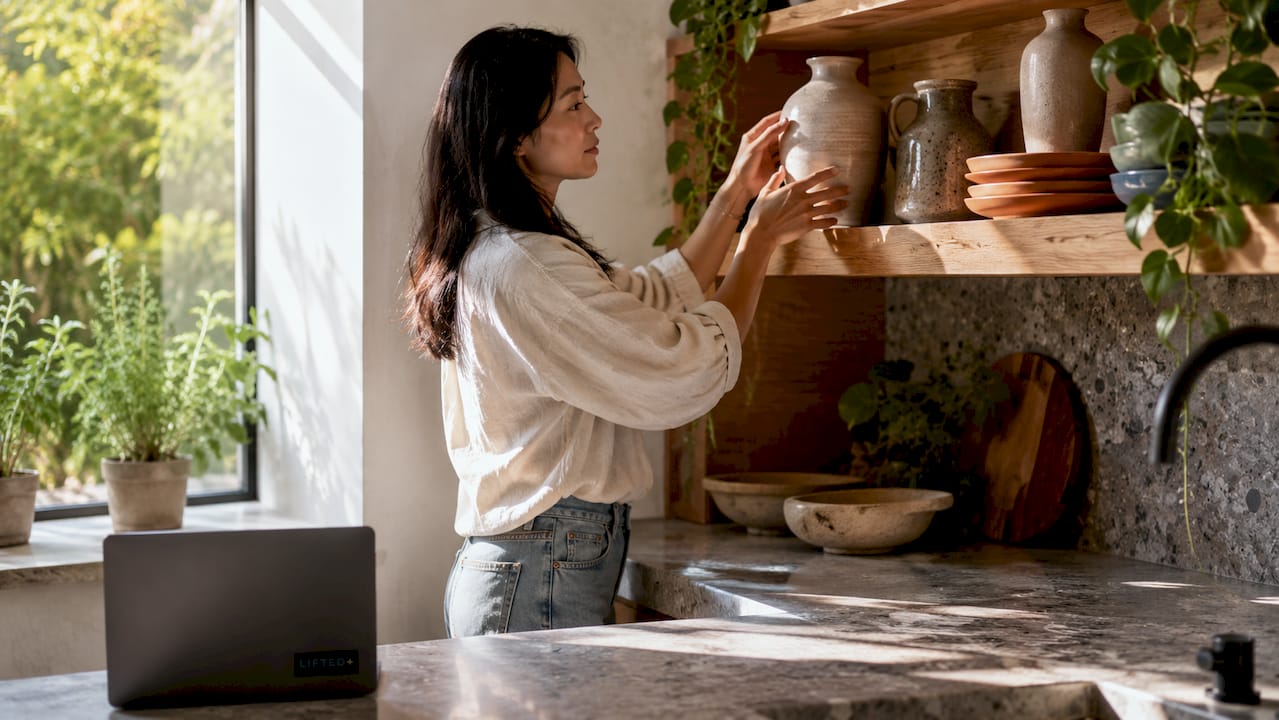
Thoughtfully curated decor is defined as the intentional selection of home furnishings, objects, and accents that reflect personal identity and actively support wellbeing, rather than simply filling space. This practice, known in interior design circles as intentional curation, sits at the intersection of environmental psychology and personal expression. Research shows that intentional decor tweaks reduce stress by 21% and improve cognitive focus. That figure alone reframes why value thoughtfully curated decor matters: your home is not just a backdrop. It is an active participant in your mental and emotional life.
Why does thoughtfully curated decor improve mood and focus?
The science behind intentional decor is grounded in environmental psychology. Your surroundings send constant signals to your nervous system, and those signals either calm or agitate. Spaces designed with purpose tend to calm.

Individuals in organised homes report 25% higher emotional stability and better sleep quality. That is not a minor lifestyle perk. It means the objects around you, and how deliberately they are placed, shape your capacity to rest, think, and recover each day.
Clutter is a particular culprit. It creates what researchers call decision residue, a drain on cognitive resources that feeds ambient anxiety and procrastination. Every surface crowded with unrelated objects forces your brain to process low-level visual noise continuously. Simplified surfaces and organised spaces reduce that mental load, freeing attention for what actually matters.
Colour and personal meaning add another layer. Vivid colours and meaningful patterns provide dopamine hits that lift mood, particularly during uncertain periods. This is not decorating for aesthetics alone. It is designing for neurochemical reward.
Pro Tip: Treat your surfaces as edited, not empty. One meaningful object with breathing room around it registers as calm and considered. Five objects of equal visual weight register as noise.
What distinguishes curated decor from standard decoration?
Most people decorate by accumulation. Pieces arrive over time, gifts are kept out of obligation, trends are followed and then abandoned. The result is a home that looks busy but feels anonymous.
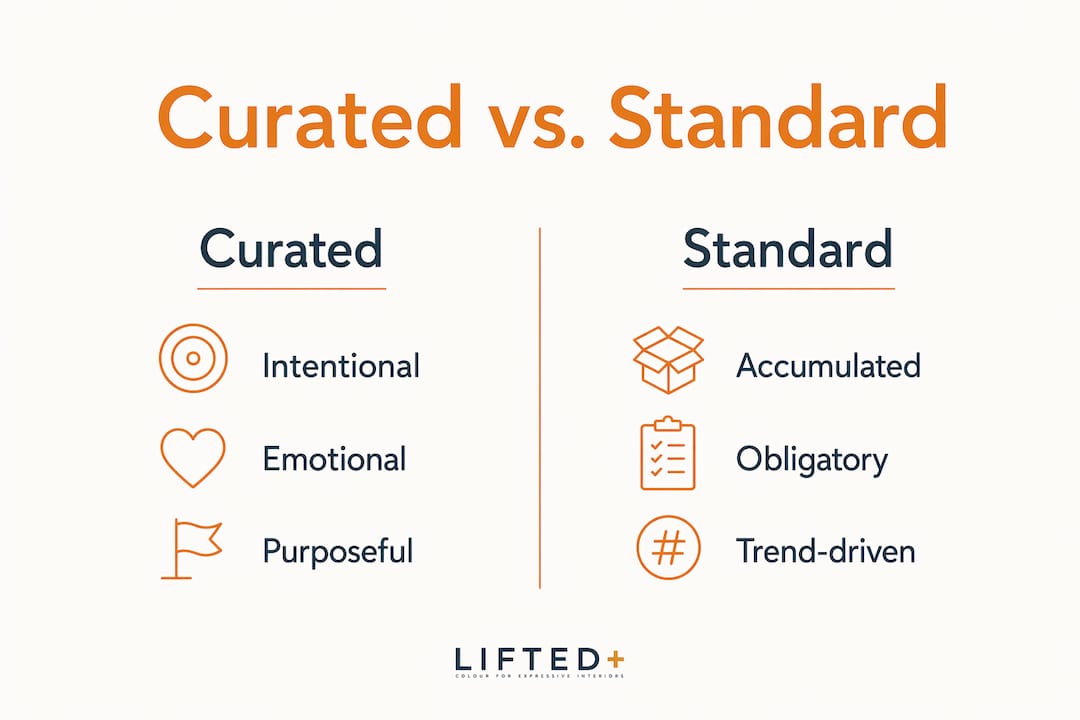
Curated decor works differently. It is an ongoing process of selection and editing, where each piece earns its place through personal resonance, function, or both. Designer Chanel Margaux Postrel frames curated interiors as autobiographies rather than one-time style achievements. That framing shifts everything. Your home becomes a living record of who you are and how you have grown, not a showroom frozen at a single moment in time.
The emotional stakes are real. Personal resonance with decor items drives place attachment, which research links to higher residential satisfaction and psychological wellbeing. Opulent aesthetics without personal meaning do not produce the same effect. A beautifully styled room that contains nothing of you will never feel like home.
Curated vs. collected: a practical comparison
| Approach | Characteristic | Emotional Outcome |
|---|---|---|
| Accumulated decoration | Items added without clear intent | Visually busy, emotionally neutral |
| Trend-driven styling | Follows seasonal or commercial cycles | Dated quickly, lacks personal resonance |
| Thoughtful curation | Each piece selected for meaning or function | Calm, expressive, emotionally grounding |
| Living autobiography | Space evolves with identity over time | Deep place attachment and satisfaction |
Pro Tip: Before adding anything new to your home, ask two questions: does this serve a purpose, and does it mean something to me? If the answer to both is no, it belongs elsewhere.
How can you apply thoughtful curation to your home?
Applying the importance of curated decor to your own space does not require a full renovation or a design degree. It requires honesty and a willingness to edit.
Start by assessing what you already have. Walk through each room and identify the objects that genuinely lift your mood when you see them. Set aside anything that feels like obligation, a relic of a past version of your life, or simply visual filler. This is not minimalism for its own sake. It is making room for what actually resonates.
From there, build with intention:
-
Designate homes for everyday items. Sustainable organisation and designated storage systems reduce recurring micro-decisions and preserve mental energy. A key hook by the door, a tray for remotes, a consistent place for your reading glasses. These small systems compound into a calmer daily experience.
-
Layer your lighting. Layered, warm, and dimmable lighting lowers cortisol more effectively than bright overhead lights. Replace a single ceiling fixture with a combination of floor lamps, table lamps, and wall sconces at different heights. The result is a room that shifts in mood as the day does. You can explore lighting for NZ homes for practical guidance on building that layered effect.
-
Introduce tactile variety. Texture in decor, through woven throws, ceramic vessels, or timber surfaces, adds sensory depth that flat, uniform spaces lack. Tactile variety in interiors engages the senses in ways that photographs of a room cannot capture but your body registers immediately.
-
Balance minimalism with personality. A curated home is not a sterile one. Leave space for the objects that carry story: the inherited bowl, the artwork bought on a trip, the plant you have kept alive for three years. These are the details that pull a space out of the safe, polite middle.
Pro Tip: Approach one room at a time. Curation done room by room feels manageable and produces visible results quickly, which builds momentum for the rest of the house.
What are the emotional benefits of personalised decor?
The benefits of thoughtful decor extend well beyond aesthetics. Your home is the environment where you recover from the world, and its emotional register matters deeply.
Interior designer Eryn Oruncak notes that a curated space aids stress reduction by fostering a rest-and-digest neurological state. That is the opposite of fight-or-flight. A home that holds you in that calmer state is not a luxury. It is a genuine health asset.
Psychologist Dr Natasha Sharma highlights the risk of emotional flatness from neutral-only palettes, advocating for expressive decor to boost mood and encourage optimism. The concept of dopamine decor, spaces designed with vivid colour and personal meaning, reflects a growing understanding that visual reward is a legitimate design goal. You can explore how decor shapes mood and style to understand how specific choices translate into emotional outcomes.
“Homes relying solely on neutral palettes without personal accents risk emotional flatness. Externalising identity through decor encourages optimism and wellbeing.” — Environmental psychology research via BBC
The value of personalised decor also shows up in how you relate to your home over time. Spaces that reflect your identity generate a sense of ownership and pride that generic interiors simply cannot. That feeling is place attachment, and it is one of the strongest predictors of residential satisfaction.
What pitfalls should you avoid when curating your home?
Knowing the importance of curated decor is one thing. Avoiding the traps that undermine it is another.
The most common mistake is over-styling. This happens when curation becomes performance, where every surface is arranged for the photograph rather than for the person who lives there. A home that looks curated but feels uncomfortable has missed the point entirely.
Chasing trends is a related trap. Curated homes age better than trend-led interiors precisely because they are built around personal meaning rather than commercial cycles. What resonates with you in 2026 will likely still resonate in five years. What was fashionable last season probably will not.
Lighting is another area where good intentions go wrong. A single bright overhead light flattens a room and keeps the nervous system alert. Layered warm lighting is not just more attractive. It is neurologically more supportive.
Personalised organisation is a lifestyle, not a one-time project. Small, consistent habits, a seasonal edit of surfaces, a monthly reassessment of what is earning its place, keep a curated home feeling alive rather than stagnant. You can find practical frameworks for this in a cohesive home edit guide that walks through the process room by room.
Pro Tip: Schedule a 20-minute seasonal walk-through of your home. Remove one item per room that no longer serves you. Over a year, that habit produces a noticeably lighter, more intentional space.
Key takeaways
Thoughtfully curated decor transforms a home into a personalised sanctuary by combining intentional selection, personal resonance, and considered organisation to support both mental clarity and emotional wellbeing.
| Point | Details |
|---|---|
| Stress reduction is measurable | Intentional decor tweaks reduce stress by 21% and improve cognitive focus. |
| Clutter drains mental energy | Decision residue from cluttered spaces feeds anxiety and reduces cognitive capacity. |
| Personal meaning outperforms aesthetics | Place attachment and residential satisfaction are driven by resonance, not opulence. |
| Lighting shapes neurochemistry | Layered, warm, dimmable lighting lowers cortisol more effectively than bright overhead lights. |
| Curation is an ongoing practice | Small, consistent habits maintain a curated home and keep it authentically yours over time. |
Curation as a form of self-knowledge
I have spent years watching people approach their homes the same way they approach a shopping list: fill the gaps, tick the boxes, move on. The result is always the same. A home that looks complete but feels hollow.
What I have come to believe, genuinely and without reservation, is that the act of curating your space is one of the most clarifying things you can do for yourself. It forces you to ask what you actually value, what you want to feel when you walk through the door, and what version of yourself you are designing for. Those are not small questions.
The homes that hold people, the ones that feel genuinely restorative, are never the most expensive or the most photographed. They are the ones where every object has earned its place. Where the lighting is soft enough to let you exhale. Where the colour on the wall is there because it means something, not because it was trending.
Embrace imperfection in this process. Your home should evolve as you do. A space that looked right three years ago and no longer does is not a failure. It is evidence that you have changed. Let the curation follow. You can find inspiration for that evolution in the Liftedplus mood library, which approaches decor as a mood-first, identity-led practice.
— Michelle
Bring your curation to life with Liftedplus
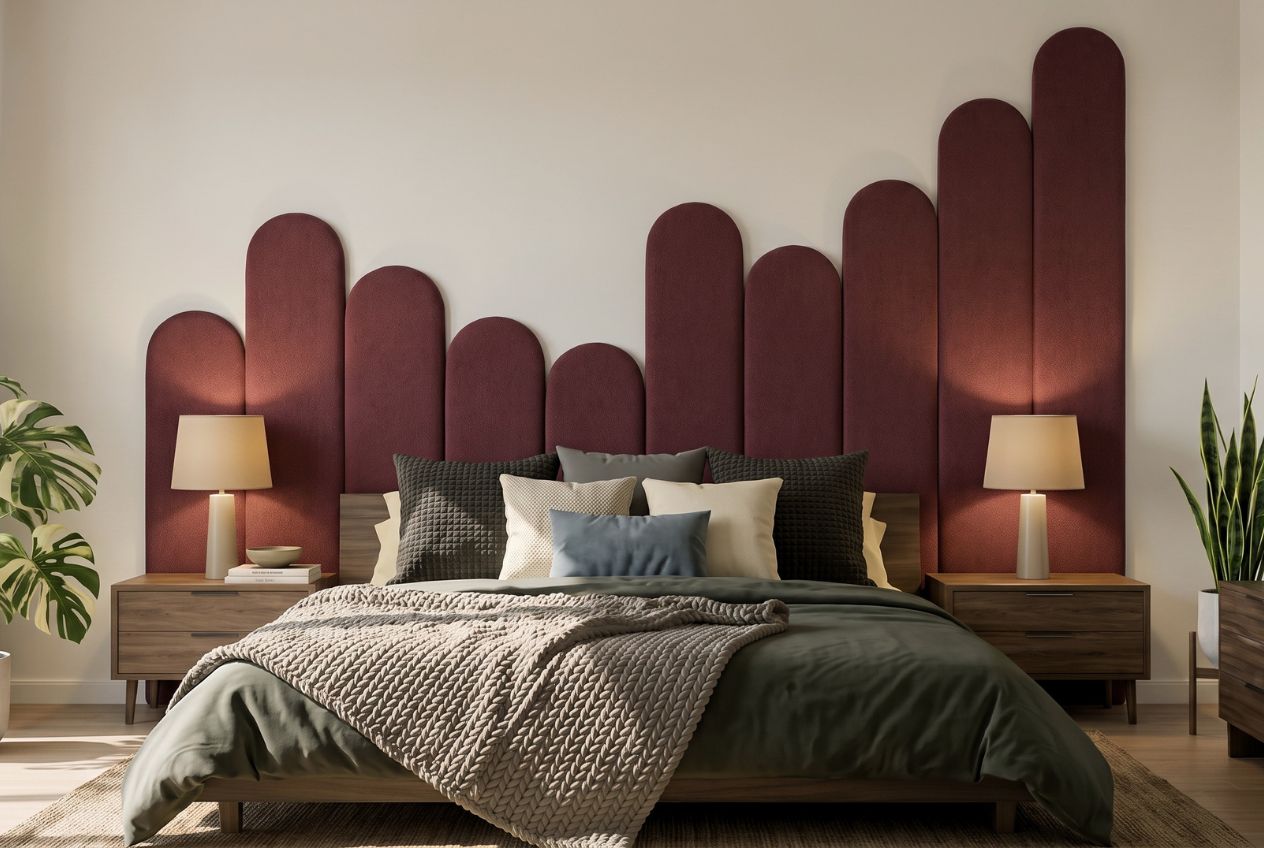
Liftedplus exists for exactly this kind of intentional approach to home design. The Liftedplus collection brings together colour-led furniture, sculptural lighting, and limited-edition wall art selected for form, presence, and emotional impact rather than trend cycles.
If you are ready to move beyond filling space and start designing for how you want to feel, explore how decor personalises mood and style through the Liftedplus lens. For those building a collection from scratch, the curated homewares edit guide offers a practical framework for assembling pieces that work together with intention. Every piece in the Liftedplus range is chosen to hold a room, not just occupy it.
FAQ
What does thoughtfully curated decor actually mean?
Thoughtfully curated decor is the intentional selection of home objects and furnishings based on personal resonance, function, and emotional impact. It differs from standard decoration in that every piece earns its place through meaning or purpose, not habit or trend.
How does curated decor reduce stress?
Intentional decor changes including lighting adjustments, clutter reduction, and the addition of greenery reduce stress by 21% and support cognitive focus. Organised, personally meaningful spaces keep the nervous system in a calmer, rest-and-digest state.
Does colour really affect mood at home?
Vivid colours and meaningful patterns trigger dopamine responses that lift mood, particularly during periods of uncertainty. Psychologist Dr Natasha Sharma specifically warns that neutral-only palettes risk emotional flatness without expressive accents to balance them.
How often should you refresh your curated home?
Personalised curation is a lifestyle, not a one-time project. A seasonal walk-through to remove items that no longer resonate and introduce new ones keeps your space authentically aligned with who you are now.
Is curated decor only for large or expensive homes?
Curated decor is defined by intention, not budget or scale. A single meaningful object in a well-lit corner of a small apartment carries more emotional weight than a room full of expensive but impersonal pieces. The hygge approach to interiors demonstrates how warmth and comfort are achieved through thoughtful layering, not spending.